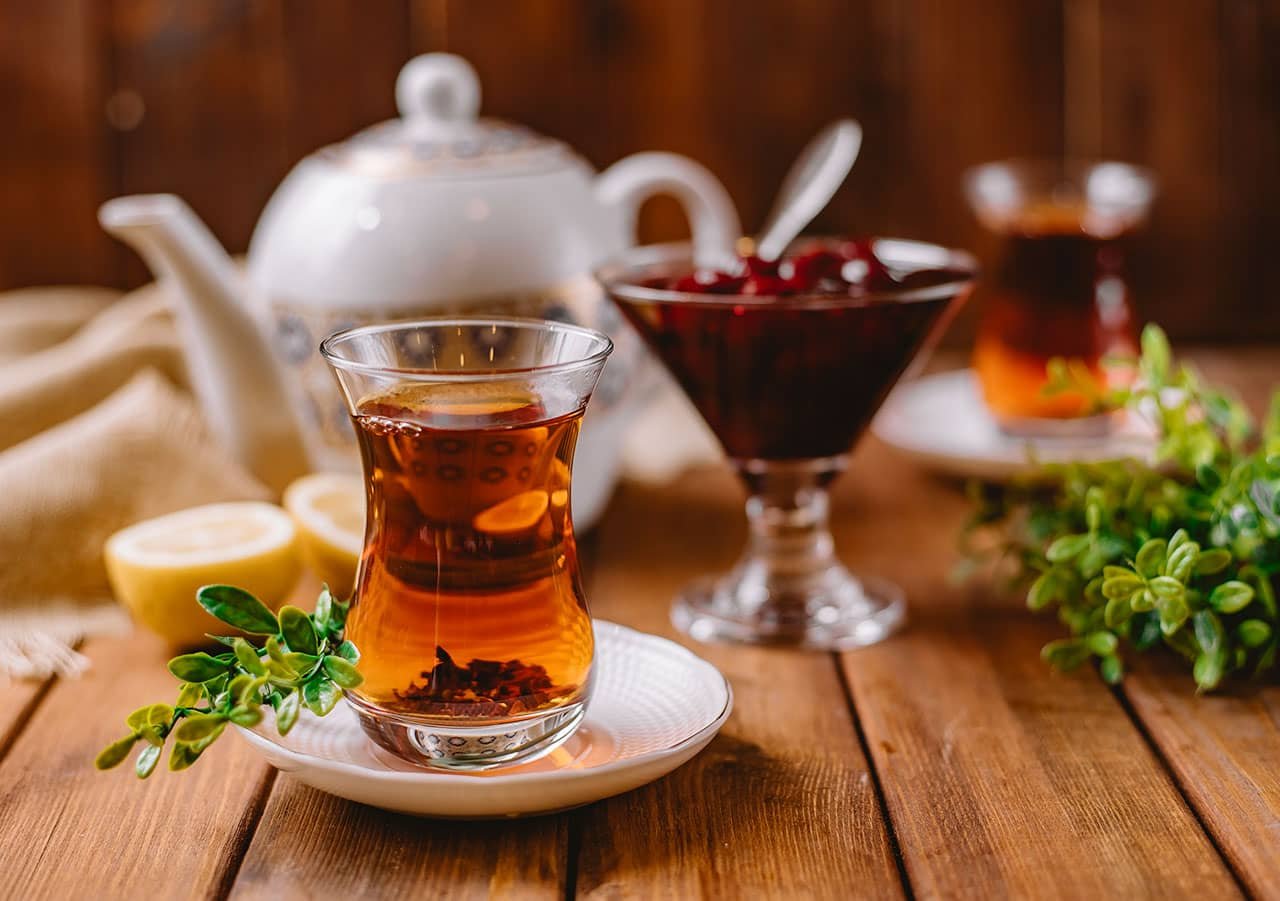
Bulgaria has a long tradition of gathering and using wild herbs from its mountains, meadows, and valleys. From fragrant rose buds and lavender to nettle, chamomile, lemon balm, and the famous Mursal tea, herbs have been part of Bulgarian households for generations.
Bulgarian herbal tea is usually prepared as an infusion of dried flowers, leaves, roots, or fruits rather than leaves from the traditional tea plant. Many of these herbs grow naturally in Bulgaria’s diverse landscapes, while others are cultivated commercially for teas, essential oils, cosmetics, and herbal products.
For Bulgarians, herbal tea — often simply called bilkov chai (билков чай) — isn’t only something you drink when you’re sick. A pot of mountain herbs with honey can be an everyday winter drink, while lighter infusions such as rose, mint, or lemon balm can be enjoyed throughout the year.
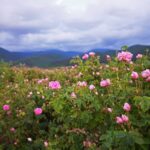
Bulgaria is particularly well known for aromatic plants. The Rose Valley is famous worldwide for Rosa damascena, lavender fields cover parts of central and northeastern Bulgaria, and the country’s mountains are home to an impressive variety of wild medicinal and culinary herbs.
In this guide, we’ll look at 10 Bulgarian herbal teas worth trying, where the herbs come from, what they taste like, how they’re traditionally used, and what to consider when buying herbal tea from Bulgaria.
Why Bulgaria Is Famous for Herbs
Bulgaria’s reputation for herbs comes largely from its geography. Although the country is relatively small, its landscape includes high mountains, river valleys, forests, fertile plains, and areas influenced by both continental and Mediterranean climates. These different environments support a remarkably diverse range of aromatic and medicinal plants.
Herbs grow throughout the Rila, Rhodope, Pirin, Balkan, and Sredna Gora mountains, where many plants have traditionally been gathered from the wild. Other herbs are cultivated commercially in Bulgaria’s agricultural regions.
Some of the country’s best-known aromatic plants include lavender, chamomile, lemon balm, mint, nettle, thyme, rosehip, St. John’s wort, and Rosa damascena. Depending on the plant, the flowers, leaves, fruits, or roots may be dried and used to prepare herbal infusions.
Herb gathering also has deep roots in Bulgarian folk tradition. Knowledge about when to collect particular plants and how to dry and prepare them was often passed between generations. One of the clearest examples is Enyovden (Еньовден), celebrated on June 24, a Bulgarian folk holiday closely associated with herbs and traditional beliefs about their properties.
Today, that tradition continues alongside commercial cultivation and modern herbal production. Dried Bulgarian herbs are sold domestically and exported abroad, while visitors can find locally produced herbal teas in supermarkets, specialty shops, monasteries, farmers’ markets, and small mountain towns.
This combination of biodiversity, favorable growing conditions, and centuries of herbal tradition is what makes Bulgarian herbal tea particularly interesting.
Herbal Tea vs. True Tea: What’s the Difference?
Although we commonly call drinks such as chamomile, rosehip, and Mursal tea “tea,” technically they are herbal infusions rather than true teas.
True tea comes from the leaves of the Camellia sinensis plant. Black tea, green tea, white tea, and oolong all come from this same species; differences in harvesting and processing create their distinctive flavors and characteristics.
Bulgarian herbal tea, on the other hand, can be prepared from many different parts of a plant, including:
- flowers, such as chamomile, lavender, and rose
- leaves, such as nettle, mint, and lemon balm
- fruits, such as rosehips
- roots, such as dandelion root
- flowering stems and aerial parts of mountain herbs
Most traditional Bulgarian herbal infusions are naturally caffeine-free, although this depends on the ingredients in a particular blend.
You’ll often see herbal tea called билков чай (bilkov chai) in Bulgaria. It may contain a single herb or a mixture of several plants chosen for their flavor and aroma.
The distinction may be technical, but in everyday Bulgarian conversation, chai is commonly used for both true tea and herbal infusions. Throughout this guide, we’ll use the familiar term Bulgarian herbal tea for these traditional herbal drinks.
10 Bulgarian Herbal Teas to Try

From herbs gathered in the Rhodope Mountains to roses and lavender grown in Bulgaria’s famous valleys and fields, there is no single flavor that defines Bulgarian herbal tea. Some varieties are floral and delicate, while others are earthy, refreshing, or slightly tart.
Bulgaria’s botanical diversity is remarkable for a country of its size. More than 2,600 species of herbs and medicinal plants grow in Bulgaria, with over 600 used in traditional herbal practices and around 300 collected regularly. This variety helps explain why herb gathering, herbal tea, and aromatic-plant cultivation have such a strong place in Bulgarian culture.
The teas below include herbs closely associated with Bulgaria as well as familiar plants that have a long place in Bulgarian herbal traditions. Some are commonly enjoyed as everyday infusions, while others have traditionally been used for more specific purposes.
Tell me who your friends are, so I can tell you who you are.
Popular Bulgarian Proverb
If you’re trying Bulgarian tea for the first time, Mursal tea, rose tea, chamomile, lemon balm, and rosehip are excellent places to start. Here are 10 Bulgarian herbal teas worth discovering.
Also Read: 10 Reasons Why Visit Bulgaria
1. Mursal Tea (Mursalski Chai)
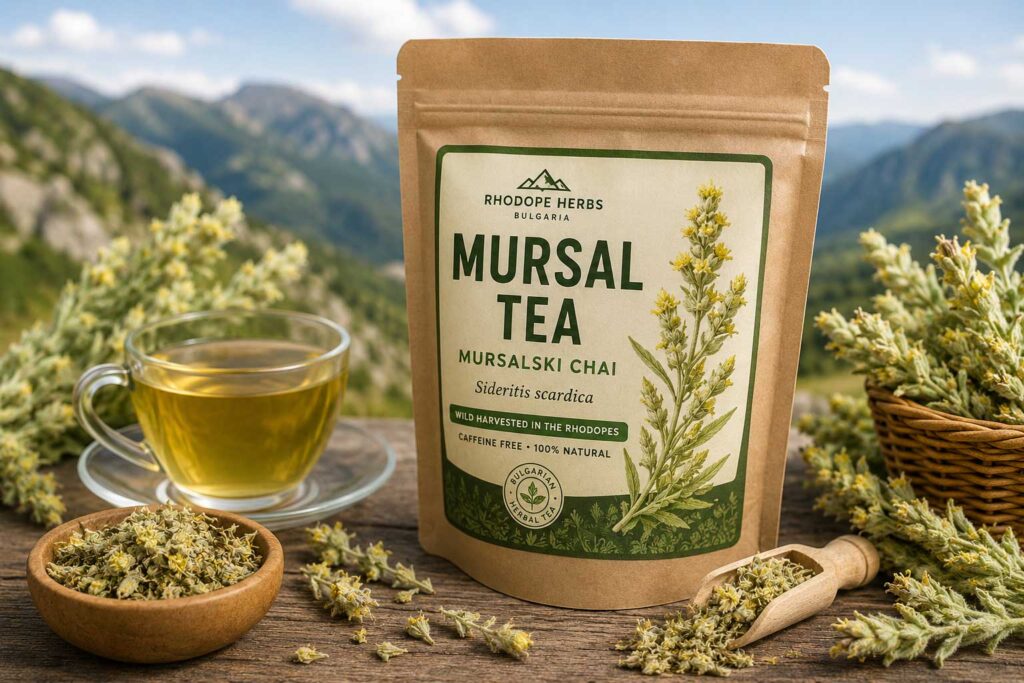
If there is one Bulgarian herbal tea that deserves to be at the top of this list, it is Mursal tea, known in Bulgaria as Mursalski chai (Мурсалски чай).
The tea is made from Sideritis scardica, a mountain herb belonging to the Sideritis genus. Plants from this genus are often known as mountain tea or ironwort in southeastern Europe.
In Bulgaria, Mursal tea is closely associated with the Rhodope Mountains, where Sideritis scardica has become one of the country’s best-known mountain herbs.
What Does Mursal Tea Taste Like?
Mursal tea has a mild, earthy, slightly floral flavor rather than the strong bitterness people sometimes expect from medicinal herbs. Its aroma is subtle, and a little honey complements it nicely.
The dried flowering stems themselves are distinctive. Instead of loose leaves, Mursal tea is often sold as whole or cut pale-green stems with small yellowish flowers.
How Bulgarians Drink Mursal Tea
A few dried stems are typically steeped or gently simmered in hot water. The resulting golden-colored infusion can be enjoyed plain, although honey and lemon are common additions.
Mursal tea has a long history of use in Bulgarian folk herbal traditions, particularly in mountain regions. Like many traditional herbs, it has accumulated numerous health claims over the years. Modern research has examined Sideritis species for their naturally occurring plant compounds, but traditional uses shouldn’t be treated as proven medical treatments.
For travelers interested in bringing home something more distinctive than an ordinary tea bag, Mursalski chai is one of the most characteristically Bulgarian herbal products to look for.
2. Bulgarian Rose Bud Tea
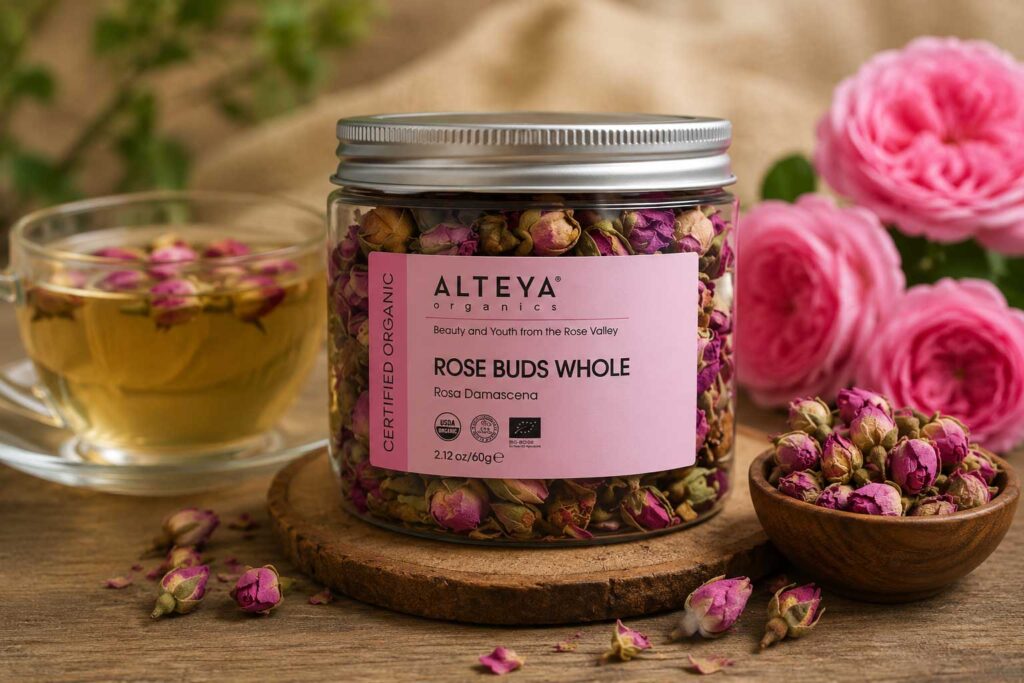
Bulgaria’s connection with roses goes far beyond perfume and rose oil. The fragrant buds and petals of Rosa damascena, the famous Damask rose cultivated in Bulgaria, can also be dried and used to prepare a delicate floral infusion.
Much of Bulgaria’s rose production is associated with the Rose Valley, particularly the area around Kazanlak and Karlovo. During the annual rose harvest, flowers are traditionally picked early in the morning, when their aromatic compounds are best preserved.
What Does Bulgarian Rose Tea Taste Like?
Bulgarian rose tea has a light floral aroma and a delicate, subtly sweet flavor. It shouldn’t taste like perfume; when prepared properly, the rose character is fragrant but gentle.
Dried rose buds can be steeped on their own or combined with other herbs. Rose also pairs well with chamomile, lavender, mint, or traditional tea leaves.
Because pure rose bud tea doesn’t contain leaves from the Camellia sinensis plant, it is naturally caffeine-free.
When shopping for Bulgarian rose tea, look for products that clearly identify the rose as Rosa damascena and state Bulgaria as the country of origin. If organic certification matters to you, check for an actual organic certification rather than assuming that “natural” or “wild” means organic.
Bulgarian rose bud tea is especially worth trying if you’re visiting the Rose Valley or want to experience another side of Bulgaria’s famous rose tradition beyond essential oil and cosmetics.
3. Bulgarian Nettle Tea
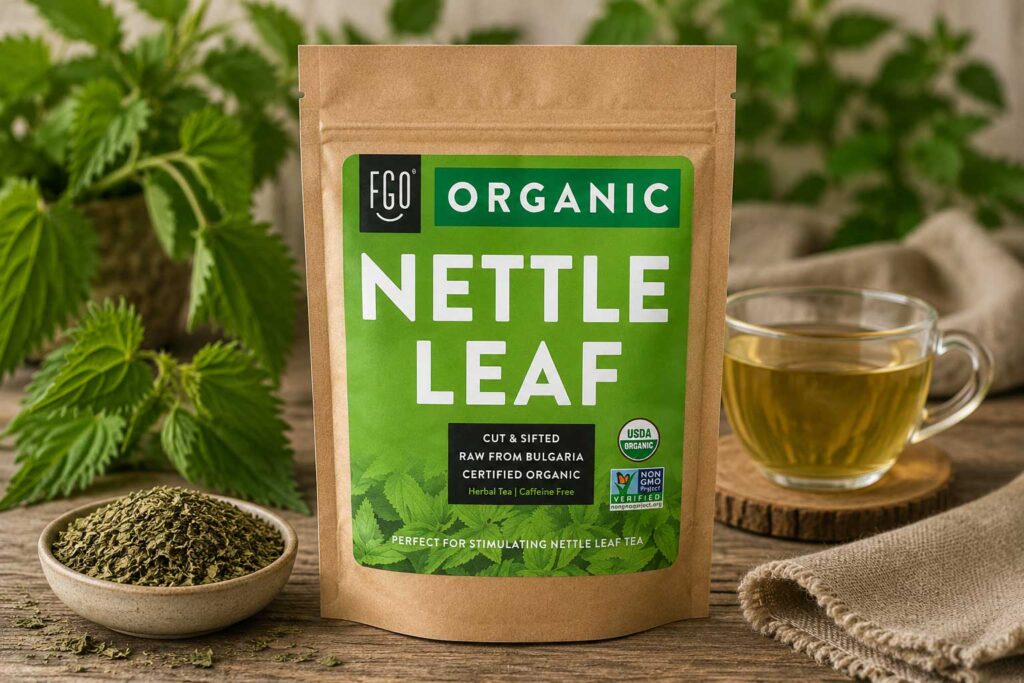
Nettle (Urtica dioica), known as kopriva (коприва) in Bulgarian, is one of the most familiar wild edible plants in Bulgaria. It appears in early spring and has long been gathered for both food and traditional herbal preparations.
Unlike some herbs on this list, nettle isn’t primarily associated with one particular Bulgarian region. It grows in many parts of the country and is a familiar sight in fields, along forest edges, and around mountain villages.
What Does Nettle Tea Taste Like?
Dried nettle leaves produce a mild, earthy infusion with a distinctly green, grassy flavor. It isn’t naturally sweet or strongly aromatic like rose or lavender, so people who find it too vegetal on its own may prefer it with a little honey, lemon, mint, or another herb.
Nettle tea is naturally caffeine-free when prepared only from nettle leaves.
Nettle in Bulgarian Food and Herbal Traditions
In Bulgaria, nettle isn’t just something you put in a teapot. Fresh young nettles are a traditional spring ingredient and can be cooked in soups, stews, purées, and other dishes.
The leaves naturally contain a range of nutrients and plant compounds, which has also made nettle a popular herb in traditional herbal practices. Research has investigated nettle for several potential uses, but drinking nettle tea shouldn’t be considered a treatment for a medical condition.
Dried nettle isn’t limited to the teapot, either. It can also find its way into soups and other dishes, which makes nettle one of the more versatile Bulgarian herbs to keep in the pantry.
4. Bulgarian Lavender Tea
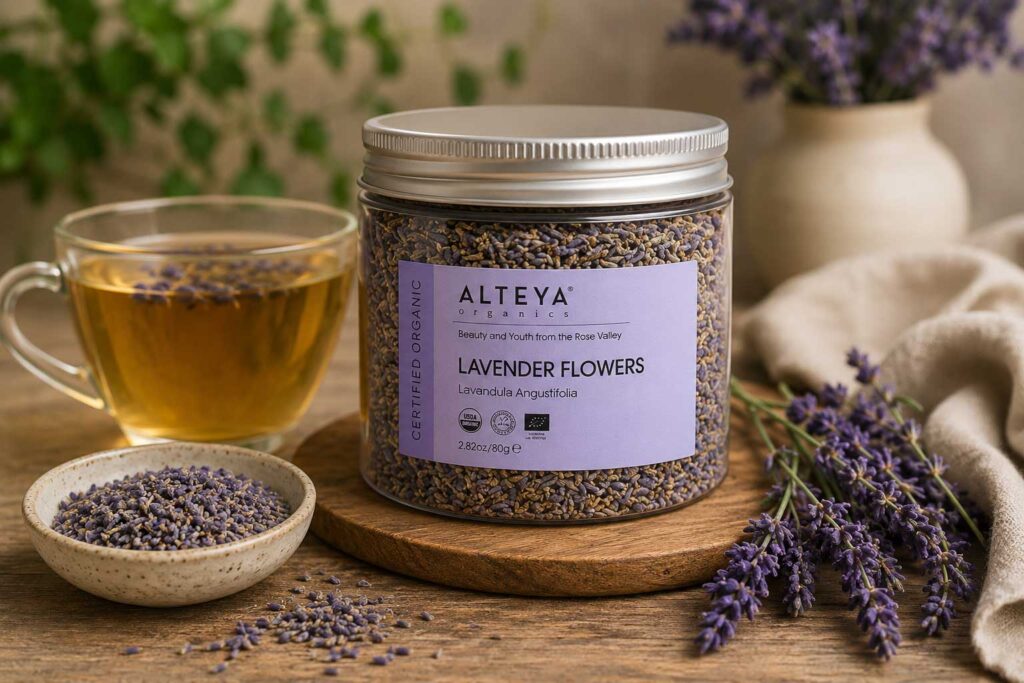
Bulgaria is well known for its lavender fields, and the fragrant purple flowers aren’t used only for essential oil and cosmetics. Dried lavender (Lavandula angustifolia) flowers can also be steeped to make a delicate, aromatic herbal tea.
Lavender is cultivated in several parts of Bulgaria, particularly in regions with sunny conditions and well-drained soils. In summer, the flowering fields create some of the country’s most beautiful agricultural landscapes.
What Does Lavender Tea Taste Like?
Lavender tea has a distinctive floral aroma with a lightly sweet, herbal flavor. A small amount goes a long way. If too much lavender is used or the flowers are steeped for too long, the infusion can become surprisingly strong and slightly bitter.
Pure lavender tea is naturally caffeine-free and can be served hot or chilled. It also blends particularly well with chamomile, lemon balm, mint, and rose.
Why Is Lavender Tea Popular?
Lavender has traditionally been associated with calm and relaxation, so it’s a familiar ingredient in evening and bedtime herbal blends. Its aroma is a large part of the experience, making lavender tea a good choice for people who enjoy strongly fragrant herbal infusions.
Research has explored lavender for several potential effects, but drinking lavender tea shouldn’t be presented as a treatment for anxiety, insomnia, digestive problems, or other medical conditions.
When buying Bulgarian lavender tea, choose culinary or food-grade dried lavender intended for consumption. Lavender sold for crafts, fragrance, or decorative purposes isn’t necessarily suitable for brewing as tea.
5. Bulgarian Dandelion Root Tea
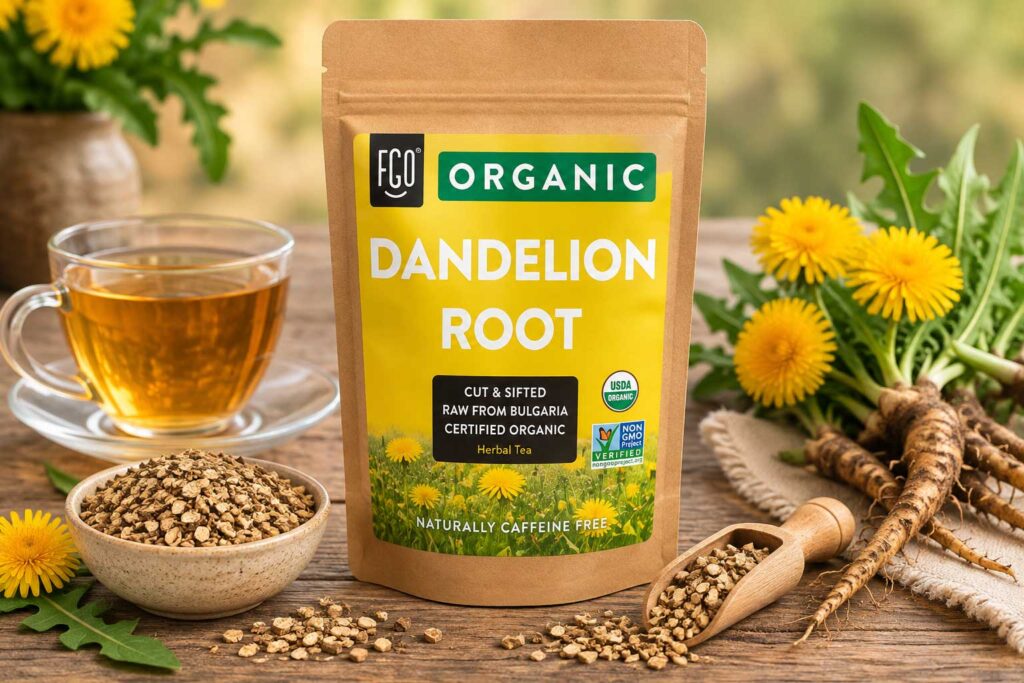
Dandelion (Taraxacum officinale) is a familiar plant throughout Bulgaria, growing in meadows, fields, gardens, and mountain areas. While its young leaves can be eaten, the dried root is also used to prepare a distinctive caffeine-free herbal drink.
Dandelion root tea is quite different from the floral Bulgarian teas on this list. It is a better choice for people who prefer deeper, earthier flavors rather than the fragrance of rose or lavender.
What Does Dandelion Root Tea Taste Like?
Dried dandelion root produces an earthy, slightly bitter herbal infusion. When the root is roasted before brewing, the flavor becomes darker and richer, sometimes with toasted or mildly nutty notes.
Because of that deeper flavor, roasted dandelion root is sometimes enjoyed as a caffeine-free alternative to coffee, although it doesn’t taste exactly like coffee and naturally contains no caffeine.
Traditional Uses of Dandelion Root
Dandelion has a long history of use in European herbal traditions, particularly in preparations associated with digestion. The plant naturally contains several nutrients and bioactive compounds, and researchers continue to investigate their potential properties.
However, many of the stronger claims commonly made online about dandelion — including claims involving the liver, cholesterol, blood pressure, and disease treatment — go beyond what can reasonably be promised from drinking a cup of herbal tea.
When buying Bulgarian dandelion root for brewing, look for pure dried or roasted root intended for food use, without unnecessary additives or artificial flavorings.
6. Bulgarian Lemon Balm Tea
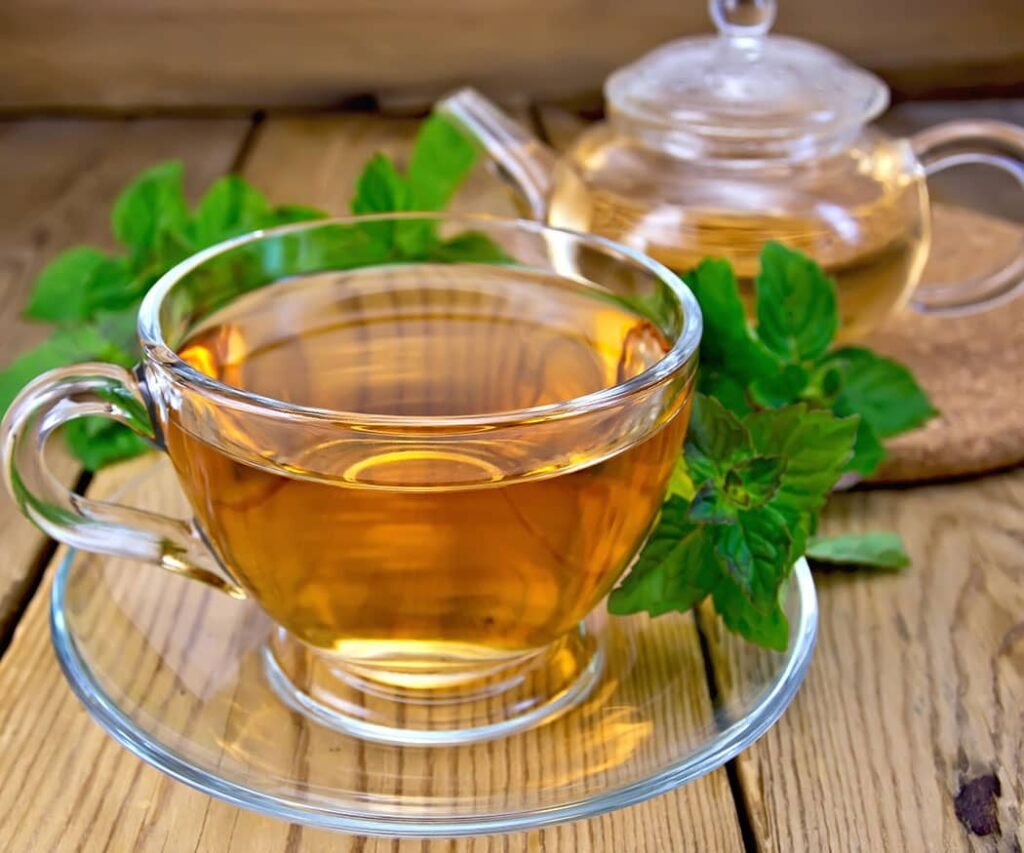
Lemon balm (Melissa officinalis), known as matochina (маточина) in Bulgarian, is an aromatic herb from the mint family. It has been used in European herbal traditions for centuries and is commonly grown or gathered in Bulgaria.
Despite its name, lemon balm isn’t related to lemons. The name comes from the fresh leaves’ distinctive lemon-like fragrance, which makes it one of the more refreshing herbs used for Bulgarian herbal tea.
What Does Lemon Balm Tea Taste Like?
Lemon balm produces a mild herbal infusion with a gentle citrus aroma and subtle natural sweetness. Dried lemon balm usually tastes softer and less bright than the freshly picked leaves, but it retains its characteristic lemony fragrance.
It can be brewed on its own or combined with mint, chamomile, lavender, or other aromatic herbs. Pure lemon balm tea is naturally caffeine-free.
A Traditional Calming Herb
Lemon balm has traditionally been used as a calming herb and as part of herbal preparations associated with digestion and relaxation. Modern research has also investigated Melissa officinalis and its naturally occurring plant compounds, although the evidence varies depending on the specific use being studied.
For everyday drinking, its biggest attraction may simply be its flavor. Lemon balm is gentle enough to drink on its own but aromatic enough that it doesn’t need added flavorings.
In Bulgarian herbal shops, you may see lemon balm sold by its botanical name, Melissa officinalis, or simply as Melissa tea.
7. Bulgarian Rosehip Tea
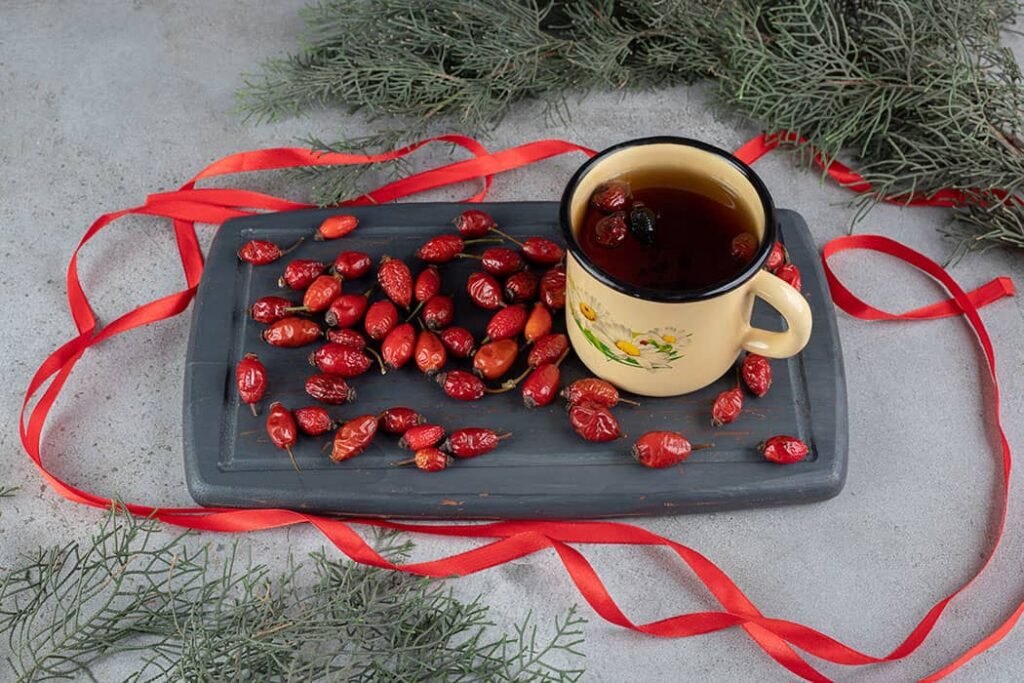
Rosehips are the small red or orange fruits that develop on rose plants after the flowers fade. Known as shipka (шипка) in Bulgarian, they are one of the most familiar ingredients in traditional Bulgarian herbal teas.
Wild rosehips grow in many parts of Bulgaria, including along woodland edges, hillsides, meadows, and mountain paths. They are usually harvested when ripe, then dried for later use in tea and other foods.
What Does Rosehip Tea Taste Like?
Rosehip tea has a fruity, pleasantly tart flavor that sets it apart from leafy or floral herbal teas. Depending on how concentrated it is, the infusion can range from mildly tangy to quite sharp.
It can be enjoyed on its own, or sweetened with a little honey to soften its tartness. Rosehip is also commonly combined with hibiscus in commercial blends, although hibiscus can contribute much of the deep red color and tartness associated with those teas.
Pure rosehip tea is naturally caffeine-free.
Rosehips and Vitamin C
Rosehips are naturally known for their vitamin C content and also contain carotenoids, polyphenols, and other plant compounds. However, vitamin C is sensitive to heat, processing, and storage, so the amount present in fresh rosehips isn’t necessarily the amount that ends up in a prepared cup of tea.
In Bulgaria, rosehips have traditionally been used for more than herbal infusions. They can also be made into syrups, jams, marmalades, and other preserves, making them a familiar part of the country’s wild-food tradition.
For Bulgarian rosehip tea, look for dried rosehip fruit intended for brewing, preferably with the country of origin clearly identified if buying it specifically as a Bulgarian product.
8. Bulgarian St. John’s Wort Tea
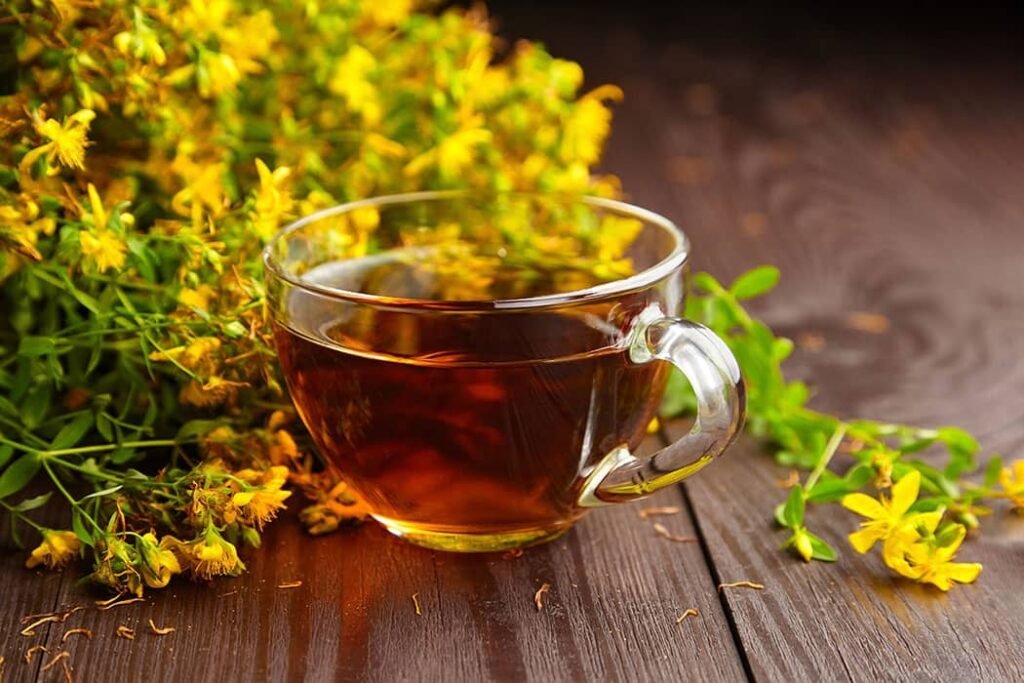
St. John’s wort (Hypericum perforatum) is a yellow-flowering herb that grows wild in many parts of Bulgaria. Known as zhalt kantarion (жълт кантарион), it has a long history in Bulgarian and wider European herbal traditions.
The flowering tops are typically gathered during the blooming season and dried for use in herbal preparations, including tea.
What Does St. John’s Wort Tea Taste Like?
St. John’s wort produces a mild, earthy herbal infusion with slightly bitter notes. Its flavor is less distinctive than rose, lavender, or lemon balm, so it is sometimes combined with other herbs in traditional tea blends.
Tea prepared only from St. John’s wort is naturally caffeine-free.
Traditional Uses and an Important Precaution
St. John’s wort is probably best known for its traditional association with mood and emotional well-being. Extracts of Hypericum perforatum have also been extensively studied, including research on their use for mild-to-moderate depression.
However, St. John’s wort is not an herb to use casually if you take medication. It can interact with numerous medicines by affecting the way the body processes them. These interactions can involve certain antidepressants, hormonal contraceptives, blood thinners, transplant medications, and other prescription drugs.
The concentration found in a cup of tea may differ from standardized extracts used in clinical research, so findings from supplements shouldn’t automatically be applied to St. John’s wort tea.
If you take prescription medication, are pregnant or breastfeeding, or have a medical condition, speak with a qualified healthcare professional before regularly using St. John’s wort.
When buying Bulgarian St. John’s wort for tea, look for properly identified Hypericum perforatum sold specifically as a food-grade herbal product.
9. Bulgarian Chamomile and Lavender Tea

Chamomile and lavender make one of the most naturally complementary Bulgarian herbal tea combinations. Both aromatic plants are cultivated in Bulgaria, and their dried flowers can be blended into a gentle, fragrant infusion.
Chamomile, known as laika (лайка) in Bulgarian, has a long place in Bulgarian households and traditional herbal preparations. Combined with the stronger fragrance of lavender, it creates a tea that is particularly well suited to slow evenings and colder months.
What Does Chamomile and Lavender Tea Taste Like?
Chamomile has a soft floral flavor with subtle apple-like notes, while lavender adds a more pronounced floral and herbal aroma.
The key is balance. Lavender can easily dominate a blend, so a good chamomile and lavender tea usually contains considerably more chamomile than lavender.
Both herbs are naturally caffeine-free.
A Popular Evening Herbal Blend
Chamomile and lavender are commonly associated with relaxation, which is why the combination often appears in evening and bedtime teas. Chamomile in particular has been studied for several potential properties, although drinking the tea shouldn’t be treated as a cure for insomnia, anxiety, digestive disorders, or other medical conditions.
You can also make the blend yourself using dried food-grade flowers. Start with mostly chamomile and a small amount of lavender, then adjust the proportions according to your taste.
For an even more Bulgarian-inspired herbal blend, try adding a little lemon balm, mint, rose, or Mursal tea.
10. Bulgarian Motherwort Tea
Motherwort (Leonurus cardiaca) is another herb found in Bulgaria and used in traditional European herbal practices. In Bulgarian, it is known as dyavolska usta (дяволска уста), a name that translates literally as “devil’s mouth.”
The plant belongs to the mint family and can be recognized by its upright stems, deeply divided leaves, and small pinkish flowers. The flowering aerial parts are typically dried for herbal preparations.
What Does Motherwort Tea Taste Like?
Motherwort is one of the more bitter herbal teas on this list. Its flavor is distinctly earthy and medicinal rather than floral or naturally sweet.
Because of that bitterness, motherwort isn’t likely to be the first Bulgarian tea we’d recommend purely for flavor. People who use it as an herbal infusion may combine it with more aromatic herbs, although honey can also soften the taste.
Like the other pure herbal infusions in this guide, motherwort tea is naturally caffeine-free.
Traditional Uses of Motherwort
Motherwort has a long history in European herbal traditions, particularly in preparations associated with the heart, nervous system, and women’s health. Researchers have identified several naturally occurring compounds in Leonurus cardiaca and continue to investigate their biological properties.
That traditional history shouldn’t be interpreted as evidence that motherwort tea can lower blood pressure, prevent blood clots, treat anxiety, or replace medical treatment.
Motherwort may not be suitable for everyone. Pregnant women and people taking certain medications should be especially cautious. If you’re considering using it regularly for a specific health purpose, speak with a qualified healthcare professional first.
For brewing, choose correctly identified Leonurus cardiaca sold specifically as a food-grade herb rather than ornamental or gardening material.
Other Bulgarian Herbs Used for Tea
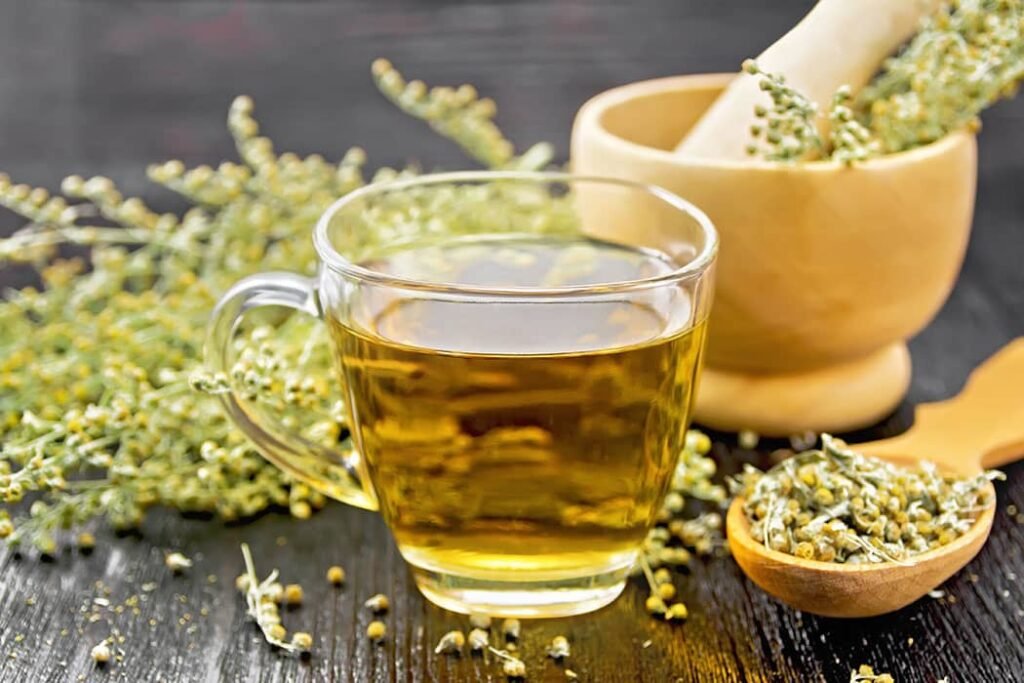
The 10 teas above represent only a small part of Bulgaria’s herbal tradition. Walk through a Bulgarian market, herbal shop, or mountain village and you’ll often find dried plants sold individually or combined into blends known simply as bilkov chai.
Here are several other herbs commonly associated with Bulgarian herbal infusions.
Mint
Mint (мента) is one of the most familiar herbs in Bulgaria and is widely used for tea. It produces a refreshing, cooling infusion that can be enjoyed hot or cold and combines easily with lemon balm, chamomile, or other mountain herbs.
Thyme
Wild thyme (мащерка) grows in sunny and rocky areas throughout Bulgaria. Its tiny flowers and leaves produce a strongly aromatic tea with an earthy, slightly savory character.
Linden Blossom
Linden blossom (липов цвят) is a traditional seasonal favorite. When linden trees flower in early summer, their fragrance can fill entire streets and parks. The dried blossoms produce a gentle, aromatic infusion that Bulgarians often enjoy with honey.
Elderflower
The fragrant white flowers of elder (бъз) are used in Bulgaria for herbal infusions as well as homemade syrups and refreshing drinks. Elderflower has a light floral aroma and pairs particularly well with lemon.
Yarrow
Yarrow (бял равнец) is another wild herb found in Bulgarian meadows and mountain areas. Its tea has a noticeably herbal and somewhat bitter taste, so it is often more appealing as part of a blend than on its own.
Wormwood
Wormwood (Artemisia absinthium), known as пелин in Bulgarian, also has a long history in European herbal traditions. It is intensely bitter and contains naturally occurring compounds that mean it isn’t suitable for unrestricted or prolonged consumption.
For that reason, wormwood isn’t one of our recommended everyday Bulgarian herbal teas. Anyone considering it for a specific health purpose should first check whether it is appropriate for them, particularly during pregnancy or when taking medication.
Mixed Bulgarian Mountain Tea
You may also encounter packages labeled simply Bulgarian mountain tea or планински чай. Unlike Mursal tea, which refers to a particular plant, these can be blends containing several herbs such as thyme, mint, lemon balm, chamomile, St. John’s wort, or other locally gathered plants.
Because there is no single recipe, always check the ingredient list. Part of the fun is that blends from different Bulgarian regions can taste noticeably different.
What Does Bulgarian Herbal Tea Taste Like?
There isn’t one flavor that defines Bulgarian herbal tea. The taste depends entirely on the plants in the cup, and Bulgaria’s wide variety of herbs means you can find everything from delicate floral infusions to tart fruit teas and intensely bitter medicinal herbs.
Floral and Fragrant
If you prefer gentle floral flavors, start with Bulgarian rose, chamomile, or lavender tea. Rose is delicate and aromatic, chamomile is softer with subtle apple-like notes, while lavender has a stronger fragrance and should usually be brewed more lightly.
Fresh and Herbal
Lemon balm, mint, and Mursal tea fall toward the fresher, more herbal side. Lemon balm brings a mild citrus character, mint is cooling and refreshing, and Mursal tea has a gentle earthy and slightly floral flavor.
These are good choices for someone trying Bulgarian mountain herbs for the first time.
Fruity and Tart
For something brighter, rosehip tea is one of the best options. Its naturally tangy, fruity character is quite different from leafy herbal infusions and pairs particularly well with honey.
Earthy and Bitter
Nettle and dandelion root have deeper, earthier flavors. Roasted dandelion root can develop toasted notes, while nettle has a distinctly green, grassy character.
Motherwort, yarrow, and especially wormwood are considerably more bitter. These herbs have traditionally been used for specific purposes rather than simply because they make an easy everyday drink.
Try Bulgarian Herbal Tea With Honey
Honey is probably the simplest accompaniment to Bulgarian herbal tea. It works especially well with Mursal tea, rosehip, chamomile, thyme, and mountain-herb blends.
Lemon is another common addition, particularly with Mursal tea, mint, and rosehip.
Before adding anything, however, taste the tea on its own. A good Bulgarian herb often has enough aroma and character that it needs very little else.
How to Prepare Bulgarian Herbal Tea
Most Bulgarian herbal teas are simple to prepare, but there isn’t one brewing method that works perfectly for every herb. Delicate flowers and leaves usually need only steeping, while tougher roots and stems may benefit from a longer infusion or gentle simmer.
Always check the instructions supplied with the herb, especially when preparing less familiar plants.
Brewing Dried Leaves and Flowers
For herbs such as chamomile, lemon balm, mint, lavender, nettle, and rose buds, place the dried herb in a cup or teapot and pour hot water over it.
Cover the cup or pot while the herbs steep. This helps retain some of the aromatic compounds that would otherwise escape with the steam.
A typical infusion takes around 5–10 minutes, although the ideal time depends on the herb and how strong you like your tea.
Preparing Mursal Tea
Mursal tea is often sold as whole dried flowering stems rather than loose leaves. Place a few stems in hot water and allow them to steep until the water develops a pale golden color and the characteristic mountain-herb aroma.
Some people gently simmer the stems for several minutes for a stronger infusion.
Preparing Roots and Fruits
Harder ingredients such as dandelion root and dried rosehips generally need more time than delicate flowers.
Crushed rosehips can be steeped for a longer period to extract their fruity flavor, while dried or roasted dandelion root may be gently simmered before straining.
Don’t Automatically Use More Herbs
Stronger isn’t necessarily better. Using too much lavender, motherwort, wormwood, or another naturally intense herb can make a cup unpleasantly bitter or overpowering.
Start with the preparation instructions on the package and adjust for taste only when appropriate.
Honey or Lemon?
Both work beautifully with many Bulgarian teas.
Honey is especially good with Mursal tea, chamomile, thyme, and rosehip, while lemon adds brightness to mint, Mursal tea, and mountain-herb blends.
If you want to experience a new Bulgarian herb properly, take your first sip without either. You may discover that its natural flavor needs nothing at all.
Where Bulgarian Tea Herbs Come From
One reason Bulgarian herbal tea is so varied is that the country’s herbs come from very different landscapes. Some are cultivated commercially in agricultural regions, while others have traditionally been gathered from mountain meadows, forest edges, and wild areas.
The Rhodope Mountains
The Rhodope Mountains have a special place in Bulgaria’s herbal traditions. The region is closely associated with Mursal tea (Sideritis scardica), as well as numerous other wild mountain herbs.
Small producers and local shops throughout the Rhodopes often sell dried herbs and regional blends, making this one of the most interesting parts of Bulgaria for travelers who want to explore traditional mountain teas.
The Rose Valley
Central Bulgaria’s famous Rose Valley, around Kazanlak and Karlovo, is synonymous with Rosa damascena. Most people know the region for Bulgarian rose oil, but dried rose buds and petals can also be used for tea.
The rose harvest takes place in late spring and early summer, when freshly opened flowers are traditionally collected in the morning.
Bulgaria’s Lavender-Growing Regions
Lavender is another important aromatic crop in Bulgaria. Large fields can be found in several agricultural regions, creating spectacular purple landscapes during the flowering season.
Much of the crop is destined for essential-oil production, but food-grade dried flowers can also be used in herbal teas and blends.
Mountains, Meadows, and Forest Edges
Many familiar Bulgarian herbs aren’t tied to a single famous growing region. Nettle, rosehip, thyme, St. John’s wort, yarrow, mint, and other plants can be found across different parts of the country where conditions are suitable.
That regional diversity shows up in the tea blends, too. A mixture purchased in the Rhodopes may contain a different combination of herbs from one found in the Balkan Mountains or another region of Bulgaria.
For visitors, that regional variety is part of the appeal. A package of locally gathered herbs can be a simple way to bring home the aromas and flavors of Bulgaria’s mountains and countryside.
Potential Benefits of Bulgarian Herbal Tea
People have enjoyed herbal infusions for centuries for their flavor, warmth, and place in traditional herbal practices. The potential benefits of Bulgarian herbal tea, however, depend on the specific herb being used. Rosehip, chamomile, nettle, lemon balm, and Mursal tea all contain different naturally occurring plant compounds.
Naturally Caffeine-Free Options
Most traditional Bulgarian herbal teas don’t contain leaves from the Camellia sinensis plant and are therefore naturally caffeine-free. This makes herbs such as chamomile, rosehip, lemon balm, lavender, and Mursal tea useful alternatives for people who want to reduce their caffeine intake.
A Source of Natural Plant Compounds
Many herbs contain naturally occurring compounds such as polyphenols and flavonoids. The exact composition varies considerably between plants, which is why the potential properties of one herbal tea shouldn’t automatically be applied to another.
Relaxation and Evening Tea
Chamomile, lavender, and lemon balm are traditionally associated with relaxation and are popular ingredients in evening herbal blends. Their gentle flavors and aromas also make them pleasant choices when you want a warm drink without caffeine.
Vitamins and Antioxidants
Some Bulgarian herbs and fruits are valued for their nutritional compounds. Rosehips, for example, are naturally rich in vitamin C, although the amount that remains in a prepared cup depends on processing, storage, and preparation.
Hydration Without Added Sugar
One of the simplest benefits of herbal tea is often overlooked. When served without added sugar, it provides a flavorful way to increase fluid intake without the calories found in many sweetened beverages.
Traditional Use vs. Proven Benefits
Bulgarian folk medicine has a long history of using herbs for different purposes, but traditional use isn’t the same as proven medical effectiveness. Research into plants such as Sideritis, chamomile, lemon balm, and St. John’s wort continues, and the strength of evidence varies considerably from one herb and health claim to another.
Traditional use doesn’t necessarily mean a health benefit has been scientifically proven, and the strength of evidence varies considerably from one herb to another.
Wild-Harvested vs. Cultivated Bulgarian Herbs
Bulgarian tea herbs can come from both wild populations and cultivated fields. Neither source automatically makes a tea better; what matters is the plant species, growing conditions, harvesting practices, processing, and how carefully the final product has been handled.
Wild-Harvested Herbs
Bulgaria has a long tradition of gathering herbs from mountains, meadows, and other natural areas. Plants such as rosehip, nettle, thyme, yarrow, and St. John’s wort may be collected from the wild where harvesting is permitted.
Wild harvesting can produce wonderful herbs, but it also requires care. Plants need to be correctly identified, gathered away from contaminated areas, and harvested without damaging vulnerable populations.
Some wild plants are protected or subject to collection restrictions, so “wild-harvested” shouldn’t be interpreted as permission to pick any herb you encounter while hiking in Bulgaria.
Cultivated Bulgarian Herbs
Other aromatic plants are grown commercially. Rosa damascena and lavender are obvious examples, with fields cultivated specifically for Bulgaria’s essential-oil, cosmetic, food, and herbal industries.
Cultivation can provide producers with greater control over harvesting, consistency, and traceability while reducing pressure on wild plant populations.
Does Wild-Harvested Mean Organic?
No. Wild-harvested, natural, pesticide-free, and organic don’t all mean the same thing.
If a Bulgarian tea is marketed as certified organic, look for recognized organic certification on the packaging. A seller describing an herb as “100% natural” or “collected in the mountains” doesn’t by itself establish that the product is certified organic.
It’s worth checking carefully when shopping online, because terms such as “organic Bulgarian tea” can sometimes be used loosely.
Whether you choose cultivated or responsibly wild-harvested herbs, favor products that clearly identify the plant, country of origin, producer, and intended use.
How to Choose and Buy Bulgarian Herbal Tea
Whether you’re shopping in Bulgaria or ordering online, a few details can help you distinguish a good Bulgarian herbal tea from a generic product using Bulgarian imagery or vague marketing claims.
Check the Country of Origin
A Bulgarian flag or a picture of the Rhodope Mountains doesn’t necessarily mean the herbs were grown in Bulgaria.
Look for packaging that clearly lists Bulgaria as the country of origin. For distinctive herbs such as Mursal tea or Bulgarian rose, reputable producers may provide even more specific information about the growing region.
Look for the Botanical Name
Common names can vary between countries and sellers. A botanical name makes identification much clearer.
For example:
- Mursal tea — Sideritis scardica
- Damask rose — Rosa damascena
- Lemon balm — Melissa officinalis
- St. John’s wort — Hypericum perforatum
- Motherwort — Leonurus cardiaca
This becomes particularly important when buying less familiar herbs online.
Don’t Assume “Natural” Means Organic
If buying Bulgarian organic tea is important to you, look for recognized organic certification rather than relying on words such as “natural,” “mountain-grown,” or “wild-harvested.”
A product can be completely natural without being certified organic.
Examine the Herbs
Loose Bulgarian herbal tea should generally still resemble the plant it came from. Rose tea may contain recognizable buds or petals, chamomile should contain flower heads, and Mursal tea is often sold as distinctive dried flowering stems.
Extremely old herbs can lose much of their aroma, so fragrance can also be a useful indication of freshness once the package is opened.
Where to Buy Bulgarian Herbal Tea in Bulgaria
If you’re traveling through Bulgaria, herbal tea is relatively easy to find. Look in herbal pharmacies, specialty tea shops, markets, monastery shops, organic-food stores, souvenir shops, and small stores in mountain towns.
Regional products can be particularly interesting. The Rhodopes are an obvious place to look for Mursal tea and mountain-herb blends, while the Rose Valley is a natural place to shop for dried Rosa damascena buds and other rose products.
Buying Bulgarian Tea Online
Bulgarian herbs are also available through producers, specialty herbal retailers, and online marketplaces. Availability changes frequently, so it’s better to evaluate the actual seller and product information rather than assuming a particular listing will always be available.
Check the botanical name, ingredient list, country of origin, package size, expiration or best-before information, and whether the herb is specifically sold for food or tea use.
For products advertised as organic, check the certification rather than relying solely on the product title.
A simple package of dried herbs may not look as impressive as an elaborate souvenir box, but clear sourcing and properly identified ingredients matter far more than fancy packaging.
Bulgarian Herbal Tea Safety and Precautions
Herbal tea may seem simple because it is made from plants, but natural doesn’t automatically mean risk-free. Most familiar culinary herbs can be enjoyed by many people in ordinary amounts, while others require considerably more caution.
The safety of a Bulgarian herbal tea depends on the particular plant, the amount consumed, how frequently it is used, and the person drinking it.
Herbs Can Interact With Medications
Some herbs contain biologically active compounds that can affect medications. St. John’s wort is an especially important example because it is known to interact with numerous medicines.
If you regularly take prescription medication, check with a qualified healthcare professional before using medicinal herbs frequently or in concentrated preparations.
Take Extra Care During Pregnancy
Pregnancy and breastfeeding are times to be particularly careful with unfamiliar herbal products. An herb being traditionally used for generations doesn’t necessarily establish that it is appropriate during pregnancy.
Motherwort and wormwood, for example, aren’t herbs we would recommend using during pregnancy without professional medical guidance.
Tea Isn’t the Same as an Extract or Supplement
Research involving a concentrated herbal extract doesn’t necessarily tell us what happens when someone drinks an ordinary cup of tea made from the same plant.
Dosage, preparation, extraction methods, and concentrations can differ enormously. For that reason, findings from concentrated herbal supplements shouldn’t automatically be applied to an ordinary cup of tea.
Correct Identification Matters
When purchasing loose herbs, particularly from online marketplaces, choose sellers that provide the botanical name and clear product information.
If gathering herbs yourself, don’t consume a wild plant unless you can identify it confidently and know that collection is permitted in that location. Some plants can be confused with other species, and certain wild plants in Bulgaria are protected or subject to harvesting restrictions.
Don’t Replace Medical Treatment With Herbal Tea
Bulgarian herbal traditions are fascinating and worth preserving, but herbal tea shouldn’t be used as a substitute for prescribed medication or necessary medical care.
Enjoy these herbs primarily for their flavor, aroma, cultural tradition, and connection with Bulgaria’s landscape. When using an herb specifically for a health condition, discuss it with an appropriately qualified healthcare professional.
Bulgarian Herbal Tea FAQ
What Is the Most Famous Bulgarian Herbal Tea?
Mursal tea (Sideritis scardica) is one of the most distinctive herbal teas associated with Bulgaria, particularly the Rhodope Mountains. Bulgaria is also well known for herbal products made from Rosa damascena, lavender, rosehip, chamomile, and other locally grown or gathered plants.
What Is Mursal Tea?
Mursal tea, or Mursalski chai, is an herbal infusion made from Sideritis scardica. The plant grows in mountainous areas of the Balkans and has especially strong ties to Bulgaria’s Rhodope Mountains. The dried flowering stems produce a mild, earthy, slightly floral infusion.
Is Bulgarian Herbal Tea Caffeine-Free?
Most of the Bulgarian herbal teas in this guide are naturally caffeine-free because they aren’t made from the Camellia sinensis tea plant. Mursal tea, rosehip, chamomile, rose, lavender, nettle, and lemon balm are examples.
Always check the ingredients in a blend, however, because some products may combine Bulgarian herbs with black or green tea.
What Tea Do Bulgarians Drink?
Bulgarians drink both conventional tea and a wide variety of herbal infusions. Popular herbs include chamomile, mint, thyme, linden blossom, lemon balm, rosehip, and Mursal tea. Herbal mixtures are commonly sold as bilkov chai (herbal tea) or mountain tea.
Is Bulgaria Famous for Herbal Tea?
Bulgaria has a strong tradition of cultivating and gathering aromatic and medicinal plants. Its mountains, valleys, and agricultural regions support many herbs used for teas, foods, essential oils, cosmetics, and traditional preparations.
The country is especially associated internationally with Rosa damascena and lavender, while Mursal tea, meanwhile, is one of the herbs most closely identified with Bulgaria’s mountain-tea tradition.
Is Bulgarian Organic Tea Always Wild-Harvested?
No. Organic and wild-harvested aren’t interchangeable terms. An herb can be cultivated and certified organic, while a wild-harvested herb isn’t automatically certified organic.
If organic production matters to you, check the product for recognized certification and clear sourcing information.
Can I Bring Bulgarian Herbal Tea Home From Bulgaria?
Packaged dried tea is a popular Bulgarian souvenir, but agricultural import rules vary by destination and can change. If you’re traveling internationally, check the current customs and agricultural regulations of the country you’re entering before packing loose herbs or other plant products.
Where Can I Buy Bulgarian Herbal Tea?
In Bulgaria, look in herbal pharmacies, markets, specialty tea shops, organic-food stores, monastery shops, and stores in mountain towns. Bulgarian teas can also be purchased online from producers and specialty herbal retailers.
For the best chance of getting an authentic product, check the country of origin, botanical name, ingredient list, and producer information rather than relying only on the word “Bulgarian” in the product title.
Final Thoughts on Bulgarian Herbal Tea
Bulgaria’s herbal traditions are another way to experience the country’s mountains, valleys, villages, and agricultural heritage. A cup of Bulgarian herbal tea can carry the fragrance of roses from central Bulgaria, lavender from sun-filled fields, rosehips gathered from the countryside, or mountain herbs associated with the Rhodopes.
If you’re trying Bulgarian tea for the first time, Mursal tea is the one I would start with. It has a particularly strong connection with Bulgaria and a mild flavor that makes it approachable even if you don’t normally drink herbal tea.
After that, try Bulgarian rose tea for something floral, rosehip for a fruitier and more tart infusion, lemon balm for its fresh citrus aroma, or chamomile and lavender when you want something gentle and fragrant.Bulgaria has over 2600 species essential small and other herbs and more than 600 of them are used, and about 300 are collected all year round.
And if you’re buying tea as a souvenir from Bulgaria, don’t worry too much about finding the fanciest package. Check the plant name, origin, ingredients, and producer. Some of the most memorable Bulgarian teas come in very simple bags filled with nothing more than carefully dried herbs.
Have you tried Mursal tea or another Bulgarian herbal tea? Let us know which one you enjoyed most and where in Bulgaria you discovered it.
Share your Bulgarian tea experience with us on Instagram by tagging @stunningbulgaria and using #stunningbulgaria — we’d love to see what you’re drinking and where you discovered it.
Planning a Trip to Bulgaria?
If Bulgarian tea has inspired you to discover more of the country, explore our guide to the Top 10 Places to Visit in Bulgaria for some of Bulgaria’s most memorable destinations. Traveling on a budget or planning a more independent adventure? Our Best Places for Backpackers in Bulgaria guide has more ideas for where to go next.