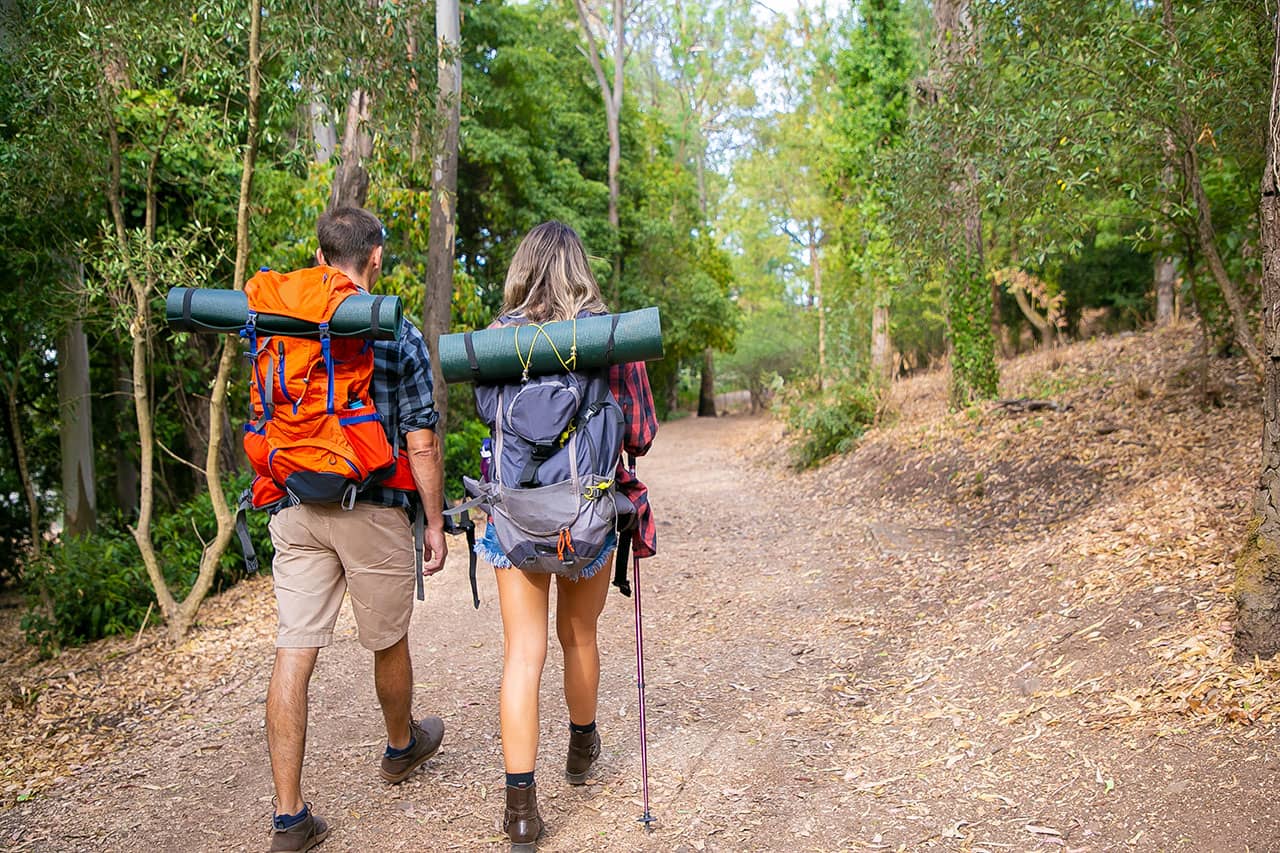
Bulgaria is an excellent country for backpackers who want to explore Europe without the high costs found in many of the continent’s better-known destinations. A single trip can take in historic cities, mountain trails, traditional villages, monasteries, and the Black Sea coast, while buses and trains connect most major stops.
The best places for backpackers in Bulgaria range from lively Sofia and ancient Plovdiv to the trails of the Rila and Pirin Mountains, the old streets of Veliko Tarnovo, and quieter stretches of the southern Black Sea coast. Distances are relatively short, so even a week can include several very different parts of the country.
You can spend one day exploring Roman ruins, the next hiking beside alpine lakes, and a few days later wake up near a sandy Black Sea beach. Hostels, guesthouses, inexpensive local restaurants, and public transportation help keep the trip manageable on a backpacker’s budget.
This guide covers the places most worth adding to a Bulgaria backpacking route, along with practical advice on transportation, accommodation, costs, and planning an itinerary.
Why Bulgaria Is Great for Backpackers
Bulgaria works especially well for independent travelers because a trip does not have to revolve around one type of experience. Cities, mountains, historic towns, monasteries, villages, and beaches are close enough to combine without spending most of your time in transit.
Bulgaria Is Still Affordable by European Standards
Accommodation, public transportation, and everyday meals can cost considerably less than in many popular destinations in Western and Northern Europe. Backpackers can stay in hostels or family-run guesthouses, eat at bakeries and traditional restaurants, and travel between cities without needing a large daily budget.
Prices rise in popular ski and seaside resorts during peak season, but careful planning can still keep costs reasonable.
You Can See a Lot Without a Car
A car gives you more freedom in rural areas, but it is not essential for a first backpacking trip. Sofia, Plovdiv, Veliko Tarnovo, Varna, Burgas, and many smaller towns are connected by buses or trains.
Some mountain destinations require an additional local bus, shuttle, taxi, or hike, so those parts of the journey need a little more planning. For the main backpacking route, however, public transportation is a practical option.
Mountains and Beaches Can Be Part of the Same Trip
Few European trips let you move so easily between high mountains and the sea. Bulgaria has several major mountain ranges, including Rila, Pirin, the Rhodopes, and the Balkan Mountains, as well as nearly 380 km of Black Sea coastline.
A longer itinerary can include hiking around the Seven Rila Lakes or Pirin National Park before continuing east toward historic coastal towns and beaches.
There Is Much More Than the Major Tourist Stops
Sofia and Plovdiv are natural starting points, but some of the most memorable stops are smaller places such as Melnik, Koprivshtitsa, Tryavna, and Shiroka Laka.
These towns and villages introduce travelers to traditional Bulgarian architecture, regional food, mountain landscapes, and a slower pace that feels very different from the country’s larger cities.
Bulgaria Is Compact Enough for a Multi-Stop Itinerary
You do not need a month to see several sides of Bulgaria. With seven days, backpackers can combine two or three regions without rushing. Two weeks opens the door to a much broader route through western and central Bulgaria and onward to the Black Sea.
The key is not trying to visit everything. Choosing a logical route and spending at least a couple of nights at the larger stops usually creates a much better trip.
15 Best Places for Backpackers in Bulgaria
The best backpacking route through Bulgaria depends on how much time you have and whether your priority is history, hiking, nightlife, beaches, or smaller traditional towns. The destinations below cover a broad mix, and several can easily be combined into the same part of a trip.
Also Read: Top 10 Places to Visit in Bulgaria
1. Sofia
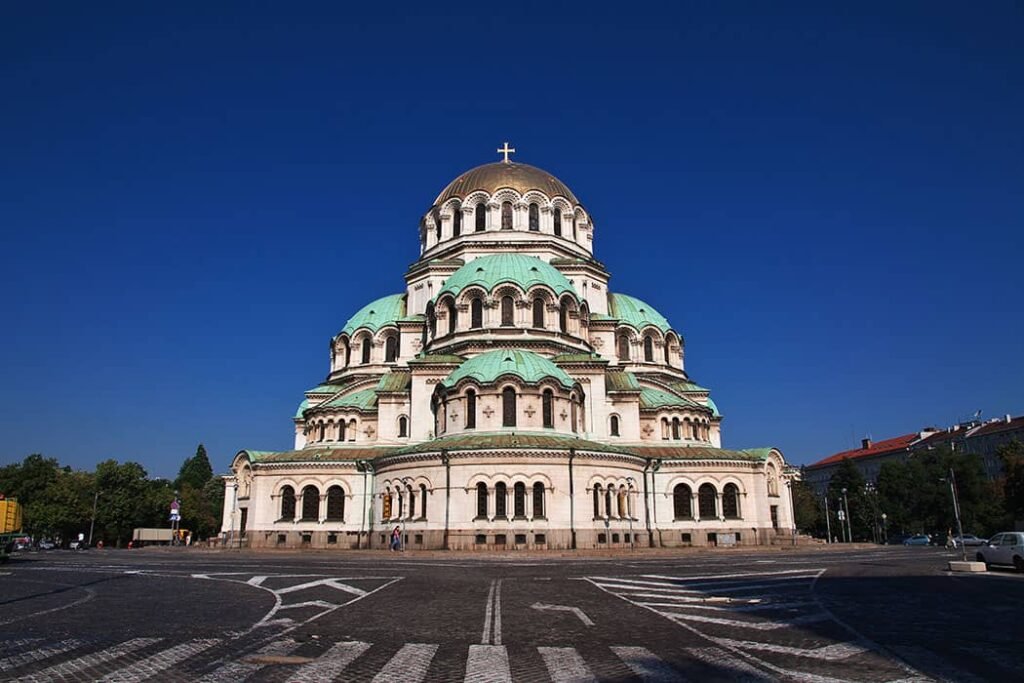
Most backpacking trips through Bulgaria begin in Sofia, and the capital deserves more than a quick arrival-and-departure stop. Roman ruins, Orthodox churches, Ottoman-era landmarks, museums, parks, restaurants, and nightlife are packed into a relatively compact center.
Start around the Alexander Nevsky Cathedral before walking toward the Church of St. Sofia, the Russian Church, the National Theatre, and the archaeological remains of ancient Serdica. Much of central Sofia can be explored on foot, while the metro makes longer journeys inexpensive and straightforward.
One of Sofia’s biggest advantages for backpackers is its location beneath Vitosha Mountain. Trails and viewpoints are close enough to turn a city stay into a hiking day without traveling to another region of Bulgaria.
The capital is also the country’s main transportation hub. Buses and trains leave for Plovdiv, Rila, Bansko, Veliko Tarnovo, the Black Sea coast, and numerous smaller destinations, so Sofia works well as the starting point for either a short trip or a longer Bulgaria backpacking itinerary.
Why backpackers should visit: Walkable historic center, good public transportation, hostel choices, nightlife, inexpensive food, and easy access to Vitosha Mountain.
How long to stay: 2–3 days.
2. Plovdiv
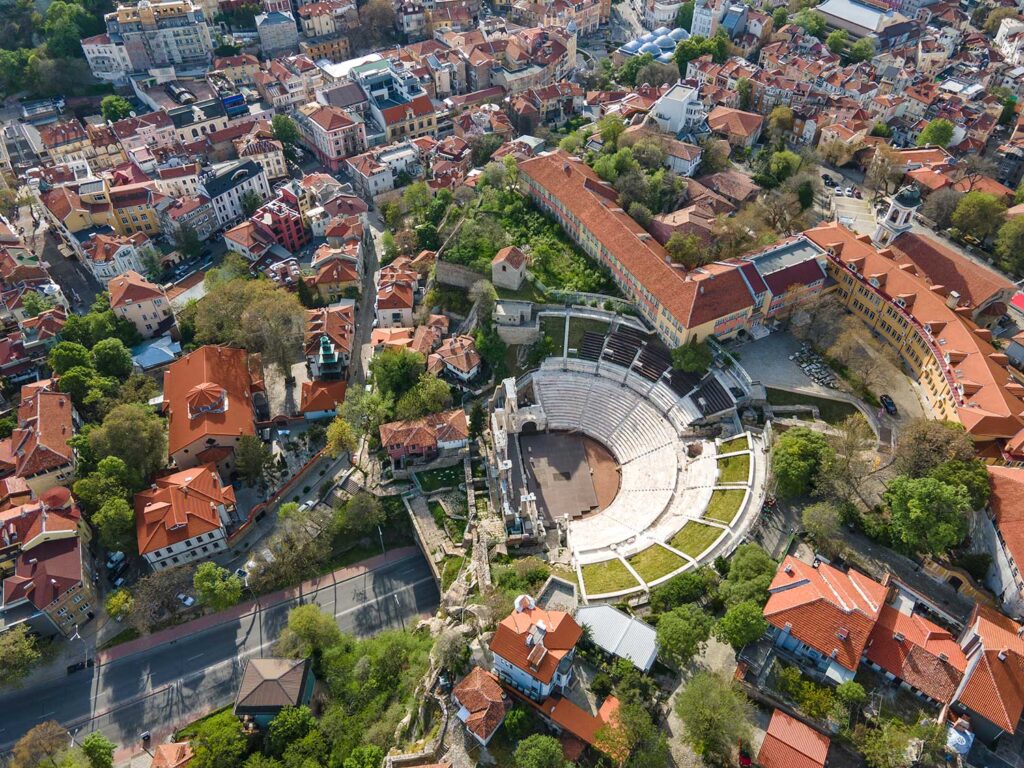
Plovdiv combines ancient history with one of Bulgaria’s most enjoyable city centers, making it an easy addition to almost any backpacking route. It is also close enough to Sofia to travel between the two without losing an entire day.
Start in the Old Town, where cobbled streets climb past colorful Bulgarian Revival houses, small museums, galleries, and historic churches. The Ancient Theatre of Philippopolis is the standout Roman landmark, while remains of the Roman Stadium can be seen directly beneath the modern pedestrian center.
For a different side of the city, walk into Kapana, the compact creative district filled with cafés, restaurants, bars, workshops, and street art. It is a good area to explore in the evening after the main historic sights begin to close.
Plovdiv is also known for its hills. Climb one around sunset for broad views across the city, with the Rhodope Mountains visible in the distance on clear days.
Most central sights are within comfortable walking distance, and accommodation ranges from hostels to inexpensive guesthouses. With frequent transport connections to Sofia and other parts of the country, Plovdiv is both easy to reach and easy to continue from.
Why backpackers should visit: Roman ruins, Bulgarian Revival architecture, a walkable center, lively evenings, and a strong mix of history and modern city life.
How long to stay: 2 days.
3. Rila Monastery
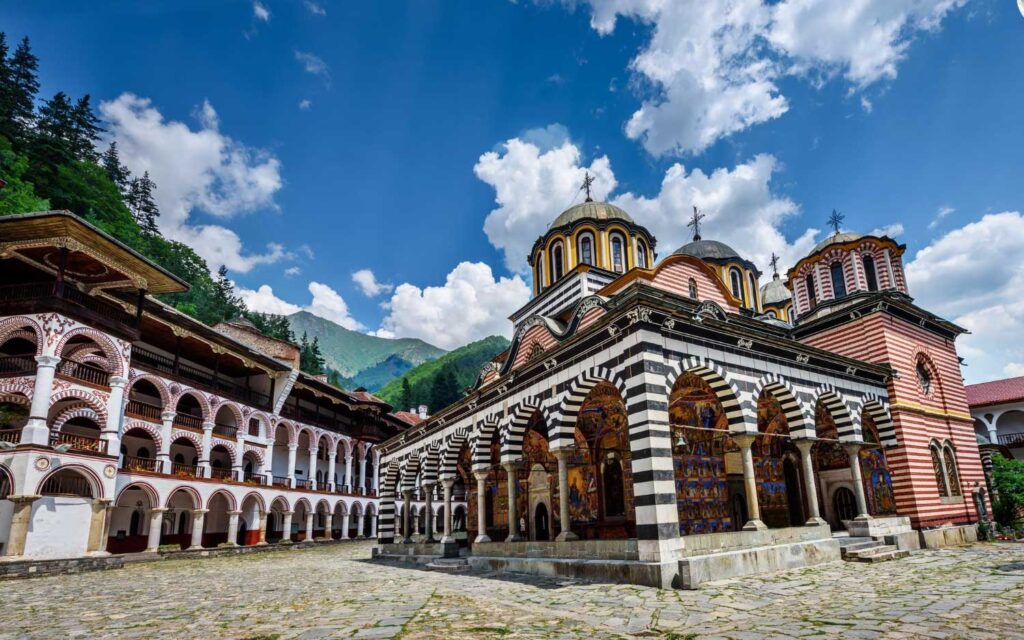
Hidden deep in the Rila Mountains, Rila Monastery deserves a place on almost any first backpacking route through Bulgaria. The monastery was founded in the 10th century and today is a UNESCO World Heritage Site surrounded by forested mountain slopes.
Walking through the entrance opens onto a large stone courtyard dominated by the striped arches and fresco-covered exterior of the main Church of the Nativity of the Virgin. The complex also includes the medieval Hrelyo’s Tower, residential buildings, and a museum containing religious and historical treasures.
You do not need a car to include Rila Monastery in a Bulgaria backpacking route, but transportation requires more planning than traveling between the major cities. Bus and shuttle options can vary by season, so check current schedules before setting out. Organized day trips from Sofia are another practical choice when public transport does not fit your itinerary.
Travelers with extra time should explore some of the surrounding Rila Mountains, too. Several walking routes begin in the area, including the trail toward the cave associated with St. Ivan of Rila.
Rila Monastery can be visited as a day trip from Sofia, although staying nearby lets you experience the mountain setting after many daytime visitors have left.
Why backpackers should visit: UNESCO-listed history, extraordinary frescoes, mountain scenery, hiking possibilities, and one of Bulgaria’s most important cultural landmarks.
How long to stay: 1 day, or overnight nearby for a slower visit.
4. Seven Rila Lakes
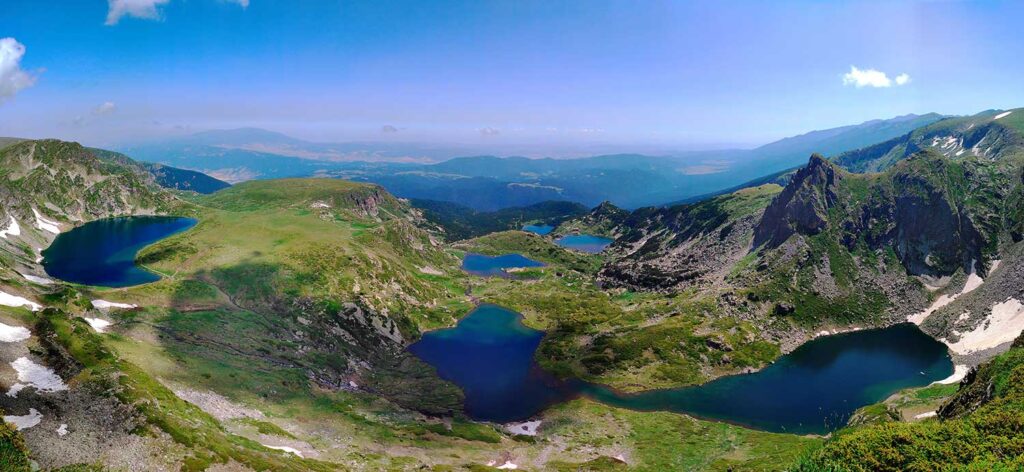
For backpackers who want to add a serious dose of mountain scenery to their trip, the Seven Rila Lakes are an obvious choice. The glacial lakes sit high in the Rila Mountains, each at a different elevation, surrounded by rocky ridges and wide alpine views.
The usual starting point is the area above Panichishte, reached via Sapareva Banya. From there, hikers generally use the chairlift to reach the higher trail network before following a loop past the lakes. The route passes lakes traditionally known as the Lower Lake, Fish Lake, Trefoil, Twin, Kidney, Eye, and Tear.
The landscape becomes more impressive as you climb. From the higher viewpoints, several lakes can be seen at once, with layers of the Rila Mountains extending beyond them.
This is not a place to rush. Mountain weather can change quickly, and even during summer, conditions at higher elevations may be very different from those in Sofia or the valleys below. Bring suitable footwear, water, sun protection, and an extra layer rather than treating the route like an ordinary city excursion.
Reaching the trailhead by public transport takes more effort than visiting Sofia or Plovdiv, but Sapareva Banya is the most practical base for travelers relying on public transport. Shared transport or a taxi for the final stretch can simplify the journey when bus connections do not line up.
Why backpackers should visit: Glacial lakes, accessible high-mountain hiking, panoramic views, and some of Bulgaria’s most recognizable alpine scenery.
How long to stay: 1 full day; 1–2 nights around Sapareva Banya if traveling entirely by public transport.
5. Bansko & Pirin Mountains
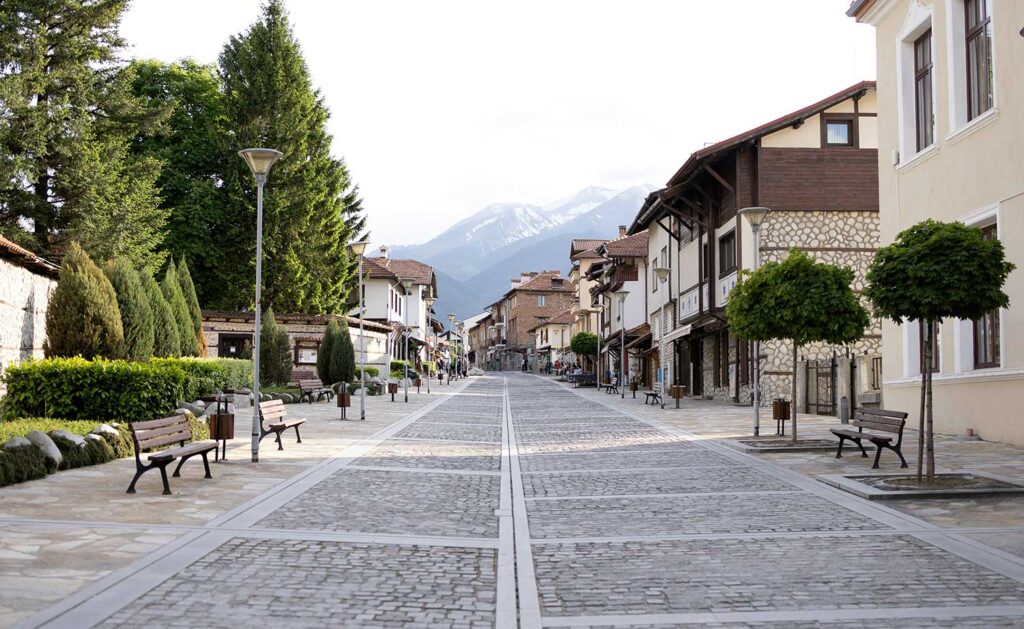
Bansko is widely known as Bulgaria’s largest ski resort, but outside winter, the real attraction lies beyond the ski slopes. The town sits at the foot of the Pirin Mountains, providing access to some of the country’s finest hiking terrain.
Spend some time in Bansko’s old quarter before heading into the mountains. Cobbled streets, stone houses, traditional taverns, and the distinctive Holy Trinity Church preserve a side of the town that is easy to miss if you stay around the modern resort zone.
During the warmer months, Pirin National Park becomes the main reason to visit. Trails lead through pine forests and rocky valleys to mountain lakes, huts, and high peaks. Experienced hikers may aim for Vihren, Bulgaria’s second-highest summit at 2,914 meters, while less demanding routes offer plenty of scenery without requiring a summit climb.
Mountain huts make Pirin especially interesting for backpackers who want more than a day hike. Multi-day routes are possible, although they require proper equipment, advance planning, and an honest assessment of hiking experience.
Bansko is connected to Sofia by bus, and the scenic narrow-gauge railway between Septemvri and Dobrinishte offers a much slower but memorable alternative for travelers with time to spare.
Why backpackers should visit: Pirin National Park, mountain hiking, affordable accommodation outside peak periods, traditional architecture, and access to multi-day trails.
How long to stay: 2–4 days, longer if you plan to hike between mountain huts.
6. Melnik

Melnik is officially Bulgaria’s smallest town, but its unusual setting gives backpackers plenty of reasons to include it on a route through southwestern Bulgaria. Traditional houses sit beneath towering sandstone formations known as the Melnik Pyramids, creating a landscape unlike anywhere else in the country.
The town itself is compact enough to explore on foot. Walk along its main street, visit the historic Kordopulov House, and wander uphill for views across the tiled rooftops and surrounding sandstone hills. Melnik’s Bulgarian Revival architecture gives the town a character very different from nearby Bansko or the larger cities.
The surrounding trails are just as interesting. A popular hike connects Melnik with Rozhen Monastery, passing through the sandstone landscape before reaching one of the region’s important Orthodox monasteries. The walk turns two separate attractions into a rewarding half-day excursion.
Melnik also lies at the heart of a long-established wine-producing area, especially associated with the local Shiroka Melnishka Loza grape. Even travelers who are more interested in hiking and history will notice how closely viticulture is tied to the region’s identity.
Because Melnik is small, you do not need several days here. It works well between Bansko and other destinations in southwestern Bulgaria, while an overnight stay allows you to experience the town after many day visitors have departed.
Why backpackers should visit: Sandstone pyramids, traditional architecture, hiking to Rozhen Monastery, compact size, and a distinctive regional atmosphere.
How long to stay: 1–2 days.
7. Veliko Tarnovo
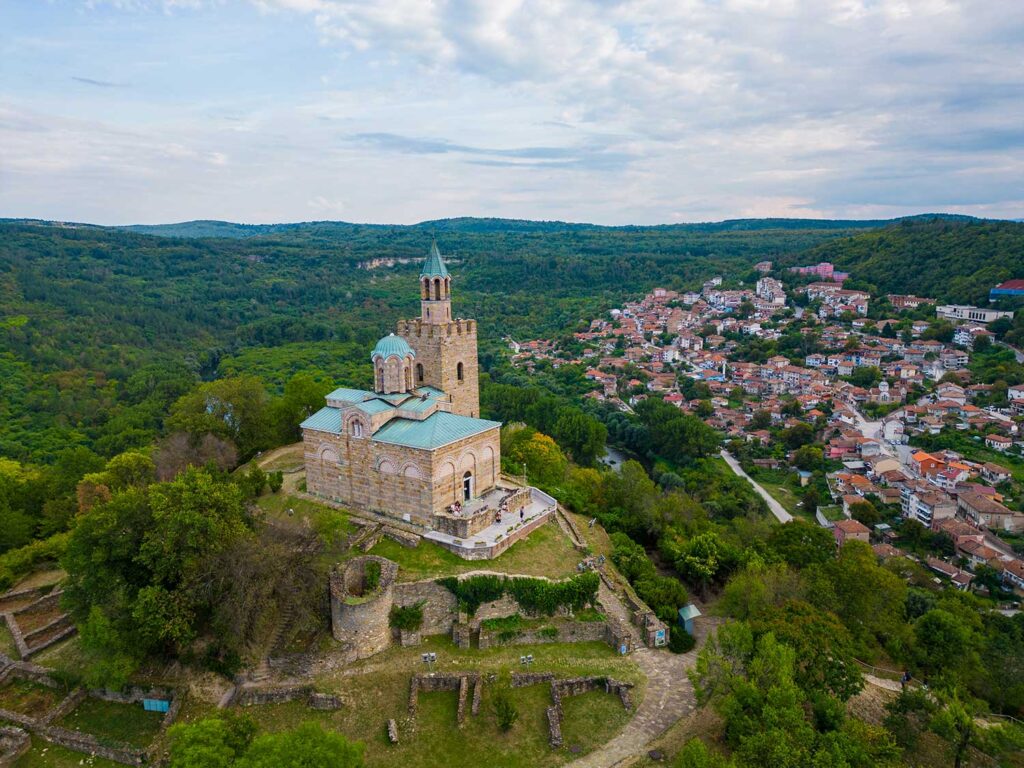
Few places in Bulgaria feel as dramatic on arrival as Veliko Tarnovo. Houses cling to steep hillsides above the winding Yantra River, while the walls and towers of Tsarevets Fortress rise across one of the city’s highest points.
Veliko Tarnovo served as the capital of the Second Bulgarian Empire, and Tsarevets is the essential first stop. Allow several hours to explore the fortified hill, archaeological remains, gates, walls, and Patriarchal Church at the summit. The elevated position also provides excellent views over the city and surrounding hills.
Back in the old town, walk along Gurko Street, where traditional houses descend toward the river, then continue to Samovodska Charshiya. This historic crafts street has workshops, small shops, cafés, and buildings that preserve some of the atmosphere of 19th-century Tarnovo.
The city’s large student population gives it more energy than its historic appearance might suggest. Backpackers will find inexpensive places to eat, casual nightlife, hostels, and guesthouses within walking distance of the central sights.
Veliko Tarnovo is also a useful base for exploring nearby destinations. The village of Arbanasi, known for its historic houses and churches, is close enough for a half-day trip, while Dryanovo Monastery and the traditional town of Tryavna can fit into a longer journey through central Bulgaria.
Why backpackers should visit: Tsarevets Fortress, medieval Bulgarian history, dramatic hilltop views, traditional streets, affordable accommodation, and a lively student atmosphere.
How long to stay: 2–3 days.
8. Tryavna
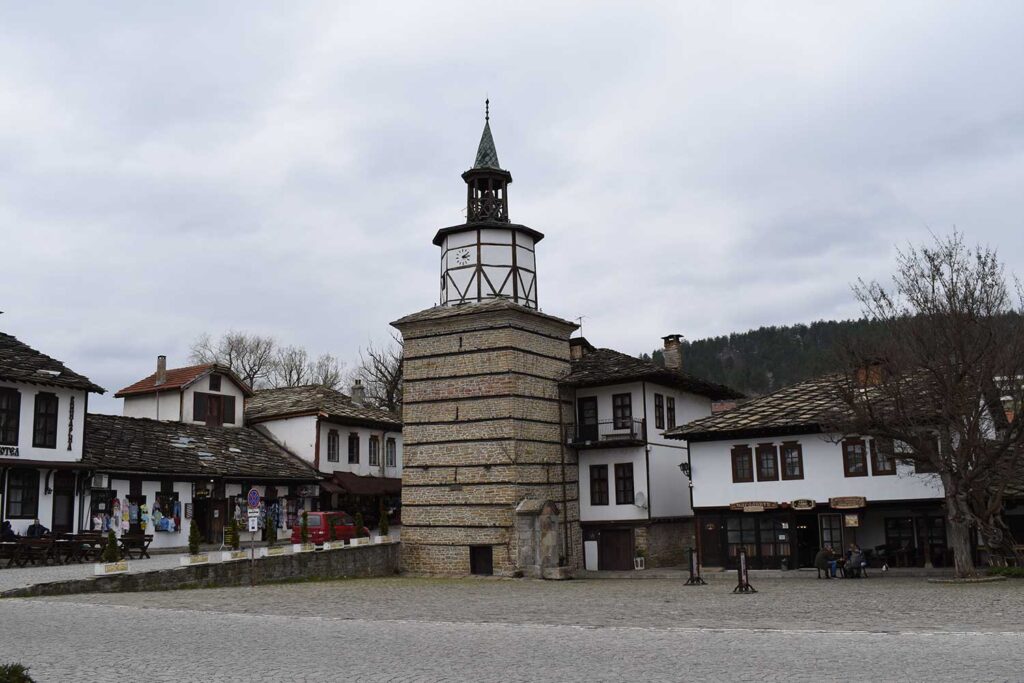
Tryavna offers a quieter change of pace after Bulgaria’s larger cities. Set in the foothills of the Balkan Mountains, the town is known for its preserved Bulgarian Revival architecture, traditional crafts, and compact historic center.
The heart of Tryavna is Captain Dyado Nikola Square, where the 19th-century Clock Tower rises above stone-paved streets and traditional houses. Beside it, the old stone bridge crosses the river and leads toward more workshops, museums, galleries, and cafés.
Tryavna developed an important school of woodcarving and icon painting during the Bulgarian National Revival. That heritage remains visible throughout the town, particularly in carved ceilings, wooden details, religious art, and workshops where traditional crafts continue.
Part of Tryavna’s appeal comes from its scale. You can explore the main sights without transportation, spend an afternoon wandering without a strict itinerary, and enjoy a slower side of Bulgaria that contrasts nicely with Sofia, Plovdiv, or the Black Sea resorts.
The surrounding hills also provide opportunities for walking and short hikes. Because Tryavna lies within central Bulgaria, it fits naturally into a route that includes Veliko Tarnovo, Gabrovo, the Etar open-air museum, or Dryanovo Monastery.
Why backpackers should visit: Preserved Revival-era streets, traditional crafts, mountain surroundings, a walkable historic center, and a relaxed atmosphere.
How long to stay: 1–2 days.
9. Koprivshtitsa
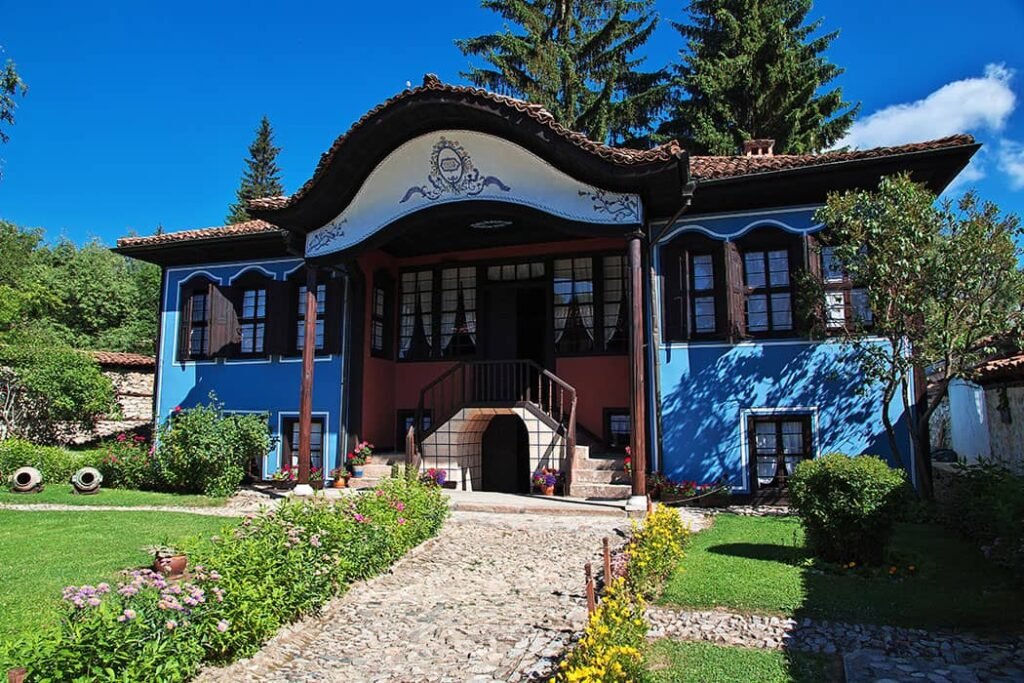
Koprivshtitsa feels very different from Bulgaria’s larger cities. Tucked into the Sredna Gora Mountains, the town is filled with colorful 19th-century houses, stone bridges, cobbled lanes, and wooded hills that make it an easy place to explore on foot.
Its importance goes far beyond architecture. Koprivshtitsa played a major role in the April Uprising of 1876 against Ottoman rule, a defining event in Bulgaria’s struggle for liberation. Several houses connected with revolutionary figures have been preserved as museums, including those associated with Todor Kableshkov, Georgi Benkovski, and Dimcho Debelyanov.
Backpackers interested in Bulgarian history will get much more from the town by visiting at least a couple of these museum houses rather than simply walking through the center. They help explain why such a small mountain settlement occupies such a prominent place in Bulgaria’s national story.
Koprivshtitsa is also a good destination for travelers who need a break from a fast itinerary. There is no huge checklist of attractions to race through. Much of the experience comes from wandering the streets, stopping at viewpoints, trying local food, and spending time among the historic houses.
The town can be reached without a car, although the railway station sits several kilometers outside the center and requires an onward bus or taxi. Check connections in advance, especially when traveling outside the busiest periods.
Why backpackers should visit: Bulgarian Revival architecture, April Uprising history, museums, mountain scenery, and a peaceful pedestrian-friendly center.
How long to stay: 1–2 days.
10. Belogradchik
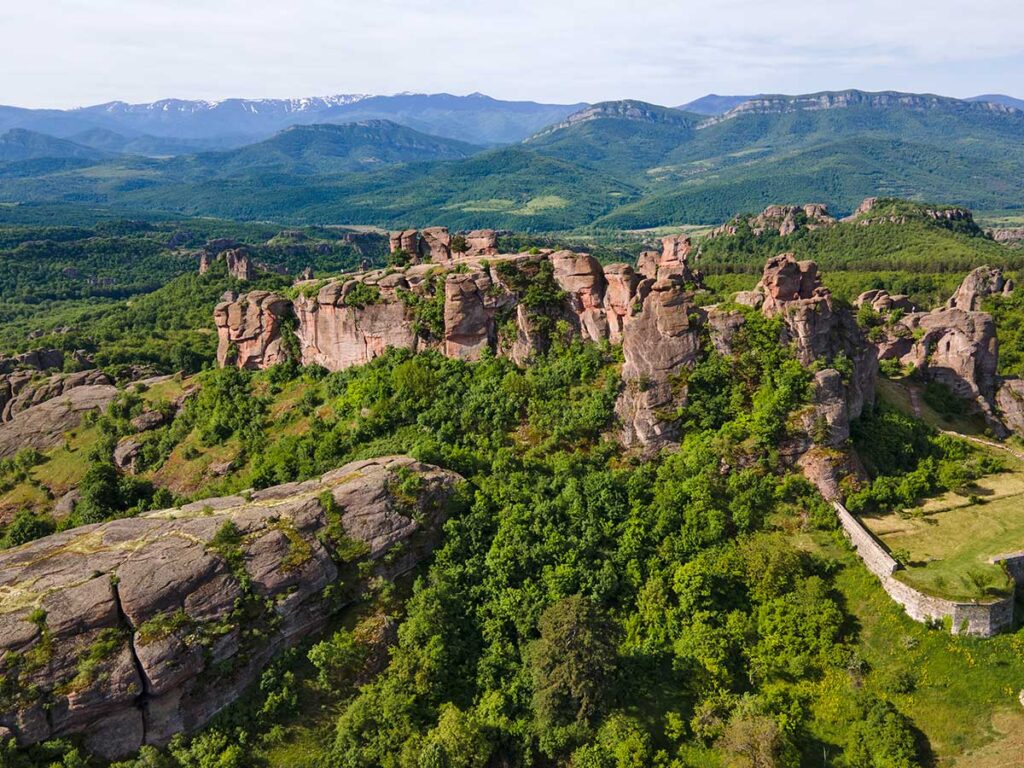
Belogradchik takes backpackers into one of the most unusual landscapes in Bulgaria. The small northwestern town is surrounded by the Belogradchik Rocks, a vast collection of reddish sandstone and conglomerate formations shaped into cliffs, pillars, towers, and natural silhouettes.
The centerpiece is Belogradchik Fortress, also known as Kaleto. Parts of the defensive complex incorporate the rocks themselves, with stone walls connecting enormous natural formations. Climbing through the fortress leads to elevated viewpoints across the surrounding landscape and toward the Balkan Mountains.
With an extra day, follow the hiking routes and viewpoints around the region rather than seeing only the formations beside town.
Another major attraction is Magura Cave, located near Rabisha northwest of Belogradchik. The cave is known for its enormous chambers, stalactites and stalagmites, and prehistoric drawings. Reaching it without a car can be less straightforward, so backpackers should check current local transportation or arrange a taxi before planning the excursion.
Belogradchik requires more effort to reach than Sofia, Plovdiv, or Veliko Tarnovo, which is part of why fewer international travelers include it. Public transport connections can be limited, and schedules deserve checking in advance. If your itinerary has room for the detour, Belogradchik is a good reason to venture into a part of Bulgaria many visitors skip.
Why backpackers should visit: Belogradchik Rocks, the rock-built fortress, hiking, unusual geology, Magura Cave, and far fewer visitors than Bulgaria’s main tourist centers.
How long to stay: 1–2 days.
11. Varna
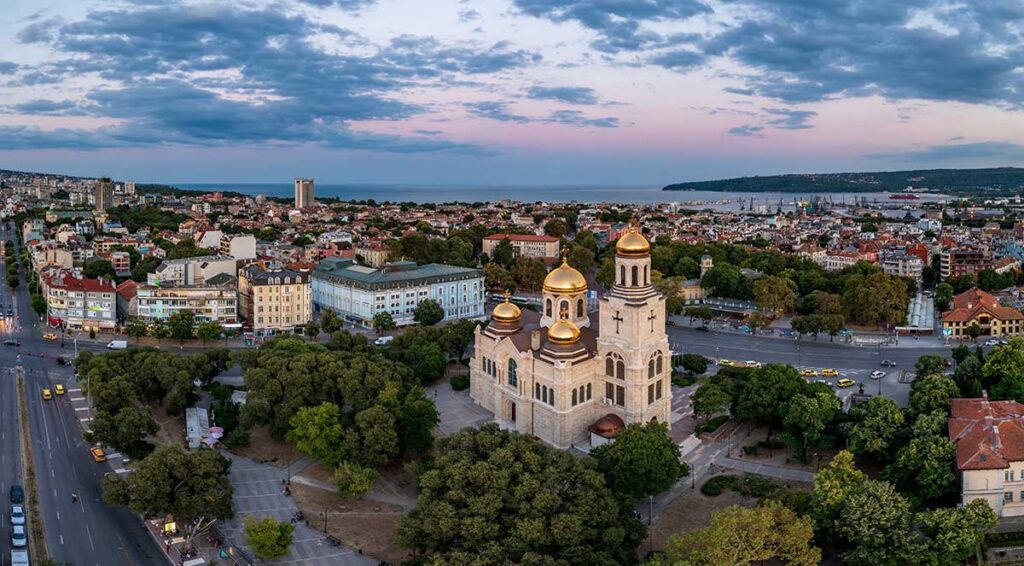
After several days of mountains and historic towns, arriving in Varna shifts the trip toward the Black Sea. The country’s largest city on the Black Sea combines beaches, archaeological sites, nightlife, parks, and easy access to other destinations along the northern coast.
The Sea Garden is one of the best places to begin. This enormous waterfront park runs alongside the coast, with walking paths leading toward viewpoints and beaches. In summer, the area stays lively well into the evening.
Varna also has considerably more history than its reputation as a seaside destination suggests. The Varna Archaeological Museum contains artifacts from across the region, including the famous gold objects discovered at the Varna Necropolis. Dating to the fifth millennium BC, the finds include some of the world’s earliest known worked gold.
Elsewhere in the center, backpackers can visit the Roman Baths, explore the pedestrian streets, and see the Dormition of the Mother of God Cathedral before heading back toward the waterfront.
Varna works well as a base on a longer Bulgaria backpacking itinerary because it has good transportation connections along the northern Black Sea coast. From here, travelers can continue toward places such as Balchik, Cape Kaliakra, and smaller coastal communities.
Summer brings the largest crowds and higher accommodation prices, so booking ahead is sensible during July and August. Late spring and early autumn can provide a more relaxed city experience while still allowing plenty of time along the coast.
Why backpackers should visit: Black Sea beaches, the Sea Garden, ancient history, nightlife, archaeological treasures, and good connections around northeastern Bulgaria.
How long to stay: 2–3 days.
12. Nessebar
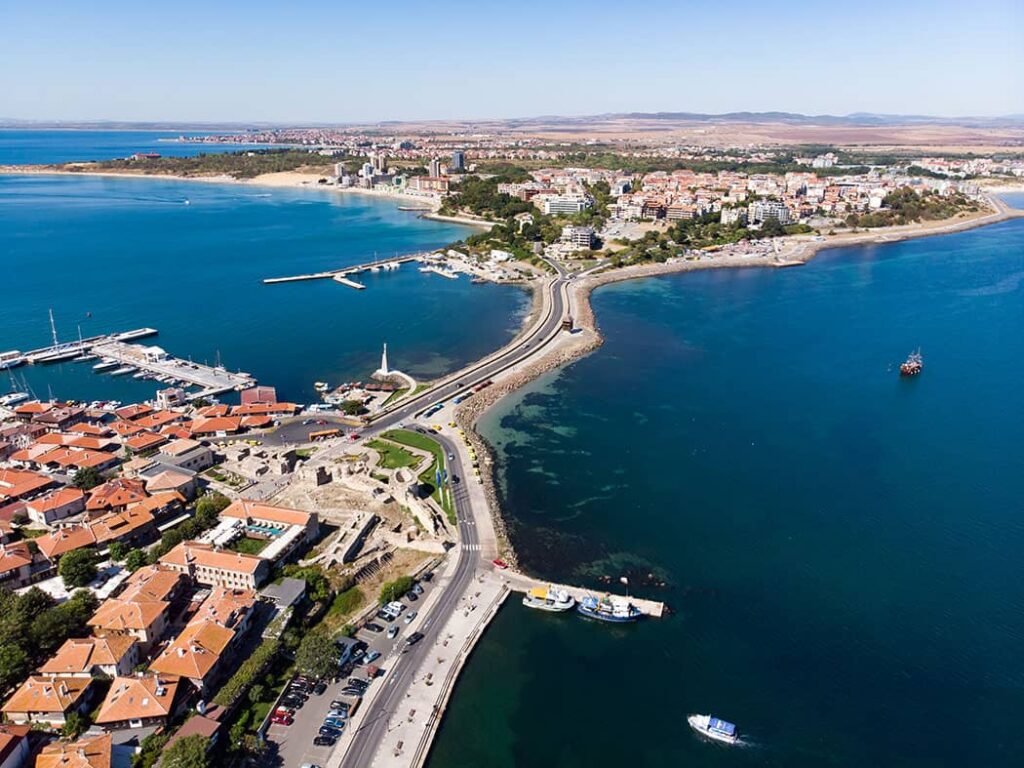
Nessebar packs an extraordinary amount of history onto a small rocky peninsula on Bulgaria’s Black Sea coast. Its ancient streets, medieval churches, traditional wooden houses, and seaside views earned the Ancient City of Nessebar a place on the UNESCO World Heritage List.
The Old Town is connected to the mainland by a narrow causeway and is compact enough to explore entirely on foot. Rather than following a rigid route, wander through the cobbled lanes and you’ll repeatedly come across archaeological remains, stone churches, small squares, and views over the Black Sea.
Among the most recognizable monuments are the Church of Christ Pantocrator, Church of St. John the Baptist, and the ruins of the Church of St. Sophia. Together, they reveal layers of Thracian, Greek, Roman, Byzantine, and medieval Bulgarian history concentrated within a remarkably small area.
Nessebar becomes very busy during the summer, particularly during the middle of the day. Backpackers who stay overnight get a different experience. Early mornings and evenings are quieter, and walking around the peninsula after the day-trip crowds leave is far more enjoyable.
Budget travelers should also know that accommodation and restaurants within the historic peninsula can cost more than options on the mainland. Staying outside the Old Town and walking in is an easy way to keep expenses under control.
Nessebar fits naturally into a backpacking route along the southern Black Sea coast. From here, travelers can continue toward Burgas and Sozopol before heading farther south toward Strandzha and Sinemorets.
Why backpackers should visit: UNESCO-listed history, medieval churches, ancient ruins, Black Sea views, and a historic center that can be explored entirely on foot.
How long to stay: 1–2 days.
13. Sozopol

Sozopol is one of the oldest settlements on Bulgaria’s Black Sea coast, but it feels quite different from Nessebar. Its old quarter spreads across a rocky peninsula where narrow lanes wind between traditional wooden houses, small churches, galleries, restaurants, and viewpoints overlooking the sea.
Founded as the Greek colony of Apollonia Pontica in the 7th century BC, Sozopol has a history stretching back more than 2,500 years. Archaeological discoveries around the town continue to reveal traces of its ancient past, while sections of the old fortifications can still be seen near the waterfront.
Part of Sozopol’s appeal is how easily you can combine sightseeing with beach time. Central Beach sits beside the Old Town, while Harmanite Beach is within walking distance. You can spend the morning exploring historic streets and the afternoon swimming without needing additional transportation.
Evenings are another reason to stay overnight. Once the heat fades, the Old Town is pleasant for a slow walk along the waterfront and through its narrow streets. Summer is lively and crowded, while late spring and September generally offer a calmer atmosphere.
Sozopol is easy to reach from Burgas, making it a practical stop on a public-transport backpacking route. From here, travelers can continue farther south toward Primorsko, Kiten, Tsarevo, and eventually Sinemorets.
Why backpackers should visit: Ancient history, traditional Black Sea architecture, walkable beaches, coastal views, and convenient connections to Burgas and the southern coast.
How long to stay: 2 days.
14. Sinemorets & Strandzha
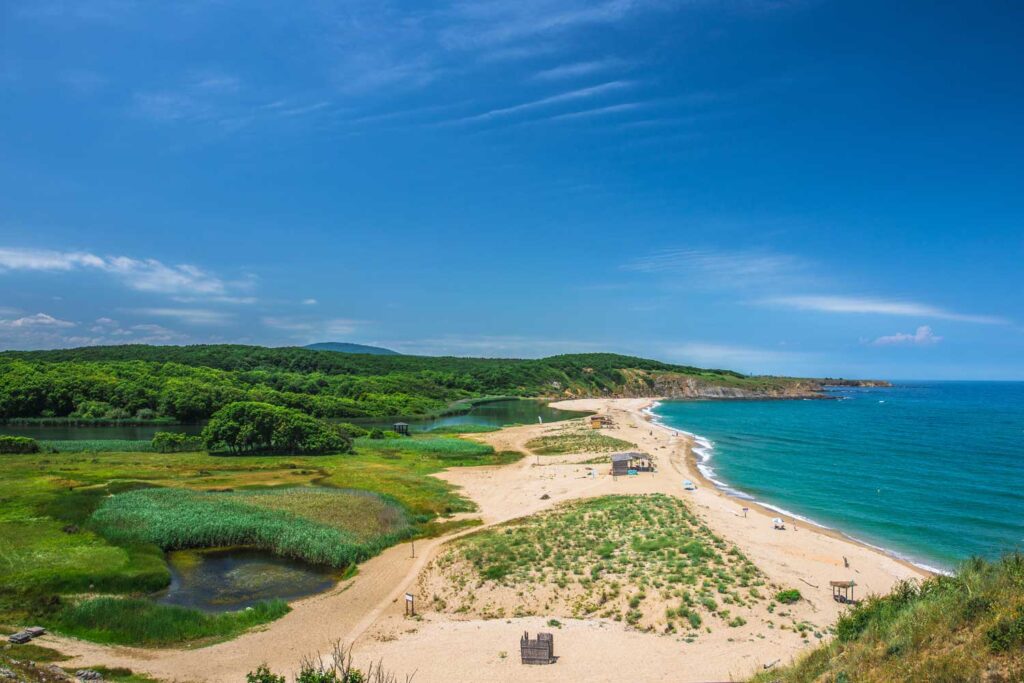
For backpackers who would rather trade large seaside resorts for forests, cliffs, and quieter beaches, Sinemorets is one of the strongest stops on Bulgaria’s southern Black Sea coast. The village lies close to the Turkish border beside Strandzha Nature Park, where wooded hills meet the sea.
The landscape around Veleka Beach is the highlight. Here, the Veleka River curves behind a long strip of sand before reaching the Black Sea, creating one of the most recognizable coastal views in Bulgaria. A short walk to the cliffs above the beach gives you the classic panorama of river, sand, and sea in a single frame.
South of the village, Butamyata Beach is easier to reach and has more facilities. Travelers willing to continue on foot can explore the coastal paths beyond it, where rocky headlands and smaller beaches reveal a wilder side of the Bulgarian Riviera.
Sinemorets also provides access to Strandzha, Bulgaria’s largest protected natural area. The region preserves dense forests, small villages, unusual plant life, traditional customs, and archaeological sites. Exploring deep into the park is considerably easier with a car, but backpackers can still experience its coastal landscapes and nearby trails while based in Sinemorets.
Public transportation becomes less frequent this far south, especially outside summer. Check current bus connections through Tsarevo before traveling and leave some flexibility in your schedule.
Sinemorets feels far removed from the large resorts farther north, with forests and cliffs still dominating much of the surrounding coastline. Spending a couple of nights here adds nature and slower travel to a backpacking trip through Bulgaria.
Why backpackers should visit: Veleka Beach, Strandzha Nature Park, coastal hiking, quieter beaches, dramatic cliffs, and a less-developed stretch of the Black Sea coast.
How long to stay: 2–3 days.
15. Rhodope Mountains & Shiroka Laka
The Rhodope Mountains offer a different kind of backpacking experience from the sharper alpine landscapes of Rila and Pirin. Forested ridges, deep gorges, caves, traditional villages, and winding mountain roads dominate this part of southern Bulgaria.
Shiroka Laka is a good introduction to the region. The village is known for its stone houses with white facades, narrow streets, arched bridges, and strong traditions of Rhodope folk music. Its compact center can be explored in a few hours, but staying overnight gives you more time to experience the quieter mountain atmosphere.
Nearby Gela extends the trip beyond Shiroka Laka and provides access to walking routes and wide views across the Rhodopes. The two villages work well as a single stop for travelers interested in traditional architecture and rural Bulgaria away from the country’s busier sightseeing stops.
The wider region has much more to explore. Trigrad Gorge, Devil’s Throat Cave, Yagodina Cave, the Buynovo Gorge, and mountain villages scattered throughout the area can turn a short visit into several days of exploration.
The main challenge for backpackers is transportation. Buses reach larger towns such as Smolyan and Devin, but connections between smaller villages and natural attractions can be infrequent. Careful planning, occasional taxis, or sharing transportation with other travelers can save considerable time.
Public transport takes more planning here, but that is also why the Rhodopes remain noticeably quieter than Bulgaria’s main tourist routes. The region is especially rewarding for travelers who enjoy hiking, traditional villages, local culture, and slower journeys through mountain landscapes.
Why backpackers should visit: Traditional Rhodope villages, mountain scenery, caves and gorges, hiking, folk culture, and a quieter side of Bulgaria.
How long to stay: 2–4 days.
How Much Does Backpacking in Bulgaria Cost?
Bulgaria remains a relatively affordable destination for backpackers, although your daily spending can vary considerably between Sofia, mountain towns, and Black Sea resorts during the summer. Traveling outside July, August, and the peak ski season generally makes it easier to find lower accommodation prices.
Since Bulgaria adopted the euro on January 1, 2026, prices are now displayed and paid in euros. For travelers who remember Bulgaria using the lev, the fixed conversion rate was €1 = 1.95583 BGN.
Typical Backpacking Budget
A careful budget traveler can often plan around €35–€50 per day, while €50–€75 per day gives more flexibility for private guesthouse rooms, paid attractions, restaurant meals, and occasional taxis or organized transportation.
As a rough planning guide:
| Expense | Typical Budget |
|---|---|
| Hostel dorm | €12–€25 |
| Budget guesthouse/private room | €25–€50+ |
| Bakery breakfast | €3–€6 |
| Casual local meal | €6–€12 |
| Restaurant meal | €10–€20+ |
| Local public transport | €1–€2 |
| Intercity bus/train | €5–€20+ |
| Museum or attraction | €3–€10+ |
These figures should be treated as estimates rather than fixed prices. Accommodation around Sunny Beach, Nessebar, Sozopol, Bansko, and other popular destinations can rise substantially during peak periods.
Easy Ways to Keep Costs Down
Use buses and trains for the longer journeys, stay within walking distance of historic centers, and choose local bakeries, supermarkets, and neighborhood restaurants instead of eating exclusively in tourist areas.
Bulgaria’s free attractions also help stretch a backpacking budget. Historic neighborhoods, mountain trails, beaches, parks, viewpoints, and many churches can be explored without an entrance fee.
Spending a little more where it saves significant time can also be worthwhile. Splitting a taxi to a remote trailhead or joining a shuttle to a difficult-to-reach attraction may be a better use of your budget than losing most of a day to complicated transport connections.
Getting Around Bulgaria as a Backpacker
Traveling around Bulgaria without a car is entirely possible, especially when your route includes major cities and established tourist destinations. Buses and trains cover much of the country, while local transport, taxis, and occasional shuttles can fill the gaps.
The main challenge comes in rural areas. Mountain villages, trailheads, caves, and remote beaches often have fewer connections, so build some flexibility into those parts of your itinerary.
Traveling by Bus
Buses are often the most practical option for backpackers. Sofia, Plovdiv, Veliko Tarnovo, Bansko, Varna, Burgas, and many smaller towns have regular intercity connections.
Travel times and departure points vary between operators, and some cities have more than one bus station. Check the station as well as the departure time before traveling.
For destinations such as Melnik, Shiroka Laka, or Sinemorets, connections may become less frequent, particularly outside the main tourist season.
Traveling by Train
Bulgaria’s railway network is useful for several major routes and can be an inexpensive way to cross the country. Trains are generally slower than buses, but the journey itself can be part of the experience.
One memorable option is the Rhodope narrow-gauge railway between Septemvri and Dobrinishte. The route winds through mountains, forests, small settlements, and high valleys before reaching the area near Bansko.
For long journeys, especially overnight services, reserving a seat or sleeping accommodation in advance can make the trip more comfortable.
Local Public Transportation
Sofia has the country’s most extensive urban transport network, including metro, tram, trolleybus, and bus services. Plovdiv, Varna, Burgas, and other larger cities also have useful local bus networks.
Historic centers are often compact enough to explore on foot, so backpackers may need public transportation only for stations, airports, suburban attractions, or trail access.
Taxis can be useful for short gaps in a route, particularly when reaching mountain trailheads or attractions outside towns. Use clearly marked licensed taxis and check the displayed rates before starting your journey.
For two or more backpackers traveling together, splitting a taxi can sometimes be surprisingly practical when the alternative involves several buses and hours of waiting.
Reaching Mountain Areas
Mountain travel requires the most planning. Places such as the Seven Rila Lakes, Pirin trailheads, Trigrad Gorge, and smaller Rhodope villages may involve a combination of bus, shuttle, taxi, chairlift, and hiking.
Check your return transportation before beginning a hike. The last bus of the day can be much earlier than expected in smaller towns and villages.
A little advance planning goes a long way, but you do not need to organize every hour of the trip. Keep the main transportation connections fixed and leave enough space between them to explore spontaneously.
Where to Stay While Backpacking in Bulgaria
Accommodation in Bulgaria ranges from social hostels in the larger cities to small family-run guesthouses in mountain villages. Backpackers do not need to rely entirely on dorm rooms to keep costs reasonable, and in smaller destinations, a simple private room may offer better value than a hostel.
Hostels in the Major Cities
Sofia, Plovdiv, Veliko Tarnovo, Varna, and Burgas have the widest selection of backpacker-oriented accommodation. Staying near the center usually costs a little more, but the ability to walk to major sights, restaurants, and transportation can compensate for the difference.
When comparing hostels, look beyond the cheapest nightly rate. A central location, kitchen, luggage storage, lockers, laundry facilities, and helpful staff can be more useful on a long trip than saving a few euros.
Guesthouses in Small Towns and Villages
In places such as Melnik, Koprivshtitsa, Tryavna, Shiroka Laka, and Sinemorets, locally owned guesthouses are often the most practical choice.
These stays can also feel more connected to the destination. Some occupy traditional houses, while others are run by families who can provide useful information about local trails, transportation, and places to eat.
Mountain Huts
Hikers planning longer routes through Rila, Pirin, or the Rhodopes can use Bulgaria’s network of mountain huts. Conditions vary considerably: some provide meals, showers, and private rooms, while others are much more basic.
Do not assume that a bed will always be available. Contact huts ahead of time when possible, especially on popular summer weekends, and carry enough cash for remote locations where card payments may not be available.
Camping
Camping can work well in certain parts of Bulgaria, particularly near the mountains and Black Sea coast, but backpackers should use established campsites where possible.
Protected areas and national parks may have restrictions on where tents can be pitched. Check local rules before wild camping rather than assuming an isolated spot is automatically permitted.
Book Ahead During Peak Periods
Backpackers traveling in July and August should consider reserving accommodation ahead in popular Black Sea destinations such as Sozopol, Nessebar, and Sinemorets.
The same applies to Bansko and other mountain resorts during the winter ski season. Outside peak periods, keeping part of the itinerary flexible is usually much easier.
Best Time to Go Backpacking in Bulgaria
Bulgaria can be explored throughout the year, but May to June and September to early October are especially good for backpackers. Temperatures are generally comfortable, major destinations are less crowded than in midsummer, and accommodation can be easier to find.
The ideal month still depends on whether your trip is focused on cities, hiking, beaches, or winter sports.
Spring: April to June
Spring works well for city trips, cultural sightseeing, and lower-elevation hiking. Sofia, Plovdiv, Veliko Tarnovo, Koprivshtitsa, and Tryavna are usually more comfortable to explore before the hottest part of summer.
May and June bring greener mountain landscapes, but snow can remain on higher trails. Do not assume that summer hiking conditions have arrived in Rila or Pirin simply because temperatures are warm in Sofia.
Summer: July and August
Summer offers the easiest combination of mountain hiking and Black Sea beaches. High-altitude trails are more accessible, mountain huts are active, and seaside towns are at their liveliest.
It is also Bulgaria’s busiest travel period. Nessebar, Sozopol, Varna, and other coastal destinations attract large numbers of visitors, while popular trails such as the Seven Rila Lakes can become crowded.
If traveling during these months, book accommodation ahead for the most popular stops and begin mountain hikes early in the day.
Autumn: September and October
September is an excellent month for backpacking in Bulgaria. The Black Sea can remain pleasant early in the month, hiking conditions are often good, and the largest summer crowds begin to disappear.
As October progresses, temperatures fall quickly in the mountains and daylight becomes shorter. Lower-elevation destinations and historic towns remain good choices even when high-altitude hiking becomes less predictable.
Winter: December to March
Winter changes the character of a backpacking trip completely. Bansko and other mountain resorts become ski destinations, while snow can transform towns such as Koprivshtitsa and Tryavna.
Sofia, Plovdiv, and Veliko Tarnovo remain possible city stops, but backpackers planning mountain activities need proper winter equipment and experience. Many summer hiking routes should not be attempted casually once snow and ice arrive.
For a first trip combining cities, villages, mountains, and the coast, late May through June or September offers the strongest overall balance.
7-Day Bulgaria Backpacking Itinerary
One week is enough for a rewarding first backpacking trip through Bulgaria, but trying to cross the entire country will leave too much time spent in transit. A better route concentrates on Sofia, the Rila Mountains, and Plovdiv, combining city sightseeing, Bulgarian history, and mountain scenery.
Days 1–2: Sofia
Begin with two days in Sofia. Explore Alexander Nevsky Cathedral, ancient Serdica, the city center, and some of the capital’s quieter streets and parks on your first day.
Use the second day for more of the city or head toward Vitosha Mountain for a few hours of hiking. Staying two nights also gives you time to recover after arriving in Bulgaria rather than immediately moving to another destination.
Day 3: Rila Monastery
Travel south to Rila Monastery for one of Bulgaria’s most important cultural experiences. Explore the monastery complex, frescoes, museum, and surrounding mountain scenery.
Depending on transportation, return to Sofia that evening or stay near the monastery. An overnight visit gives you a quieter experience after many day visitors have left.
Day 4: Seven Rila Lakes
Continue toward Sapareva Banya and spend the day hiking around the Seven Rila Lakes. Allow most of the day for transportation, the chairlift, and the hike rather than trying to squeeze another major destination into the schedule.
Stay around Sapareva Banya or return toward Sofia depending on your onward connection.
Days 5–6: Plovdiv
Travel to Plovdiv and spend two days exploring the Old Town, Ancient Theatre, Roman Stadium, Kapana district, and the city’s hills.
Two nights give you time to enjoy Plovdiv after dark instead of treating it as another quick sightseeing stop.
Day 7: Plovdiv or Return to Sofia
Spend the morning visiting anything you missed before returning to Sofia for your flight or onward journey.
If your international travel departs directly from another destination, the final day can instead be used for a slower morning in Plovdiv.
Route: Sofia → Rila Monastery → Seven Rila Lakes → Plovdiv → Sofia
This route keeps travel distances manageable while still showing three very different sides of Bulgaria: its capital, high mountains and Orthodox heritage, and one of Europe’s oldest continuously inhabited cities.
14-Day Bulgaria Backpacking Itinerary
Two weeks gives backpackers enough time to see a much broader cross-section of Bulgaria without changing accommodation every night. This route combines major cities, mountain scenery, historic towns, and the Black Sea coast while keeping the journey moving generally from west to east.
Days 1–2: Sofia
Start with two days in Sofia. Explore Alexander Nevsky Cathedral, ancient Serdica, the central streets and parks, then use part of your second day for Vitosha Mountain if the weather is suitable.
Day 3: Rila Monastery
Head south to Rila Monastery and spend several hours exploring the complex and its mountain surroundings. Stay nearby or position yourself for the following day’s journey toward the Seven Rila Lakes.
Day 4: Seven Rila Lakes
Dedicate a full day to the Seven Rila Lakes. The hike and transportation deserve enough time that you are not watching the clock throughout the day.
Days 5–6: Plovdiv
Continue to Plovdiv for two nights. Explore the Ancient Theatre, Roman Stadium, Old Town, Kapana, and at least one of the city’s hills.
Days 7–8: Veliko Tarnovo
Travel north to Veliko Tarnovo. Visit Tsarevets Fortress, Gurko Street, and Samovodska Charshiya, then use the second day for more of the city or a side trip to nearby Arbanasi.
Day 9: Tryavna
Continue to Tryavna for a slower day among Bulgarian Revival houses, craft workshops, the Clock Tower, and the old stone bridge. Staying overnight breaks up the journey and adds a smaller traditional town to an itinerary otherwise dominated by major destinations.
Days 10–11: Varna
Head east to Varna and the Black Sea. Spend time in the Sea Garden, visit the Archaeological Museum and Roman Baths, and leave room for your first beach afternoon.
Day 12: Nessebar
Travel south along the coast to Nessebar. Explore its UNESCO-listed Old Town, medieval churches, archaeological remains, and waterfront before staying overnight.
Day 13: Sozopol
Continue past Burgas to Sozopol. Wander through the Old Town, see traces of ancient Apollonia, and spend part of the day beside the Black Sea.
Day 14: Burgas and Departure
Travel to Burgas for onward transportation or your flight. If your schedule allows, spend a few hours walking through the Sea Garden and central pedestrian area before leaving.
Route: Sofia → Rila Monastery → Seven Rila Lakes → Plovdiv → Veliko Tarnovo → Tryavna → Varna → Nessebar → Sozopol → Burgas
For travelers with more time, add Bansko and Pirin, Melnik, or continue south from Sozopol to Sinemorets and Strandzha rather than trying to squeeze them into these 14 days.
What to Pack for Backpacking in Bulgaria
Packing for Bulgaria depends heavily on the season and whether you plan to spend time in the mountains. A trip combining Sofia, Rila, the Rhodopes, and the Black Sea can involve very different temperatures within the same week, so layers are more useful than packing for a single type of weather.
Comfortable Walking Shoes
Cobbled streets are common in places such as Plovdiv, Veliko Tarnovo, Koprivshtitsa, Tryavna, Nessebar, and Sozopol. Comfortable shoes with decent grip are far more useful than footwear chosen only for city walking.
Bring proper hiking shoes if the Seven Rila Lakes, Pirin National Park, or longer mountain trails are part of your route.
Lightweight Layers
Even during summer, mornings and evenings can feel cool in the mountains. Carry a light insulating layer and a rain jacket rather than relying entirely on warm-weather clothing.
Conditions at higher elevations can change much faster than they do in the cities below.
Reusable Water Bottle
A reusable bottle is useful for long travel days and hiking. Bulgaria has numerous public fountains and mountain springs, although you should not assume that every natural water source is safe to drink without local knowledge.
Sun Protection
Summer sun can be strong both on the Black Sea coast and at higher elevations. Pack sunscreen, sunglasses, and a hat, especially if you expect to spend several hours hiking.
Small Daypack
A lightweight daypack allows you to leave your main backpack at your accommodation while exploring cities or heading into the mountains.
It should have enough space for water, food, an extra layer, rain protection, and basic hiking essentials.
Power Adapter
Bulgaria uses Type C and Type F plugs with a 230V, 50Hz electricity supply. Travelers coming from the United States, United Kingdom, and countries using different plug types will need an appropriate adapter.
Some Cash
Cards are widely accepted in cities and tourist destinations, but cash remains useful in smaller villages, mountain huts, local buses, markets, and small family-run businesses.
Since Bulgaria adopted the euro in 2026, travelers no longer need to exchange money into Bulgarian lev for their trip.
The best approach is to keep your main backpack reasonably light. Bulgaria’s cities have supermarkets, pharmacies, outdoor shops, and shopping centers, so most forgotten everyday items can easily be purchased after arrival.
Is Bulgaria Safe for Backpackers?
Bulgaria is generally a straightforward country for independent travel, including for people visiting on their first backpacking trip. The precautions you would take elsewhere in Europe still apply: keep valuables secure in busy areas, use licensed transportation, and pay attention to your surroundings late at night.
Watch Your Belongings in Busy Areas
Petty theft can occur around crowded transportation hubs, tourist attractions, public transport, and nightlife areas. Keep your phone and wallet somewhere secure rather than in an easily accessible backpack pocket.
A hostel locker is also useful for passports, spare cards, and other valuables you do not need while sightseeing.
Use Licensed Taxis
Use clearly marked licensed taxis and check the displayed fare information before beginning the journey. At airports and major stations, use official taxi services or established booking methods rather than accepting unsolicited rides.
Public transportation is often the simpler option in Sofia and other large cities.
Take Mountain Safety Seriously
In Bulgaria, mountain conditions can pose a greater practical risk than exploring the cities. Weather in Rila, Pirin, and the Rhodopes can change rapidly, even when conditions in the valleys are warm and sunny.
Check the forecast before hiking, carry enough water and appropriate clothing, and avoid unfamiliar high-mountain routes in poor weather. Tell someone where you are going when heading onto a longer or more isolated trail.
Be Careful on Roads
Road awareness is important when walking near traffic, particularly outside town centers where sidewalks may disappear. Do not assume vehicles will always stop simply because you are approaching a crossing.
Keep Copies of Important Documents
Store a digital copy of your passport, insurance information, and important reservations separately from the originals. Having a backup can save considerable trouble if a bag or wallet goes missing.
Get Travel Insurance for Active Trips
Travel insurance is worth considering for any international trip, but it becomes more important if your plans include hiking, skiing, mountain biking, or other outdoor activities.
Check what your policy actually covers rather than assuming all mountain activities are automatically included.
Most backpackers will encounter Bulgaria as a welcoming and manageable destination. Basic travel awareness, sensible planning, and extra care in the mountains go a long way toward keeping the trip trouble-free.
Practical Tips for Backpacking in Bulgaria
A little local knowledge can make backpacking in Bulgaria considerably easier, especially once your route leaves the major cities. These are some of the details worth knowing before you arrive.
Learn a Few Bulgarian Words
English is commonly spoken in tourist areas and among many younger Bulgarians, but it becomes less reliable in villages and smaller towns. Learning a few Bulgarian words is both useful and appreciated.
Здравейте (Zdraveyte) means hello, благодаря (blagodarya) means thank you, and моля (molya) can mean please or you’re welcome.
Learning to recognize a few words written in Cyrillic can also help with signs, station names, menus, and transportation.
Don’t Rush Through the Country
Bulgaria looks small on a map, but mountain roads and indirect public transportation can make some journeys surprisingly slow.
Trying to visit a new destination every day quickly turns a backpacking trip into a tour of bus stations. Two nights in major stops such as Sofia, Plovdiv, Veliko Tarnovo, and Varna create a much more comfortable pace.
Check Transport Schedules Ahead of Time
Major routes are generally straightforward, but smaller destinations may have only a handful of buses each day. Weekend and seasonal schedules can also differ.
This matters most for places such as Melnik, Belogradchik, Shiroka Laka, Sinemorets, and mountain trailheads. Always check the return connection before setting off on a day trip.
Eat Where Bulgarians Eat
Traditional Bulgarian food can be filling and affordable, especially away from the most tourist-heavy streets. Bakeries are useful for inexpensive breakfasts and travel-day snacks, while neighborhood restaurants often provide better value than restaurants immediately beside major attractions.
Try dishes such as banitsa, Shopska salad, tarator, kebapche, kyufte, kavarma, and meshana skara during your trip.
Carry Cash Outside the Major Cities
Card payments are common, but small guesthouses, mountain huts, markets, local transport, and rural businesses may still prefer or require cash.
Keep a modest amount with you rather than relying entirely on cards or phone payments.
Leave Room for Unplanned Stops
Some of the best experiences while backpacking in Bulgaria happen between the famous attractions: a small mountain village, an unexpected viewpoint, a local market, or a conversation at a family-run guesthouse.
Plan the important transportation and accommodation, but avoid filling every day from morning until night. Bulgaria rewards travelers who leave themselves enough time to wander.
Frequently Asked Questions About Backpacking in Bulgaria
Is Bulgaria good for backpackers?
Yes. Bulgaria combines relatively affordable accommodation and transportation with historic cities, mountains, traditional villages, monasteries, and Black Sea beaches. Distances between major destinations are also manageable, which makes it possible to experience several different regions on one trip.
How many days do you need to backpack Bulgaria?
A week is enough for Sofia, Plovdiv, and one or two mountain destinations. Two weeks is better for a broader Bulgaria backpacking itinerary, especially if you want to include Veliko Tarnovo and the Black Sea coast. Three weeks allows more time for places such as Pirin, Melnik, Belogradchik, the Rhodopes, and Strandzha.
Can you backpack Bulgaria without a car?
Yes. Sofia, Plovdiv, Veliko Tarnovo, Varna, Burgas, Bansko, and many other destinations can be reached by bus or train. A car becomes more useful for remote villages, mountain trailheads, caves, and isolated natural attractions.
How much money do you need for backpacking in Bulgaria?
A budget of roughly €35–€50 per person per day can work for travelers using hostel dorms, public transportation, bakeries, supermarkets, and inexpensive local restaurants. Around €50–€75 per day provides more room for private accommodation, attractions, restaurant meals, and occasional taxis. Costs can be higher at seaside and ski resorts during peak season.
What are the best places for backpackers in Bulgaria?
Some of the best places for backpackers in Bulgaria include Sofia, Plovdiv, Rila Monastery, the Seven Rila Lakes, Bansko and Pirin National Park, Melnik, Veliko Tarnovo, Tryavna, Koprivshtitsa, Belogradchik, Varna, Nessebar, Sozopol, Sinemorets, and the Rhodope Mountains.
What is the best month to backpack Bulgaria?
June and September work well for many backpacking trips. Temperatures are generally comfortable, mountain hiking is possible on many routes, and crowds are usually lighter than during July and August. September can also work well for combining hiking with the Black Sea coast.
Are hostels common in Bulgaria?
Hostels are easiest to find in larger destinations such as Sofia, Plovdiv, Veliko Tarnovo, Varna, and Burgas. In smaller towns and villages, family-run guesthouses are more common and can still be inexpensive.
Is wild camping allowed in Bulgaria?
Rules vary depending on the location, and restrictions apply in some protected areas, national parks, nature reserves, beaches, and other sites. Backpackers should check the regulations for the specific area and use established campsites or designated camping areas when required.
Do I need to speak Bulgarian?
No, but learning a few basic phrases is useful. English is widely understood in many tourist areas, particularly among younger people, but it is less dependable in remote villages and rural areas. Being able to recognize Cyrillic place names can also make independent travel easier.
Is Bulgaria part of the Schengen Area?
Yes. Bulgaria became fully part of the Schengen Area on January 1, 2025, when checks at its internal land borders with other Schengen countries were lifted. Travelers should therefore consider time spent in Bulgaria when calculating any Schengen stay limits that apply to their nationality.
Final Thoughts on Backpacking in Bulgaria
A backpacking route through Bulgaria can change quickly: Roman ruins in Plovdiv, mountain trails in Rila or Pirin, medieval history in Veliko Tarnovo, and eventually the beaches of the Black Sea.
The best places for backpackers in Bulgaria are not limited to Sofia, Plovdiv, and the major coastal towns. Smaller destinations such as Melnik, Tryavna, Koprivshtitsa, Shiroka Laka, and Sinemorets often provide the contrast that makes a longer trip more memorable.
You also do not need to see everything at once. Choose a route that fits your available time, allow a few slower days between major stops, and leave some flexibility for places you discover along the way.
Whether you have seven days or several weeks, backpacking in Bulgaria offers history, nature, traditional culture, and plenty of opportunities to explore beyond Europe’s most familiar travel routes.
Continue Exploring Bulgaria
Planning a longer trip? These guides can help you discover more places to add to your route:
- Top Places to Visit in Bulgaria — for more historic towns, natural landmarks, and cultural attractions across the country.
- Best Beaches in Bulgaria for Summer Travelers — if your backpacking route includes the Black Sea coast.
- 25 Best Waterfalls in Bulgaria — for hiking destinations and natural stops beyond the main tourist route.
- UNESCO World Heritage Sites in Bulgaria — explore the country’s most important cultural and natural heritage sites.
- Top Traditional Bulgarian Dishes — a useful introduction to what to eat while traveling around Bulgaria.
- Rila Monastery Guide — for planning a deeper visit to one of the highlights of this backpacking route.
Have you backpacked through Bulgaria? Share your favorite place in the comments below, or follow us on Instagram and tag @stunningbulgaria in your Bulgarian travel photos. You can also use #stunningbulgaria so we can see where your travels take you.