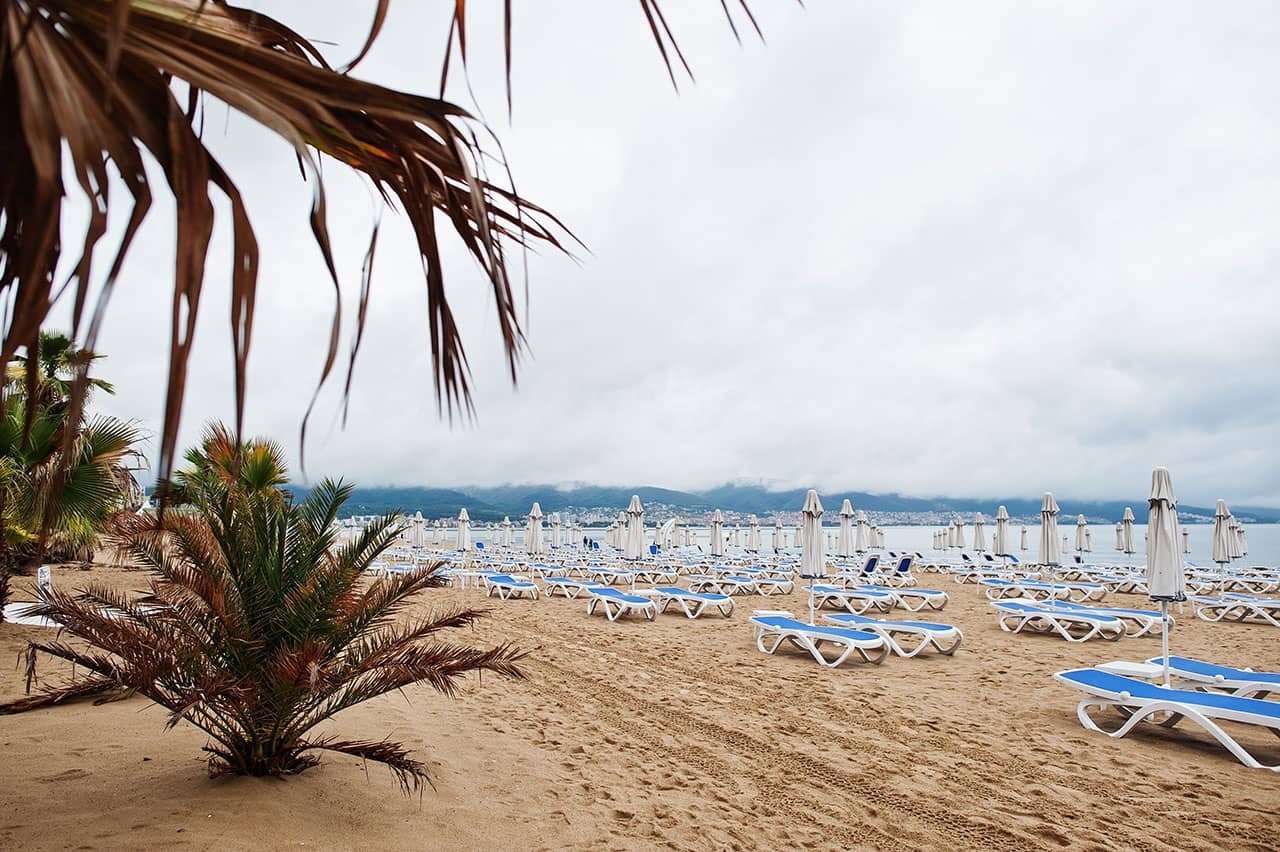
The Bulgarian Riviera stretches along Bulgaria’s entire Black Sea coast, covering roughly 378 km from the Romanian border in the north to Turkey in the south. Along the way, the coastline changes dramatically, with long sandy beaches, rocky cliffs, historic seaside towns, modern resorts, and quieter stretches that still feel surprisingly wild.
The northern Bulgarian Black Sea coast is known for its dramatic headlands, limestone cliffs, and established resorts around Varna and Balchik. Farther south, the landscape gradually gives way to broad sandy beaches, dunes, coastal forests, and smaller seaside towns.
At the southern end of the Bulgarian Riviera, the coastline reaches Strandzha Nature Park, Bulgaria’s largest protected area. Here, around places such as Sinemorets and Silistar, forested hills descend toward secluded beaches and the Black Sea.
From busy resorts such as Golden Sands and Sunny Beach to the historic streets of Sozopol and the natural landscapes around Bolata and Veleka Beach, Bulgaria’s coast offers much more variety than its reputation as an affordable summer destination might suggest.
Exploring the Bulgarian Riviera
Along its 378 km of Black Sea coastline, the Bulgarian Riviera shifts between busy resorts, historic seaside towns, rocky headlands, long sandy beaches, wetlands, forests, and small sheltered bays.
The north is home to well-known destinations such as Golden Sands, Albena, Balchik, and Cape Kaliakra, with Varna serving as the region’s main coastal city. Traveling south brings you to Sunny Beach, Nessebar, Burgas, and Sozopol, followed by increasingly wild scenery toward Sinemorets, Silistar, and the Turkish border.
You don’t have to experience the Bulgarian coast in just one way. It can be a classic beach holiday, a road trip between historic seaside towns, a quiet escape surrounded by nature, or a combination of all three.
Be strict, but firstly and mostly toward yourself!
Colonel Boris Drangov
Below are several places that show just how different one part of the Bulgarian Riviera can be from another.
Also Read: Best Beaches in Bulgaria for Summer Travelers
Golden Sands Beach
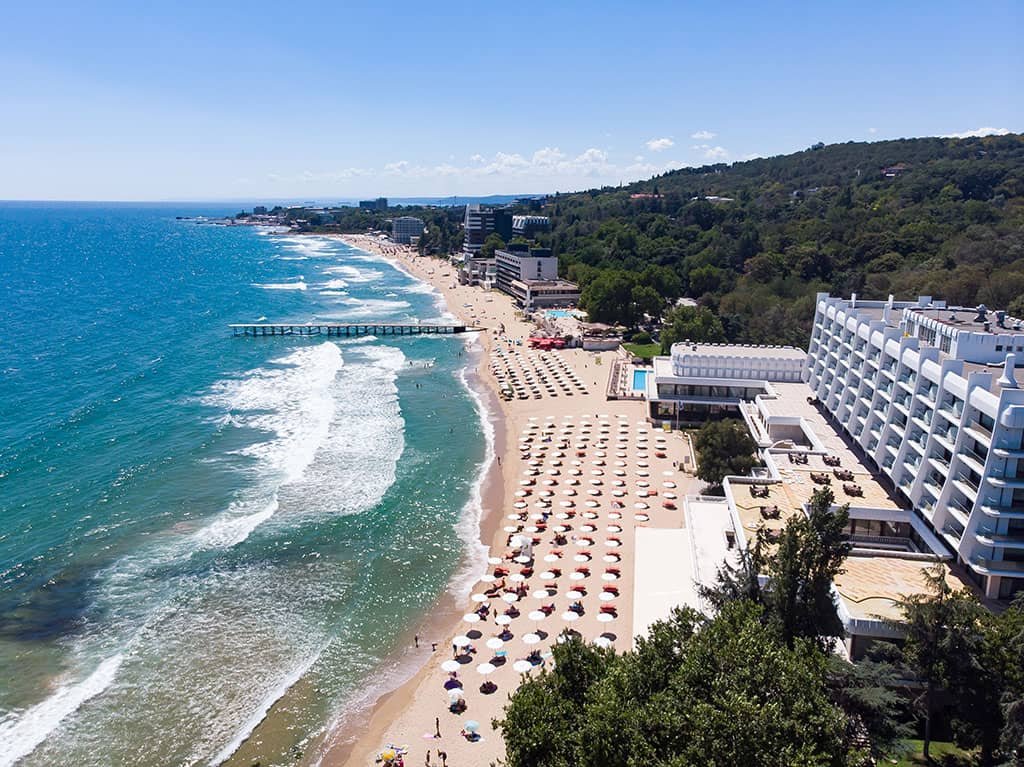
Just 17 km north of Varna, Golden Sands is one of the best-known seaside resorts on the Bulgarian Riviera. Its long sandy beach, large selection of hotels, restaurants, and summer activities make it a popular base for travelers exploring the northern Black Sea coast.
The resort takes its name from the fine golden-colored sand that stretches along the shoreline. Unlike some of Bulgaria’s quieter beaches, Golden Sands is a fully developed resort, so expect a lively atmosphere during the peak summer months, particularly in July and August.
Immediately behind the resort, the scenery changes as the beach gives way to the forested hills of Golden Sands Nature Park. The park covers more than 13 square kilometers overlooking the Black Sea. Established as a protected area in 1943, it is among Bulgaria’s oldest nature parks and gives visitors an easy escape from the busy beachfront.
The wider area is also known for its mineral springs, while Varna and the nearby resort of St. Constantine and Helena are close enough to combine with Golden Sands during a trip along Bulgaria’s northern coast.
Golden Sands works particularly well for travelers who prefer having the beach, accommodation, restaurants, nightlife, and other resort facilities within easy reach.
Location: Golden Sands Beach
Sunny Beach
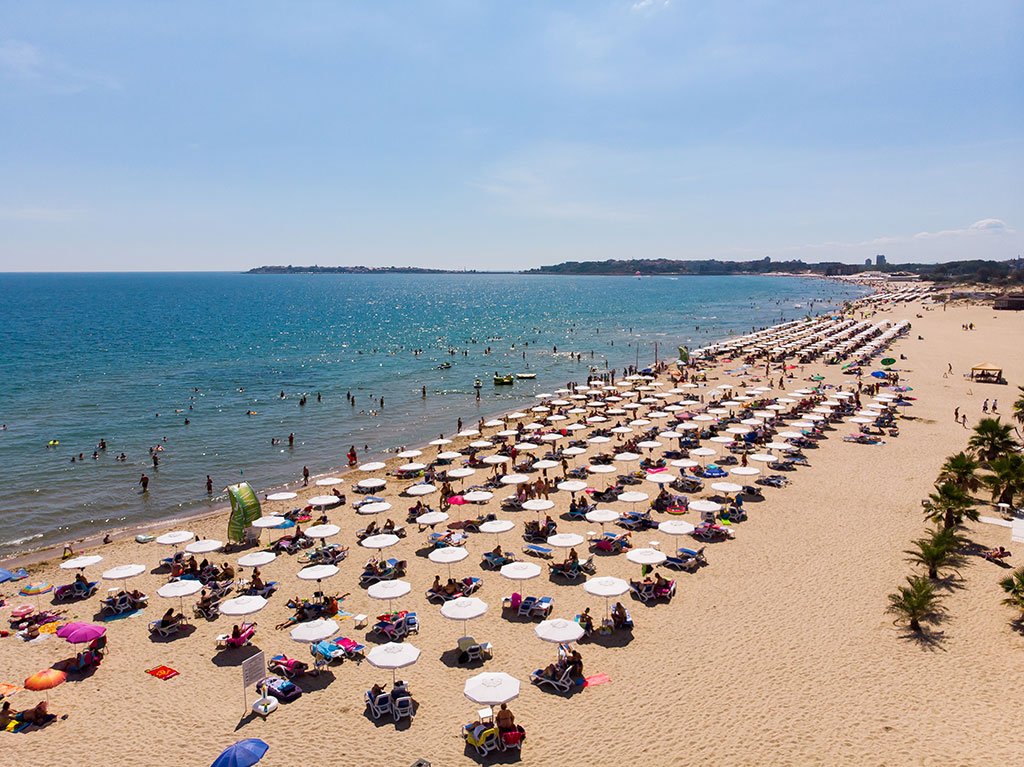
Sunny Beach (Slanchev Bryag) is the largest and liveliest resort on the Bulgarian Riviera. Located about 35 km north of Burgas, it stretches along a broad sandy bay between Nessebar and Sveti Vlas on Bulgaria’s southern Black Sea coast.
The resort is known for its long sandy beach and enormous choice of hotels, restaurants, beach bars, shops, entertainment, and water activities. During the height of summer, the central areas can be extremely busy, especially in the evenings when Sunny Beach’s nightlife becomes a major part of the experience.
This is very different from the quieter beaches farther south around Strandzha. Sunny Beach is highly developed and best suited to travelers who enjoy having almost everything within walking distance rather than searching for a secluded stretch of coastline.
One of its biggest advantages is its location. The historic town of Nessebar, a UNESCO World Heritage Site, sits immediately to the south, making it easy to combine a beach holiday with one of Bulgaria’s most fascinating historic destinations.
Sunny Beach may not be the place to experience the wild side of the Bulgarian Black Sea coast, but as Bulgaria’s largest seaside resort, it remains an important part of the Bulgarian Riviera.
Location: Sunny Beach, Bulgaria
Albena Beach

About 30 km north of Varna and 12 km from Balchik, Albena is a purpose-built seaside resort with a broad sandy beach stretching for several kilometers along Bulgaria’s northern Black Sea coast.
Opened in 1969, Albena developed into one of the country’s established family-oriented resorts. Compared with the denser development of Sunny Beach or Golden Sands, it has a more spacious feel, with hotels and recreational areas surrounded by greenery.
Nature is an important part of the setting. Albena lies beside the Baltata Nature Reserve, where dense floodplain forest grows along the lower Batova River close to the Black Sea. With forest so close to the beach, Albena feels noticeably greener than many of Bulgaria’s larger seaside resorts.
The beach itself is wide and sandy, with shallow water in many areas and easy access to hotels, restaurants, water sports, and other resort facilities. This makes Albena especially convenient for families and travelers who prefer an organized beach holiday without being far from nature.
Its location also makes Albena a useful base for exploring the northern coast, with Balchik, Cape Kaliakra, and Varna all within reach.
Location: Albena Beach
Sozopol

About 35 km south of Burgas, Sozopol combines sandy beaches with an old seaside town that has been inhabited for thousands of years.
Founded as the ancient Greek colony of Apollonia Pontica, Sozopol has a history stretching back to antiquity. Today, much of its character is concentrated in the Old Town, where narrow streets, traditional wooden houses, small churches, archaeological remains, and views across the Black Sea make it worth exploring away from the beach.
For swimming and sunbathing, Central Beach sits between the Old Town and the newer part of Sozopol, while Harmanite Beach provides a longer stretch of sand farther south. There are also several smaller beaches and coves around the surrounding coastline.
Summer brings a much livelier atmosphere, with waterfront restaurants, cafés, beach bars, and a busy harbor. Cultural events are another part of Sozopol’s identity, particularly the Apollonia Festival of Arts, traditionally held around the end of August and beginning of September.
Sozopol is a good stop for travelers who want to combine time on the Black Sea with Bulgarian history and an old-town atmosphere rather than spending an entire holiday inside a modern resort.
Location: Sozopol Central Beach, Bulgaria
Bolata Beach
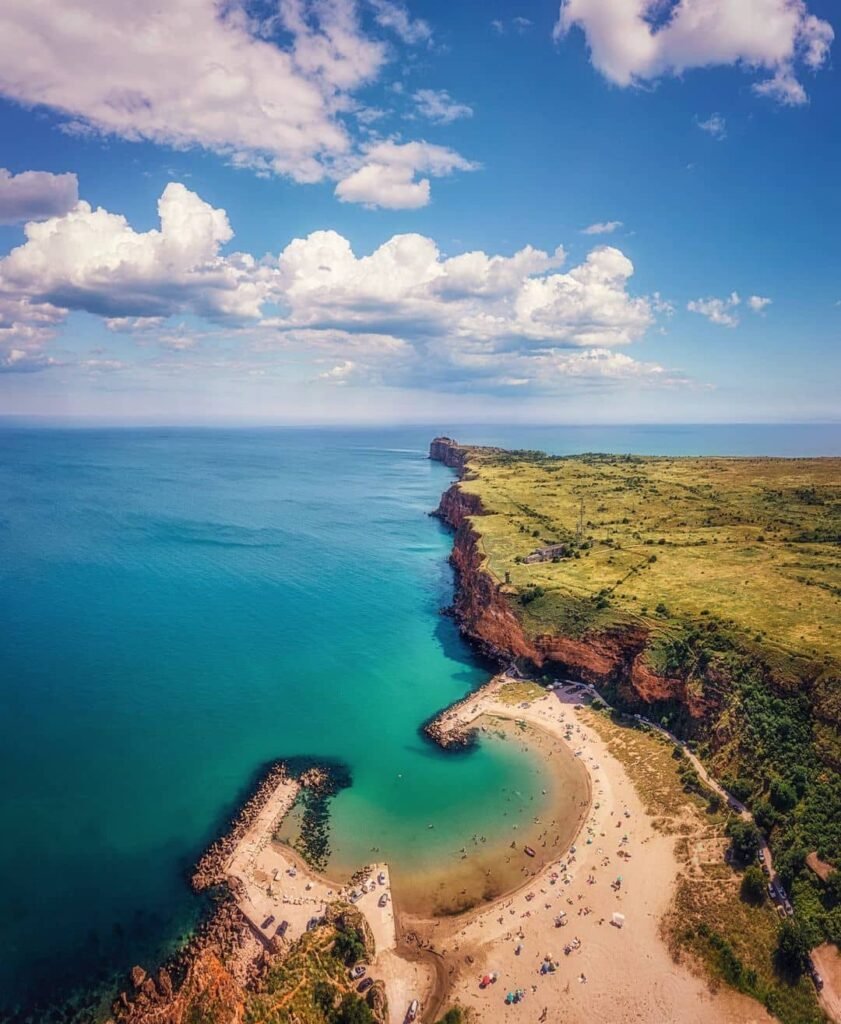
Hidden beneath the cliffs of Bulgaria’s northern Black Sea coast, Bolata Beach is a small crescent-shaped beach near the village of Bulgarevo and Cape Kaliakra. Its sheltered bay and surrounding reddish cliffs make Bolata instantly recognizable among the beaches of Bulgaria’s northern coast.
Bolata forms part of the protected Kaliakra Complex, an area included in the European Natura 2000 network. Unlike the long resort beaches around Golden Sands and Albena, Bolata is relatively small, and the surrounding landscape is as much a reason to visit as the sand itself.
A short climb into the hills above the bay opens up views across the beach and Black Sea. From above, Bolata’s curved shoreline, blue-green water, cliffs, and surrounding grasslands are especially striking.
The beach is roughly 5 km from Bulgarevo and 14 km from Kavarna, making it easy to combine with Cape Kaliakra on the same trip. This northeastern corner of Bulgaria is also an important area for migratory birds, adding another reason to explore beyond the shoreline.
Bolata can become busy on warm summer days despite its isolated appearance, and its small size means it feels crowded more quickly than Bulgaria’s larger beaches. Visiting earlier in the day is usually a better way to experience the scenery.
Location: Bolata Beach, Bulgaria
Veleka Beach, Sinemorets

© Instagram | @alevchukbg
At the northern edge of Sinemorets, Veleka Beach sits where the Veleka River meets the Black Sea, creating a coastal landscape that is difficult to confuse with anywhere else in Bulgaria. A long strip of sand separates the river from the sea before the two waters finally meet near the northern end of the beach.
This is the far southern end of the Bulgarian Riviera, close to the Turkish border and surrounded by the protected landscapes of Strandzha Nature Park. Instead of large hotels and dense resort development, the scenery here is dominated by forested hills, the river, open coastline, and the Black Sea.
The best-known view is from the cliffs above the northern side of the beach. From there, you can see the Veleka winding through the green landscape before reaching the sand and sea below. It’s the classic view of Veleka Beach and one you’ll see frequently in photographs of Bulgaria’s southern coast.
Veleka Beach itself has a wilder character than the resort beaches farther north. Conditions in the sea can change, and currents around river mouths deserve extra caution, so swimmers should pay attention to local warnings and lifeguard instructions where available.
Sinemorets also has Butamyata Beach south of the village, while several more secluded stretches of coastline can be found nearby. Together, they reveal the quieter, more natural side of Bulgaria’s Black Sea coast.
Location: Sinemorets Veleka Beach, Bulgaria
Silistar Beach
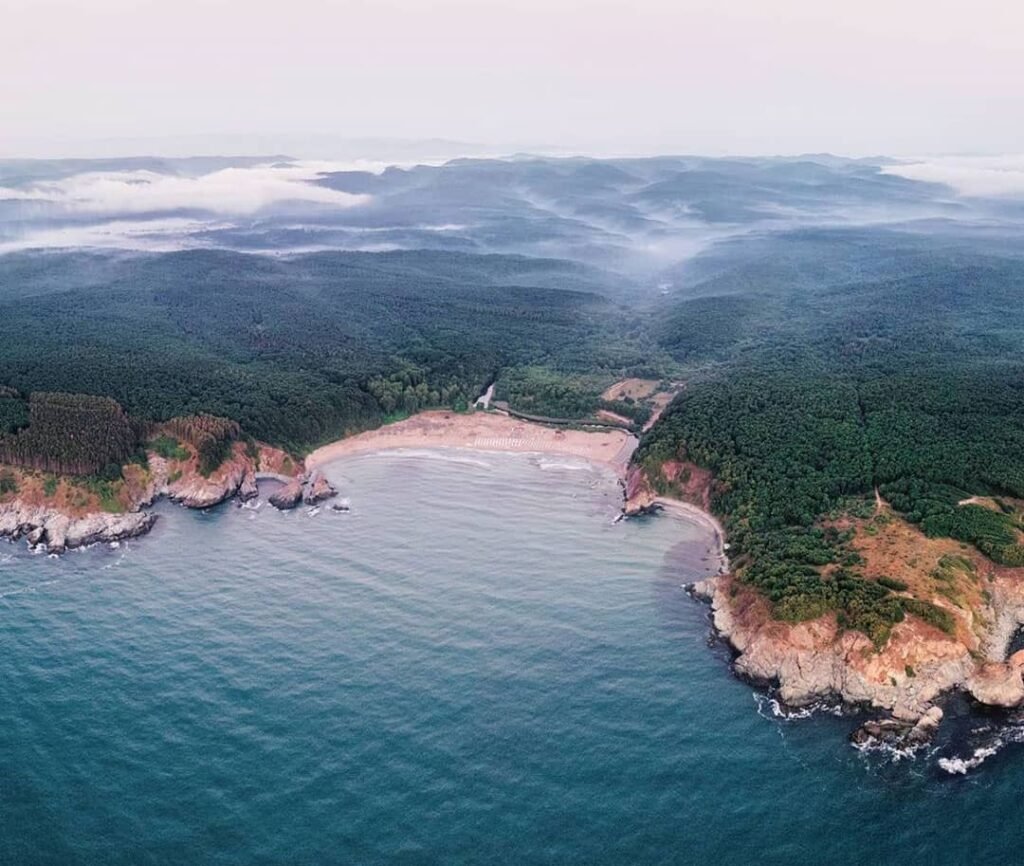
Farther south from Sinemorets, Silistar Beach lies between the villages of Sinemorets and Rezovo, only a short distance from Bulgaria’s border with Turkey. Surrounded by wooded hills, the sheltered sandy bay feels far removed from the large resorts farther north along the Bulgarian Riviera.
Silistar is part of a protected area within Strandzha Nature Park, and the surrounding territory also falls within the European Natura 2000 network. Protection of this landscape has helped preserve the forest, dunes, and relatively undeveloped character of the coastline.
The beach forms a compact bay with fine sand and typically clear water. Trees and dense vegetation reach close to the shore, giving the bay a very different character from the open resort beaches around Sunny Beach, Albena, and Golden Sands.
Despite its remote appearance, Silistar is no longer much of a secret during the summer. July and August can bring plenty of visitors, while access and parking arrangements may vary from season to season. Anyone visiting should also respect marked protected areas and avoid disturbing the dunes and surrounding vegetation.
Together with Veleka Beach and the coastline around Sinemorets, Silistar shows why the southernmost section of Bulgaria’s Black Sea coast deserves time beyond the country’s better-known seaside resorts.
Location: Silistar Beach, Bulgaria
Northern vs. Southern Bulgarian Riviera
Travel Bulgaria’s Black Sea coast from north to south and the scenery doesn’t stay the same for long. The northern coast brings more dramatic cliffs and established resorts, while the south gradually opens into long sandy beaches, historic towns, and the forests of Strandzha.
Northern Bulgarian Riviera
The northern Bulgarian Riviera extends from the Romanian border toward the area around Varna and includes places such as Kavarna, Cape Kaliakra, Balchik, Albena, Golden Sands, and St. Constantine and Helena.
Rocky headlands and limestone cliffs are more prominent here, particularly around Cape Kaliakra. At the same time, long sandy beaches and developed resorts are easy to find closer to Varna.
This part of the coast works well for combining beach time with places such as Balchik Palace and Botanical Garden, Cape Kaliakra, Aladzha Monastery, and Varna.
Southern Bulgarian Riviera
South of the Balkan Mountains, the coastline becomes increasingly known for its long sandy beaches, dunes, historic towns, and eventually the forests of Strandzha.
The busiest resort area surrounds Sunny Beach and Nessebar, while farther south you’ll find Burgas, Pomorie, Sozopol, Primorsko, Kiten, Tsarevo, Ahtopol, and Sinemorets.
Continue toward the Turkish border and the character changes again. Around Sinemorets and Silistar, large resorts give way to forested hills, river mouths, protected areas, and some of the least-developed stretches of Bulgaria’s coastline.
The north is known for dramatic cliffs and established resorts, while the far south suits travelers drawn to nature, smaller towns, and a less-developed seaside atmosphere.
Best Places to Stay on the Bulgarian Riviera
Choosing a base on the Bulgarian Riviera depends on how you plan to spend your days. Varna works well for exploring the north, the big resorts put the beach at your doorstep, and smaller towns such as Sozopol and Sinemorets offer a completely different pace.
Varna
Varna is a practical base for exploring the northern coast. Bulgaria’s largest Black Sea city has beaches of its own, but it also puts Golden Sands, St. Constantine and Helena, Balchik, and other northern destinations within reach.
Choose Varna if you prefer the restaurants, museums, parks, shopping, and year-round atmosphere of a city rather than staying entirely within a beach resort.
Golden Sands and Albena
For a traditional resort holiday, Golden Sands and Albena are two of the main choices in northern Bulgaria.
Golden Sands has the livelier atmosphere, while Albena generally feels more self-contained and relaxed. Both offer direct beach access and plenty of accommodation close to the sea.
Nessebar and Sunny Beach
These neighboring destinations offer two very different experiences. Sunny Beach is centered on its long beach, hotels, entertainment, and nightlife, while Nessebar adds centuries of history and a UNESCO-listed Old Town.
Staying in this area also provides a convenient base for exploring the central section of Bulgaria’s Black Sea coast.
Sozopol
Sozopol works especially well for travelers who want beaches without giving up the atmosphere of a historic town. Its Old Town, harbor, restaurants, cultural events, and several nearby beaches make it easy to spend a few days here without relying on a large resort complex.
Sinemorets
At the opposite end of the spectrum is Sinemorets. Near the Turkish border, the village is surrounded by some of the southern coast’s finest natural scenery, including Veleka Beach, Butamyata Beach, the Veleka River, and Strandzha Nature Park.
Sinemorets makes a better base for travelers interested in beaches and nature than those looking for large resorts or extensive nightlife.
For a longer coastal trip, consider splitting your stay between one northern and one southern destination. This makes it much easier to experience both sides of the Bulgarian Riviera without spending every day driving long distances.
Best Time to Visit the Bulgarian Riviera
The main beach season along the Bulgarian Riviera runs from June through September, although the best month depends on the kind of trip you’re planning.
June
June is a good time to visit before the busiest part of summer. Days are already warm, resorts are coming fully to life, and beaches are generally less crowded than in July and August. The Black Sea may still feel cool early in the month, particularly for longer swims.
July and August
July and August are the peak months on Bulgaria’s Black Sea coast. This is when you’ll usually find the warmest beach weather, the liveliest resort atmosphere, and the widest choice of seasonal restaurants and activities.
It is also the busiest period. Popular places such as Sunny Beach, Golden Sands, Nessebar, and Sozopol can become crowded, and accommodation prices tend to be higher.
September
September is a favorite time for many people who prefer the coast after the peak summer rush. The intense summer crowds begin to disappear, daytime temperatures can remain pleasantly warm, and the Black Sea retains much of the heat accumulated over the summer.
Some seasonal businesses begin reducing their hours later in the month, particularly in smaller resorts, but destinations such as Varna, Burgas, Nessebar, and Sozopol remain rewarding beyond the main beach season.
What About Spring and Autumn?
Outside summer, the Bulgarian Black Sea coast becomes a very different destination. Swimming may not be the main attraction, but cooler weather can be ideal for exploring historic towns, coastal trails, nature reserves, and places such as Cape Kaliakra and Strandzha.
For a classic beach holiday, late June through early September is the most reliable period for warm summer weather and swimming.
Getting Around the Bulgarian Riviera
The Bulgarian Black Sea coast stretches for hundreds of kilometers, so trying to see everything from a single resort isn’t particularly practical. How you travel depends on whether you’re planning a traditional beach holiday or exploring several parts of the coast.
Arriving by Air
The two main gateways to the Bulgarian Riviera are Varna Airport in the north and Burgas Airport in the south.
Varna is convenient for destinations such as Golden Sands, St. Constantine and Helena, Albena, and Balchik. Burgas provides easier access to Sunny Beach, Nessebar, Pomorie, Sozopol, Primorsko, Tsarevo, and the southern coast.
Traveling by Car
A car provides the most flexibility, particularly for reaching smaller beaches, nature reserves, and places away from the main resort areas.
It is especially useful if you plan to explore Cape Kaliakra and Bolata in the north or travel through Strandzha toward Sinemorets and Silistar in the south.
During July and August, allow extra time around popular resorts and coastal towns. Traffic can become heavy, and parking near well-known beaches may be limited.
Buses and Public Transportation
Buses connect the major cities, towns, and many resorts along Bulgaria’s coast. Local and regional services can work well for straightforward trips between popular destinations, particularly around Varna and Burgas.
Reaching smaller coves and more isolated natural areas without a car can be less convenient, however, so check seasonal transportation options before relying entirely on public transit.
Don’t Try to See the Entire Coast in One Day
Distances on a map can be deceptive. Traveling from the far northern coast to Sinemorets involves considerably more than simply following a road beside the sea.
For a Bulgarian Riviera road trip, divide the coast into sections and spend several nights in different locations. A northern base around Varna or Balchik and a southern base around Burgas, Sozopol, or Sinemorets will give you much more time to actually enjoy the places you’re visiting.
Which Part of the Bulgarian Riviera Is Best for You?
With historic towns, large resorts, quiet villages, and protected coastline spread along the Black Sea, the best place to stay depends on the kind of trip you have in mind.
- For families: Albena offers a wide sandy beach, resort facilities, and a more relaxed setting than Bulgaria’s largest resorts.
- For nightlife: Sunny Beach has the biggest concentration of clubs, bars, entertainment, and late-night activity on the coast.
- For history and beaches: Nessebar and Sozopol make it easy to divide your time between the sea and centuries-old streets, churches, and archaeological sites.
- For nature: Sinemorets and the Strandzha coast provide access to river landscapes, forests, protected areas, and less-developed beaches.
- For cliffs and coastal scenery: Cape Kaliakra and Bolata are hard to beat.
- For a city-and-beach combination: Varna and Burgas offer urban amenities while keeping beaches and nearby coastal destinations within easy reach.
- For a classic resort holiday: Golden Sands, Albena, and Sunny Beach provide the greatest concentration of beachfront hotels and tourist facilities.
For first-time visitors who have enough time, combining two different parts of the Bulgarian Riviera is often more rewarding than staying in a single resort. A few days around Varna or Balchik followed by time around Sozopol or Sinemorets reveals just how much the Bulgarian Black Sea coast changes from north to south.
Frequently Asked Questions About the Bulgarian Riviera
Where is the Bulgarian Riviera?
The Bulgarian Riviera runs along Bulgaria’s eastern border on the Black Sea, stretching roughly 378 km from Romania in the north to Turkey in the south. Varna and Burgas are the two main coastal cities.
What are the best beaches on the Bulgarian Riviera?
Golden Sands and Albena are good choices for developed resort beaches, Bolata is known for its dramatic northern scenery, while Veleka and Silistar offer a more natural setting along the southern coast.
Is the Bulgarian Riviera expensive?
Bulgaria can still offer good value compared with many established Mediterranean destinations, but prices vary considerably. Large resorts, beachfront hotels, and peak-season stays in July and August generally cost more than smaller towns or trips during June and September.
Is the Black Sea warm enough for swimming?
Yes. Swimming season generally runs from June into September, with the warmest sea temperatures usually occurring during the middle and latter part of summer.
Is the northern or southern Bulgarian Black Sea coast better?
The northern coast is known for places such as Varna, Balchik, Golden Sands, Cape Kaliakra, and Albena, while the southern coast includes Nessebar, Sunny Beach, Burgas, Sozopol, and the wilder Strandzha coastline.
How many days do you need for the Bulgarian Riviera?
A single resort can easily fill a long weekend or week-long beach holiday. To explore both the northern and southern Black Sea coast, however, allow at least seven to ten days. More time will let you travel at a relaxed pace and include smaller towns, beaches, and natural areas along the way.
What are the main airports for the Bulgarian Riviera?
Varna Airport serves the northern Black Sea coast, while Burgas Airport is the main gateway for the southern coast. Which one makes more sense depends on where you plan to stay.
Have You Explored the Bulgarian Riviera?
The Bulgarian Riviera is much more varied than the large beach resorts for which the country is often known. Travel from Cape Kaliakra in the north toward Strandzha in the south and you’ll encounter cliffs, long sandy beaches, historic towns, river mouths, coastal forests, lively resorts, and quiet corners of the Black Sea coast.
You don’t need to see all 378 km in a single trip. Pick a section of the coast, leave some time for places beyond the main resorts, and explore at a slower pace. Small beaches, viewpoints, villages, and old towns along the way can easily become the places you remember most.
If you’ve traveled along Bulgaria’s Black Sea coast, I’d love to hear which place you enjoyed most. You can also share your photos with @stunningbulgaria on Instagram and use #stunningbulgaria.
While you’re planning your trip, continue exploring Bulgaria with these guides: