Bulgaria’s big cities may get most of the attention, but some of the country’s most memorable places are much smaller. Historic mountain towns and villages preserve cobblestone streets, traditional houses, old churches, local crafts, and a way of life that feels far removed from the busier resorts and cities.
The small towns in Bulgaria are especially rewarding for travelers interested in history, architecture, nature, and Bulgarian traditions. Some played an important role during the Bulgarian National Revival, while others are known for their mountain setting, folklore, traditional crafts, or distinctive local character.
This guide includes both small towns and villages in Bulgaria. Places such as Melnik, Koprivshtitsa, Tryavna, and Kotel are towns, while Bozhentsi, Zheravna, Arbanasi, Shiroka Laka, Gela, and Leshten are villages. What they share is their small size, historic atmosphere, and the experience they offer beyond Bulgaria’s larger tourist destinations.
From the colorful Revival houses of Koprivshtitsa to the stone-roofed homes of the Rhodope Mountains, here are 10 of the best small towns in Bulgaria and traditional villages worth visiting.
Top Small Towns and Villages to Visit in Bulgaria
The places on this list are spread across several regions of Bulgaria, from the Balkan Mountains and Sredna Gora to the Rhodopes and the foothills of Pirin. Each has its own character: some are closely connected with the Bulgarian National Revival, while others stand out for their folklore, mountain scenery, traditional architecture, or local crafts.
You don’t need to visit all ten on one trip. Several work well as day trips from larger cities, while others are better enjoyed with an overnight stay and enough time to explore the surrounding mountains and countryside.
He who does not love his mother, his father, his wife, and his children, does not love his Fatherland either!
Hristo Botev
1. Bozhentsi
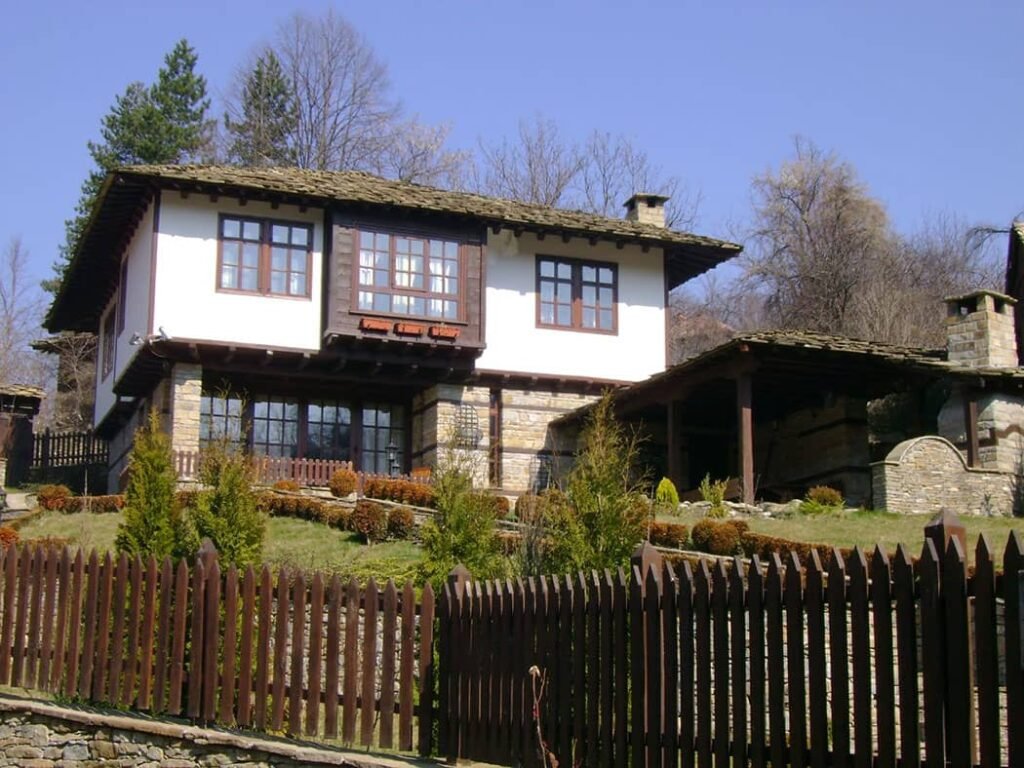
Hidden among the wooded hills of the Balkan Mountains near Gabrovo, Bozhentsi offers the quiet atmosphere that makes the small towns in Bulgaria and their neighboring historic villages so rewarding to explore. The village has preserved much of its Bulgarian National Revival character. Stone walls, cobblestone lanes, wooden gates, and traditional houses with distinctive stone-slab roofs give the village an atmosphere that feels remarkably removed from modern city life.
Bozhentsi developed into a prosperous settlement during the 18th and 19th centuries, when local merchants and craftsmen traded wool, leather, wax, honey, and other goods. The wealth of that period can still be seen in the large Revival-era houses, many with workshops and storage areas incorporated into their design.
Today, Bozhentsi is an architectural and historical reserve, with numerous preserved buildings representing traditional architecture from the Bulgarian National Revival. Rather than having one major landmark, much of the appeal comes from simply walking its narrow streets and noticing the stone roofs, wooden verandas, old fountains, workshops, and houses tucked into the surrounding greenery.
While exploring the village, look for the Prophet Elijah Church, the old school, traditional workshops, and several historic houses open to visitors. Small guesthouses and taverns make it possible to stay overnight, although Bozhentsi also works well as a day trip from Gabrovo or Veliko Tarnovo.
Why Visit Bozhentsi?
Come for the architecture, quiet mountain setting, and the chance to experience a well-preserved Bulgarian Revival village without needing a long itinerary. Bozhentsi is particularly beautiful when you have enough time to wander beyond the main street and explore its smaller cobblestone lanes.
Location: Bozhentsi, Gabrovo Province
Distance from Gabrovo: About 15 km
Best for: Bulgarian Revival architecture, photography, history, and relaxed village walks
2. Gela
High in the central Rhodope Mountains, Gela is a small mountain village surrounded by forests, meadows, and some of the most impressive scenery in southern Bulgaria. It lies about 18 km from Pamporovo and close to Shiroka Laka, so both villages fit easily into the same trip.
The area around Gela has been inhabited since ancient times, and archaeological discoveries point to a long human presence in this part of the Rhodopes. Traces associated with Thracian settlements and sanctuaries have been found in the surrounding region, adding another layer of interest to a place already rich in local legends and folklore.
Local legends connect Gela with Orpheus, the mythical Thracian musician and poet. Several places in the Rhodope Mountains claim connections with Orpheus, and the landscape around Gela has become part of that tradition. The stories are best enjoyed as part of the region’s mythology rather than treated as established historical fact.
Gela’s greatest attraction is its setting. Mountain peaks rise around the village, hiking routes cross the surrounding countryside, and open Rhodope meadows provide beautiful views in almost every direction.
The village becomes especially lively during the annual Gela Bagpipe Contest, when musicians and visitors gather in the mountain meadows for a celebration of Rhodope music and the traditional kaba gaida.
Why Visit Gela?
Gela shows a different side of the small towns in Bulgaria, where mountain scenery and local traditions matter more than a long list of landmarks. Combine it with nearby Shiroka Laka for a trip that brings together Rhodope scenery, traditional architecture, folklore, and music.
Location: Gela, Smolyan Province
Near: Shiroka Laka and Pamporovo
Best for: Rhodope scenery, hiking, folklore, traditional music, and photography
3. Zheravna
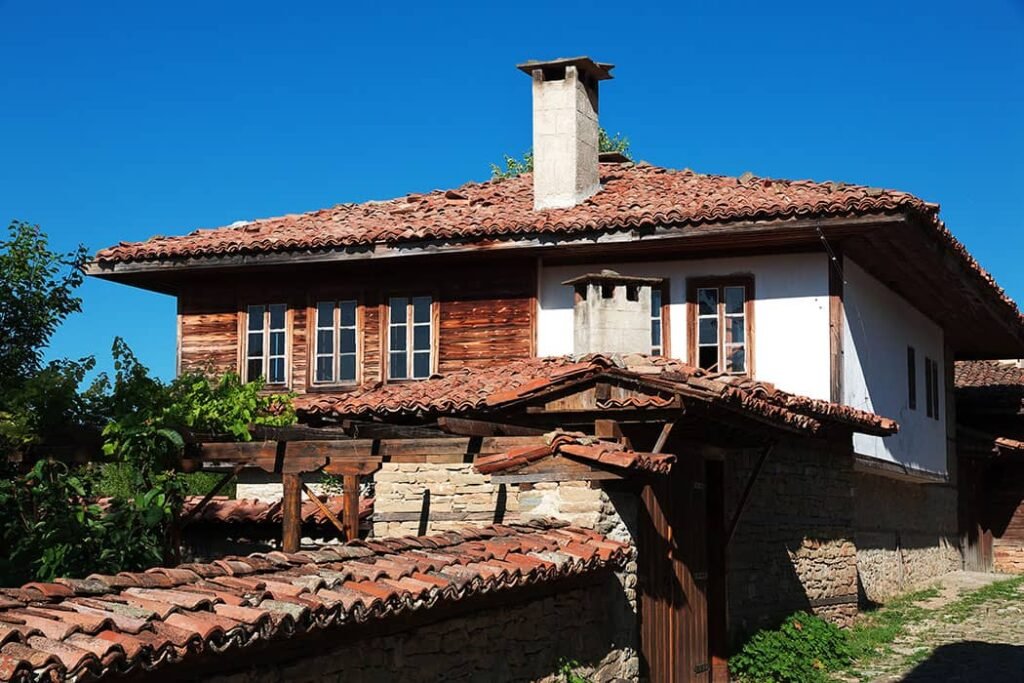
With narrow cobblestone lanes, stone walls, wooden houses, and forested hills surrounding the village, Zheravna feels like a place built for wandering on foot. Located in the eastern Balkan Mountains about 12 km from Kotel, it is an architectural reserve known for its remarkably preserved Bulgarian National Revival heritage.
More than 170 historic houses have been preserved in Zheravna, many dating from the 18th and 19th centuries. Their dark wooden façades, deep eaves, stone foundations, carved details, and enclosed courtyards create the distinctive appearance of the village. Modern development is limited in its historic center, which has helped Zheravna retain much of its traditional character.
The settlement prospered during the Bulgarian National Revival as a center of crafts and trade. Today, several historic buildings have been converted into museums where visitors can learn more about the people, architecture, and everyday life that shaped the village.
Among the places worth seeing are the Yordan Yovkov House Museum, dedicated to one of Bulgaria’s most celebrated writers, the Sava Filaretov House, and the Church of St. Nicholas. Even without entering every museum, walking through Zheravna is an experience in itself, especially along the quieter lanes away from the center.
Every year, the Festival of Folk Costume brings another side of Zheravna to life, with participants dressed in traditional or early 20th-century clothing as music, dancing, crafts, and Bulgarian traditions fill the surrounding area.
Why Visit Zheravna?
Zheravna combines architecture, history, and mountain scenery in a compact village that is easy to explore on foot. Stay long enough to walk beyond the busiest streets, where old wooden houses, stone walls, and views toward the Balkan Mountains reveal the quieter side of the village.
Location: Zheravna, Sliven Province
Distance from Kotel: About 12 km
Best for: National Revival architecture, Bulgarian history, traditional culture, photography, and slow travel
4. Arbanasi
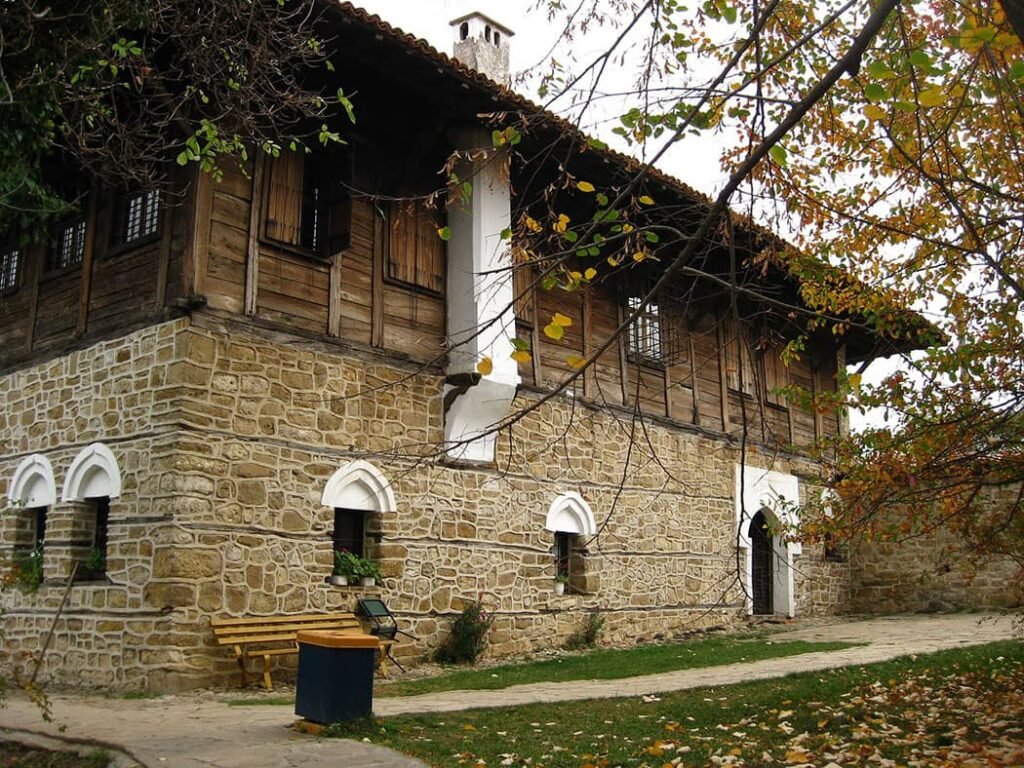
Arbanasi makes an easy addition to a Veliko Tarnovo itinerary and offers a different experience from many small towns in Bulgaria. Its fortified houses and fresco-covered churches give the village a character of its own.
Arbanasi became a prosperous trading and crafts settlement during the Ottoman period, particularly in the 17th and 18th centuries. Wealthy merchants built large fortified houses behind high stone walls, creating an architectural style quite different from the smaller Revival houses found in villages such as Bozhentsi and Zheravna.
One of the best places to see this architecture is the Konstantsalieva House, a large historic residence with heavy wooden gates, stone walls, living quarters, storage areas, and interior spaces that offer a glimpse into the lives of wealthy families who once lived here.
Arbanasi’s churches are equally impressive. From the outside, some appear surprisingly modest, but their interiors contain extensive frescoes and religious artwork. The Church of the Nativity of Christ is the standout, with walls and vaulted ceilings covered in elaborate paintings created during several periods.
Other landmarks include the Church of Saints Archangels Michael and Gabriel, the Church of St. George, and several historic monasteries in and around the village.
From parts of the plateau, there are beautiful views toward Veliko Tarnovo and the surrounding hills. Allow some time to enjoy them instead of moving directly from one historic sight to another.
Why Visit Arbanasi?
Arbanasi is an excellent addition to a Veliko Tarnovo itinerary. Its fortified houses and fresco-covered churches give it a character unlike most other Bulgarian villages, while its hilltop setting provides a quieter contrast to the busy historic sights of Veliko Tarnovo.
Location: Arbanasi, Veliko Tarnovo Province
Distance from Veliko Tarnovo: About 4 km
Best for: Historic churches, traditional architecture, Bulgarian history, photography, and day trips from Veliko Tarnovo
5. Shiroka Laka

Deep in the central Rhodope Mountains, Shiroka Laka is known for its stone houses, arched bridges, narrow streets, and strong musical traditions. Located about 23 km northwest of Smolyan and close to Pamporovo, the village is an architectural and folklore reserve and a rewarding stop while exploring the Rhodopes.
Traditional houses climb the slopes on both sides of the river, giving Shiroka Laka a very different appearance from the wooden Revival villages of the Balkan Mountains. Many were built during the 19th century and feature thick stone walls, white façades, wooden details, and characteristic stone-slab roofs.
As you walk through the village, look for the old arched stone bridges crossing the river and the Church of the Assumption of the Virgin Mary, built in the 19th century. The surrounding hills provide an impressive backdrop almost everywhere you turn.
Music is an important part of Shiroka Laka’s identity. The village is closely associated with traditional Rhodope folk music and the deep sound of the kaba gaida, the large bagpipe characteristic of this part of Bulgaria. It is also home to the National School of Folk Arts, where Bulgarian folk music and traditions continue to be taught.
One of the most memorable times to visit is during Pesponedelnik, the village’s traditional Kukeri festival, usually held at the beginning of March. Masked performers dressed in elaborate costumes and heavy bells parade through the village as part of an old ritual traditionally associated with driving away evil and welcoming spring.
Why Visit Shiroka Laka?
Shiroka Laka brings Rhodope architecture, folk music, mountain scenery, and living traditions together in one place. Among the small towns in Bulgaria and historic villages featured here, few have such a strong connection to Rhodope musical culture.
Location: Shiroka Laka, Smolyan Province
Distance from Smolyan: About 23 km
Best for: Rhodope architecture, folk music, Kukeri traditions, mountain scenery, and photography
6. Leshten

Perched on the southern slopes of the Western Rhodope Mountains, Leshten is a tiny village of stone houses, narrow lanes, and sweeping views toward the Pirin Mountains. After decades of population decline, many of its traditional homes were restored and converted into guesthouses, helping transform the village into a small destination for rural and mountain tourism.
Leshten’s appeal is less about checking off major landmarks and more about the setting itself. Old houses built from stone and wood line steep lanes, traditional roofs rise above garden walls, and the surrounding mountains are visible from many parts of the village.
A number of restored houses retain architectural features typical of the region while now serving as family-run guesthouses and places to eat. This makes Leshten particularly suited to an overnight stay, when the village becomes much quieter after daytime visitors leave.
The unusual Clay House, with its rounded forms and storybook appearance, has also become a recognizable local landmark. It is very different from the historic architecture surrounding it, but it adds a quirky detail to the village.
Leshten can easily be combined with Kovachevitsa, another beautifully preserved village in the Western Rhodopes. The mineral springs and archaeological remains around Ognyanovo are nearby too, another reason to spend more than a few hours in this part of the Rhodopes.
Why Visit Leshten?
Leshten is less about sightseeing and more about slowing down. Compared with the busier small towns in Bulgaria, its appeal comes from mountain views, restored houses, quiet lanes, and easy access to other villages in the Western Rhodopes.
Location: Leshten, Blagoevgrad Province
Near: Kovachevitsa and Ognyanovo
Best for: Rural tourism, mountain views, traditional houses, photography, and quiet overnight stays
7. Koprivshtitsa

Colorful houses, stone bridges, cobblestone streets, and wooded hills make Koprivshtitsa one of the most recognizable historic towns in Bulgaria. Located in the Sredna Gora Mountains along the Topolnitsa River, the town preserves hundreds of buildings from the Bulgarian National Revival period.
Many of these historic buildings are brightly painted homes with stone foundations, wooden details, enclosed courtyards, and distinctive façades. Several have been transformed into museums, allowing visitors to step inside rather than experience the town only from its streets.
Koprivshtitsa also occupies an important place in Bulgarian history. It was a major center of the April Uprising of 1876 against Ottoman rule. The uprising began here on April 20, 1876, according to the Julian calendar then in use, before spreading to other revolutionary districts.
Several museum houses tell the stories of prominent Bulgarians connected with the town. Among the most important are the homes of Todor Kableshkov, Georgi Benkovski, Dimcho Debelyanov, Lyuben Karavelov, and Nayden Gerov. Together, these museum houses tell a much broader story of Koprivshtitsa and its place in Bulgarian history.
Another landmark is the small First Rifle Shot Bridge (Kalachev Bridge), associated with the opening moments of the April Uprising. Visitors can also explore historic churches, old fountains, craft shops, and quiet residential streets beyond the main museum route.
Koprivshtitsa remains strongly connected with Bulgarian folk culture as well. The town hosts the National Festival of Bulgarian Folklore, a major gathering of traditional singers, musicians, dancers, and storytellers held periodically in the nearby meadows.
Why Visit Koprivshtitsa?
Few small towns in Bulgaria combine beautiful architecture and national history as naturally as Koprivshtitsa. You can spend several hours visiting its museums, but leave time simply to walk the cobblestone streets and explore beyond the busiest part of town.
Location: Koprivshtitsa, Sofia Province
Distance from Sofia: About 110 km
Best for: Bulgarian history, National Revival architecture, museums, folk traditions, and photography
8. Kotel

Surrounded by the eastern Balkan Mountains, Kotel stands apart from many other small towns in Bulgaria because of its deep connections with the National Revival, traditional crafts, and folk culture. It doesn’t have the same concentration of preserved historic houses as Koprivshtitsa or Zheravna. Instead, Kotel’s appeal lies in its connections with the Bulgarian National Revival, traditional crafts, and folk culture.
Kotel became an important center of education, crafts, and Bulgarian cultural life during the National Revival. A remarkable number of influential figures were born in or connected with the town, including revolutionary Georgi Sava Rakovski, educator Sophronius of Vratsa, statesman Gavril Krastevich, and scholar Dr. Petar Beron.
The Pantheon of Georgi Sava Rakovski is among Kotel’s most important sights. Its exhibitions explore the life of Rakovski and the revolutionary movement that eventually contributed to Bulgaria’s liberation from Ottoman rule.
Kotel is also closely associated with traditional carpet weaving. The geometric patterns and distinctive colors of Kotel carpets form part of a craft tradition passed through generations. Visitors interested in Bulgarian folk culture can learn more about local textiles, crafts, costumes, and everyday life in the town’s museum collections.
Music is another important part of Kotel’s identity. The town is home to the Filip Kutev National School of Folk Arts, where generations of students have studied Bulgarian folk music, dance, singing, and traditional instruments.
Beyond its museums, Kotel makes a useful base for exploring the surrounding eastern Balkan Mountains. Forests, rock formations, caves, and hiking routes are found throughout the area, while Zheravna is only about 12 km away.
Why Visit Kotel?
Kotel isn’t as polished as some of the heritage destinations on this list, and that’s part of its appeal. Its story is tied to the people, crafts, music, and revolutionary history of the town, along with easy access to the landscapes of the eastern Balkan Mountains.
Location: Kotel, Sliven Province
Near: Zheravna
Best for: Bulgarian history, traditional crafts, folk music, museums, and mountain exploration
9. Tryavna

Tryavna has a remarkably well-preserved historic center, where cobblestone streets, stone bridges, traditional houses, craft workshops, and the landmark Clock Tower are all within an easy walk.
Tryavna became an important center of craftsmanship during the 18th and 19th centuries and gave rise to the Tryavna Art School, known especially for woodcarving, icon painting, and architecture. The work of generations of local masters can still be seen throughout the town.
At the heart of old Tryavna is Captain Dyado Nikola Square, dominated by the 19th-century Clock Tower. Beside it, the old stone bridge crosses the river toward one of the most atmospheric parts of town, where historic buildings now house workshops, galleries, cafés, and small shops.
The Daskalov House is another highlight. Its interiors contain two extraordinary carved wooden ceilings created during a famous craftsmanship competition between a master woodcarver and his apprentice. Their intricate sun motifs have become symbols of the Tryavna woodcarving tradition.
Visitors interested in religious art should also explore Tryavna’s collections of icons and woodcarving. The town’s museums preserve works produced by generations of artists from the Tryavna School, providing a closer look at a craft tradition that influenced churches and homes throughout Bulgaria.
Other sights include the Church of St. Archangel Michael, the Angel Kanchev House Museum, old school buildings, traditional workshops, and residential streets where National Revival houses still line the hillsides.
Why Visit Tryavna?
Among the best small towns in Bulgaria for walking, Tryavna combines a compact historic center with genuine artistic traditions. The old bridge and Clock Tower may be its best-known sights, but the woodcarving workshops, museum houses, and quieter streets are what make the town worth spending several hours exploring.
Location: Tryavna, Gabrovo Province
Near: Gabrovo and Bozhentsi
Best for: Woodcarving, icon painting, National Revival architecture, museums, crafts, and walking
10. Melnik

Surrounded by sandstone cliffs and the unusual formations of the Melnik Earth Pyramids, Melnik looks unlike any other town on this list. Located in southwestern Bulgaria near the Pirin Mountains, it is officially the smallest town in Bulgaria by population, yet its history, architecture, wine traditions, and dramatic landscape make it a rewarding place to explore.
Melnik flourished as a commercial and cultural center during the Bulgarian National Revival, with local merchants becoming wealthy through trade, particularly wine. Historic houses still line the sloping streets, often combining stone lower levels with broad wooden upper floors.
The most impressive is the Kordopulov House, built in the 18th century for a wealthy merchant family. Its spacious rooms, decorated interiors, stained-glass windows, and underground wine cellar offer a glimpse into Melnik’s prosperous past.
Wine remains closely tied to the identity of the region. Vineyards cover the surrounding countryside, and Melnik is especially associated with the indigenous Shiroka Melnishka Loza, or Broad-Leaved Melnik grape. Small wineries and wine cellars can be found throughout the area, preserving a tradition that has shaped the town for generations.
The landscape is just as memorable as the town itself. The Melnik Earth Pyramids are natural sandstone formations sculpted by erosion into steep ridges, pinnacles, and slopes around Melnik. Climb above the town and the rooftops gradually give way to wide views of the surrounding sandstone formations.
For a longer visit, continue to Rozhen Monastery, about 7 km from Melnik. One of Bulgaria’s important medieval monasteries, it can also be reached by a scenic hiking route through the sandstone landscape.
Why Visit Melnik?
Melnik combines several experiences that are difficult to find together elsewhere: historic architecture, a centuries-old wine culture, mountain scenery, and the surreal landscape of the Melnik Earth Pyramids. Its compact size also makes it easy to explore on foot.
Location: Melnik, Blagoevgrad Province
Near: Rozhen Monastery and the Pirin Mountains
Best for: History, traditional architecture, local wine heritage, hiking, landscapes, and photography
Which Small Towns and Villages in Bulgaria Should You Visit?
Choosing between the small towns in Bulgaria depends largely on what you want to experience. Koprivshtitsa and Tryavna are excellent for Bulgarian National Revival history, while Shiroka Laka and Gela are better suited to travelers drawn to Rhodope culture and mountain scenery. Melnik stands apart for its sandstone landscape and wine heritage.
| Destination | Best For | Region | Combine With |
|---|---|---|---|
| Bozhentsi | Revival architecture, quiet walks | Balkan Mountains | Gabrovo, Tryavna |
| Gela | Mountains, folklore, hiking | Rhodope Mountains | Shiroka Laka, Pamporovo |
| Zheravna | Historic houses, traditional culture | Eastern Balkan Mountains | Kotel |
| Arbanasi | Churches, historic houses | Veliko Tarnovo region | Veliko Tarnovo |
| Shiroka Laka | Rhodope architecture, folklore | Rhodope Mountains | Gela, Pamporovo |
| Leshten | Rural stays, mountain views | Western Rhodopes | Kovachevitsa, Ognyanovo |
| Koprivshtitsa | Bulgarian history, museums | Sredna Gora | Panagyurishte |
| Kotel | History, crafts, folk culture | Eastern Balkan Mountains | Zheravna |
| Tryavna | Woodcarving, architecture, walking | Balkan Mountains | Bozhentsi, Gabrovo |
| Melnik | Earth pyramids, history, wine heritage | Southwestern Bulgaria | Rozhen Monastery |
For a first trip focused on historic towns in Bulgaria, Koprivshtitsa, Tryavna, and Melnik are strong choices. For traditional village architecture, look toward Bozhentsi, Zheravna, Arbanasi, and Shiroka Laka. Travelers interested in quieter mountain stays may prefer Gela or Leshten.
Several destinations also pair naturally together. Tryavna and Bozhentsi, Kotel and Zheravna, and Gela and Shiroka Laka can each be combined into a single regional trip without spending most of the day on the road.
Tips for Visiting Small Towns and Villages in Bulgaria
Exploring small towns and villages in Bulgaria is generally straightforward, but a little planning can make the trip much easier. Many historic centers were built long before cars, and several destinations on this list are tucked into mountain regions where public transportation is limited.
Consider Renting a Car
A car gives you much more flexibility, especially for villages such as Gela, Leshten, Bozhentsi, and Zheravna. It also makes it easier to combine nearby destinations, such as Tryavna with Bozhentsi or Kotel with Zheravna.
Public buses and trains can work well for some larger towns, but schedules to smaller mountain villages may be limited.
Wear Comfortable Shoes
Cobblestone streets look beautiful in photographs but are not always easy to walk on. Comfortable shoes with good grip are useful in Koprivshtitsa, Zheravna, Bozhentsi, Arbanasi, and other historic areas, especially after rain.
Don’t Rush Through the Historic Centers
Many of these places are small enough to cross quickly, but that doesn’t mean they should be rushed. Step away from the main square, explore the side streets, visit a museum house or workshop, and leave time for the details that make each place distinctive.
Stay Overnight When You Can
Day trips are convenient, but villages such as Leshten, Shiroka Laka, and Zheravna have a different atmosphere in the early morning and evening after many daytime visitors have left. Traditional guesthouses can also become part of the experience.
Check Museum and Festival Schedules
Opening hours can vary by season, and smaller museums may close on certain days. Festival dates can also change from year to year. Check official local information before traveling specifically for a museum, folk festival, or cultural event.
Respect Historic Buildings and Local Life
These destinations are not simply tourist attractions. People still live in many of the historic houses and neighborhoods featured in this guide. Respect private property, avoid entering courtyards without permission, and follow any photography restrictions inside churches and museums.
Frequently Asked Questions About Small Towns in Bulgaria
What are the best small towns in Bulgaria to visit?
Koprivshtitsa, Tryavna, Melnik, and Kotel are among the best small towns in Bulgaria for travelers interested in history, traditional architecture, museums, and local culture. This guide also includes historic villages such as Bozhentsi, Zheravna, Arbanasi, Shiroka Laka, Gela, and Leshten.
What is the smallest town in Bulgaria?
Melnik is the smallest town in Bulgaria by population. Despite its size, it has a long history and is known for its traditional architecture, local wine heritage, nearby sandstone pyramids, and proximity to Rozhen Monastery.
Which small town in Bulgaria is best for history?
Koprivshtitsa is an excellent choice for Bulgarian history. The town played an important role in the April Uprising of 1876 and preserves numerous National Revival houses associated with revolutionaries, writers, and other prominent Bulgarians.
Which traditional villages in Bulgaria are worth visiting?
Bozhentsi, Zheravna, Arbanasi, Shiroka Laka, and Leshten are all worth considering. Together they show just how varied Bulgaria’s historic villages can be, from Revival-era houses and frescoed churches to Rhodope architecture and mountain scenery.
Can you visit Bulgaria’s small towns without a car?
Yes, some small towns in Bulgaria, including Koprivshtitsa and Tryavna, can be reached by public transportation, although connections may require additional planning. A car is much more convenient for combining remote villages and mountain destinations on the same trip.
Which small towns and villages can be combined on one trip?
Several make natural pairs because they are close together. Tryavna and Bozhentsi can be explored together, as can Kotel and Zheravna or Gela and Shiroka Laka. Melnik is easily combined with Rozhen Monastery, while Arbanasi fits naturally into a visit to Veliko Tarnovo.
Discover the Smaller Side of Bulgaria
Bulgaria’s smaller destinations reveal a side of the country that’s easy to miss when traveling only between Sofia, Plovdiv, and the Black Sea coast. Here, old stone bridges still cross mountain rivers, Revival houses line cobblestone streets, church walls preserve centuries-old paintings, and traditional crafts remain part of local identity.
The small towns in Bulgaria are also wonderfully varied. Koprivshtitsa tells the story of the April Uprising, Tryavna preserves generations of woodcarving and icon painting, and Melnik sits beneath sandstone formations unlike anywhere else in the country. The villages add another dimension, from the wooden houses of Zheravna to the Rhodope traditions of Shiroka Laka and Gela.
You don’t need to see all ten at once. Choose a region, slow down, and leave enough time to wander beyond the main sights. In places this small, an old side street, a mountain view, or a conversation at a family-run guesthouse can become as memorable as the landmark you originally came to see.
Continue Exploring Bulgaria
Planning more of your trip? These guides will help you discover some of the country’s most memorable places:
Have you visited any of these towns or villages? Share your favorite with @stunningbulgaria on Instagram and use #stunningbulgaria so we can see where you’ve been.