Traveling to Bulgaria for the first time is fairly easy, but a few local customs and practical differences can catch visitors by surprise. Knowing some of the things NOT to do in Bulgaria can save you time, prevent awkward misunderstandings, and help you experience much more of the country.
Some mistakes are cultural, such as getting confused by Bulgaria’s famous head gestures. Others are practical, like relying entirely on public transportation when you want to explore remote monasteries, mountain villages, waterfalls, and historical sites.
Most aren’t serious mistakes. They’re simply things I wish more first-time visitors knew before arriving.
16 Things NOT to Do in Bulgaria
Bulgaria is an easy country to fall in love with once you venture beyond the obvious tourist stops. Ancient ruins, medieval monasteries, small villages, mountains, Black Sea beaches, mineral springs, and excellent local food are packed into a relatively small country.
To get the most from your trip, here are some of the most important things NOT to do in Bulgaria, along with common mistakes first-time visitors should avoid.
The man is a slave of his own will, but a master of his own work.
Colonel Boris Drangov
Don’t Visit Only the Big Cities
Sofia, Plovdiv, and Varna are all worth visiting, but one of the biggest mistakes you can make in Bulgaria is spending your entire trip in the major cities.
Some of the country’s most memorable places are found in the mountains, small towns, villages, monasteries, and countryside. Bulgaria has everything from ancient Thracian tombs and medieval fortresses to traditional villages, caves, waterfalls, and Black Sea beaches.
Before your trip, make a rough plan of what you want to see beyond the cities. Consider adding at least one mountain destination, historical site, monastery, or traditional village to your itinerary. Several of Bulgaria’s UNESCO World Heritage Sites are also outside the major urban centers.
Also Read: Top 10 Places to Visit in Bulgaria

Don’t Assume Every Public Fountain Is Drinking Water
Bulgaria is famous for its mineral springs, and in many towns, villages, parks, and mountain areas you will come across public fountains where locals regularly fill bottles with water.
Carrying a reusable water bottle is a good idea, especially if you are traveling around the country. It reduces unnecessary plastic waste and can be refilled wherever you know the water is safe to drink.
However, don’t assume that every fountain or natural spring you encounter is suitable for drinking. Look for signs indicating that the water is potable, use established drinking fountains, or ask a local if you are unsure.
Mineral water is also an important part of Bulgarian culture. Places such as Velingrad, Hisarya, Devin, Sandanski, and Sapareva Banya are well known for their mineral springs and spa traditions.
Bulgaria has hundreds of mineral and thermal springs, with more than 200 developed mineral-water sources across the country. This abundance of natural mineral water is one reason spa and balneotherapy traditions have such a long history in Bulgaria.
Bulgaria is the second country in Europe after Iceland by the number of mineral and spring water sources!
Don’t Rely Only on Public Transportation
Public transportation can get you around Bulgaria’s major cities and between many towns, but don’t rely on it for your entire trip if you want to explore beyond the usual tourist routes.
Sofia has an extensive metro and public transportation network, while buses and trains connect many destinations across the country. However, reaching remote monasteries, mountain villages, waterfalls, caves, and archaeological sites can be much more difficult without a car. Some routes also have limited schedules, especially on weekends or in smaller towns.
If you want the freedom to explore Bulgaria’s countryside, renting a car can save a considerable amount of time and make it easier to combine several destinations in one day.
Many of Bulgaria’s most breathtaking places are outside the major cities, and having your own transportation gives you much more flexibility to discover them.
Don’t Ignore Bulgaria’s Long History
It is easy to visit Bulgaria for its mountains, beaches, and food without realizing just how much history surrounds you. Ancient tombs, Roman ruins, medieval fortresses, monasteries, churches, and traditional villages can be found throughout the country.
The lands of modern Bulgaria were home to ancient Thracian tribes long before the Bulgarian state existed and later became part of the Roman and Byzantine worlds. Let’s not forget that Bulgaria has more than 1,300 years of state history. The First Bulgarian Empire was established south of the Danube in 681 AD, making Bulgaria one of the oldest states in Europe to have preserved its name to the present day. Yet the history of these lands stretches much further back, shaped by Thracians, Romans, Slavs, and other peoples who left their mark long before the Bulgarian state was founded.
You can still see traces of these different periods across Bulgaria, from Thracian tombs and Roman cities to medieval capitals such as Pliska and Veliki Preslav and landmarks from the Bulgarian National Revival.
One of the things NOT to do in Bulgaria is rush past its history. If you enjoy historical sites, make time for at least a few archaeological landmarks during your trip. They add an entirely different dimension to understanding Bulgaria beyond its beautiful scenery.
More than 40,000 cultural monuments are registered across Bulgaria, an extraordinary number for such a small country. Bulgaria’s Ministry of Tourism has ranked the country third in Europe after Italy and Greece for its number of immovable cultural monuments and artifacts.
Don’t Eat Only at International Fast-Food Chains
You can find the same international fast-food chains in Bulgaria that you probably have at home, but eating only familiar food means missing one of the best parts of visiting the country.
Bulgarian cuisine is hearty, fresh, and diverse, with plenty of dishes worth trying. Start with a Shopska salad, then look for bob chorba, Bulgarian moussaka, stuffed peppers (palneni chushki), banitsa, parlenka, kebapche, and cold tarator.
Look beyond restaurants aimed specifically at tourists, too. Small family-run restaurants, traditional mehanas (Bulgarian taverns), bakeries, and neighborhood eateries are often where you’ll find some of the most memorable local food.
And don’t leave Bulgaria without trying a warm banitsa from a local bakery for breakfast. It is one of the simplest—and best—Bulgarian foods to eat while traveling.
Don’t Start Heated Political Arguments
Bulgarians certainly aren’t afraid to talk about politics, and you may hear plenty of political opinions during your trip. The safer rule isn’t to avoid politics completely, but to avoid turning a casual conversation into a heated argument.
Topics involving current political parties, corruption, communism, the Ottoman period, Russia, and Bulgaria’s recent political history can bring out very different opinions, sometimes even among members of the same family.
If the subject comes up naturally, listen and ask questions rather than assuming that all Bulgarians see these issues in the same way. What sounds like an innocent political joke or historical comment to a visitor can occasionally touch on a much deeper local debate.
And if several Bulgarians start arguing about politics with each other, you may be better off enjoying your Shopska salad and letting them handle it.
Don’t Buy Alcohol From Questionable Sources
Bulgaria is known for traditional drinks such as rakia, and you may come across homemade versions during your travels. But don’t buy unlabelled or suspiciously packaged alcohol from unknown sellers simply because it is cheap.
When buying alcohol, stick to reputable supermarkets, shops, restaurants, wineries, and licensed producers. Properly bottled products should have clear labels and come from a source you can trust.
Homemade rakia is deeply rooted in Bulgarian tradition, and many families still produce their own. If you are offered some by people you know and trust, that’s very different from buying an anonymous bottle from a questionable roadside or informal seller.
The price isn’t the problem—the source is.
Don’t Assume a Nod Always Means Yes
Of all the things NOT to do in Bulgaria, assuming that every nod means “yes” is one of the easiest mistakes for first-time visitors to make. Bulgarian customs around indicating “yes” and “no” with the head can be surprisingly confusing.
Traditionally, Bulgarians may move the head from side to side to indicate “yes” and make a nodding motion to indicate “no,” which can appear reversed to visitors from many other countries. In practice, things aren’t always that simple. Many Bulgarians, especially those accustomed to interacting with foreigners, use the gestures in the internationally familiar way.
This means you can occasionally find yourself wondering whether the person in front of you just agreed with you or told you exactly the opposite.
A popular legend also explains how the reversed gestures originated during centuries of Ottoman rule. According to the story, Bulgarians were forced at knifepoint to renounce their faith and deliberately reversed the gestures for yes and no. It’s a fascinating story, but there is no solid historical evidence that this is actually how the Bulgarian head gestures began.
When something important is being discussed—directions, prices, reservations, or transportation—don’t depend entirely on a head gesture. Listen for the Bulgarian words “da” (да) for yes and “ne” (не) for no, or simply ask for clarification.
Don’t Assume Everyone Speaks English
You can get by with English in many parts of Bulgaria, especially in Sofia, Plovdiv, Varna, the Black Sea resorts, and other popular tourist destinations. Many younger Bulgarians also speak English very well.
Once you venture into smaller towns, mountain villages, local markets, or less touristy areas, however, you may meet people who speak little or no English. That shouldn’t stop you from exploring. One of the simplest things NOT to do in Bulgaria is assume that English will work everywhere; learning just a few Bulgarian words can make traveling considerably easier.
Here are a few useful ones to remember:
- Zdraveyte (Здравейте) — Hello
- Blagodarya (Благодаря) — Thank you
- Molya (Моля) — Please / You’re welcome
- Da (Да) — Yes
- Ne (Не) — No
- Izvinete (Извинете) — Excuse me / Sorry
Don’t worry about getting the pronunciation perfect. Even a simple blagodarya is usually appreciated, and you’ll often find that people will try to help even when you don’t share a common language.
One more thing: Bulgarian uses the Cyrillic alphabet, so becoming familiar with a few Cyrillic letters before your trip can be surprisingly useful when reading road signs, menus, and place names.
Don’t Expect Bulgaria to Be Cheap Everywhere
Assuming everything will be incredibly cheap is another of the things NOT to do in Bulgaria. The country still offers good value compared with many destinations in Western Europe, but prices vary considerably depending on where you travel.
Prices can vary considerably depending on where you travel. Sofia, popular Black Sea resorts, ski destinations such as Bansko and Borovets, and restaurants in heavily visited tourist areas can cost much more than small towns and villages.
You can still find excellent value in local bakeries, neighborhood restaurants, markets, family-run guesthouses, and places away from the busiest tourist centers. But the old idea that practically everything in Bulgaria costs next to nothing simply isn’t true anymore.
Instead of choosing a place simply because it looks cheap, look for where locals eat, shop, and spend their time. That’s often where you’ll find both better prices and a more authentic side of Bulgaria.
Don’t Assume You Can Pay by Card Everywhere
Card payments are widely accepted in Bulgaria, especially in hotels, supermarkets, shopping centers, larger restaurants, and businesses in the major cities. Still, carrying some cash is a good idea.
Small shops, local markets, bakeries, mountain huts, village restaurants, parking areas, and businesses in more remote places may prefer cash or occasionally accept nothing else. This becomes more important once you leave Sofia and the major tourist destinations.
You don’t need to carry a large amount. Keep enough cash for small purchases, food, transportation, entrance fees, or unexpected situations where a card isn’t accepted.
Also remember that Bulgaria uses the euro, so visitors no longer need to exchange money into Bulgarian leva as they did in the past.
Don’t Assume Everything Will Be Open When You Arrive
If you’re visiting a museum, monastery, cave, mountain hut, archaeological site, or another attraction outside the major cities, check the opening hours before making the trip.
Some smaller attractions have seasonal schedules, shorter winter hours, specific closing days, or different weekend hours. Mountain huts and businesses in resort areas can also operate differently outside the main summer and winter seasons.
Before making a long drive or hike for a single attraction, check its current schedule on the official website or call ahead when possible.
For monasteries and churches, remember that these are active religious sites rather than simply tourist attractions. Services, religious holidays, and local rules can occasionally affect visitor access.
A quick check before leaving can save you from driving across half of Bulgaria only to discover that the door is locked.
Don’t Be Too Quick to Criticize Bulgarian Football
Football is the most popular sport in Bulgaria, and you’ll have no trouble finding Bulgarians willing to talk about it. The Premier League, Champions League, European competitions, and international football are all easy conversation starters.
Bulgarian football, however, can be a slightly different subject. Locals may freely complain about the national team’s results, the domestic league, club management, or the current state of Bulgarian football—but that doesn’t necessarily mean they want to hear a visitor spend ten minutes explaining how terrible it is.
Football loyalties can also run deep, particularly around clubs such as Levski Sofia and CSKA Sofia, whose rivalry is one of the biggest in Bulgarian sport.
You certainly don’t need to avoid football conversations. Just remember the same rule that works almost everywhere in the Balkans: let the locals complain about their football first.
Don’t Assume Bulgarian Self-Criticism Is an Invitation to Join In
Like people in many Balkan countries, Bulgarians can be extremely self-critical. You may hear locals joking about Bulgaria, complaining about the government, making fun of their hometown, or teasing their friends without holding much back.
But there is a difference between Bulgarians making jokes about themselves and hearing the same jokes from someone who barely knows the country. Criticism of Bulgaria, its people, history, or traditions can sometimes be taken more personally when it comes from a visitor.
That doesn’t mean you need to be overly careful with every joke. Bulgarian humor can be sarcastic, direct, and wonderfully self-deprecating. Just get to know the people you’re with before joining in.
A Bulgarian may complain about Bulgaria all afternoon—and then spend the evening explaining why it is one of the best countries in the world. You’ll get used to it.
Don’t Expect Every Road to Be in Great Condition
Driving is one of the best ways to explore Bulgaria, especially if you want to reach small villages, monasteries, waterfalls, mountain areas, and places far from the main tourist routes. But road conditions can vary considerably.
Major highways and roads between larger cities are generally easy to navigate, while smaller rural and mountain roads can be narrow, winding, poorly marked, or rough in places. Potholes are also something to watch for, especially once you leave the main roads.
When driving in Bulgaria, don’t judge travel times only by distance. A destination that looks close on the map may take considerably longer to reach when the route winds through the mountains or passes through a series of villages.
If you’re driving outside the cities, give yourself extra time and avoid rushing. And sometimes the slower road turns out to be the better one—you’ll pass villages, mountain views, roadside fruit stands, and places you would never see from a highway.
Don’t Forget That Monasteries and Churches Are Religious Sites
Bulgaria’s monasteries and Orthodox churches are among the most beautiful places to visit in the country, but remember that many of them are active places of worship rather than simply tourist attractions.
Dress respectfully, keep your voice down, and pay attention to signs regarding photography. Some churches and monasteries allow photos in certain areas but prohibit them inside, particularly when flash photography is involved.
You may also arrive during a religious service. Visitors are usually welcome to enter when permitted, but avoid walking around taking photos or talking loudly while people are praying.
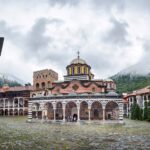
At heavily visited places such as Rila Monastery, it’s easy to forget that monks still live and worship within the same complex tourists are exploring.
You don’t need to understand every Orthodox tradition before entering. A little respect and awareness are enough.
FAQ About Things NOT to Do in Bulgaria
What should tourists avoid doing in Bulgaria?
Some of the main things NOT to do in Bulgaria include limiting your trip to the big cities, assuming everyone speaks English, relying entirely on public transportation for remote destinations, drinking from an unknown natural spring, and assuming you can pay by card everywhere. Visitors should also respect local customs, religious sites, and cultural differences.
Is Bulgaria safe for tourists?
Bulgaria is generally a straightforward country to travel around, including for first-time visitors. As you would anywhere else, keep an eye on your belongings in crowded tourist areas, use reputable transportation and businesses, and take normal precautions when traveling at night or exploring unfamiliar places.
Is it rude to nod your head in Bulgaria?
No. The confusion comes from the traditional Bulgarian head gestures for “yes” and “no,” which can appear reversed to many foreign visitors. Modern usage isn’t always consistent, especially when Bulgarians are speaking with foreigners, so listen for “da” (yes) and “ne” (no) when the answer matters.
Can you drink tap water in Bulgaria?
Tap water is generally drinkable in much of Bulgaria, and the country is famous for its natural mineral springs. However, don’t assume that water from every roadside fountain, mountain spring, or unmarked source is safe to drink. When in doubt, use an established drinking-water source or ask locally.
Do I need cash when visiting Bulgaria?
It’s a good idea to carry some cash even though card payments are widely accepted. Smaller shops, markets, bakeries, mountain huts, parking areas, and businesses in villages or remote destinations may not always accept cards.
Do people speak English in Bulgaria?
English is widely spoken in major cities and tourist destinations, particularly among younger Bulgarians. You may encounter fewer English speakers in small towns and villages, so learning a few Bulgarian words such as blagodarya (thank you), molya (please), da (yes), and ne (no) can be useful.
Have You Been to Bulgaria? What Would You Add?
Bulgaria is an easy country to explore once you understand a few of its local quirks. Most of the things on this list aren’t strict rules—they’re simply useful things to know that can make your first trip a little easier and a lot more enjoyable.
If you’ve already visited Bulgaria, what surprised you? Is there something you wish you had known before your first trip? Let us know what you would add to our list of things NOT to do in Bulgaria.
You can also find us on Instagram at @stunningbulgaria and share your travels with #stunningbulgaria.
More Bulgaria Travel Guides
Planning your trip? These guides can help you discover more of the country: