Bulgaria has a rich historical and cultural heritage, and many of the essential Bulgarian souvenirs you will find around the country are closely connected to its folklore, crafts, food, and traditions.
Finding a unique souvenir is not always easy, especially when shops are filled with the usual magnets and postcards. Handcrafted Bulgarian souvenirs are a great way to bring a piece of the country home with you, whether you are buying something for yourself, for Bulgarian friends living abroad, or as a gift for someone discovering Bulgaria for the first time.
Essential Bulgarian Souvenirs You Should Buy on Your Next Trip
Bulgaria is full of small souvenir shops, markets, and artisan workshops where you can find traditional pottery, wood carvings, old pins from the socialist era, embroidered clothing and textiles, hand-painted icons, locally made foods, and many other distinctly Bulgarian gifts.
Do not despise old customs! Don’t forget your father’s fireplace!
Georgi Sava Rakovski
Below are 15 Bulgarian souvenirs worth looking for during your trip, from famous Bulgarian rose products and traditional crafts to foods and gifts that are easy to bring home.
Rose Oil or Rose Products
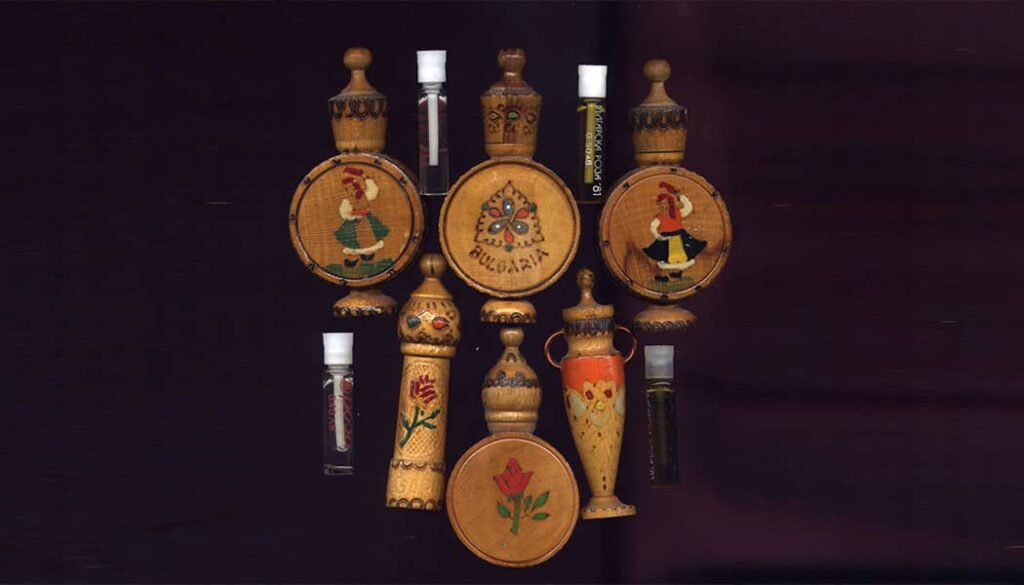
Bulgarian rose oil is one of the country’s most famous products and an excellent souvenir to bring home from Bulgaria. It is traditionally produced from the highly fragrant Rosa damascena, or Damask rose, which has been cultivated in Bulgaria for centuries.
The heart of Bulgaria’s rose-growing tradition is the Rose Valley, particularly the area around Kazanlak and Karlovo. Roses are harvested by hand during the flowering season, usually early in the morning, before the petals lose some of their precious aromatic compounds.
Pure Bulgarian rose oil requires an enormous quantity of rose blossoms to produce even a small amount of essential oil, which helps explain its high value. Bulgaria’s rose industry has also become internationally associated with perfumes, cosmetics, rose water, soaps, creams, and other natural rose products.
If you want a distinctly Bulgarian souvenir, rose oil or a product made with Bulgarian rose oil is difficult to beat. Small bottles of rose oil, rose water, perfumes, soaps, and cosmetics are widely available and are easy to bring home as gifts.
Traditional Bulgarian Textiles or Folklore Costumes
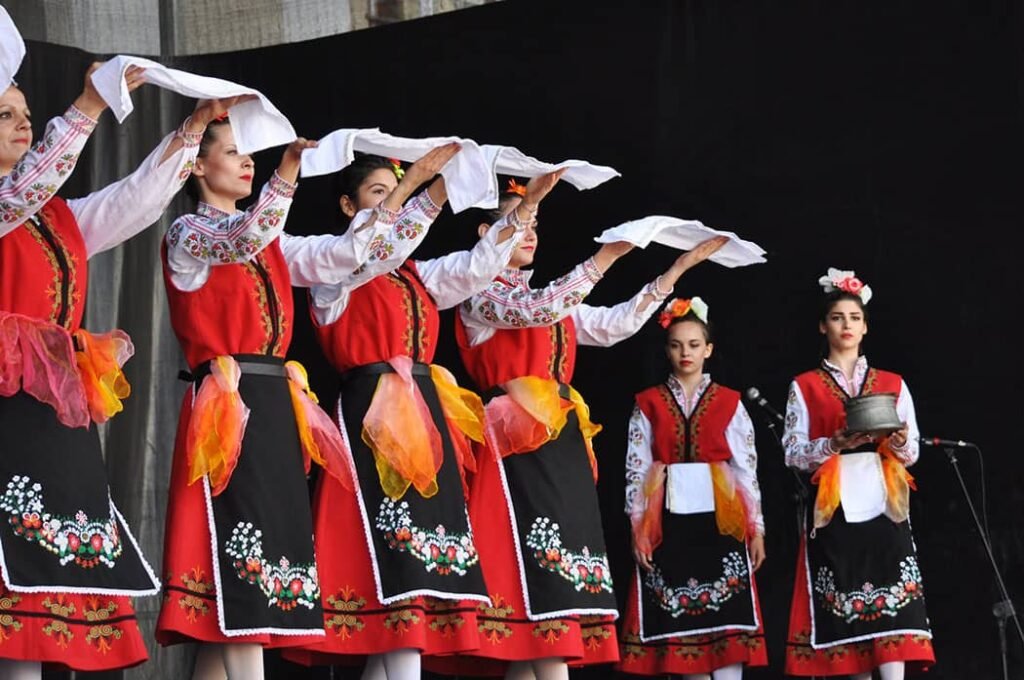
Traditional Bulgarian folk costumes, known as nosii (носии), are among the most colorful and recognizable expressions of Bulgarian culture. Many of the styles seen today developed over generations and became especially distinctive during the Bulgarian National Revival.
Traditional women’s costumes can include embroidered shirts, aprons, skirts or pinafores, belts and buckles, head coverings, and jewelry. Men’s costumes traditionally include embroidered shirts, trousers or full-bottomed breeches, vests, sashes, and other regional garments.
Bulgarian traditional clothing varies considerably from one region to another. Bulgaria’s ethnographic regions developed their own combinations of colors, embroidery, fabrics, patterns, and accessories, so there is no single Bulgarian national costume.
An authentic handmade nosiya can be an expensive souvenir, but you can also find smaller and easier-to-carry items inspired by traditional Bulgarian embroidery, including shirts, scarves, tablecloths, bags, and decorative textiles.
Traditional Bulgarian Pottery
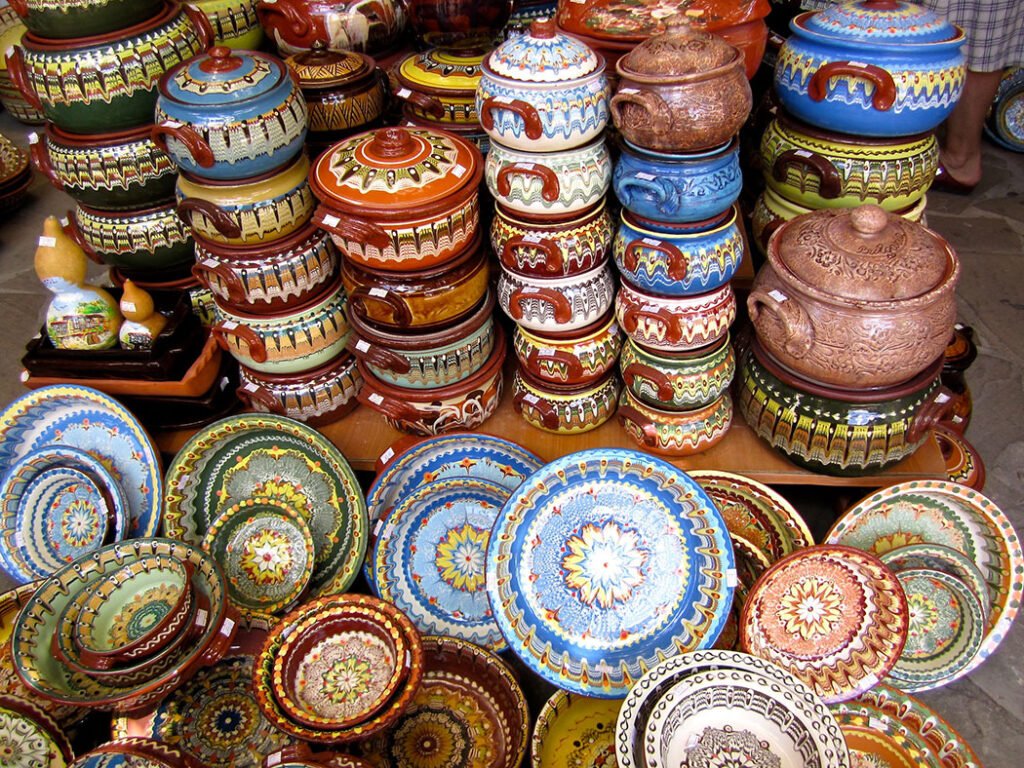
Traditional Bulgarian pottery is both decorative and practical, which makes it a popular souvenir to bring home from Bulgaria. Hand-painted ceramics have a long tradition in the country, with different regions developing recognizable colors, patterns, and decorative styles.
Troyan is especially famous for its pottery tradition and distinctive hand-painted ceramics. You can also find skilled pottery makers and traditional crafts in places such as Gabrovo and other historic craft centers around Bulgaria.
Bulgarian pottery comes in many forms, including plates, bowls, cups, pitchers, casserole dishes, serving dishes, and decorative pieces. Traditional designs often feature colorful geometric or floral patterns, making each piece feel distinctly Bulgarian.
If you are buying pottery to cook or serve food in rather than simply display, ask the seller whether the piece is food-safe and suitable for cooking, as decorative ceramics are not always intended for kitchen use.
Martenitsa
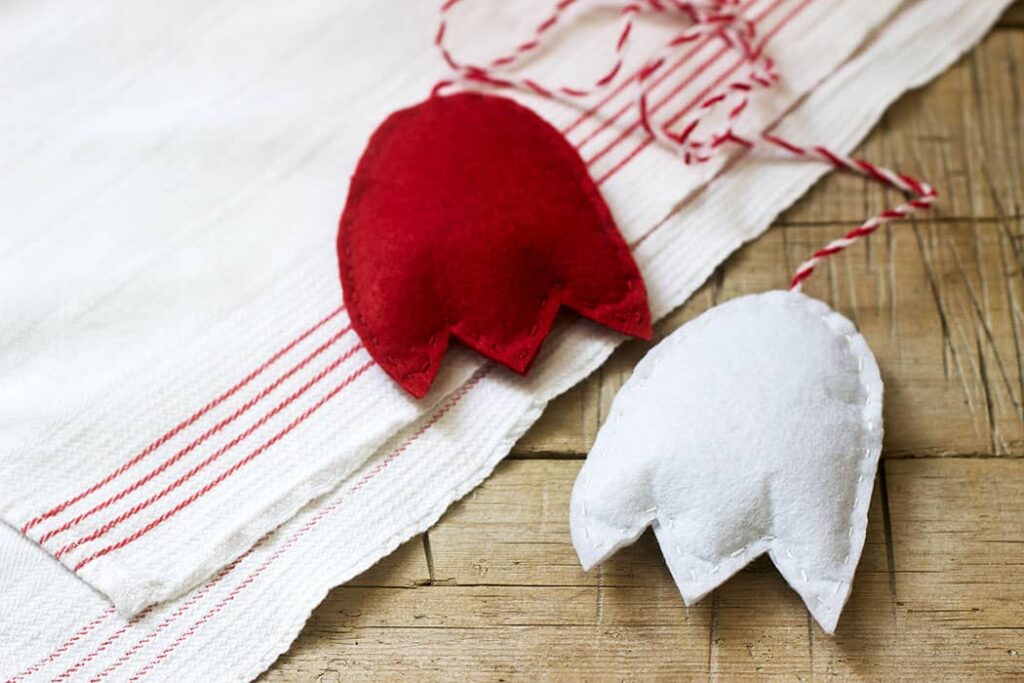
The Martenitsa (мартеница) is one of Bulgaria’s most recognizable traditions and a small, inexpensive souvenir with a great deal of cultural meaning. It is traditionally made from intertwined red and white threads and can take the form of a bracelet, tassel, or the famous pair of figures known as Pizho and Penda.
Bulgarians exchange Martenitsi on Baba Marta Day, March 1, to welcome the arrival of spring and wish each other health and good fortune. They are traditionally worn until the wearer sees a stork, swallow, or blossoming tree. The Martenitsa may then be tied to a flowering tree or placed beneath a stone, depending on local tradition.
The customs associated with March 1 are shared by several countries in the region. In 2017, UNESCO inscribed the cultural practices associated with March 1 on its Representative List of the Intangible Cultural Heritage of Humanity, with Bulgaria among the participating countries.
If you visit Bulgaria in late February or March, you will see Martenitsi almost everywhere, from small street stalls to markets and souvenir shops.
Bulgarian Crafts Made of Wood or Copper
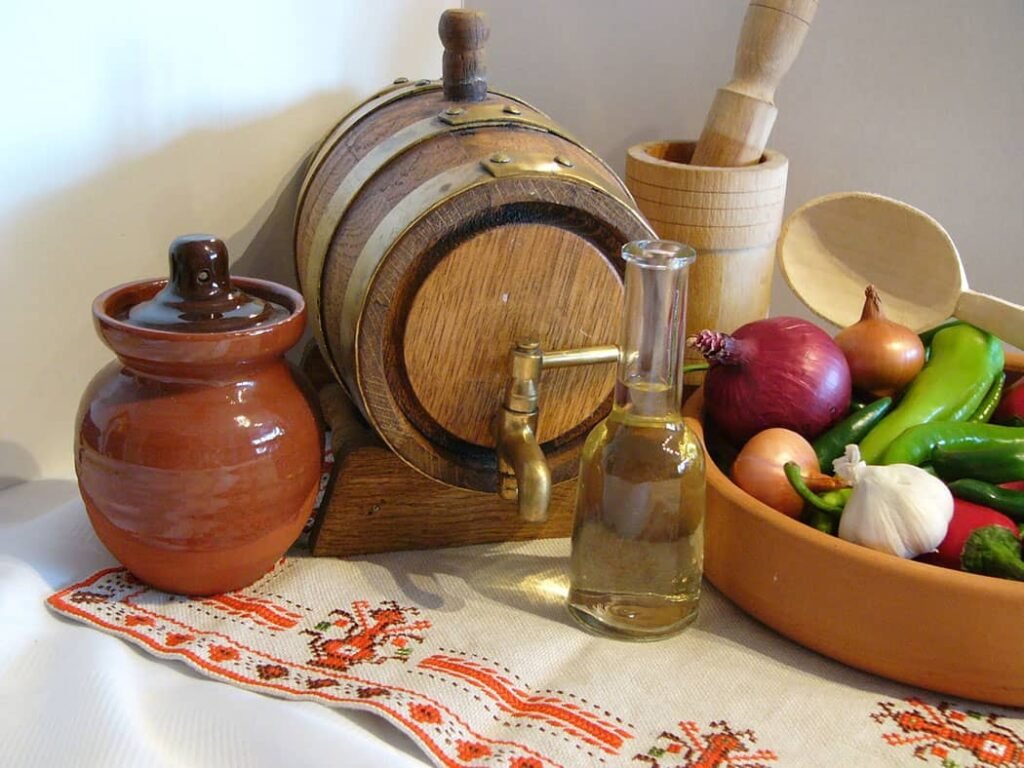
Handcrafted Bulgarian souvenirs made from wood or copper are another traditional gift you can bring home from Bulgaria. Woodcarving and metalworking have deep roots in Bulgarian craftsmanship, and handmade pieces can still be found in souvenir shops, artisan workshops, and some of the country’s ethnographic complexes.
Wooden souvenirs range from small spoons, bowls, plates, boxes, and carved figures to decorative barrels and wooden holders for Bulgarian rose oil. More elaborate pieces may feature traditional floral, geometric, or folklore-inspired carvings.
Traditional copperware includes decorative plates, small pots, coffee vessels, and other hammered pieces that can still be found in craft shops and markets.
For something more authentic, look for handmade pieces from local craftspeople rather than mass-produced souvenirs. Small workshops and ethnographic centers are especially good places to see how some of these traditional Bulgarian crafts are made.
Rakia

Rakia (ракия) is one of the best-known traditional alcoholic drinks in Bulgaria and throughout the Balkans. In Bulgaria, it is commonly served as an aperitif alongside Shopska salad, pickled vegetables (turshiya), yogurt-based salads, and other appetizers.
Bulgarian rakia is most commonly made from grapes or plums, although varieties made from apricots, peaches, pears, apples, cherries, figs, quince, and other fruits can also be found.
Rakia is usually clear, but barrel-aged varieties can develop a golden or amber color along with additional aromas from the wood. It is traditionally served in small glasses and sipped slowly, usually together with food.
The drink has a long history in Bulgaria, although its exact origins are debated and rakia traditions are shared across several Balkan countries. Different regions of Bulgaria also have their own local producers, fruit varieties, and styles.
If you want an edible souvenir that represents Bulgarian food culture, a bottle from a local Bulgarian distillery or small producer can be an interesting choice. Just remember to check customs and alcohol allowances before bringing it home from Bulgaria.
Lavender Products

Bulgarian lavender products are another fragrant and easy-to-carry souvenir from Bulgaria. The country has become an important producer of lavender and lavender essential oil, with fields grown in several regions, particularly in central and northeastern Bulgaria.
You can find Bulgarian lavender essential oil, soaps, creams, floral water, sachets, and other cosmetics in specialty shops, pharmacies, markets, and souvenir stores.
Lavender essential oil is highly concentrated, so it should generally be diluted appropriately before applying it to the skin and should not be confused with lavender-infused cosmetic products that are formulated for direct use.
Locally produced lavender oil, soaps, or sachets are a good alternative to Bulgaria’s better-known rose products, particularly if you want a small gift that travels well.
Bulgarian Wine
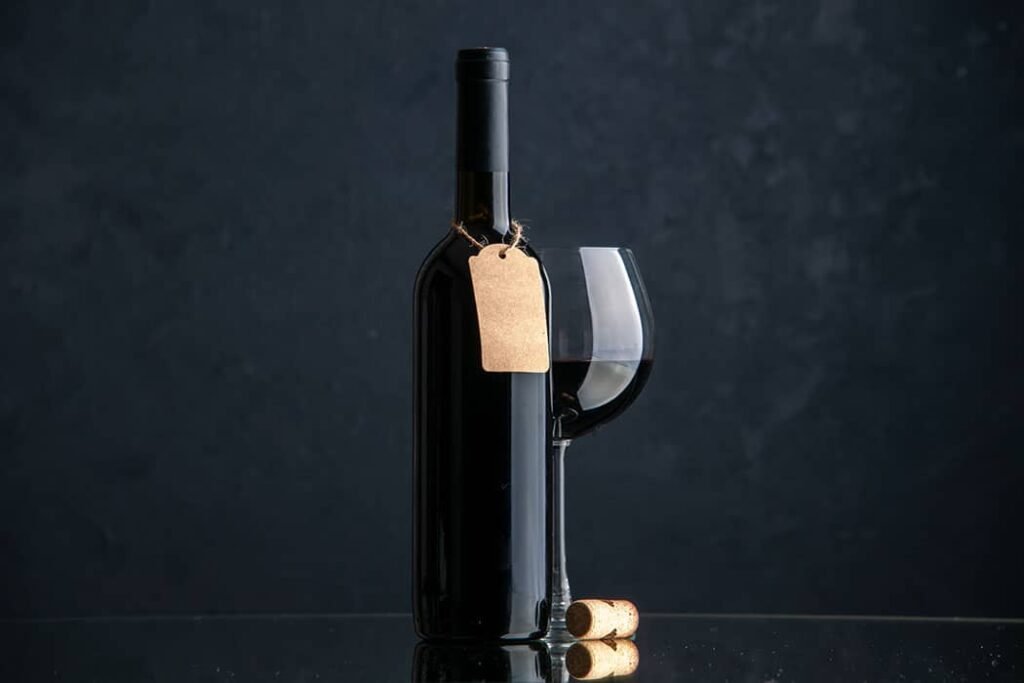
Bulgaria has a wine-making tradition stretching back thousands of years, with viticulture in the region dating to the ancient Thracians. During the 20th century, Bulgaria also became a major wine exporter, and today its wine industry combines long-established traditions with a growing number of modern wineries and boutique producers.
One of the best reasons to bring home Bulgarian wine is the opportunity to try local grape varieties that may be difficult to find elsewhere. Look for wines made from Mavrud, Melnik (Shiroka Melnishka Loza), Rubin, Gamza, and Dimyat, alongside internationally familiar varieties grown in Bulgaria.
You will find excellent wines across Bulgaria, from Melnik and the Thracian Lowlands to the Danube Plain and Black Sea coast, with everything from robust reds to lighter whites and rosé wines.
A bottle from a winery you visited makes an especially memorable Bulgarian souvenir. If you are flying home, remember to check airline baggage rules and the customs allowances of your destination country before purchasing alcohol.
Bulgarian Hand-Painted Icons or Paintings
Hand-painted Bulgarian icons can be a meaningful souvenir for visitors interested in the country’s Orthodox Christian heritage and traditional art. Icon painting has played an important role in Bulgarian culture for centuries and can be seen in churches, monasteries, museums, and historic homes throughout the country.
Bulgaria has a particularly rich tradition of religious painting, frescoes, murals, and wood-carved iconostases. During the Bulgarian National Revival, important artistic centers and schools developed distinctive styles that can still be seen in historic churches and monasteries today.
Modern hand-painted icons depicting Jesus Christ, the Virgin Mary, Bulgarian saints, and patron saints are available in monastery shops, religious stores, galleries, and artisan workshops. A small icon purchased from a monastery you visited can also carry a much more personal connection to the trip.
If you are looking for an authentic piece, distinguish between a genuinely hand-painted icon and a mass-produced printed reproduction. Antique religious objects are a different matter and may be subject to cultural-property and export restrictions, so modern works are generally the simpler choice for travelers.
Magnets, Postcards, and Small Bulgarian Souvenirs

Not every souvenir has to be handmade or expensive. Magnets, postcards, keychains, and other small keepsakes are inexpensive, easy to pack, and available in almost every tourist destination in Bulgaria.
Designs often feature famous Bulgarian landmarks and symbols such as Rila Monastery, Alexander Nevsky Cathedral, Nessebar, Veliko Tarnovo, the Bulgarian rose, traditional folk costumes, and historic monuments.
A magnet or postcard from a specific place you visited can also make a more personal souvenir than a generic Bulgaria-themed item. They are especially useful if you want to bring back small gifts for several friends or family members without filling your suitcase.
Bulgarian Herbal Tea

Bulgaria has an exceptional variety of medicinal and aromatic plants. More than 2,600 plant species with medicinal properties have been identified in the country, with hundreds traditionally collected and used as herbs. Bulgaria’s varied mountains, valleys, meadows, and climate provide excellent growing conditions for many wild and cultivated herbs.
Herbal teas are widely used in Bulgarian households, and you can find dried linden blossom, chamomile, thyme, mint, St. John’s wort, rose, elderflower, and many other herbs in markets, pharmacies, specialty shops, and monasteries around the country.
Mursalski chai (Mursal tea) is one of the best-known mountain teas to look for in Bulgaria. Made from Sideritis scardica, the herb is traditionally associated with the Rhodope Mountains and other high-altitude areas of the country. Its mild, earthy flavor makes it an interesting souvenir for tea lovers.
Dried Bulgarian herbs are also lightweight and easy to pack, making Bulgarian herbal tea one of the most practical souvenirs to bring home.
Hand-Woven Lace and Embroidery

Hand-woven lace and traditional embroidery are beautiful examples of Bulgarian craftsmanship and make distinctive souvenirs for anyone interested in folk art and textiles.
Handmade tablecloths, doilies, placemats, runners, towels, and other decorative textiles can feature intricate lacework or colorful embroidery inspired by traditional Bulgarian patterns. Embroidery has an especially important place in Bulgarian folk culture, with different regions developing their own combinations of colors, geometric shapes, and motifs.
Although most modern textiles are machine-made, craftspeople around Bulgaria continue to preserve traditional techniques. Some of the best places to look for authentic handmade pieces are craft markets, small artisan workshops, ethnographic museums, and Bulgaria’s historic craft complexes.
If you find a piece being sold directly by the craftsperson who made it, even better—you will be taking home something genuinely connected to a living Bulgarian tradition.
Bulgarian Duduk
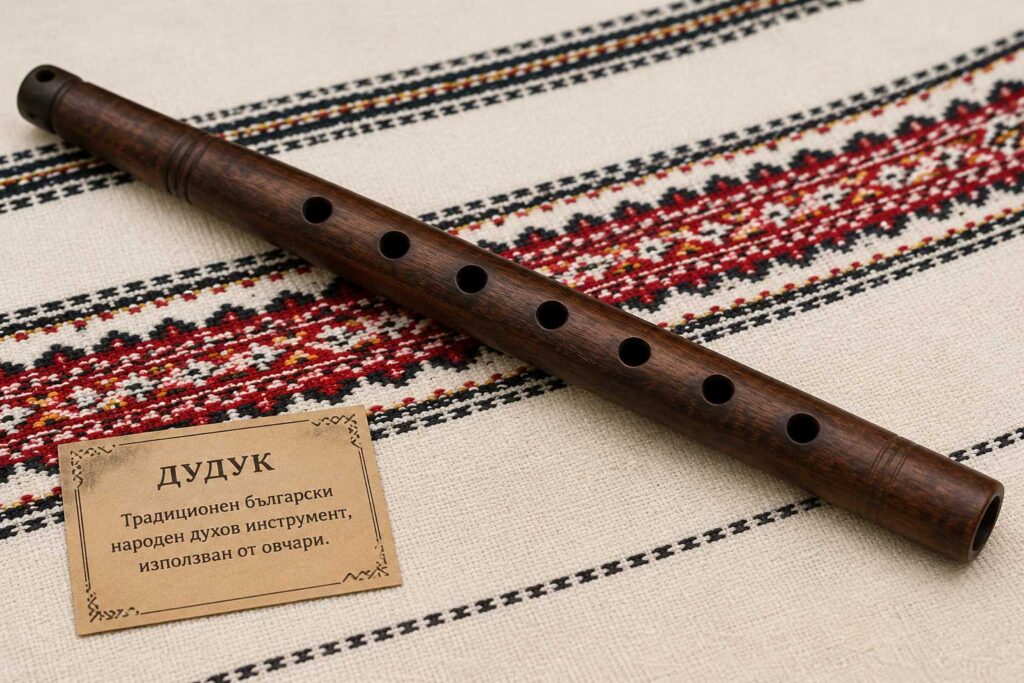
The duduk is a traditional wooden wind instrument found in Bulgarian folk music, particularly in parts of northwestern Bulgaria. The Bulgarian instrument is a type of end-blown flute traditionally associated with shepherds and rural musical traditions.
Bulgarian duduks are generally made from wood and have finger holes used to produce a simple, distinctive folk sound. Today, you may find handmade examples in traditional craft shops, folk-instrument stores, and some souvenir shops.
For musicians or anyone interested in Bulgarian folk traditions, a handmade duduk is certainly more unusual than the typical souvenir-shop magnet.
One important distinction: the Bulgarian duduk should not be confused with the Armenian duduk, a different double-reed instrument that shares the same name.

Sharena sol (шарена сол), literally meaning “colorful salt,” is a traditional Bulgarian seasoning and one of the easiest food souvenirs to bring home from Bulgaria.
Recipes vary, but the mixture commonly combines salt, dried summer savory (chubritsa), paprika, and fenugreek, sometimes with additional herbs and spices. Different regions, families, and producers have their own versions, so the flavor and ingredients can vary considerably.
Bulgarians traditionally sprinkle sharena sol over bread, toast, vegetables, potatoes, eggs, and other simple dishes. A slice of fresh bread dipped in sharena sol is one of the simplest ways to taste it.
You can find packets and decorative jars of Bulgarian sharena sol in supermarkets, food markets, specialty shops, and souvenir stores throughout the country. It is inexpensive, lightweight, and easy to pack, making it one of the most practical Bulgarian souvenirs for anyone who enjoys cooking.
Hand-Knitted Woolen Socks

Bulgarian hand-knitted woolen socks are a traditional, practical souvenir, especially if you visit the country during the colder months. Handmade pairs often feature colorful geometric patterns and designs inspired by Bulgarian folk textiles.
Wool has long been used in Bulgarian mountain communities because it provides excellent insulation during cold winters. Traditional socks can be knitted from natural wool and made in many different combinations of colors and patterns, so handmade pairs are rarely exactly alike.
You can find woolen socks at craft markets, ethnographic complexes, mountain towns, festivals, and small souvenir shops. When possible, look for genuinely handmade pairs made from natural wool rather than inexpensive factory-made imitations.
They are the kind of Bulgarian souvenir or winter gift that is actually useful once you get home.
Where to Buy Authentic Bulgarian Souvenirs
You will find souvenir shops in almost every major tourist destination in Bulgaria, but some of the most memorable Bulgarian souvenirs come directly from local craftspeople, markets, monasteries, and small specialty shops.
For traditional pottery, woodcarving, textiles, and other handmade crafts, look around ethnographic complexes and historic craft towns. Places such as Etar near Gabrovo, Troyan, Veliko Tarnovo, and the Old Town of Plovdiv are particularly good for discovering traditional Bulgarian crafts.
Rose oil and rose cosmetics are widely available, but the Rose Valley around Kazanlak and Karlovo is the best place to shop for locally produced rose products. Herbal teas, sharena sol, honey, and other Bulgarian foods can often be found in supermarkets, farmers’ markets, monastery shops, and specialty food stores.
When buying handmade items, take a moment to ask where they were produced. A souvenir made by a Bulgarian potter, woodcarver, embroiderer, or other local craftsperson has a much stronger connection to your trip than a mass-produced item that simply carries a Bulgaria label.
Did You Buy Any of These Essential Bulgarian Souvenirs?
Have you brought home any of these Bulgarian souvenirs, or received one as a gift? If there is another traditional Bulgarian product or handmade craft you think belongs on this list, let us know.
You can also tag @stunningbulgaria on Instagram and use #stunningbulgaria to share what you discovered during your travels around Bulgaria.
While you’re planning your trip, you may also enjoy: