For years, travelers have filled the beaches of Greece, wandered through Italy’s historic cities, and headed to Croatia for summer on the Adriatic. Meanwhile, Bulgaria has remained surprisingly easy to overlook.
But there are plenty of reasons to visit Bulgaria, especially if you want a European trip that combines nature, history, food, and culture without following the same crowded itinerary as everyone else.
For a relatively small country, Bulgaria gives you a surprising amount to see. You can hike through the Rila and Pirin Mountains, walk the cobbled streets of centuries-old towns, visit Orthodox monasteries, relax beside the Black Sea, soak in mineral springs, and sit down to a traditional meal without spending what you might in many better-known European destinations.
And there are still plenty of places where you won’t feel surrounded by tourists.
Bulgaria isn’t completely undiscovered, of course. Sofia, Plovdiv, Bansko, Nessebar, and the Black Sea resorts already attract international visitors. But venture beyond the best-known stops and the country can still feel remarkably local, affordable, and unhurried.
From mountain scenery and ancient history to seaside towns and memorable food, here are 10 reasons Bulgaria deserves a place on your European travel list — and why it may be one of Europe’s most underrated destinations.
Why Is Bulgaria One of Europe’s Most Underrated Destinations?
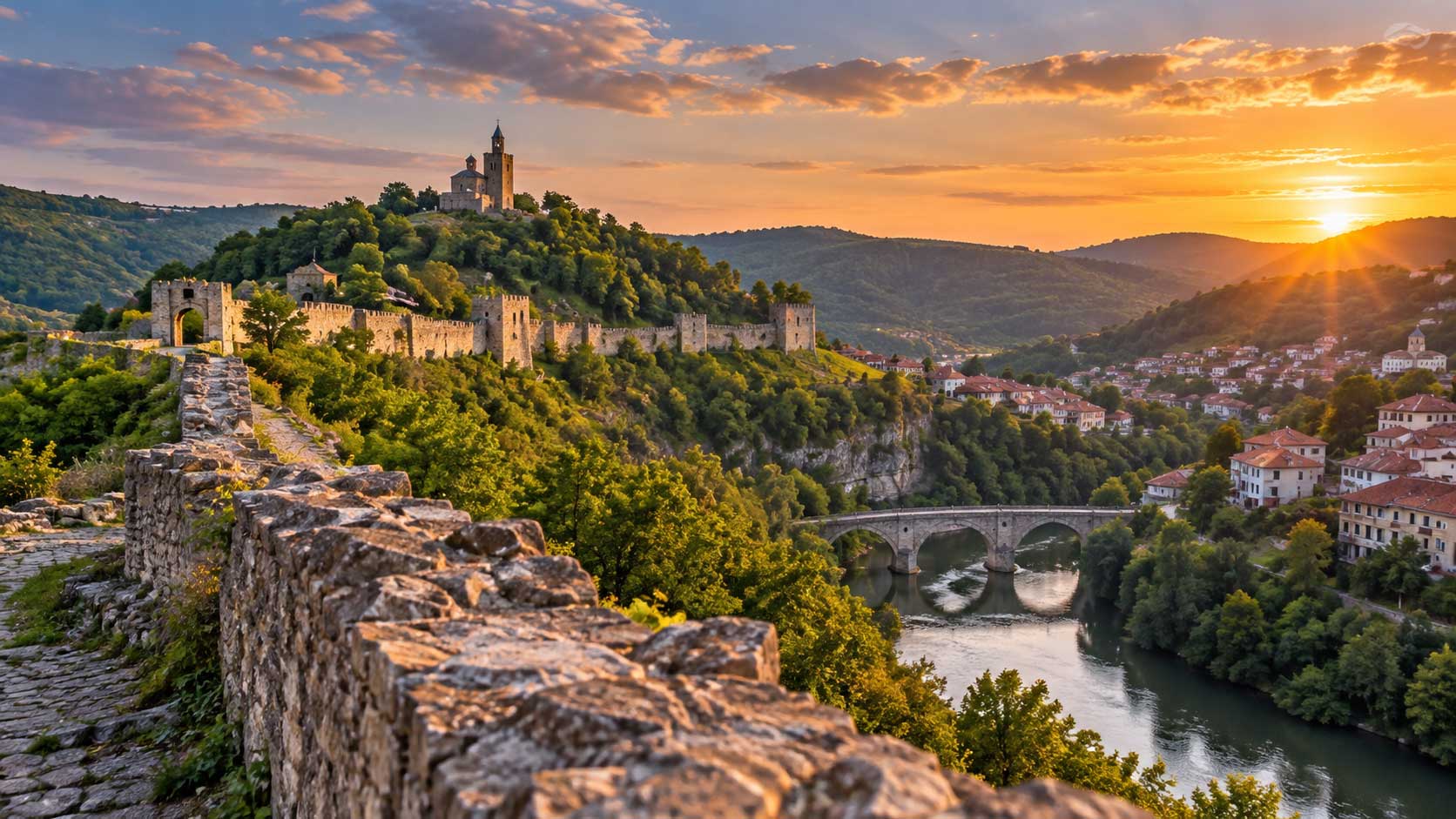
Bulgaria tends to get less attention than many of its European neighbors, but that has little to do with a lack of things to see and do. The country combines mountains, beaches, historic cities, traditional villages, ancient ruins, monasteries, mineral springs, and excellent food — often within just a few hours of one another.
That variety is one of the biggest reasons to visit Bulgaria. You can spend a weekend exploring Sofia, plan a road trip through small mountain towns, hike in Rila or Pirin, spend a summer holiday on the Black Sea, or build an entire itinerary around history and traditional Bulgarian culture.
Prices can also be easier on the budget than in many of Europe’s most popular destinations, particularly once you travel beyond the biggest resorts and tourist centers.
But what makes Bulgaria especially interesting is the combination of variety and authenticity. You don’t have to travel far from the main attractions to find quiet villages, family-run restaurants, local markets, hiking trails, and historic places that still feel connected to everyday Bulgarian life.
And that variety becomes obvious the moment you look beyond Bulgaria’s cities — because some of the country’s biggest surprises are waiting in its mountains, lakes, forests, and wild landscapes.
10 Reasons to Visit Bulgaria
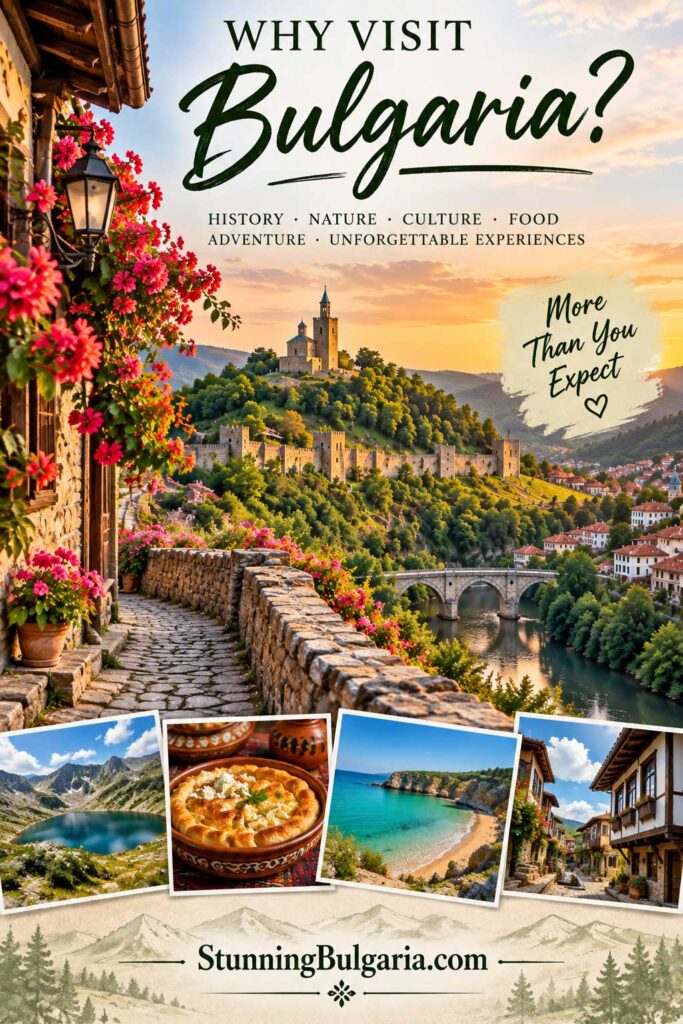
So what makes Bulgaria stand out when Europe already has so many extraordinary places to visit? It isn’t just one attraction or one region. What makes Bulgaria stand out is how quickly the experience changes as you travel. Mountains give way to historic towns, ancient cities, traditional villages, and eventually the Black Sea coast.
The following reasons to visit Bulgaria show just how much there is to experience, whether you’re planning a short European getaway or a longer road trip through the country.
And the best place to start is with one of Bulgaria’s greatest strengths: its landscapes.
1. Bulgaria Has Some of Europe’s Most Underrated Natural Scenery
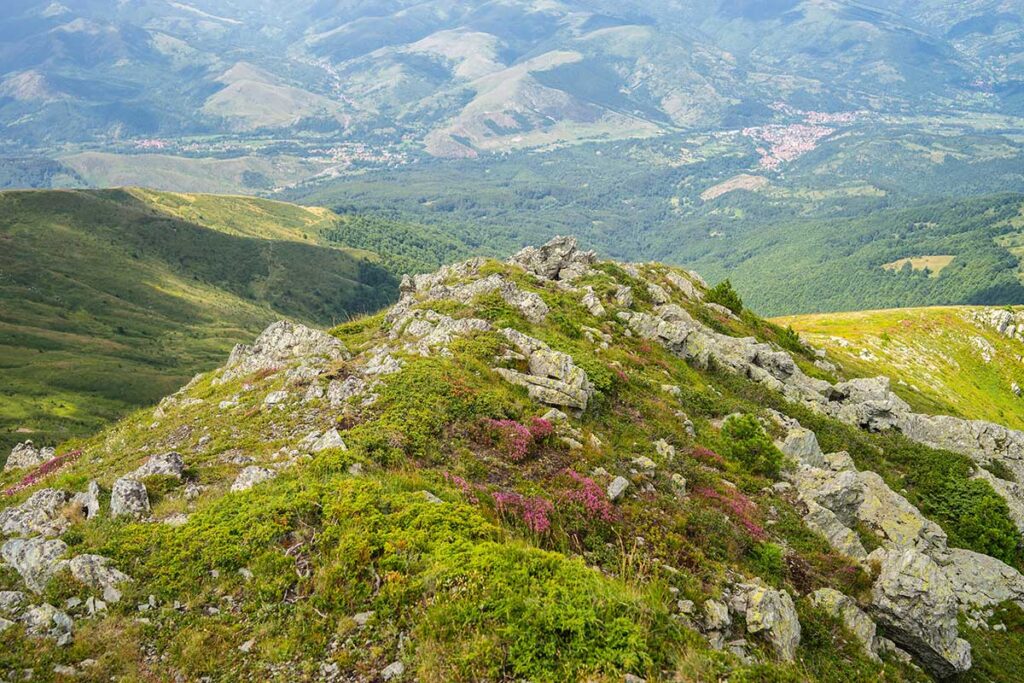
Bulgaria may be relatively small, but its landscapes change quickly. Drive a few hours and you can go from broad valleys and forested hills to alpine peaks, glacial lakes, waterfalls, caves, and rugged mountain trails.
The Rila Mountains are home to some of the country’s most recognizable scenery. The Seven Rila Lakes, set high above the surrounding forests, are connected by hiking trails with sweeping views across the mountains. Rila is also home to Musala, the highest peak in Bulgaria and the entire Balkan Peninsula at 2,925 meters (9,596 feet).
Farther south, the Pirin Mountains have a wilder, rockier character. Sharp peaks, clear mountain lakes, and high-altitude trails make Pirin one of Bulgaria’s best regions for hiking. Much of the range is protected within Pirin National Park, a UNESCO World Heritage Site.
Then there are the Rhodope Mountains, where the landscape feels completely different. Forest-covered ridges surround small villages, winding roads, caves, and deep gorges. Trigrad Gorge, Devil’s Throat Cave, and viewpoints scattered throughout the central Rhodopes make this one of the most atmospheric parts of Bulgaria.
But you don’t need to plan a demanding mountain trek to appreciate the country’s natural beauty. Waterfalls, unusual rock formations, caves, wetlands, scenic roads, and protected natural areas give travelers plenty of easier ways to get outdoors.
If waterfalls are high on your list, our guide to the best waterfalls in Bulgaria covers everything from famous mountain cascades to easier roadside stops.
Some of Bulgaria’s most memorable landscapes can be reached on short walks, scenic drives, chairlifts, or simple day trips. That makes the country just as rewarding for casual nature lovers as it is for travelers who want to spend days exploring the mountains.
And once you start traveling between them, another advantage quickly becomes apparent: seeing this much of Bulgaria can still cost considerably less than exploring many of Europe’s better-known destinations.
2. Bulgaria Is One of Europe’s Most Affordable Destinations
Bulgaria’s landscapes may get you interested in visiting, but the cost of traveling here can make it much easier to stay longer.
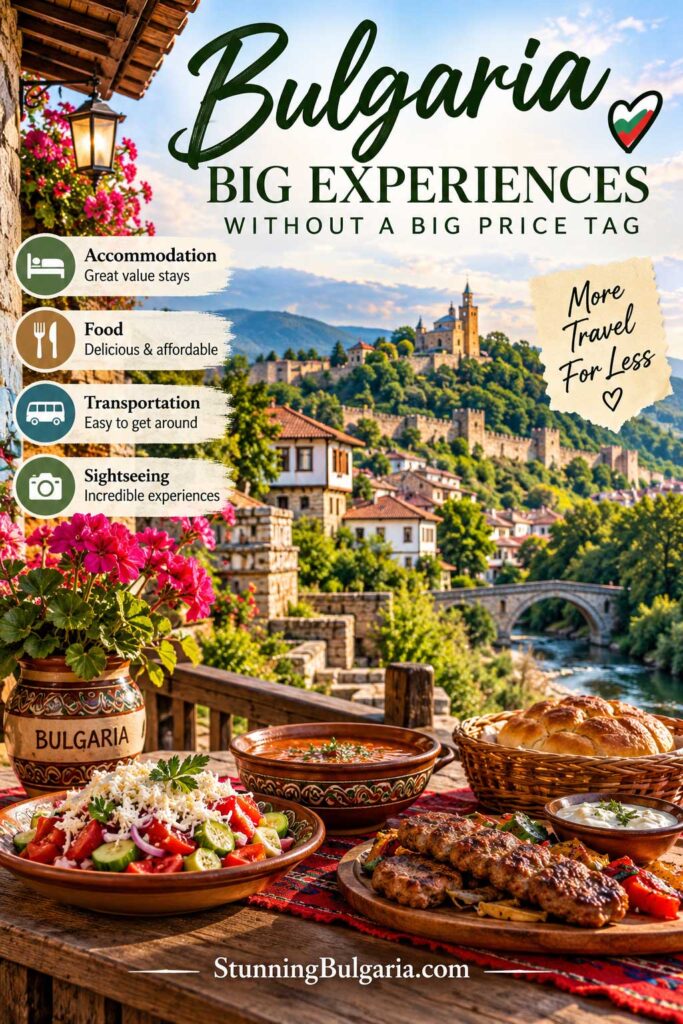
Compared with many of Europe’s most popular destinations, Bulgaria can still offer excellent value for accommodation, food, transportation, and sightseeing. That doesn’t mean everything is cheap — prices in Sofia, major ski resorts, and popular Black Sea destinations can rise during peak season — but your travel budget can often stretch further here than in many better-known parts of Europe.
You may notice the difference when eating out. Step away from the most tourist-heavy areas and you can find neighborhood restaurants, bakeries, markets, and traditional mehanas where a good meal can still be surprisingly reasonable.
Accommodation offers similar flexibility. Bulgaria has everything from city hotels and seaside resorts to small family-run guesthouses tucked into mountain towns and villages. In places such as Koprivshtitsa, Tryavna, Melnik, and the Rhodopes, choosing a smaller guesthouse can become part of the experience rather than simply somewhere to sleep.
Getting around can be economical as well. Buses and trains connect many cities and towns, while renting a car gives you much more freedom to reach villages, monasteries, mountain roads, and natural attractions that can be difficult to combine using public transportation alone.
Perhaps most importantly, traveling on a moderate budget doesn’t mean missing what makes Bulgaria special. Walking through Plovdiv’s Old Town, exploring historic neighborhoods, hiking in the mountains, visiting small villages, and spending time along the coast can fill an itinerary without requiring luxury-level spending.
For travelers who want to experience more of Europe without watching every euro disappear into hotels, meals, and admission tickets, Bulgaria remains one of the continent’s strongest value destinations.
And fortunately, spending less on the trip doesn’t mean compromising at the table — because Bulgarian food may be one of the biggest surprises waiting for first-time visitors.
3. Bulgarian Food Is Surprisingly Good
Bulgarian food rarely gets the international attention given to Italian, Greek, or French cuisine. For many first-time visitors, that makes it one of the trip’s biggest surprises. Bulgarian cuisine simply doesn’t have the international recognition of Italian, Greek, or French food.
That changes quickly once you sit down at a Bulgarian table.
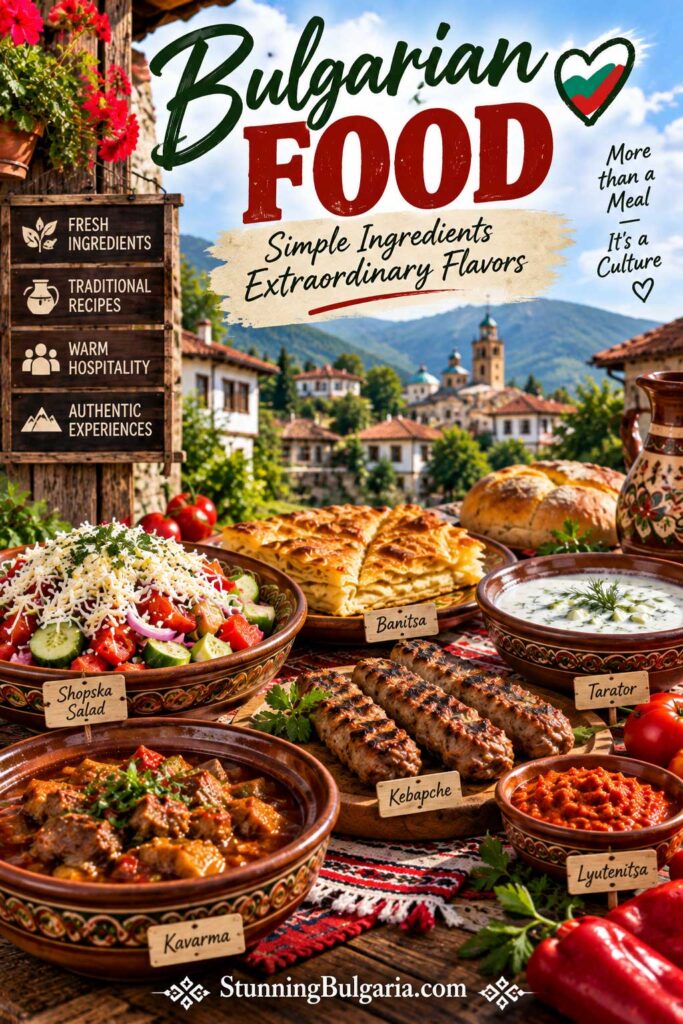
Meals often begin with something simple: a Shopska salad piled with tomatoes, cucumbers, peppers, onions, and grated white sirene cheese. Add warm bread, roasted peppers, or a small plate of lyutenitsa, and what should be a starter can easily become half the meal.
Then come the dishes that Bulgarians grow up with. Banitsa, made with thin pastry and a filling commonly prepared with eggs and sirene, is a breakfast favorite. Tarator combines yogurt, cucumber, dill, garlic, and walnuts into a cold soup that makes perfect sense on a hot summer day. Grilled kebapche and kyufte are everywhere, while slow-cooked dishes such as kavarma bring out the more comforting side of Bulgarian cooking.
And then there is the yogurt.
Bulgaria has a particularly strong connection with yogurt, traditionally associated with cultures containing Lactobacillus delbrueckii subsp. bulgaricus. You’ll encounter yogurt at breakfast, in soups and sauces, alongside savory dishes, and sometimes simply eaten on its own.
What makes eating in Bulgaria especially enjoyable, however, isn’t one famous national dish. It is the way food changes as you travel.
Along the Black Sea, fish and seafood become more prominent. Mountain regions have their own hearty specialties. The Rhodopes are known for dishes such as patatnik, made primarily from grated potatoes, onion, and herbs. Small bakeries sell warm pastries in the morning, while roadside restaurants and village taverns can produce meals every bit as memorable as those in fashionable city restaurants.
Bulgarian cuisine doesn’t need to be complicated to be good. Much of its appeal comes from familiar ingredients — tomatoes, peppers, potatoes, yogurt, cheese, herbs, beans, and grilled meats — prepared in ways that generations of Bulgarians recognize immediately.
Come to Bulgaria for the mountains or the history, and you may find that the meals become some of the moments you remember most.
And that history runs far deeper than many first-time visitors realize. Beneath Bulgaria’s modern cities and quiet towns are traces of Thracians, Romans, medieval Bulgarian rulers, and centuries of cultural change.
4. Bulgaria Has Thousands of Years of History
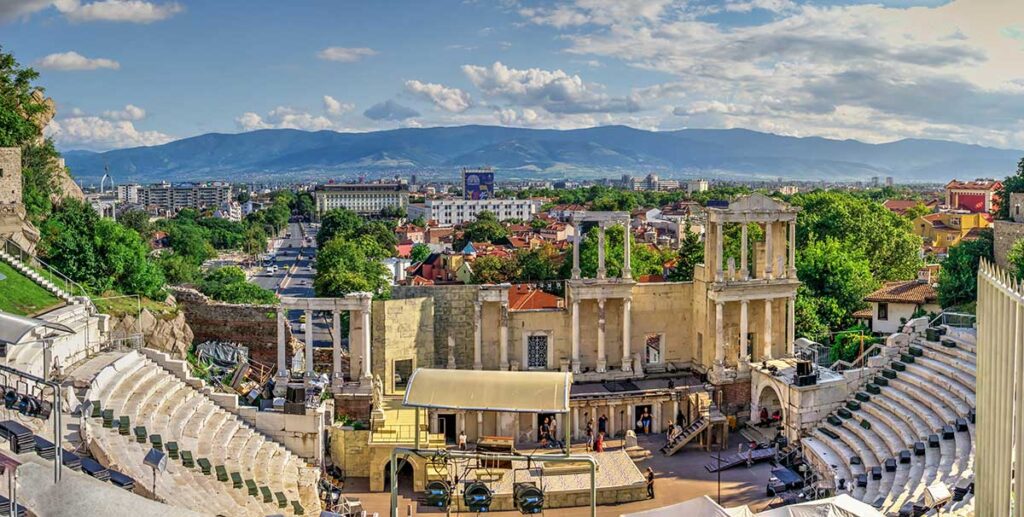
It is easy to arrive in Bulgaria for the mountains, beaches, or affordable travel and suddenly realize you are walking through layers of European history that stretch back thousands of years.
Long before the modern Bulgarian state existed, the region was home to ancient Thracian peoples and kingdoms. Their legacy survives in tombs, sanctuaries, gold treasures, and archaeological sites scattered across the country. The Thracian Tomb of Kazanlak, dating to the Hellenistic period, is one of Bulgaria’s best-known Thracian monuments and a UNESCO World Heritage Site.
The Romans left an equally visible mark.
In Plovdiv, you can walk through the modern city and encounter a remarkably preserved Roman theater, remains of an enormous ancient stadium, and archaeological sites woven directly into today’s streets. In central Sofia, remains of ancient Serdica appear beneath and between modern buildings, allowing you to walk through pieces of the Roman city without leaving the center of the capital.
Then comes Bulgaria’s own medieval story.
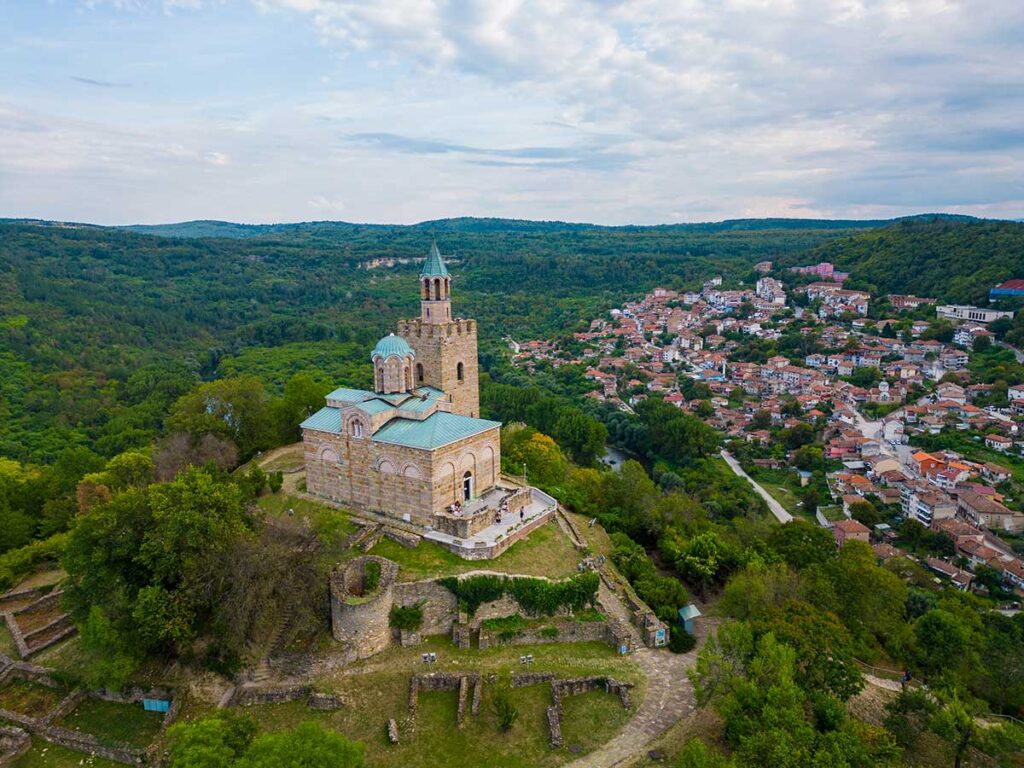
The First Bulgarian Empire emerged in the seventh century, and Bulgaria developed into one of medieval Europe’s important political and cultural powers. Places such as Pliska, Preslav, and Veliko Tarnovo preserve pieces of that history, while Tsarevets Fortress remains one of the country’s most recognizable medieval landmarks.
Bulgaria’s monasteries tell another part of the story. The most famous is Rila Monastery, founded in the 10th century and surrounded by the Rila Mountains. The mountain setting is part of the experience, especially as the monastery first comes into view at the end of the road through the Rila Mountains.
Later chapters are visible in Bulgaria’s National Revival towns, where colorful houses, stone walls, wooden balconies, churches, and cobbled streets preserve remarkable examples of 18th- and 19th-century architecture. Koprivshtitsa, Tryavna, and Plovdiv’s Old Town are excellent places to experience this heritage.
What makes exploring Bulgarian history so rewarding is that it rarely feels confined to museums. You encounter it beneath city streets, inside churches and monasteries, along old cobbled lanes, among fortress walls, and in towns where centuries-old houses remain part of the landscape.
You don’t simply visit one archaeological site and move on. Thracian, Roman, medieval Bulgarian, Ottoman, and National Revival history continue to reappear as you travel across the country.
And eventually, that journey reaches another side of Bulgaria that many international travelers still underestimate: its Black Sea coast.
5. Bulgaria’s Black Sea Coast Is Beautiful
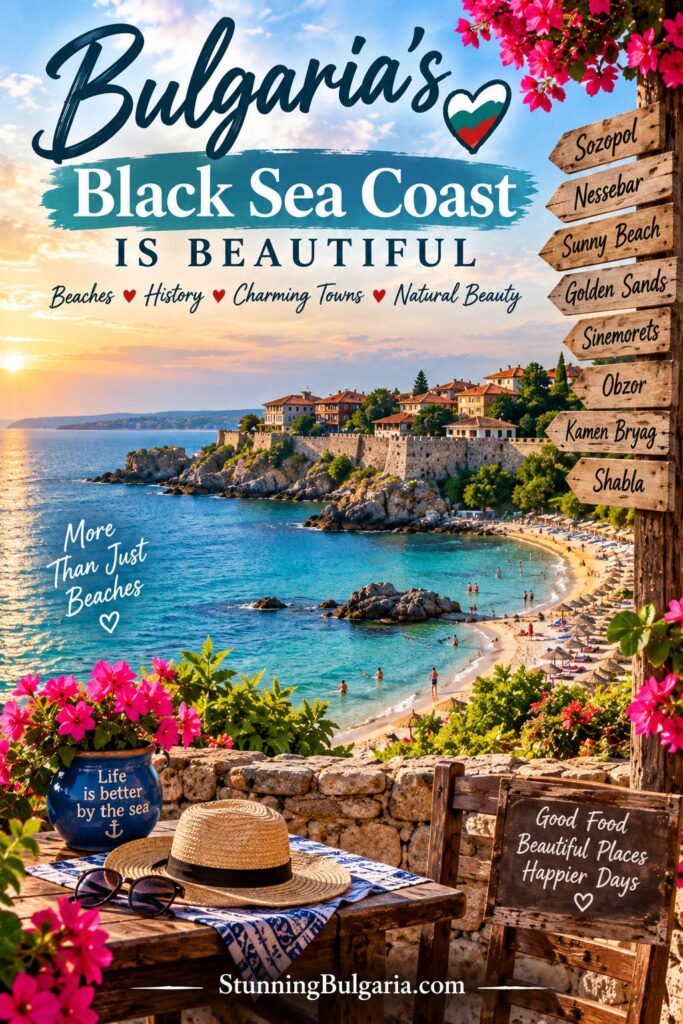
Mention a European beach vacation and most travelers immediately think of Greece, Italy, Spain, or Croatia. Bulgaria rarely enters the conversation as quickly — yet the country has nearly 380 kilometers of Black Sea coastline, with long sandy beaches, historic seaside towns, protected natural areas, and plenty of places to swim.
And no, the Bulgarian coast isn’t one enormous resort.
If the coast is a major part of your trip, start with our guide to the Best Beaches in Bulgaria for a broader look at where to swim and stay.
There are certainly busy destinations. Sunny Beach is known for large hotels, nightlife, and a long stretch of sand, while Golden Sands, north of Varna, attracts travelers looking for a classic resort vacation. During July and August, some of the most popular beaches can become very busy.
But travel beyond the largest resorts and the experience begins to change.
Sozopol combines beaches with a historic old town where traditional houses and cobbled lanes sit close to the sea. Nessebar packs centuries of history onto a small peninsula connected to the mainland, with medieval churches, historic buildings, and narrow streets that make it worth visiting even if you never put on a swimsuit.
For something quieter, smaller coastal communities and more natural stretches of shoreline offer a different experience. Sinemorets, near Bulgaria’s southern border, is known for the striking landscape where the Veleka River meets the Black Sea. Irakli offers a less-developed stretch of coastline, while the areas around Shabla and Kamen Bryag reveal the cliffs, open landscapes, and wilder character of the northern coast.
Travelers looking beyond the main resorts can also explore these hidden beaches in Bulgaria, including quieter stretches of coastline that are easy to miss on a first trip.
Families have plenty of options too. Towns such as Obzor offer long sandy beaches and a more relaxed atmosphere than the largest resorts, while smaller coastal destinations make it possible to choose between full beach facilities and simpler days beside the water.
Bulgaria’s coast also looks and feels different from the Mediterranean destinations many travelers know better. Instead of the island-dotted horizons associated with parts of the Mediterranean, you’ll find broad beaches, sand dunes, wetlands, rocky headlands, coastal cliffs, and long stretches of open sea.
You could easily build an entire vacation around Bulgaria’s coastline. But the coast becomes even more interesting when it is part of a longer trip.
You can hike through the mountains, visit monasteries and ancient cities, explore traditional villages, and several days later find yourself eating dinner within sight of the Black Sea.
That ability to experience so many different sides of the country is one of the strongest reasons to visit Bulgaria. Yet some of its most memorable moments happen away from the famous attractions — in small towns, neighborhood restaurants, local markets, and villages where everyday life still feels distinctly Bulgarian.
6. Bulgaria Still Feels Authentic
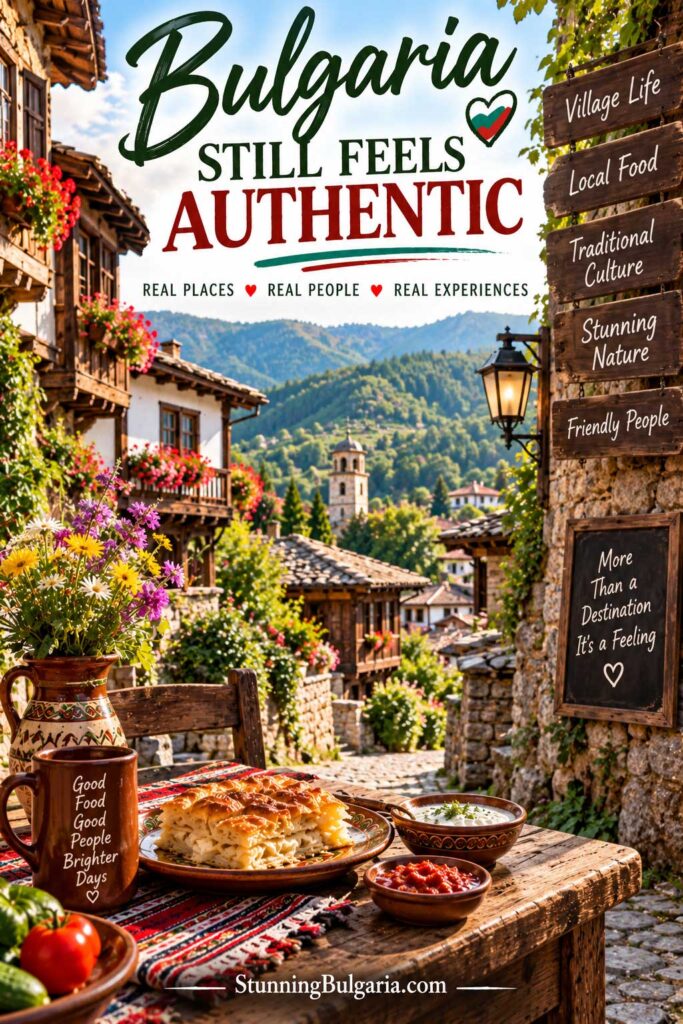
“Authentic” is a word that gets used far too often in travel writing, but in Bulgaria it describes something fairly simple: tourism doesn’t define every place you visit.
Step outside the busiest parts of Sofia, the major Black Sea resorts, and popular ski destinations, and everyday life continues at its own rhythm.
Morning might begin with people stopping at a neighborhood bakery for banitsa. Local markets fill with seasonal tomatoes, peppers, cherries, grapes, and herbs. In mountain towns, older houses still sit behind stone walls and wooden gates, while village gardens overflow with vegetables, fruit trees, and flowers.
You don’t have to travel particularly far to encounter this side of Bulgaria.
Places such as Koprivshtitsa, Tryavna, Zheravna, Shiroka Laka, and Kovachevitsa preserve distinctive traditional architecture, but they aren’t simply outdoor museums. They are communities where historic houses, guesthouses, workshops, restaurants, and everyday homes can share the same streets.
Traditional culture remains visible too — in crafts, music, dance, festivals, celebrations, and regional food. Depending on where and when you travel, you might encounter woodcarving in Tryavna, traditional music in the Rhodopes, handmade pottery, embroidery, folk dancing, or a local dish you haven’t seen anywhere else on your trip.
But some of the most memorable experiences are much simpler.
You can explore more of this heritage through Bulgaria’s traditional Bulgarian crafts, from woodcarving and pottery to weaving and other regional traditions.
It might be buying fruit from a small market, stopping for lunch at a roadside restaurant, hearing church bells across an old neighborhood, chatting with the owner of a family-run guesthouse, or sitting outside at the end of a long day in the mountains.
These aren’t attractions created specifically for visitors. They’re ordinary pieces of everyday life — and experiencing them can tell you as much about Bulgaria as another afternoon spent checking landmarks off a list.
Of course, modern Bulgaria isn’t frozen in the past. Sofia has fashionable restaurants, shopping districts, nightlife, and contemporary neighborhoods. Plovdiv has a thriving creative scene, and many of the country’s best-known destinations have changed considerably with tourism and development.
That’s exactly why exploring beyond the obvious stops matters.
Bulgaria lets you experience modern European life alongside traditions and places that still carry a strong local identity — and nowhere is that contrast more beautiful than in the country’s mountain towns and villages.
7. Bulgaria Has Amazing Mountain Towns and Villages
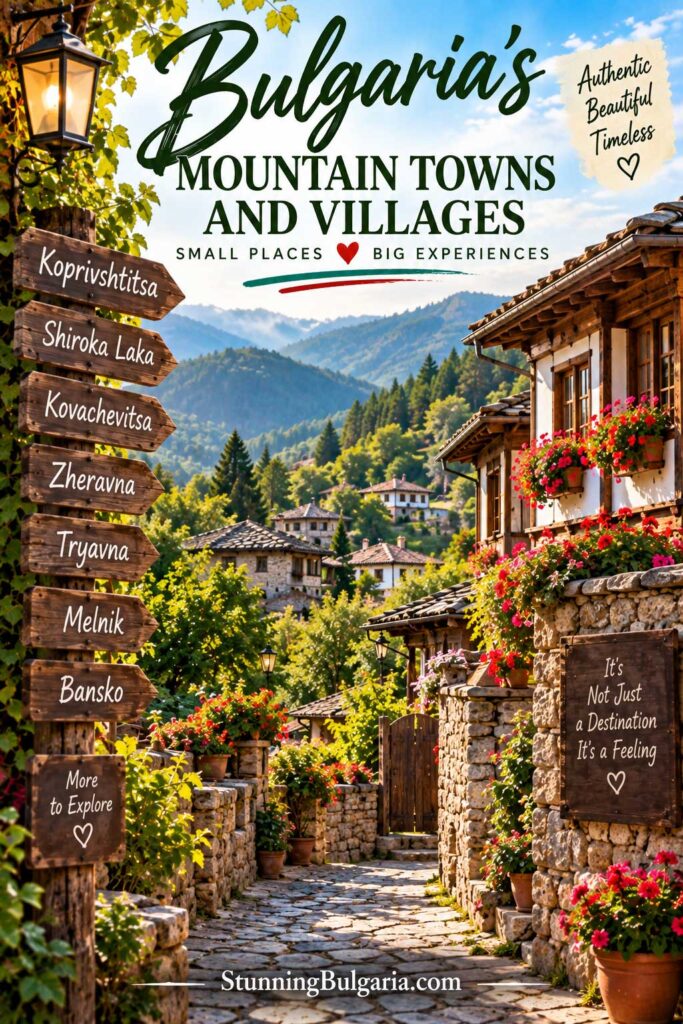
Some of Bulgaria’s most beautiful places aren’t large cities or famous resorts. They’re smaller towns and villages tucked between mountains, where cobbled streets, stone walls, wooden houses, and forested slopes create an entirely different kind of trip.
Several of these towns also belong on any broader list of the most beautiful places in Bulgaria, especially if you’re planning a road trip rather than staying in one city.
Koprivshtitsa is one of the best-known examples. Colorful Bulgarian National Revival houses line quiet streets crossed by small stone bridges, while museums preserve the stories of people connected to Bulgaria’s struggle for independence. Visit early in the morning or stay overnight, and the town can feel very different from the busier midday hours.
In the Rhodope Mountains, Shiroka Laka has a completely different character. Traditional stone houses climb the steep sides of the valley, narrow streets follow the contours of the mountains, and the surrounding scenery makes the village an excellent stop on a longer Rhodope road trip.
Then there is Kovachevitsa, where stone roofs, narrow lanes, and traditional houses seem to follow the shape of the hillside. This isn’t a place you need to rush through with a checklist. Much of the pleasure comes from walking slowly, noticing the architecture, and taking in the mountain setting.
Zheravna, in the eastern Balkan Mountains, is known for its preserved wooden Revival-era houses and stone-paved streets. Tryavna offers another side of Bulgaria’s architectural heritage, with its old clock tower, traditional houses, museums, workshops, and long connection with woodcarving.
And then there is Melnik.
Officially Bulgaria’s smallest town, Melnik sits beneath unusual sandstone formations in the country’s southwest. Its traditional houses, local wine culture, and proximity to Rozhen Monastery make it easy to combine history, scenery, and food in a single visit.
Not every mountain destination is tiny. Bansko, for example, is internationally known as a ski resort, but step away from the modern hotels and ski infrastructure and you’ll find an older part of town filled with stone houses, churches, narrow streets, and traditional mehanas.
A road trip also lets you connect places that are awkward to combine by bus — and some of the best stops are the ones you notice between destinations. Mountain roads wind through forests and valleys, while monasteries, viewpoints, rivers, and roadside restaurants provide plenty of reasons to stop along the way.
Bulgaria’s mountain towns and villages offer a slower, more intimate way to experience the country. But they’re only half the story — because Bulgaria’s cities bring ancient ruins, grand architecture, creative neighborhoods, and modern life together in ways that can change within just a few streets.
8. Bulgaria’s Cities Are Full of Character
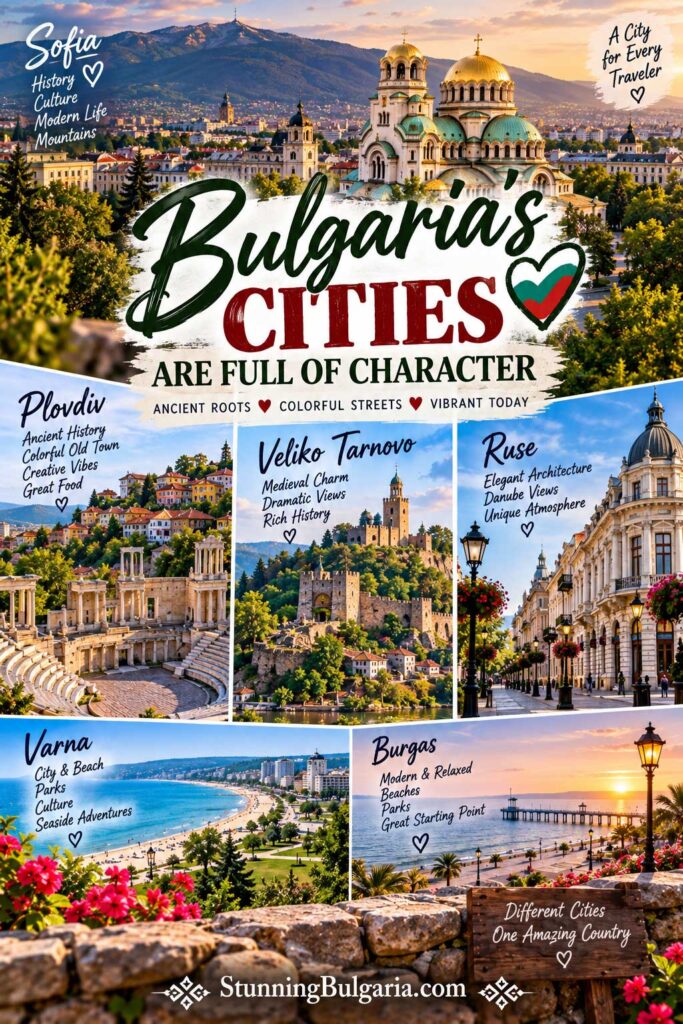
Bulgaria’s villages may preserve some of the country’s most picturesque traditions, but its cities show how many different layers of Bulgarian history can exist in the same place.
Start with Sofia, a capital where those layers are sometimes separated by only a few steps.
In the city center, you can see remains of ancient Roman Serdica, walk past Ottoman-era landmarks and Orthodox churches, admire the golden domes of Alexander Nevsky Cathedral, and continue into neighborhoods filled with restaurants, cafes, galleries, and shops. With Vitosha Mountain rising just beyond the city, Sofia also has the unusual advantage of keeping nature surprisingly close.
Then there is Plovdiv, one of Bulgaria’s most rewarding cities to explore on foot.
Its Roman theater is the obvious landmark, but Plovdiv’s appeal goes far beyond a single ancient site. The cobbled streets and colorful National Revival houses of the Old Town contrast with the creative spaces, restaurants, and cafes of Kapana, while Roman remains continue to appear throughout the modern city center.
Veliko Tarnovo feels different again.
Built across steep hills above the Yantra River, the former medieval Bulgarian capital has one of the country’s most dramatic settings. The walls and towers of Tsarevets Fortress dominate the landscape, while old streets climb across the hillsides below.
Head toward the Danube and Ruse brings another architectural style into the mix. Elegant buildings from the late 19th and early 20th centuries give parts of the center a distinctly Central European atmosphere.
On the Black Sea, Varna and Burgas combine urban life with beaches, parks, restaurants, and easy access to the coast. They can work as destinations in their own right or as convenient starting points for exploring seaside towns and beaches farther north or south.
What makes Bulgaria’s cities enjoyable isn’t that they compete with Paris, Rome, or Barcelona for monumental attractions. It’s that each has its own scale, history, and atmosphere — and you can often explore them without the overwhelming crowds found in some of Europe’s most visited cities.
Spend a few days moving between them and Bulgaria starts to feel much larger and more varied than it appears on the map.
And when you’re ready to leave the streets behind, the mountains, rivers, caves, ski slopes, and trails surrounding those cities open up yet another side of the country — one made for adventure.
9. Bulgaria Is Perfect for Adventure Travelers
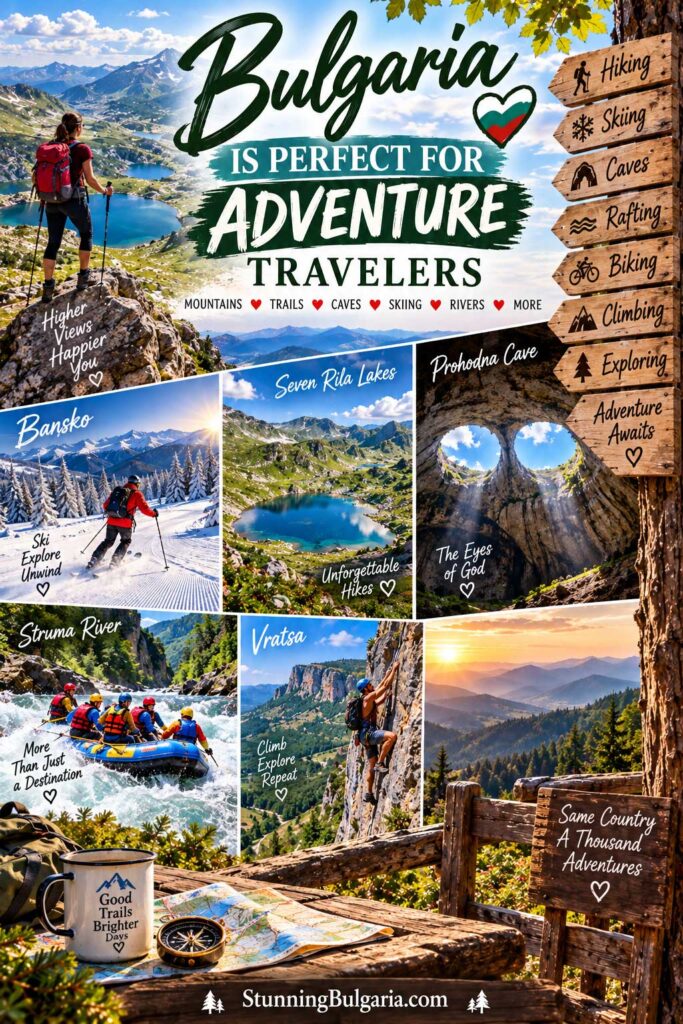
Bulgaria isn’t only a country to explore from cafe terraces and historic streets. Once you head into the mountains, there are plenty of reasons to pack hiking boots, skis, a bike, or simply a willingness to try something new.
Hiking is the obvious place to start.
The Rila and Pirin Mountains contain some of Bulgaria’s most spectacular trails, ranging from relatively accessible day hikes to demanding routes across high ridges. The Seven Rila Lakes are among the country’s most popular hiking destinations, while experienced hikers can tackle peaks such as Musala and Vihren.
Long-distance hikers can go much farther. Major hiking routes cross Bulgaria’s mountain ranges, while a network of mountain huts makes multi-day adventures possible for travelers who want to spend more time away from the cities.
Bansko, Borovets, and Pamporovo are Bulgaria’s best-known ski destinations, offering skiing and snowboarding without requiring a trip to the Alps. Bansko combines its ski area with a historic old town, Borovets provides easy access to the Rila Mountains, and Pamporovo puts you deep in the Rhodopes.
Bulgaria has thousands of caves, although only a small number are developed for regular tourist visits. Devil’s Throat Cave in the Rhodopes is known for its powerful underground waterfall, while Prohodna Cave is instantly recognizable for the two enormous openings in its ceiling commonly called the “Eyes of God.”
The dramatic limestone cliffs around Vratsa attract rock climbers, while mountain biking opens up another way to explore Bulgaria’s forests and mountain terrain. Depending on the season and location, travelers can also find opportunities for rafting, kayaking, horseback riding, paragliding, and cycling.
The Struma River is one of Bulgaria’s best-known rafting destinations, particularly around the Kresna Gorge. Organized rafting trips make it possible for beginners to experience the river too, although conditions and available routes vary with water levels and the season.
What makes adventure travel in Bulgaria particularly appealing is how easily it can fit into a broader trip. You don’t need to dedicate an entire vacation to outdoor sports. A morning hike, afternoon cave visit, day of rafting, or weekend in the mountains can fit naturally between historic towns, monasteries, and city stops.
And perhaps that’s the real advantage of traveling through Bulgaria: you can fit an extraordinary amount into one trip without feeling as though you’re following the same crowded European itinerary as everyone else.
10. Bulgaria Makes It Easy to Escape the Crowds
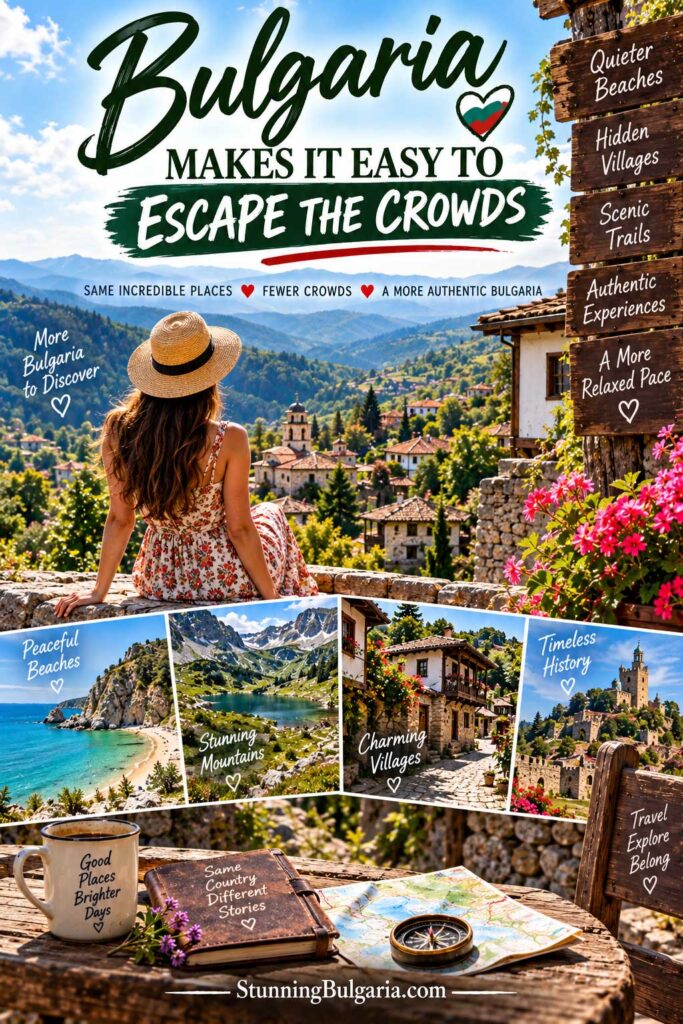
Perhaps the best reason to visit Bulgaria now is not any single mountain, beach, city, or historic site. It is the way you can still experience all of them without building your entire trip around crowds.
That doesn’t mean Bulgaria is empty of tourists.
Nessebar can become packed during summer. Bansko is busy during ski season. Popular Black Sea resorts fill with vacationers in July and August, and you’ll rarely have the Seven Rila Lakes to yourself on a beautiful summer weekend.
But tourism tends to concentrate in particular places and seasons. Travel beyond them and the atmosphere can change remarkably quickly.
You might leave a busy resort and find a much quieter beach farther down the coast. A popular mountain destination can sit surprisingly close to villages that receive far fewer international visitors. Even in well-known historic towns, staying overnight can reveal a completely different atmosphere once many of the daytime visitors have left.
That gives travelers something increasingly valuable: room to explore at their own pace.
You can linger over lunch instead of rushing toward the next attraction. You can follow an unplanned mountain road because a village looks interesting on the map. You can spend an afternoon wandering through a historic town without feeling that every street exists primarily for tourism.
And you don’t need to search for completely unknown destinations to experience that feeling.
Sometimes it simply means visiting Koprivshtitsa on a quiet weekday, exploring the Rhodopes outside peak holiday periods, choosing a smaller Black Sea town instead of a major resort, or spending an extra night somewhere many visitors treat as a quick day trip.
Bulgaria isn’t undiscovered, and it shouldn’t be presented that way. It has established resorts, famous landmarks, busy cities, and places that attract plenty of visitors.
What it still offers, however, is choice.
You can experience the lively beach resort, the modern capital, and the famous mountain attraction — then travel a little farther and find quiet roads, family-run guesthouses, forest trails, old villages, and places where tourism feels like only one small part of everyday life.
That balance can be harder to find in some of Europe’s most heavily visited destinations.
And it may not last forever. As more travelers discover what Bulgaria offers, the question becomes less about whether the country deserves a place on your European itinerary — and more about when you should go.
Best Time to Visit Bulgaria
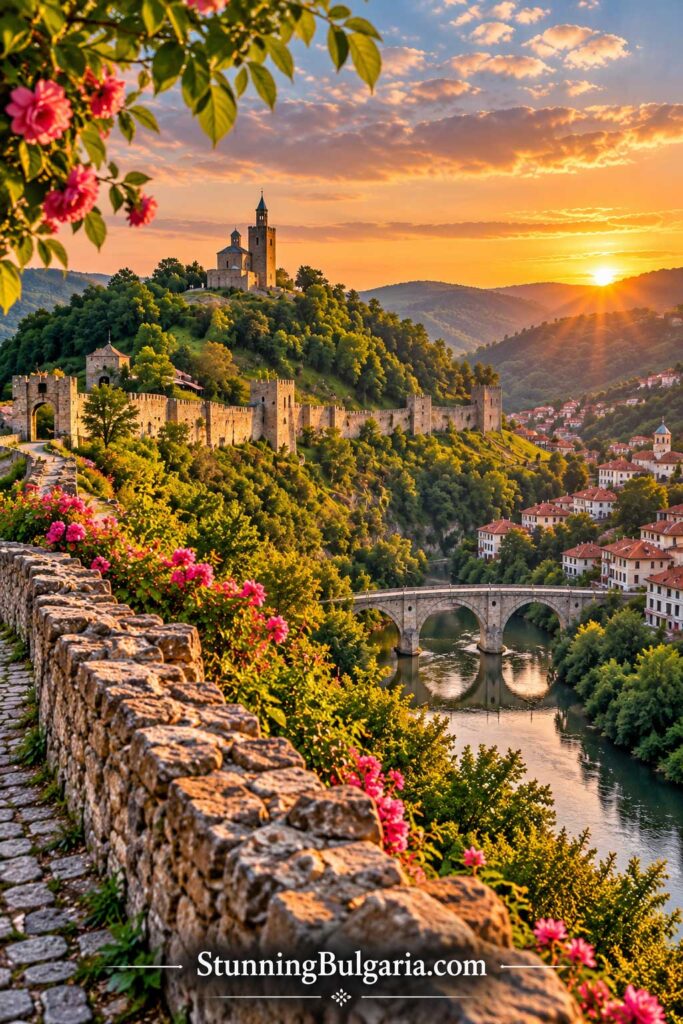
The best time to visit Bulgaria depends on what you want to do, but for a trip combining cities, historic towns, mountains, and sightseeing, May, June, September, and early October are some of the best months to consider.
These shoulder-season months generally offer a good balance between pleasant weather and manageable crowds. They are particularly well suited to road trips, walking through historic towns, visiting monasteries, and spending time outdoors without the peak heat of midsummer.
Spring in Bulgaria: April to June
Spring brings Bulgaria back to life. April can still be unpredictable, especially in the mountains, but May and June bring greener landscapes, longer days, wildflowers, and increasingly warm temperatures.
Waterfalls can also be particularly impressive after periods of spring rain and mountain snowmelt. For travelers interested in sightseeing, road trips, nature, and historic towns, late spring is one of the most rewarding times to explore Bulgaria.
Summer in Bulgaria: July and August
Summer is the main season for the Black Sea coast. July and August bring warm weather, long days, busy beach towns, and the liveliest atmosphere at Bulgaria’s seaside resorts.
Summer is also one of the best times to head into the high mountains, although conditions at higher elevations should always be checked before setting out.
The tradeoff is larger crowds and higher seasonal prices in Bulgaria’s most popular coastal and mountain destinations.
Autumn in Bulgaria: September and October
Autumn is one of Bulgaria’s most beautiful seasons.
September can be excellent for sightseeing and road trips, and early September can still work well for a Black Sea trip when the weather cooperates. The busiest part of the summer season begins to wind down, while many days remain warm.
As autumn progresses, changing leaves transform Bulgaria’s forests and mountain regions. Towns such as Koprivshtitsa, Tryavna, and Veliko Tarnovo can be especially atmospheric surrounded by fall color.
Winter in Bulgaria: December to March
Winter belongs to the mountains.
Travelers head to Bansko, Borovets, and Pamporovo for skiing and snowboarding, while snowfall can completely transform Bulgaria’s mountain landscapes and historic towns.
Ski conditions and the length of the season vary from year to year, so anyone planning a winter sports trip should check current snow and resort conditions before traveling.
For travelers more interested in cities than skiing, winter can offer a quieter experience, but expect shorter days and cold weather.
Bulgaria by Season at a Glance
| Season | Best For | What to Expect |
|---|---|---|
| Spring (April–June) | Sightseeing, nature, waterfalls, road trips | Green landscapes, mild-to-warm weather, fewer peak-season crowds |
| Summer (July–August) | Black Sea beaches, hiking, festivals | Hot weather, busiest coastal season, good access to high mountains |
| Autumn (September–October) | Road trips, hiking, cities, photography | Pleasant temperatures, fall colors, quieter destinations |
| Winter (December–March) | Skiing, snowboarding, winter escapes | Snow in mountain regions, ski season, colder city sightseeing |
For a first trip to Bulgaria, I would choose late May through June or September. You’ll have plenty of daylight to explore, generally comfortable conditions for sightseeing, and the flexibility to combine cities, villages, mountains, and — particularly in September — parts of the Black Sea coast.
Of course, choosing the right month is only half the planning. Bulgaria may look compact on a map, but trying to squeeze Sofia, Plovdiv, the mountains, historic villages, and the Black Sea into a few days is one of the easiest ways to rush the trip.
So how much time should you actually give Bulgaria?
How Many Days Do You Need in Bulgaria?
For a first visit, 7 to 10 days is a good amount of time to experience Bulgaria without turning the trip into a race. That gives you enough time to explore a few cities, see at least one mountain region, visit historic towns or monasteries, and still leave room for an unplanned stop along the way.
You can certainly visit for less time. Bulgaria works well for a long weekend or a short city break, especially if you’re flying into Sofia. But the country’s appeal becomes much clearer once you travel beyond the capital.
3–4 Days in Bulgaria
With only three or four days, keep the itinerary focused.
You could spend two days exploring Sofia, then take a day trip to Rila Monastery or the surrounding mountains. Another option is to divide your time between Sofia and Plovdiv, particularly if history, architecture, and food are higher priorities than hiking.
Avoid trying to add the Black Sea to a trip this short. Bulgaria may look small on a map, but crossing the country takes time.
5–7 Days in Bulgaria
A week gives you considerably more freedom.
A first-time itinerary could combine Sofia, Rila Monastery, Plovdiv, and Veliko Tarnovo, with a mountain or village stop along the way.
Alternatively, spend several days in Sofia and the Rila or Pirin Mountains before continuing to Plovdiv and one of Bulgaria’s smaller historic towns.
With careful planning, you can cover a lot in seven days, but it is still worth resisting the temptation to change hotels every night.
10 Days in Bulgaria
With 10 days, you have enough time to stop treating every destination as a quick visit.
You can combine major cities with smaller destinations such as Koprivshtitsa, Tryavna, Melnik, or villages in the Rhodope Mountains. You’ll also have more time for hiking, monasteries, scenic drives, and stops you didn’t originally plan.
If the Black Sea is important to you, ten days also makes it much more realistic to include the coast without sacrificing most of the inland highlights.
2 Weeks in Bulgaria
With two weeks, you can experience several very different sides of the country.
A longer route might take you from Sofia through the Rila and Pirin Mountains, Plovdiv and the Rhodopes, Veliko Tarnovo, and eventually to the Black Sea coast.
Two weeks also allows you to slow down. Instead of treating every town as a two-hour stop, you can stay overnight, explore surrounding villages, spend a full day hiking, or simply leave part of the itinerary open.
| Trip Length | Best For |
|---|---|
| 3–4 days | Sofia + one major day trip or Sofia + Plovdiv |
| 5–7 days | Several major highlights and one mountain or historic region |
| 10 days | A more complete road trip with cities, mountains, and villages |
| 14 days | Inland Bulgaria + Black Sea coast at a comfortable pace |
If you’re visiting Bulgaria for the first time and have the flexibility, I’d aim for at least one week and preferably 10 days.
That’s long enough for Bulgaria to stop feeling like a collection of attractions and start feeling like a country you’re actually traveling through.
And after seeing how much can fit into a single trip, there is one final question worth answering directly: is Bulgaria really worth visiting compared with the rest of Europe?
Is Bulgaria Worth Visiting?
Yes, Bulgaria is absolutely worth visiting, especially if you enjoy combining history, nature, traditional food, smaller towns, and outdoor experiences in the same trip.
What makes Bulgaria particularly rewarding is its variety. You can spend one day walking among Roman ruins in Plovdiv, another hiking beside glacial lakes in the Rila Mountains, and another exploring a Revival-era town or sitting beside the Black Sea.
If you’re starting to build an itinerary, our guide to the places to visit in Bulgaria is a useful next step for narrowing down which regions deserve your time.
Bulgaria is especially worth considering if you:
- Prefer destinations with a strong local identity.
- Enjoy mountains, hiking, caves, waterfalls, and outdoor activities.
- Love historic towns, monasteries, fortresses, and archaeological sites.
- Want a European beach trip beyond the Mediterranean.
- Like discovering regional food and traditional restaurants.
- Want your travel budget to stretch further than it might in some of Europe’s most heavily visited destinations.
- Prefer having the option to escape major tourist crowds.
That doesn’t mean Bulgaria will suit every traveler.
Public transportation is useful between many larger cities, but reaching smaller villages, mountain areas, and remote natural attractions can require more planning. Roads vary in quality, English may be less widely spoken once you leave major tourist destinations, and service styles and tourism infrastructure can vary considerably once you travel beyond the country’s major destinations.
Those extra considerations are a relatively small tradeoff for the variety Bulgaria offers. Arrive curious and willing to explore beyond the obvious stops, and the country can easily become one of the unexpected highlights of a European trip.
It has famous sights worth seeing, but some of the experiences you’ll remember most may be the ones you never planned — a mountain road, a tiny bakery, a village you stopped in on a whim, or a long dinner that lasted much later than expected.
And if Bulgaria is starting to sound like somewhere you’d like to explore, a few practical questions usually come next.
FAQs About Visiting Bulgaria
Is Bulgaria a good destination for first-time visitors?
Yes. Bulgaria is a good choice for first-time visitors who want a mixture of cities, history, nature, food, and outdoor activities. Sofia and Plovdiv are relatively easy places to begin, while a longer trip can include monasteries, mountain towns, villages, and the Black Sea coast.
Is Bulgaria expensive for tourists?
Bulgaria can be relatively affordable compared with many popular destinations in Western and Southern Europe. Accommodation, local restaurants, public transportation, and many attractions can offer good value, although prices are generally higher in major resorts and during peak travel periods.
What is Bulgaria best known for?
Bulgaria is known for its mountains, Black Sea beaches, Orthodox monasteries, ancient Thracian and Roman heritage, traditional villages, rose production, yogurt, wine, and distinctive Balkan cuisine. Rila Monastery, Plovdiv, Nessebar, the Seven Rila Lakes, and the country’s ski resorts are among its best-known attractions.
What is the most beautiful part of Bulgaria?
There isn’t one answer because Bulgaria’s regions look remarkably different. The Rila and Pirin Mountains are excellent for dramatic alpine scenery, while the Rhodope Mountains combine forests, villages, gorges, and caves. Travelers interested in historic architecture may prefer places such as Koprivshtitsa, Plovdiv, or Veliko Tarnovo, while beach lovers can explore the Black Sea coast.
What should you not miss when visiting Bulgaria?
For a first trip, consider including Sofia, Plovdiv, Rila Monastery, and at least one mountain or traditional town. With more time, add Veliko Tarnovo, the Rhodopes, Koprivshtitsa, Melnik, or the Black Sea coast depending on your interests and the season.
Do you need a car to travel around Bulgaria?
Not necessarily. Trains and buses connect many of Bulgaria’s larger cities and towns, so it is possible to travel without renting a car. However, a car gives you considerably more flexibility when visiting mountain villages, monasteries, trailheads, remote beaches, and smaller attractions.
Is English widely spoken in Bulgaria?
English is widely spoken in major cities, hotels, restaurants, and popular tourist destinations, particularly among younger Bulgarians and people working in tourism. In smaller villages and less-visited areas, English may be more limited. Learning a few basic Bulgarian phrases can be helpful and is usually appreciated.
Does Bulgaria have good beaches?
Yes. Bulgaria has a long Black Sea coastline with sandy beaches ranging from large resort areas to smaller and less-developed stretches of coast. Sozopol, Nessebar, Obzor, Sinemorets, and the areas around Varna and Burgas all provide very different seaside experiences.
How many days should I spend in Bulgaria?
Seven to ten days is a good starting point for a first trip. A week allows you to combine several major destinations, while 10 days gives you more time for mountains, villages, scenic drives, and potentially part of the Black Sea coast. With two weeks, you can explore the country at a much more relaxed pace.
When is the best month to visit Bulgaria?
June and September are two of the most versatile months for visiting Bulgaria. They generally work well for sightseeing, road trips, and outdoor activities without the height of the July–August holiday season. The ideal month still depends on your plans: summer is best for a classic Black Sea vacation, while winter is the main season for skiing.
Why is Bulgaria underrated?
Bulgaria receives less international attention than many of Europe’s most famous destinations despite having mountains, beaches, ancient ruins, medieval landmarks, historic towns, distinctive food, and a rich cultural heritage within a relatively compact country. For many visitors, that combination — along with the ability to explore beyond heavily touristed areas — is exactly what makes Bulgaria so rewarding.
Bulgaria May Not Stay Underrated Forever
Bulgaria doesn’t need to compete with Italy’s famous cities, Greece’s islands, or Croatia’s Adriatic coast. It offers something different — and that is precisely why it deserves more attention.
A trip here can take you from the streets of Sofia to a monastery deep in the Rila Mountains, from Roman ruins in Plovdiv to tiny villages in the Rhodopes, and from medieval fortresses to long summer evenings beside the Black Sea.
But the places in between are often just as memorable.
It might be the smell of warm banitsa from a bakery in the morning. A cobbled street you hadn’t planned to explore. A mountain view that makes you pull the car over. Fresh tomatoes and sirene at a small restaurant. Or an evening in a village where staying one more night suddenly sounds better than continuing with the itinerary.
Those moments are difficult to capture on a list of attractions, yet they are a big part of what makes traveling through Bulgaria special.
The country isn’t a secret, but it still receives far less attention than many of Europe’s headline destinations. That may be part of its appeal right now.
Bulgaria still gives you something increasingly valuable in Europe: the freedom to explore beyond the places everyone already knows.
So if you’ve been considering Bulgaria but haven’t quite decided whether to go, don’t treat it as the country you might visit someday after you’ve seen the rest of Europe.
Put it on the list now. Bulgaria may end up being the place that surprises you most.
You May Also Like
Planning your own trip to Bulgaria? Continue exploring with these guides:
- Top Places to Visit in Bulgaria — Discover historic towns, mountain landscapes, monasteries, waterfalls, caves, and some of the country’s most memorable places.
- Best Beaches in Bulgaria — Explore beautiful places to swim, relax, and spend a summer day along Bulgaria’s Black Sea coast.
- The Bulgarian Riviera: Top Beaches to Visit — Travel along the Black Sea through sandy beaches, historic seaside towns, lively resorts, and scenic coastal stops.
- Things Not to Do in Bulgaria — Avoid common mistakes and learn a few useful things to know before traveling around the country.
What Surprised You Most About Bulgaria?
Have you already visited Bulgaria, or is it still somewhere on your travel list?
Maybe it was the mountains, the food, the Black Sea coast, the history, or a small town you hadn’t expected to love. Tell us what surprised you most about Bulgaria in the comments.
And if you’re exploring the country, tag @stunningbulgaria and use #stunningbulgaria so we can follow along with your Bulgarian adventures.