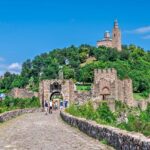
Bulgaria’s traditional crafts are still alive in small workshops, ethnographic complexes, and historic towns across the country. Some of the best authentic Bulgarian crafting places let you watch potters, woodcarvers, weavers, coppersmiths, and other artisans using techniques that have been passed down through generations.
Many of these places also preserve the architecture and everyday life of Bulgaria during the 18th and 19th centuries. Old houses, cobbled streets, water-powered workshops, traditional clothing, handmade pottery, and local food make them much more than ordinary museums.
If you want to experience a different side of Bulgaria beyond its famous monasteries, beaches, and mountain trails, these places are well worth adding to your trip.
Authentic Bulgarian Crafting Places to Visit
From the working workshops of Etar to the old streets of Zlatograd, these destinations offer a glimpse into Bulgarian traditions that are increasingly difficult to find elsewhere.
There are no short cuts to any place worth going.
Here are some of the best places in Bulgaria to discover traditional craftsmanship and the people helping to keep these skills alive.
1. Ethnographic Village Complex Etar (Etar Open-Air Museum)
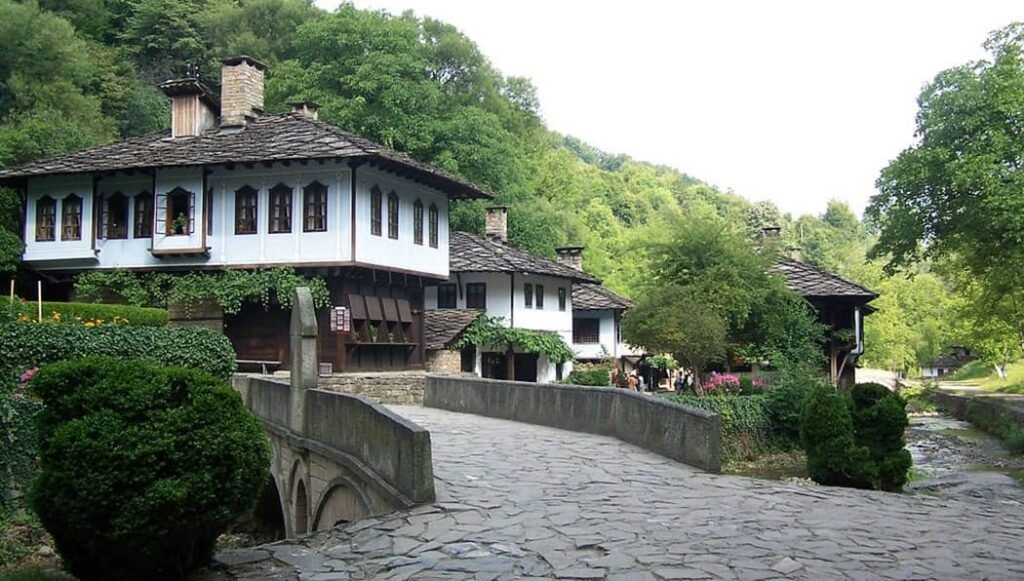
Located just outside Gabrovo, Ethnographic Village Complex Etar, also known as the Etar Open-Air Museum, brings traditional Bulgarian crafts to life in a setting that feels much closer to a working village than a conventional museum.
Opened in 1964, Etar recreates the architecture and everyday life of the Gabrovo region during the Bulgarian National Revival. The complex includes traditional houses, workshops, cobbled streets, and an impressive collection of water-powered machinery that once supported local crafts and small industries.
What makes Etar especially enjoyable is that many of the workshops are active. Depending on when you visit, you may see artisans practicing pottery, woodcarving, weaving, coppersmithing, cutlery making, icon painting, jewelry making, and traditional musical-instrument making.
Several crafts can be experienced firsthand through demonstrations and activities, giving visitors the chance to learn how traditional objects were made rather than simply looking at them behind glass.
Allow yourself enough time to walk through the complex slowly. You can browse handmade products, watch craftspeople at work, explore the old buildings, and stop for traditional Bulgarian food before continuing your trip around the Gabrovo region.
Good to know: Etar is about 8 km south of Gabrovo and pairs well with a visit to the nearby Sokolski Monastery.
Location: Ethnographic Village Complex Etar
2. Ethnographic Area Complex Zlatograd
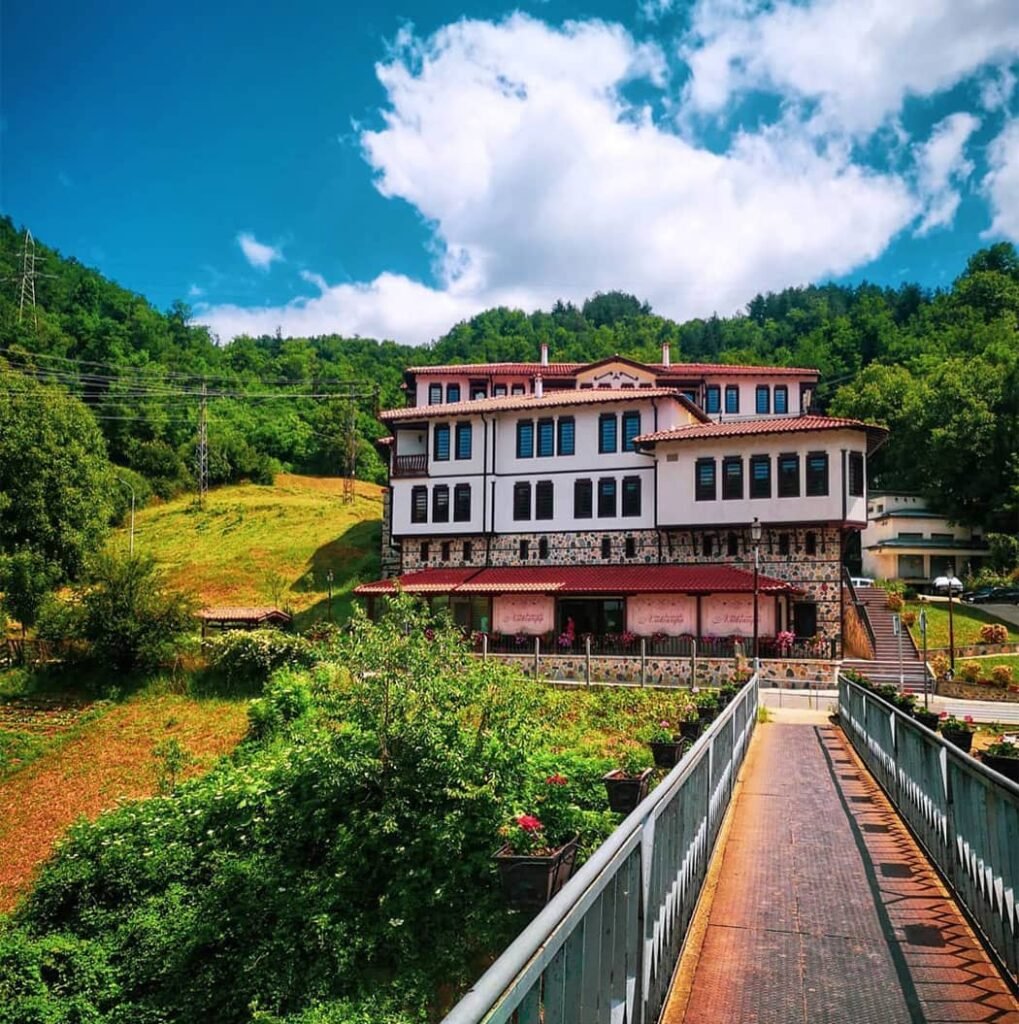
In the heart of the Rhodope Mountains, Ethnographic Area Complex Zlatograd brings together traditional architecture, working craft workshops, and the atmosphere of one of Bulgaria’s most distinctive mountain towns.
The complex is located in the old quarter of Zlatograd, around 60 km southeast of Smolyan and only a few kilometers from the border with Greece. Rather than being separated from the town, the ethnographic area forms part of Zlatograd itself, making it easy to wander between historic houses, workshops, small shops, and places serving traditional Rhodope food.
Several old Bulgarian crafts are still demonstrated here. Visitors can see artisans working with pottery, weaving, woodcarving, coppersmithing, goldsmithing, and other traditional trades. The complex also preserves historic water-powered equipment that shows how water was once used to operate machinery in local workshops.
Zlatograd is worth exploring beyond the workshops as well. The narrow streets, whitewashed Revival-era houses, wooden balconies, and surrounding Rhodope Mountains make the old quarter one of the most atmospheric stops in southern Bulgaria.
If you have more time, stay overnight rather than treating Zlatograd as a quick stop. This gives you a chance to explore the old town at a slower pace and try some of the traditional dishes of the Rhodope region.
Good to know: Zlatograd works particularly well as part of a longer road trip through the Rhodopes, especially when combined with Smolyan and other mountain villages in the region.
Location: Ethnographic Area Complex Zlatograd
3. Samovodska Charshiya, Veliko Tarnovo
Right in the historic center of Veliko Tarnovo, Samovodska Charshiya is one of the easiest places to combine traditional Bulgarian crafts with sightseeing. The old market street developed during the 19th century, when merchants, craftsmen, and farmers from nearby villages came here to sell their goods.
Today, the restored crafts street keeps part of that atmosphere alive. Walking along its cobbled lanes, you’ll find small workshops where artisans continue traditional crafts such as pottery, woodcarving, coppersmithing, weaving, icon painting, and handmade jewelry.
Unlike a museum where finished objects sit behind glass, Samovodska Charshiya gives you the chance to step inside workshops, see craftspeople at work, and buy handmade items directly from local artisans. It is also one of my favorite places to look for a Bulgarian souvenir that feels more personal than something mass-produced.
The street itself is part of the experience. Revival-era buildings, stone walls, wooden shopfronts, small galleries, and traditional workshops make it a pleasant area to explore even if you don’t plan to buy anything.
Samovodska Charshiya is also within walking distance of many of Veliko Tarnovo’s main attractions, so you can easily include it while exploring the old capital.
Good to know: Don’t rush through the street just to reach the next attraction. Some of the most interesting things are inside the small workshops, where you can watch how the objects displayed outside are actually made.
Location: Samovodska Charshiya, Veliko Tarnovo
4. National Exhibition of Arts and Crafts, Oreshak
Just a short distance from Troyan Monastery, the village of Oreshak is closely connected with Bulgarian pottery and traditional craftsmanship. Its main attraction is the National Exhibition of Arts and Crafts, where handmade works from different regions of Bulgaria are brought together in one location.
The exhibition complex opened in 1971 and has developed into an important center for Bulgarian applied arts and traditional crafts. Its collections and exhibitions feature ceramics, woodcarving, textiles, embroidery, metalwork, jewelry, traditional clothing, and other handcrafted objects.
Oreshak is especially associated with the pottery traditions of the Troyan region. The distinctive Troyan ceramics, often decorated with flowing patterns in earthy colors, are among the most recognizable forms of Bulgarian pottery. You’ll see plenty of examples around Oreshak and neighboring Troyan, along with opportunities to buy pieces directly from local makers.
The complex hosts temporary exhibitions, craft demonstrations, cultural events, and meetings with Bulgarian artisans throughout the year. This makes the experience different depending on when you visit, so it is worth checking what is happening before your trip.
One of the biggest advantages of visiting Oreshak is its location. Troyan Monastery is only about 1 km away, making it easy to combine Bulgarian craftsmanship, history, architecture, and one of the country’s most important monasteries in a single trip.
Good to know: If Bulgarian pottery is one of the main reasons you’re visiting, leave some extra time for Oreshak and Troyan rather than seeing only the exhibition complex. Small workshops and shops throughout the area sell locally made ceramics.
Location: National Exhibition of Arts and Crafts, Oreshak
5. Old Dobrich Architectural and Ethnographic Complex
In the center of Dobrich, the Old Dobrich Architectural and Ethnographic Complex recreates the atmosphere of a traditional Dobrudzha market street from the late 19th and early 20th centuries.
The complex brings together restored architecture, small workshops, and traditional crafts in a part of Bulgaria that visitors sometimes overlook while heading toward the Black Sea coast. It is a particularly convenient stop if you’re exploring northeastern Bulgaria.
Inside the workshops, you can discover crafts once closely connected with everyday life in the region, including pottery, weaving, embroidery, woodworking, leatherworking, metalwork, and other handmade trades. Some workshops still have artisans producing and selling their work, so you may have the opportunity to watch part of the process before choosing a handmade souvenir.
There is also an old-style bakery where visitors can get a taste of the food traditions that developed alongside these crafts. Together with the workshops and traditional architecture, it helps Old Dobrich feel more like a small historic neighborhood than a conventional museum exhibition.
You don’t need an entire day to explore the complex, which makes it easy to include as part of a visit to Dobrich or on a longer trip through northeastern Bulgaria.
Good to know: If you’re staying on Bulgaria’s northern Black Sea coast, Dobrich makes an easy inland addition to a trip that might also include Balchik, Cape Kaliakra, or the surrounding coastal area.
Location: Old Dobrich Architectural and Ethnographic Complex, Dobrich
6. Ethnographic and Crafts Center, Sopot
At the foot of the Balkan Mountains, the Ethnographic and Crafts Center in Sopot is a small but interesting stop for anyone who wants to see traditional Bulgarian crafts away from the larger ethnographic museums.
The complex is located close to the house-museum of Ivan Vazov, one of Bulgaria’s most important writers, and preserves the atmosphere of the old craft workshops that once formed an important part of life in towns such as Sopot.
Here you can see examples of traditional skills including woodcarving, weaving, engraving, and other handmade crafts. Local artisans continue to work in the complex, giving visitors an opportunity to see how some of these objects are produced and to purchase handmade pieces directly from the craftsmen.
The setting is much more intimate than Etar or Zlatograd. You won’t need hours to explore it, but that’s part of its appeal. Walk through the courtyard, look inside the workshops, talk to the artisans if they’re working, and then continue exploring the historic center of Sopot.
Sopot itself deserves some extra time. The town is closely associated with Ivan Vazov and sits in a beautiful location beneath the Central Balkan Mountains, with nearby Karlovo making an easy addition to the same trip.
Good to know: Combine the Ethnographic and Crafts Center with the Ivan Vazov House Museum and a walk around central Sopot. If you’re traveling through the Rose Valley, you can also include Karlovo and Kalofer on the same route.
Location: Ethnographic and Crafts Center, Sopot
7. Arbanasi Village
Set on a plateau just outside Veliko Tarnovo, Arbanasi has preserved much of the architecture and character that made it an important settlement during the Bulgarian National Revival. Unlike Etar or Zlatograd, it isn’t primarily a working crafts complex, but its architecture, decorated churches, carved woodwork, and preserved interiors make it an excellent place to discover another side of traditional Bulgarian craftsmanship.
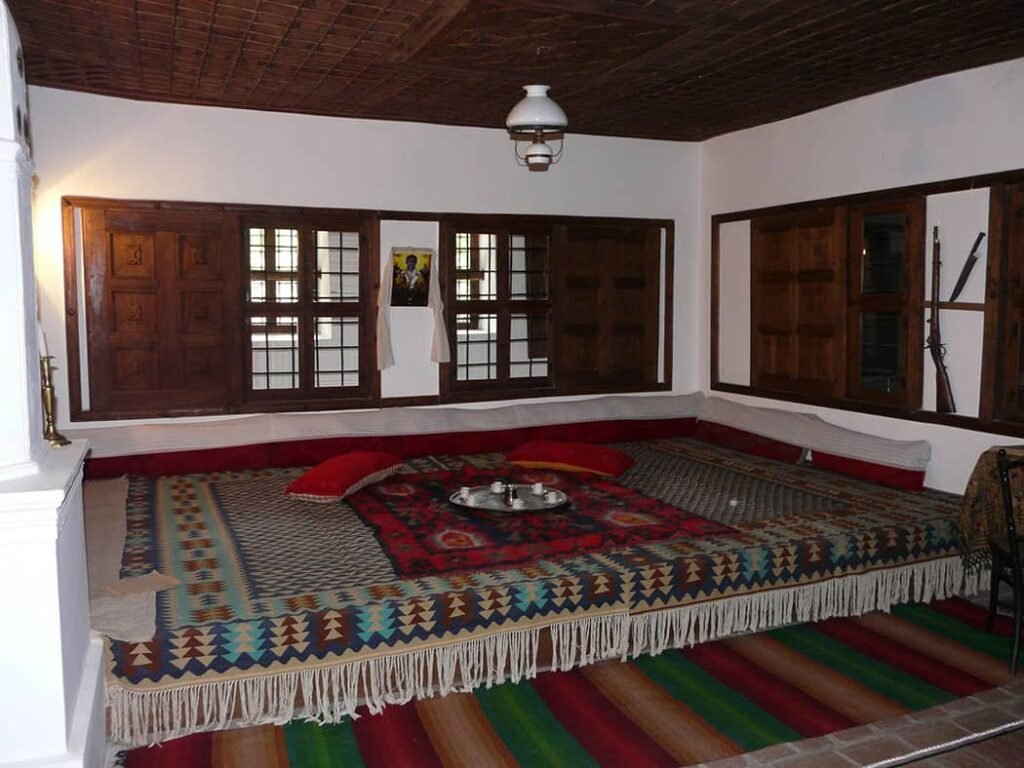
Arbanasi prospered as a wealthy trading and crafts settlement during the 17th and 18th centuries. Many of the houses built during this period resemble small fortresses from the outside, with high stone walls and heavy wooden gates, while their interiors reveal carved ceilings, wooden details, painted decoration, and period furnishings.
The village is also famous for its historic churches. From the outside, some appear surprisingly simple, but step inside and you’ll find richly painted interiors covered with frescoes. The Church of the Nativity of Christ is the highlight and one of the places you shouldn’t miss while exploring Arbanasi.
Several preserved houses are open to visitors and provide a closer look at how wealthy families lived here centuries ago. The Konstantsalieva House is especially worth seeing, with its defensive stone exterior, wooden interior, period furnishings, and household objects.
Arbanasi has five historic churches and two monasteries, reflecting the wealth and importance the settlement once enjoyed. Today, its stone streets, old houses, churches, and views toward the surrounding hills make it an easy place to spend several hours.
It’s also extremely convenient to visit from Veliko Tarnovo. You can explore Samovodska Charshiya and Tsarevets before heading up to Arbanasi, combining two of the places on this list in the same day.
Good to know: Arbanasi is an architectural and historical reserve, but contrary to a claim sometimes repeated online, it is not a UNESCO World Heritage Site.
Location: Arbanasi, Bulgaria
8. National Ethnographic Museum, Sofia
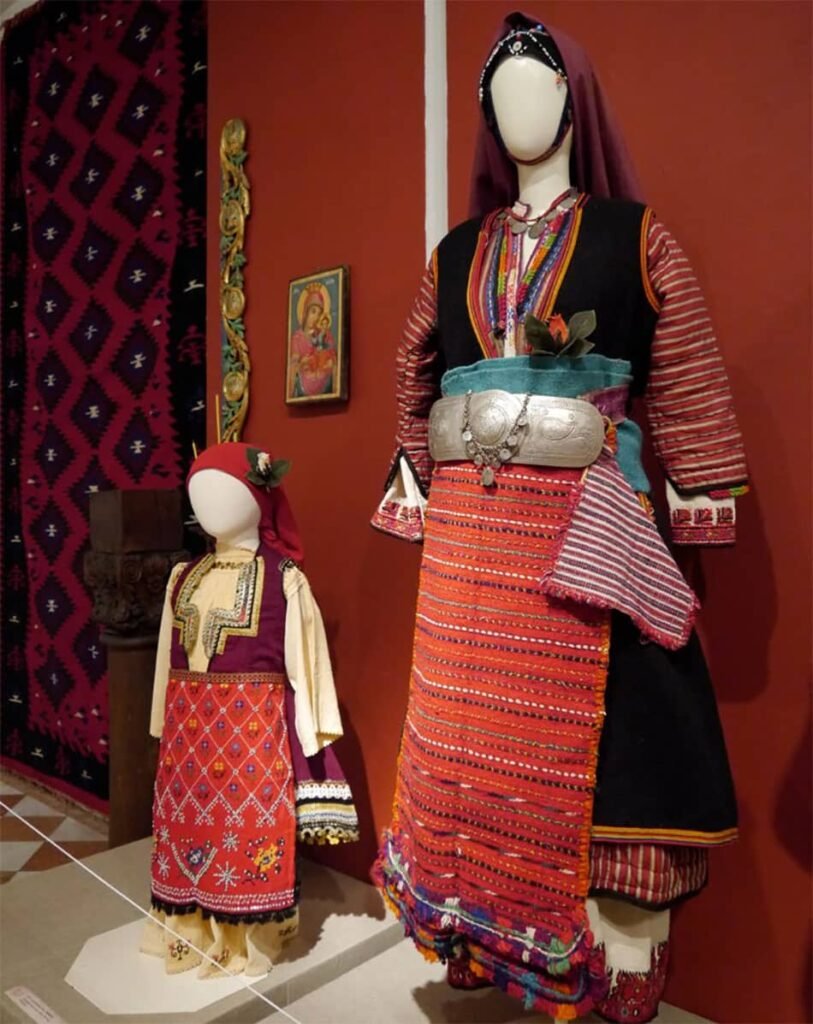
If you don’t have time to travel to Bulgaria’s smaller craft villages and ethnographic complexes, the National Ethnographic Museum in Sofia offers an excellent introduction to traditional Bulgarian craftsmanship in the capital.
The museum is housed in the former Royal Palace in central Sofia, which it shares with the National Art Gallery. Its location alone makes it easy to include while sightseeing, just steps from the City Garden and the Ivan Vazov National Theatre.
The museum preserves an extensive collection connected with everyday life, traditional clothing, customs, and crafts from different regions of Bulgaria. Among the exhibits you’ll find folk costumes, embroidery, woven textiles, carpets, ceramics, carved wood, metalwork, jewelry, household objects, agricultural tools, and ritual objects.
One of the most interesting aspects of the collection is the regional variety. Bulgarian traditional clothing, embroidery, weaving patterns, and decorative techniques can differ considerably from one part of the country to another, and seeing them together makes those differences much easier to appreciate.
This is also a useful place to visit before exploring some of the working craft centers elsewhere on this list. At Etar, Zlatograd, or Oreshak you can watch artisans practicing traditional skills; here you can see how these objects fit into Bulgarian homes, clothing, celebrations, and everyday life.
The museum belongs to the Institute of Ethnology and Folklore Studies with Ethnographic Museum at the Bulgarian Academy of Sciences, which also conducts research into Bulgarian traditional culture and folklore.
Good to know: Because the museum is right in central Sofia, you can easily combine it with the National Art Gallery, Ivan Vazov National Theatre, Alexander Nevsky Cathedral, and other major sights.
Location: National Ethnology Museum, Sofia
9. Tryavna – A Town of Woodcarvers and Craftsmen
Few towns in Bulgaria are as closely associated with traditional craftsmanship as Tryavna. Located in the Central Balkan Mountains, the town became an important center of woodcarving, icon painting, and building during the Bulgarian National Revival.
Tryavna is particularly famous for the Tryavna Art School, whose master craftsmen developed a recognizable style of woodcarving and religious art. Their work can still be seen in old houses, churches, carved ceilings, iconostases, and museum collections throughout the town.
To see this tradition up close, visit the Daskalov House, home to the Museum of Woodcarving and Icon Painting. Its most famous features are two extraordinary carved wooden ceilings created in the early 19th century. According to local history, master Dimitar Oshanetsa and his apprentice Ivan Bochukov competed to produce the more impressive ceiling, resulting in the two elaborate sun-shaped carvings that survive today.
But traditional craftsmanship in Tryavna isn’t confined to a museum. Walk through the old town around the clock tower and you’ll find workshops, galleries, and small shops selling woodcarvings, ceramics, icons, textiles, and other handmade Bulgarian crafts.
Around the workshops, you’ll find stone streets, old bridges, white Revival-era houses, wooden shopfronts, and the famous Tryavna Clock Tower. It’s a lovely part of town to explore on foot.
Tryavna is therefore much more than somewhere to shop for handicrafts. It is a place where Bulgarian architecture, art, and craftsmanship can still be experienced together.
Good to know: Don’t miss Daskalov House even if you have only a few hours in Tryavna. The carved ceilings are among the finest examples of the town’s woodcarving tradition.
Location: Tryavna, Bulgaria
10. Koprivshtitsa – Traditional Crafts and Revival Architecture
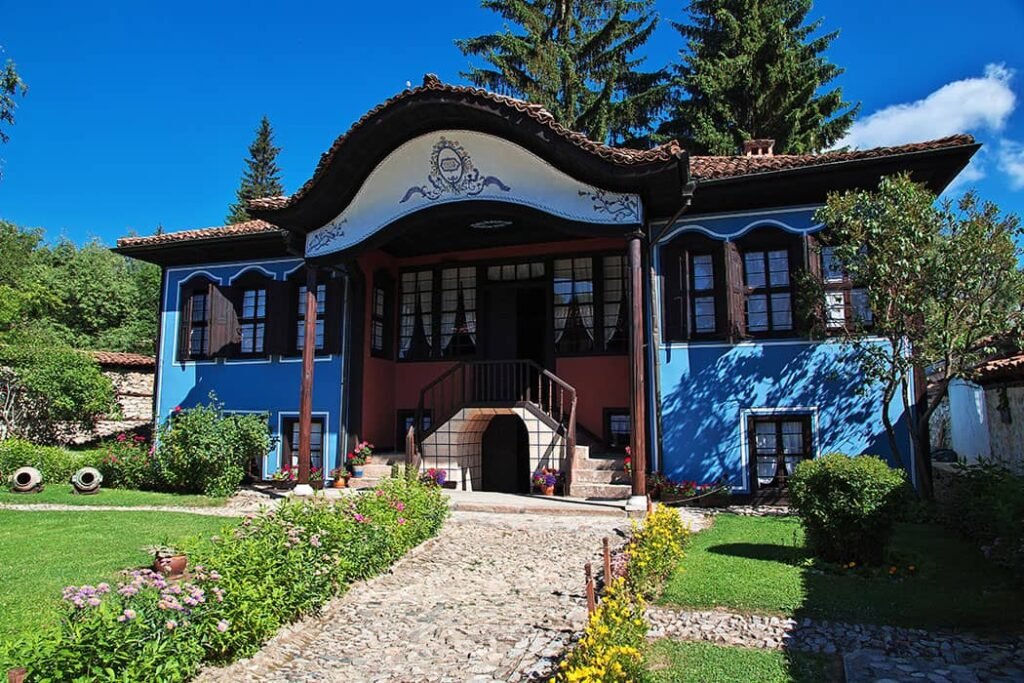
With its colorful houses, cobbled streets, stone bridges, and mountain setting, Koprivshtitsa captures the atmosphere of Bulgaria’s National Revival period remarkably well. The town is famous for its role in Bulgarian history, but it is also a wonderful place to see traditional craftsmanship preserved inside historic homes.
Many of Koprivshtitsa’s Revival-era houses display the work of skilled Bulgarian builders, woodcarvers, painters, weavers, and other craftsmen. Step inside the museum houses and you’ll find carved wooden ceilings, painted facades, woven textiles, embroidery, traditional clothing, household objects, and period furniture.
Among the most impressive buildings are the Oslekov House, Lyutov House, Dimcho Debelyanov House, and Georgi Benkovski House. Each offers a slightly different look at the architecture and everyday life of families who lived in Koprivshtitsa during the 19th century.
The Lyutov House is particularly interesting for anyone exploring Bulgarian decorative arts. Its interiors combine carved wood, painted decoration, textiles, and furnishings that show just how much craftsmanship went into the homes of wealthier families during this period.
You can also find small shops and local makers selling souvenirs and handmade items around the historic center. Take your time browsing rather than limiting your visit to the main museums—the streets and houses are a large part of what makes Koprivshtitsa memorable.
While it doesn’t function as a dedicated craft complex like Etar, Koprivshtitsa deserves a place on this list because traditional Bulgarian craftsmanship is built into the town itself.
Good to know: Koprivshtitsa can be visited as a day trip from Sofia, but staying overnight gives you a chance to walk through the historic center early in the morning or evening after many day visitors have left.
Location: Koprivshtitsa, Bulgaria
11. Shiroka Laka – Rhodope Crafts and Architecture
Deep in the Rhodope Mountains, Shiroka Laka is known for its stone houses, narrow streets, traditional music, and distinctive mountain architecture. While it isn’t a large working craft complex like Etar, the village offers a different way to experience the skills and traditions that shaped everyday life in the Rhodopes.
The historic center is filled with traditional houses built from stone and wood, many with thick walls, wooden upper floors, small windows, and stone roofs. These buildings are themselves examples of the craftsmanship of local builders who adapted their techniques to the steep terrain and harsh mountain winters.
Shiroka Laka also has a strong connection with Rhodope folk music and traditional musical instruments. The village is home to the National School of Folk Arts, where younger generations continue to study Bulgarian folk music, singing, and instruments associated with the region.
As you walk through the village, look for locally made textiles, wool products, woodwork, and other crafts connected with Rhodope traditions. The experience here is less about moving between formal workshops and more about seeing traditional architecture, music, and mountain culture together.
The village is also an excellent addition to a longer journey through the Rhodopes. Zlatograd offers the stronger working-craft experience, while Shiroka Laka provides a quieter look at the architecture and cultural traditions of the mountains.
Good to know: Shiroka Laka is close to several major Rhodope attractions, including Pamporovo, Smolyan, and the village of Gela, making it easy to include in a mountain itinerary.
Location: Shiroka Laka, Bulgaria
12. Bozhentsi – Traditional Crafts and Revival-Era Village Life
Hidden in the wooded hills near Gabrovo, Bozhentsi is a remarkably well-preserved National Revival village. Stone-paved lanes, wooden gates, old workshops, and two- and three-story houses give the village an atmosphere that feels far removed from modern city life.
Bozhentsi grew prosperous during the 18th and 19th centuries as local residents became involved in crafts and trade. Wool processing, leatherworking, blacksmithing, weaving, and other trades were closely connected with everyday life and the local economy.
Today, the village is an architectural and historical reserve, with many buildings preserving the characteristic style of the Bulgarian National Revival. The combination of stone ground floors, whitewashed upper levels, dark timber, stone roofs, wooden balconies, and enclosed courtyards makes the architecture itself one of the main reasons to visit.
Several historic buildings have been turned into museum houses and exhibitions where you can learn more about local households, commerce, and traditional village life. Small workshops and shops also offer handmade products and Bulgarian souvenirs.
Bozhentsi isn’t a large working craft center like nearby Etar, and that’s exactly why the two places complement each other. At Etar, the emphasis is on craftsmen and working workshops. In Bozhentsi, you experience the preserved village environment in which many of these trades once flourished.
The village is small enough to explore on foot, so leave the car behind and wander through the old lanes. Follow the streets away from the busiest central area and you’ll find some lovely views across the village and surrounding hills.
Good to know: Bozhentsi and Etar Open-Air Museum are close enough to visit on the same trip, making the Gabrovo region especially rewarding for travelers interested in traditional architecture and crafts.
Location: Bozhentsi, Bulgaria
13. Zheravna – Traditional Crafts and Wooden Revival Houses
Tucked into the eastern Balkan Mountains, Zheravna feels almost made for wandering, with narrow cobbled lanes, stone walls, old fountains, and beautifully preserved wooden houses dating mainly from the Bulgarian National Revival.
Zheravna prospered during the 18th and 19th centuries, when local families were involved in sheep breeding, wool production, crafts, and trade. The wealth created during this period can still be seen in the large houses built by merchants and craftsmen.
Wood is everywhere in Zheravna. Houses feature broad wooden facades, carved details, heavy gates, balconies, cupboards, ceilings, and interior furnishings made by skilled craftsmen. Many of the buildings are surrounded by high stone walls, creating the distinctive appearance for which the village is known.
Several historic homes now operate as museums, including the houses associated with Yordan Yovkov and Sava Filaretov. Their interiors preserve furniture, textiles, household objects, and other details that help visitors understand what life in a prosperous Balkan village once looked like.
Traditional textiles are another important part of Zheravna’s character. Weaving, woolwork, embroidery, traditional clothing, and other household crafts were once essential skills rather than decorative hobbies.
Zheravna becomes especially colorful during the annual Festival of Folk Costume, when thousands of visitors arrive dressed in traditional clothing for several days of Bulgarian music, dancing, food, and folklore. If you prefer a quieter experience, visit outside the festival period, when the old streets are considerably more peaceful.
Good to know: Wear comfortable shoes. Much of the pleasure of visiting Zheravna comes from wandering its steep cobbled lanes and discovering old houses away from the central square.
Location: Zheravna, Bulgaria
14. Kovachevitsa – Traditional Stone Architecture and Mountain Craftsmanship
High in the western Rhodope Mountains, Kovachevitsa immediately stands out for its steep cobbled streets and tall stone-and-timber houses. This traditional mountain construction style developed over generations of skilled local builders.
The village grew during the Bulgarian National Revival, and many surviving houses date to the 18th and 19th centuries. Local craftsmen became particularly respected for their stone masonry and building skills, and much of their work is still visible throughout the village today.
The houses are strikingly different from those you’ll see in places such as Koprivshtitsa or Zheravna. Their lower levels are built from heavy local stone, while upper floors incorporate timber and lighter materials. Stone roofs, wooden balconies, large gates, and narrow passages complete the distinctive appearance of the village.
Kovachevitsa isn’t a working craft center filled with workshops. Instead, the craftsmanship is visible in the village itself—in the masonry, woodwork, roofs, streets, walls, and houses that have survived for generations.
Stonemasons, carpenters, and master builders were just as important to Bulgaria’s craft traditions, and Kovachevitsa preserves their work on a village-wide scale.
The mountain setting adds to the experience. There are few modern distractions in the historic center, and walking through its narrow streets lets you appreciate how naturally the old buildings fit into the surrounding landscape.
Good to know: Combine Kovachevitsa with nearby Leshten if you have time. The two villages make an excellent detour when exploring the western Rhodopes and the area around Gotse Delchev.
Location: Kovachevitsa, Bulgaria
15. Busintsi – One of Bulgaria’s Historic Pottery Centers
The small village of Busintsi, near Tran in western Bulgaria, may not be as famous as Etar or Koprivshtitsa, but it holds an important place in the history of Bulgarian pottery.
For generations, Busintsi was known for its skilled potters and distinctive ceramic tradition. At its height, pottery was practiced by many families in the village, with knowledge of shaping, firing, glazing, and decorating clay passed from one generation to the next.
Busintsi pottery developed its own recognizable forms and decoration. Local craftsmen produced practical objects for everyday life—jugs, bowls, pitchers, cooking vessels, and containers—but many pieces were also decorated with characteristic glazes and patterns.
The village’s pottery heritage is preserved at the Museum of Busintsi Ceramics, where visitors can see examples of traditional vessels and learn more about the techniques and history of the local pottery school.
Busintsi is especially interesting because its pottery developed as a distinctly local tradition. Traditional pottery wasn’t identical across the country. Different regions developed their own shapes, colors, decorative styles, and methods according to local materials and customs.
Busintsi is therefore worth seeking out if you’re especially interested in Bulgarian ceramics and traditional pottery. It is quieter and much less touristy than most destinations on this list, but that’s also part of its appeal.
Good to know: Busintsi is close to the town of Tran, so consider combining the village with other sights in this less-visited corner of western Bulgaria.
Location: Museum of Busintsi Ceramics, Busintsi
16. Ethnographic Complex Chateau Medovo
Near Bulgaria’s Black Sea coast, Ethnographic Complex Chateau Medovo offers another place to discover traditional crafts without traveling far from the country’s major seaside resorts. The complex is located in the village of Medovo, about 12 km west of Sunny Beach and within easy reach of Pomorie and Burgas.
Built in a traditional Bulgarian architectural style, Chateau Medovo was designed to recreate some of the atmosphere of an old Bulgarian village. One of its most interesting features is its Street of Crafts, where different workshops have represented skills associated with Bulgarian traditional life and the National Revival period.
Crafts presented at the complex have included pottery and ceramics, weaving, leatherworking, coppersmithing, silversmithing, and traditional food making. The pottery workshop showcases Bulgarian ceramic decoration techniques, while the coppersmith workshop has produced items ranging from jugs and cups to trays, ornaments, and jewelry.
The traditional food workshops add something different to the experience. Visitors have also been introduced to old-fashioned Bulgarian sweets and foods such as halva, pestil, Turkish delight, sesame treats, homemade preserves, and coffee prepared on hot sand.
Chateau Medovo differs from historic places such as Tryavna or Arbanasi because it is a purpose-built ethnographic tourist complex rather than a preserved Revival-era settlement. Several Bulgarian craft traditions are brought together here, making Medovo an accessible stop for travelers staying along the Black Sea coast.
The complex has also included accommodation, restaurants, shops, and other visitor facilities, although individual workshops and services may operate seasonally or change over time.
Good to know: If seeing the craft workshops is the main reason for your visit, check what is operating before making a special trip. Chateau Medovo is most convenient as a detour while staying around Sunny Beach, Nessebar, Pomorie, or Burgas.
Location: Ethnographic Complex Chateau Medovo
17. Ethnographic Complex Orehite, Troyan
Located in the village of Dalbok Dol, around 10 km from Troyan, Ethnographic Complex Orehite offers a quieter look at traditional life in the Central Balkan Mountains.
Known locally as Orehite (“The Walnuts”), the complex brings together restored traditional houses and objects connected with the everyday life of the region. Rather than functioning as a large open-air museum like Etar, Orehite is a smaller ethnographic complex where the emphasis is on experiencing the atmosphere of an old Balkan village home.
The traditional architecture is an important part of the experience. Stone, wood, old household objects, agricultural tools, textiles, and period furnishings help recreate how families in this part of Bulgaria once lived.
Orehite also differs from many places on this list because visitors have traditionally been able to stay overnight in the restored houses. This turns the experience into something closer to rural heritage tourism than a conventional museum visit.
While you shouldn’t come here expecting the large collection of working craft workshops found at Etar or Zlatograd, Orehite makes sense as part of a wider exploration of the Troyan region, where pottery and traditional craftsmanship remain an important part of local identity.
Its location also makes it easy to combine with Troyan, Oreshak, and Troyan Monastery. If you’re already visiting the National Exhibition of Arts and Crafts in Oreshak, Orehite can add a more intimate look at traditional rural life in the same region.
Good to know: Orehite is primarily a small ethnographic and accommodation complex rather than a major working craft center. If you plan to stay overnight or visit specifically for the ethnographic experience, check current opening and accommodation information before traveling.
Location: Ethnographic Complex Orehite, Dalbok Dol
Traditional Bulgarian Crafts to Look For
One of the reasons these authentic Bulgarian crafting places are so interesting is the variety of skills preserved across different regions. Some developed into distinctive local traditions, while others were once part of everyday life throughout Bulgaria.
Bulgarian Pottery and Ceramics
Pottery is among Bulgaria’s most recognizable traditional crafts. Troyan and Oreshak are particularly famous for their ceramics, while Busintsi developed its own historic pottery tradition. Bowls, pitchers, plates, cooking vessels, and decorative pieces were traditionally shaped by hand and decorated with regional patterns and glazes.
Woodcarving
Woodcarving reached an exceptionally high level during the Bulgarian National Revival. Craftsmen produced everything from household objects and furniture to elaborate ceilings and church iconostases. Tryavna became one of the country’s best-known centers of woodcarving, and some remarkable examples can still be seen inside its historic houses.
Weaving and Embroidery
For generations, Bulgarian families produced much of their own clothing, rugs, blankets, and household textiles. Weaving and embroidery developed distinctive colors, geometric patterns, and motifs that varied considerably between regions.
Traditional textiles and costumes can be explored in ethnographic museums throughout Bulgaria, while places such as Etar and Zlatograd still help visitors understand how some of this work was traditionally done.
Coppersmithing and Metalwork
Coppersmiths once produced many of the objects found in Bulgarian kitchens and homes, including pots, trays, coffee vessels, jugs, and decorative pieces. You can still encounter this craft in places such as Etar, Zlatograd, and Samovodska Charshiya, where traditional workshops preserve the connection between craftsmanship and everyday life.
Icon Painting
Icon painting has a special place in Bulgarian cultural history. During the National Revival, schools of painters and woodcarvers created icons and elaborate church interiors throughout the country. Tryavna became particularly well known for its icon-painting tradition.
Traditional Jewelry and Goldsmithing
Goldsmiths and silversmiths produced jewelry, buckles, ornaments, religious objects, and decorative accessories. Many designs were closely connected with regional folk costumes, and surviving examples can be seen today in ethnographic museum collections.
These crafts also make some of the most interesting souvenirs to bring home from Bulgaria. If you want ideas beyond the usual tourist-shop gifts, see our guide to Essential Bulgarian Souvenirs.
Which Bulgarian Crafting Place Should You Visit?
You certainly don’t need to visit all of these authentic Bulgarian crafting places on one trip. The best choice depends on where you’re traveling and which Bulgarian traditions interest you most.
For the most complete introduction to traditional Bulgarian crafts, Etar Open-Air Museum would be my first choice. Its working workshops, historic buildings, and water-powered machinery bring several crafts together in one place.
If you’re exploring the Rhodope Mountains, choose Zlatograd for working workshops and traditional architecture, while Shiroka Laka offers a stronger connection with Rhodope music and mountain culture.
For woodcarving and icon painting, Tryavna is difficult to beat. If pottery is your main interest, head toward Troyan and Oreshak, or seek out the much less visited pottery tradition of Busintsi.
Travelers staying in Veliko Tarnovo can easily explore Samovodska Charshiya and Arbanasi on the same trip. Around Gabrovo, combine Etar and Bozhentsi for two very different perspectives on traditional Bulgarian life.
If you’re based in Sofia, the National Ethnographic Museum is by far the easiest introduction. Koprivshtitsa also makes a rewarding trip from the capital if you want to experience Revival-era architecture outside the city.
And if your Bulgarian holiday is focused mainly on the Black Sea coast, Old Dobrich provides an interesting option in the north, while Chateau Medovo is conveniently located for travelers around Sunny Beach, Nessebar, Pomorie, and Burgas.
Whichever you choose, spend some time inside the workshops rather than simply walking through. Watching a potter shape clay or a woodcarver work by hand tells you far more about Bulgarian craftsmanship than a souvenir shelf ever could.
How to Plan a Bulgarian Crafts Road Trip
You don’t need to cross the entire country to experience several of these authentic Bulgarian crafting places. Many are clustered close enough together to combine into a day trip or a longer road trip.
Gabrovo, Tryavna and Bozhentsi
This is probably the strongest area for anyone interested in Bulgarian crafts and National Revival architecture. Start with Etar, where you can watch traditional crafts being practiced, then explore the woodcarving heritage of Tryavna and the preserved village atmosphere of Bozhentsi.
Troyan and Oreshak
The Troyan region is the obvious choice if you’re interested in Bulgarian pottery and ceramics. Visit the National Exhibition of Arts and Crafts in Oreshak, continue to nearby Troyan Monastery, and look for locally made Troyan pottery along the way. Ethnographic Complex Orehite can also be included if you have additional time.
Veliko Tarnovo and Arbanasi
These two are very easy to combine. Explore the workshops of Samovodska Charshiya while sightseeing in Veliko Tarnovo, then make the short trip to Arbanasi for its historic houses, carved interiors, and richly decorated churches.
The Rhodope Mountains
For a longer mountain journey, Zlatograd and Shiroka Laka offer two different experiences. Zlatograd has the stronger concentration of traditional workshops, while Shiroka Laka is known for its Rhodope architecture, folklore, and musical traditions.
Sofia and Western Bulgaria
Start at the National Ethnographic Museum in Sofia for an overview of Bulgarian traditional culture. From the capital, Koprivshtitsa makes an excellent day trip, while Busintsi can be combined with Tran for travelers looking for somewhere considerably less visited.
Bulgaria’s Black Sea Region
If most of your holiday will be spent along the coast, you still have opportunities to explore Bulgarian crafts. Old Dobrich is convenient when traveling around the northern Black Sea coast, while Chateau Medovo is closer to Sunny Beach, Nessebar, Pomorie, and Burgas.
Whichever route you choose, check current opening hours before setting out. Smaller workshops, museums, and ethnographic complexes may have seasonal schedules, and individual artisans may not work every day.
Frequently Asked Questions About Bulgarian Crafts and Crafting Places
What are the best places to see traditional Bulgarian crafts?
Etar Open-Air Museum near Gabrovo is one of the best places to start because visitors can see multiple traditional crafts demonstrated in working workshops. Zlatograd, Samovodska Charshiya in Veliko Tarnovo, Tryavna, Oreshak, and the Ethnographic and Crafts Centre in Sopot are also excellent choices.
What traditional crafts is Bulgaria known for?
Bulgaria has a long tradition of pottery, woodcarving, weaving, embroidery, coppersmithing, icon painting, leatherworking, jewelry making, and traditional textile production. Certain areas developed particularly strong local traditions, including Troyan ceramics, Tryavna woodcarving, and Busintsi pottery.
Where can I watch Bulgarian craftsmen at work?
Etar and Zlatograd are two of the best-known authentic Bulgarian crafting places where visitors may see artisans practicing traditional skills. Samovodska Charshiya and several smaller craft centers also have active workshops. Demonstrations can vary by season and day, so check before making a special trip.
Where is the best place to see Bulgarian pottery?
The Troyan and Oreshak area is one of the best destinations for Bulgarian pottery. Troyan ceramics are easily recognized by their flowing decorative patterns and characteristic glazing. Busintsi is another fascinating destination for travelers interested specifically in Bulgaria’s historic pottery traditions.
Can I buy handmade Bulgarian crafts at these places?
Yes. Many craft centers and historic towns have workshops or small shops where you can buy handmade pottery, woodcarvings, textiles, embroidery, jewelry, icons, and other Bulgarian handicrafts. Buying directly from an artisan is also a good way to support the people keeping these traditional skills alive.
Can I visit several Bulgarian craft destinations on one trip?
Absolutely. Etar, Tryavna, and Bozhentsi work particularly well together, as do Veliko Tarnovo and Arbanasi. Around Troyan, you can combine Oreshak, Troyan Monastery, and other attractions in the region. A longer Rhodope itinerary can include Zlatograd and Shiroka Laka.
Are Bulgarian ethnographic complexes open year-round?
Many major museums and ethnographic complexes operate throughout the year, but opening hours can change by season. Smaller workshops may also close on certain days or operate only when an artisan is present. Always check current opening hours before traveling specifically to see a particular craft demonstration.
Discover Bulgaria Through Its Traditional Crafts
Visiting these authentic Bulgarian crafting places is about more than watching how pottery, textiles, woodcarvings, or copper objects are made. They preserve skills that were once part of everyday life in Bulgarian towns and villages and show how different those traditions could be from one region to another.
If you have time for only one, Etar is an excellent introduction. But some of the smaller places can be just as memorable. Tryavna’s carved wood, the pottery traditions around Troyan and Busintsi, Zlatograd’s workshops, and the old houses of Zheravna each reveal a different part of Bulgaria’s cultural heritage.
And if you find a small workshop with an artisan still making things by hand, step inside. Ask about the craft, watch how the work is done, and consider buying something made locally. You may end up taking home a piece with a story behind it rather than another souvenir from a tourist shop.
Have you visited any of these places, or do you know a Bulgarian craft village or workshop that deserves to be included? Let us know and tag @stunningbulgaria on Instagram with #stunningbulgaria.
While you’re planning your trip, you may also enjoy: