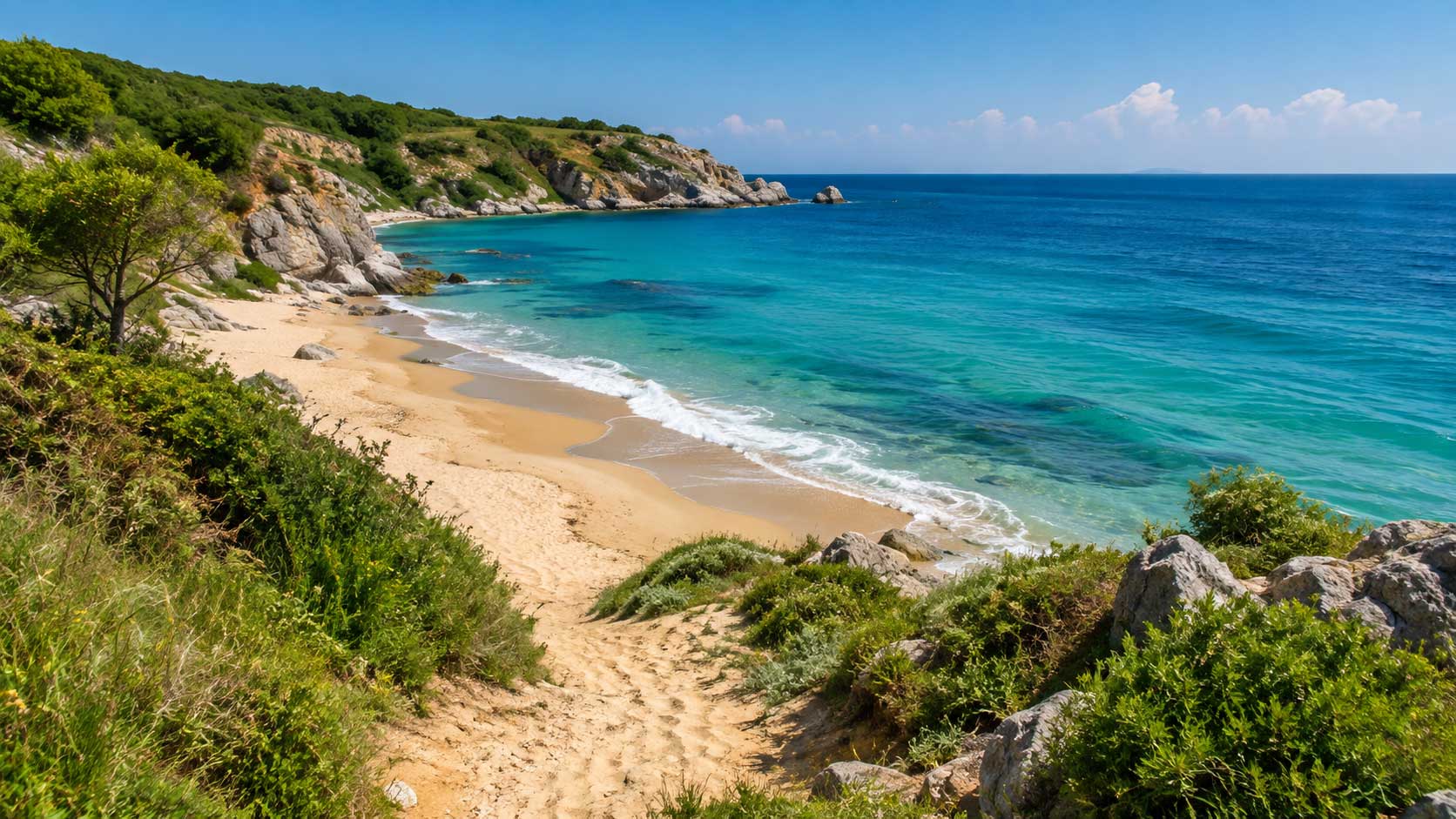
Bulgaria’s Black Sea coast is famous for places like Sunny Beach, Golden Sands, and Nessebar, but our guide to the best beaches in Bulgaria only scratches the surface of what you’ll find beyond the major resorts.
Travel beyond the rows of hotels and busy promenades and the coastline begins to change. Forests reach almost to the water, sandy paths wind through protected landscapes, and small bays hide between rocky headlands. In some places, there is little more than a beautiful stretch of sand, the Black Sea, and enough room to find your own quiet corner.
The hidden Black Sea beaches in Bulgaria reveal a very different side of the Bulgarian seaside.
Some are wild and almost completely undeveloped. Others sit close to small coastal villages yet feel worlds away from the country’s busiest resorts. And while a few aren’t exactly secrets anymore, they still offer the natural scenery, open space, and slower pace that can be difficult to find in the major tourist destinations.
From the forest-backed sands of Silistar to the unusual meeting of river and sea at Veleka Beach and the dramatic cliffs surrounding Bolata Bay, there are some remarkable places waiting beyond the usual resort stops.
One of the best ways to explore these hidden beaches in Bulgaria is on a road trip along the coast. You can spend the morning on a quiet beach, stop for lunch in a small seaside town, explore a nature reserve in the afternoon, and still reach one of Bulgaria’s historic coastal towns before sunset.
If your perfect beach day means more nature, fewer crowds, and a little exploration, these beautiful corners of Bulgaria’s Black Sea coast are a great place to start.
What Makes a Beach “Hidden” in Bulgaria?
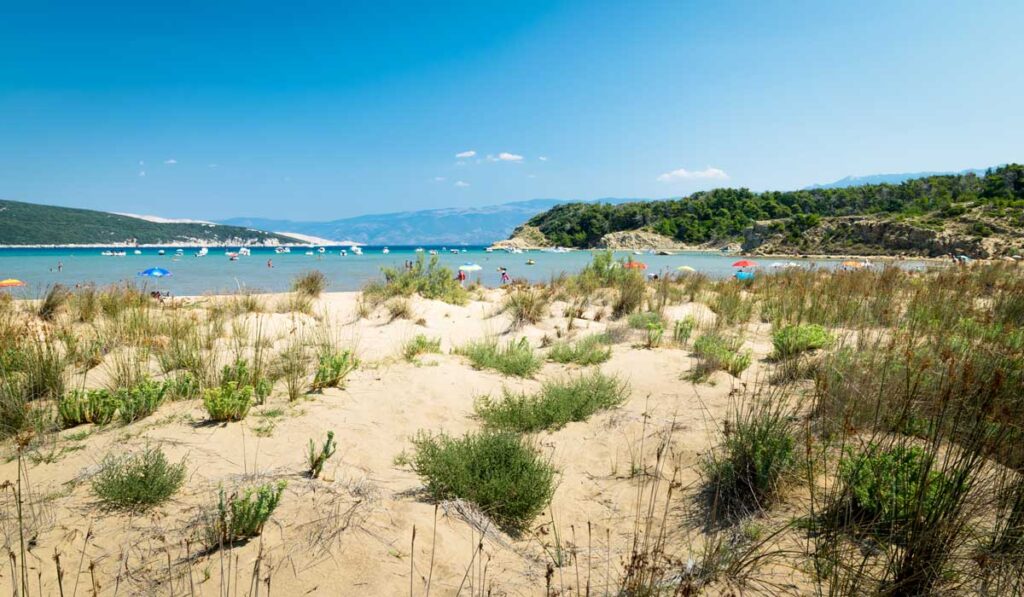
Not every beach in this guide is a secret, and we don’t want to pretend otherwise. Places like Bolata and Veleka have become increasingly popular with Bulgarian travelers, photographers, and international visitors who venture beyond the country’s major seaside resorts.
Here, “hidden” is more about the experience than how many people know the beach exists. These are places that have escaped the large-scale development found along some of Bulgaria’s busiest stretches of coastline. You may find a forest behind the sand instead of a row of hotels, or reach the beach along a smaller road or walking trail rather than stepping directly from a resort promenade.
Many are surrounded by protected landscapes, dunes, cliffs, rivers, or woodland. Facilities can be limited, particularly at the wilder beaches, but that’s also a large part of their appeal.
If you’re looking for beach clubs, endless rows of sunbeds, restaurants, and nightlife within walking distance, Bulgaria has plenty of excellent places for that. This guide is about the other side of the Black Sea coast: wild dunes, forest-backed coves, river mouths, dramatic cliffs, and quieter stretches of sand where nature is still the main attraction.
Hidden Black Sea Beaches in Bulgaria at a Glance
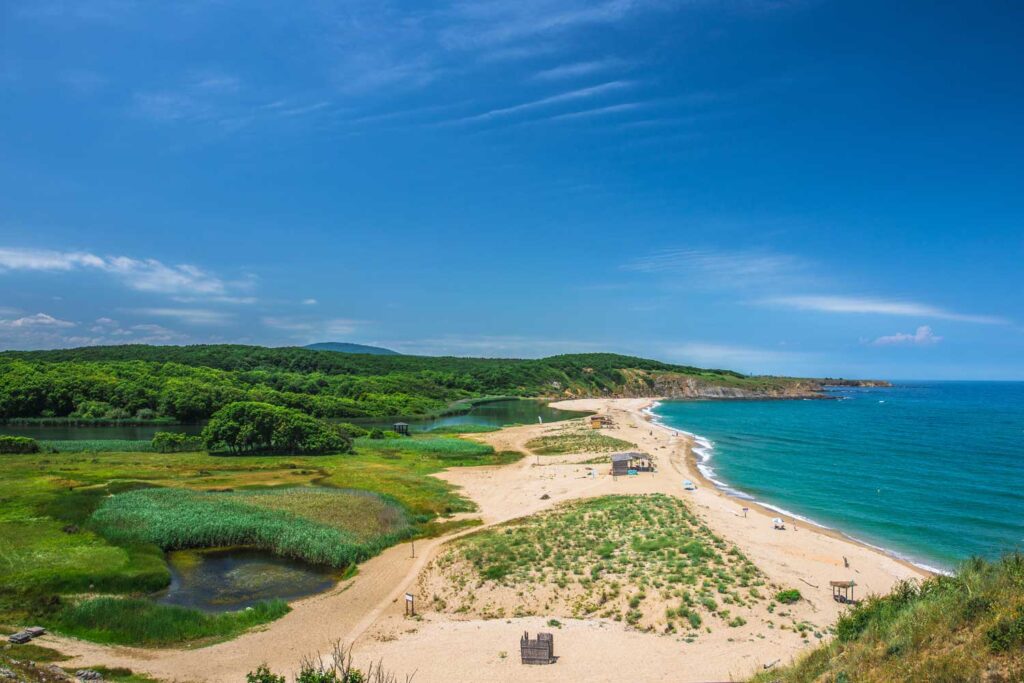
Bulgaria’s Black Sea coast changes dramatically as you travel from north to south. There are tiny bays surrounded by cliffs, beaches hidden beyond forests and walking trails, long stretches of undeveloped sand, and river mouths where freshwater meets the sea.
Some are easier to reach than others, and a few have become increasingly popular in recent years. What they share is a setting that feels far removed from Bulgaria’s large seaside resorts.
If you’re planning a road trip along the coast, here’s a quick look at the beaches we’ll explore.
| Beach | Location | Best For | What Makes It Special |
|---|---|---|---|
| Silistar Beach | Near Sinemorets | Nature & swimming | Sheltered sandy bay surrounded by forest |
| Lipite Beach | South of Sinemorets | Seclusion & hiking | Wild beach reached on foot through a natural coastal landscape |
| Veleka Beach | Sinemorets | Scenery & photography | Spectacular setting where the Veleka River reaches the Black Sea |
| Irakli Beach | Near Emona | Wild coastline | Long natural beach backed by largely undeveloped scenery |
| Kara Dere Beach | Near Byala | Escaping the resorts | Remote stretch of sand with very little development |
| Bolata Bay | Near Cape Kaliakra | Dramatic scenery | Small crescent-shaped bay surrounded by reddish cliffs |
| Coral Beach | Near Lozenets | Nature & open space | Sandy coastline without the atmosphere of a large resort |
| Arkutino Beach | South of Sozopol | Dunes & nature | Beautiful beach near dunes, wetlands, and protected landscapes |
| Krapets Beach | Near Krapets | Peace & long walks | Quiet northern coastline with long stretches of sand |
| Durankulak Beach | Near Durankulak | Remote nature | Wild northern coastline beside an important wetland area |
Exploring the hidden beaches in Bulgaria doesn’t mean you should expect every stretch of sand to be empty. Silistar, Veleka, Bolata, and Irakli are well known among Bulgarians, and summer weekends can still bring plenty of visitors. What separates them from the country’s major resort beaches is their natural setting, limited large-scale development, and the feeling that the landscape—not the hotels—is still the main attraction.
Timing makes a big difference. Visit on a weekday, arrive earlier in the morning, or travel in June or September, and even some of the better-known beaches can feel considerably more peaceful.
1. Silistar Beach

About 5 kilometers south of Sinemorets, Silistar Beach is one of the most beautiful places to experience the wilder side of Bulgaria’s southern Black Sea coast. Continue south from Silistar and you’re soon approaching Bulgaria’s border with Turkey, giving this whole corner of the country a wonderfully remote feel.
Silistar sits in a sheltered bay framed by wooded hills, with a wide strip of golden sand separating the forest from the Black Sea. Instead of high-rise hotels and a busy promenade behind you, the backdrop is dominated by greenery.
The setting is what makes Silistar special. The bay curves gently between two headlands, and on calm summer days the water can be wonderfully inviting for swimming. From the beach, the surrounding hills make the coastline feel much more secluded than you might expect from one of Bulgaria’s increasingly popular natural beaches.
Silistar lies within the wider Strandzha Nature Park landscape, so the scenery surrounding the beach is just as important as the sand itself. This is a part of Bulgaria where forest, rivers, rocky coastline, and the Black Sea come together within a relatively small area.
It’s also one of the most beautiful stretches of the Bulgarian Riviera for travelers who prefer nature to large resorts.
Don’t expect to have Silistar completely to yourself, though. Its beauty is hardly a secret among Bulgarians anymore. July and August weekends can get busy, particularly in the middle of the day. Come earlier in the morning, visit on a weekday, or travel in June or September for a noticeably quieter experience.
Getting to Silistar Beach
Silistar is reached from the coastal road south of Sinemorets, approximately 5 kilometers from the village. The final approach feels considerably more rustic than arriving at one of Bulgaria’s major beach resorts, which is part of the experience.
If you’re driving, don’t assume that road, parking, or access conditions will always be exactly as described in older travel guides. Conditions around Bulgaria’s wilder beaches can change from season to season, so check locally before heading down.
Once you’re there, plan to stay awhile. Silistar isn’t the kind of beach where you need a packed itinerary. Bring what you need for the day, settle into the sand, swim when the sea is calm, and enjoy the natural surroundings.
Why Visit Silistar?
Choose Silistar if you want a natural Black Sea beach without needing a long hike to reach it. It provides much of the scenery people seek from Bulgaria’s wild coastline while remaining close enough to Sinemorets for restaurants, accommodation, and supplies.
It’s also an excellent stop on a longer exploration of the southern coast. Veleka Beach and Lipite Beach are nearby but offer completely different experiences, making Sinemorets one of the best bases for discovering several of Bulgaria’s most beautiful natural beaches.
Best for: Swimming, nature, couples, photographers, and travelers exploring Strandzha and the southern Black Sea coast.
2. Lipite Beach
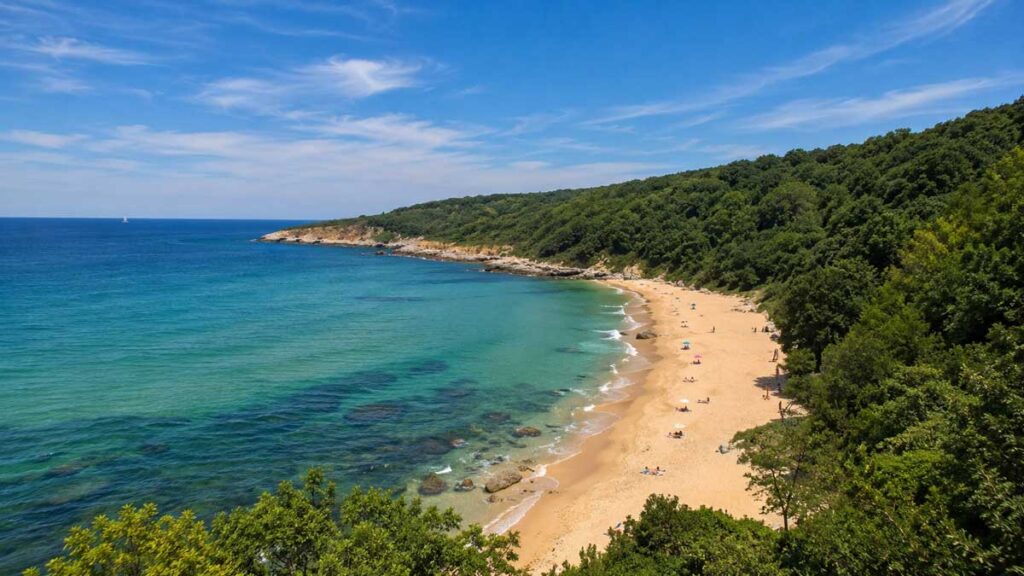
Just south of Sinemorets, Lipite Beach feels noticeably more secluded than nearby Silistar and Veleka. There is no road that takes you directly to the sand, so reaching the beach requires a walk through the coastal landscape. That extra effort is one of the reasons Lipite remains quieter than many beaches in the area.
The beach itself is relatively small, with golden sand framed by green hills and woodland. There are no large hotels or busy promenades behind the shoreline. Once you arrive, there isn’t much competing for your attention—just the beach, the surrounding nature, and the Black Sea.
That’s a large part of Lipite’s charm and one reason it deserves a place among the best hidden beaches in Bulgaria. Some of Bulgaria’s formerly little-known beaches now draw sizeable summer crowds, but the walk to Lipite naturally discourages many visitors looking for somewhere they can simply park and step onto the sand.
An early start makes the walk much more pleasant, especially in midsummer. Temperatures are usually more comfortable for walking, and arriving earlier gives you more time to enjoy the beach before making your way back.
Getting to Lipite Beach
Lipite is reached on foot from the Sinemorets area, with a common approach continuing south from Butamyata Beach along the coast.
Don’t think of the walk as simply something you have to endure before reaching the beach. It’s part of what makes visiting Lipite memorable, with stretches of woodland and open coastal scenery along the way.
Comfortable shoes are a much better choice than walking the entire route in flip-flops, especially if you plan to explore the surrounding area. Bring plenty of drinking water as well—the Bulgarian summer sun can be intense, particularly in July and August.
Trails and access conditions can change, so check the current route locally before heading out rather than relying entirely on an old map or travel guide.
What to Expect at Lipite
Lipite isn’t the place to choose if you want restaurants, shops, showers, and other resort-style conveniences within easy reach. Come prepared to be self-sufficient for the time you plan to spend there.
Bring drinking water, something to eat, sunscreen, a hat, and anything else you’ll need for the day. Most importantly, take everything back with you when you leave. Keeping beaches like Lipite beautiful depends on visitors treating them differently from heavily serviced resort beaches.
Take the same approach to swimming. Conditions on the Black Sea can vary, and you shouldn’t assume a remote beach has the lifeguards or other safety services you’d expect at a major resort. If the water looks rough or you’re uncertain about conditions, staying out is the sensible choice.
Why Visit Lipite Beach?
Lipite is a great choice for travelers who don’t mind putting in a little effort for a quieter beach experience. The walk, smaller size, and natural surroundings give it a sense of separation from the busier seaside destinations nearby.
It’s also easy to make Lipite part of a longer exploration of Sinemorets and the southern Strandzha coast. Veleka, Butamyata, Silistar, and Lipite are all relatively close geographically, yet each offers a noticeably different view of Bulgaria’s Black Sea coastline.
If Silistar is an accessible introduction to this wilder corner of Bulgaria, Lipite is where you go when you want to venture a little farther off the usual seaside route.
Best for: Hiking, quiet beach days, nature, photography, couples, and adventurous travelers comfortable carrying their own supplies.
3. Veleka Beach
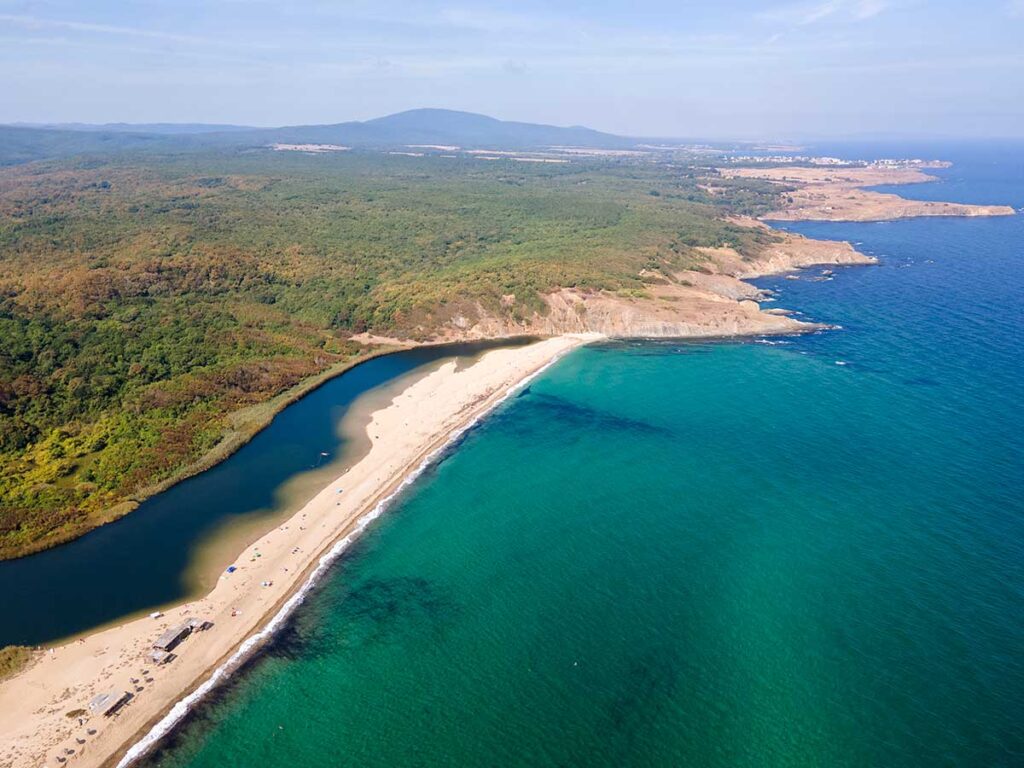
At the northern edge of Sinemorets, Veleka Beach has one of the most distinctive landscapes on Bulgaria’s Black Sea coast. Here, the Veleka River curves toward the sea, creating a beautiful meeting point of freshwater, golden sand, green vegetation, and the open Black Sea.
A long strip of sand separates the lower reaches of the river from the sea. Seen from the cliffs above Sinemorets, the shape of the beach becomes even more impressive, with the Veleka winding through the greenery before reaching the coast.
That’s what makes this beach different from almost anywhere else in Bulgaria. You aren’t coming only for sand and swimming—the surrounding landscape is a major part of the experience. On one side you have the Black Sea, while behind the beach the river passes through reeds and dense vegetation on its final journey through Strandzha.
Veleka is hardly a secret among Bulgarians anymore. Its unusual setting has made it popular with photographers and travelers exploring the southern coast, and summer days can get busy. Yet without the wall of large hotels found at major resorts, it still feels closely connected to the natural landscape around it.
See Veleka Beach From Above
Before heading down to the sand, make time to see Veleka Beach from above.
The elevated viewpoints around Sinemorets reveal the sweeping curve of the river, the strip of sand, and the Black Sea beyond. From beach level the setting is beautiful; from above, you can actually understand what makes the geography here so unusual.
Morning is a wonderful time to visit, particularly if you want a quieter experience. The viewpoint is also worth returning to later in the day when changing light gives the coastline an entirely different appearance.
If you enjoy photography, this is one viewpoint you won’t want to rush. This is easily one of the most photogenic coastal views in Bulgaria.
Getting to Veleka Beach
Veleka Beach lies immediately north of Sinemorets, so it is much easier to include in a coastal itinerary than more remote places such as Lipite.
If you’re staying in the village, walking can be more convenient than moving your car between nearby beaches, particularly during the busiest weeks of July and August when parking becomes more difficult.
Even with its proximity to Sinemorets, remember that you’re visiting a natural beach rather than a large resort complex. Bring what you’ll need and don’t expect the same level of facilities you’d find at Sunny Beach or Golden Sands.
Swimming at Veleka Beach
The meeting of river and sea is what makes Veleka beautiful, but it’s also a good reason to pay attention to conditions before swimming.
Waves and currents on the Black Sea can vary, and conditions near a river mouth deserve additional caution. Follow posted warnings and lifeguard instructions when present, and don’t enter rough water simply because other swimmers are doing so.
Swimming isn’t the only reason to visit anyway. Walking along the sand, watching the river, exploring the surrounding coastline, and photographing the landscape can easily fill several hours.
Explore the Veleka River
Don’t overlook the river itself.
The Veleka flows through the forests of Strandzha before reaching the Black Sea at Sinemorets, and exploring it offers a completely different experience from spending the day on the beach. Seasonal boat trips and other activities may be available locally, so it’s worth checking what’s operating during your visit.
Seeing the river from the water also helps explain why the Sinemorets area feels so different from Bulgaria’s major resort towns. Forest, river, wetland, beach, and sea all come together within a remarkably small area.
Why Visit Veleka Beach?
Come to Veleka for the scenery as much as the beach itself. Bulgaria has quieter stretches of sand and beaches with more amenities, but few can match this combination of river, sea, cliffs, and greenery.
It’s particularly worthwhile for photographers and road-trippers, and pairing Veleka with nearby Silistar and Lipite gives you three very different coastal experiences without traveling far.
If you do only one thing before leaving, climb high enough to appreciate the view. Seeing the Veleka River curve toward the Black Sea from above is one of the highlights of Bulgaria’s southern coastline.
Best for: Photography, nature, scenic views, road trips, couples, and travelers exploring Sinemorets and Strandzha.
4. Irakli Beach
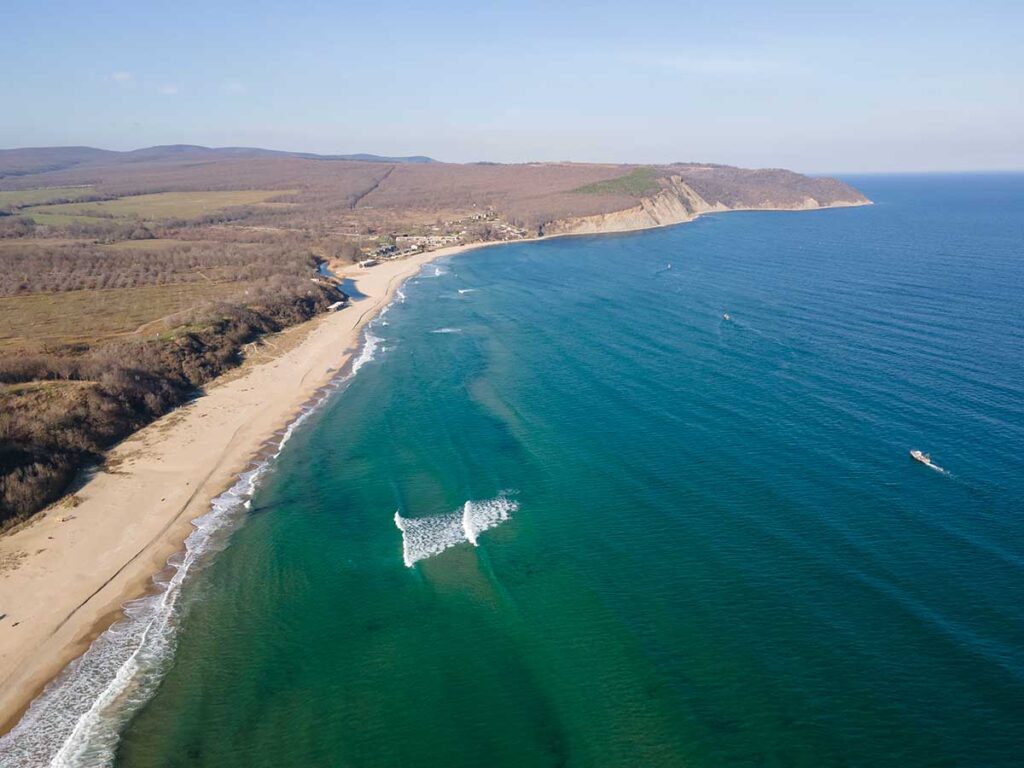
Tucked between some of Bulgaria’s better-known seaside destinations, Irakli Beach offers something increasingly difficult to find along the Black Sea coast: a long stretch of sand where the landscape still feels more important than the buildings around it.
Located near the village of Emona, Irakli has been a favorite escape for generations of Bulgarians looking for an alternative to the country’s organized beach resorts. Unlike the smaller coves around Sinemorets, this is a broad, open beach with plenty of coastline to explore.
That sense of space is one of the first things you’ll notice. The shoreline stretches into the distance, with natural vegetation behind much of the beach instead of the dense hotels and promenades associated with Bulgaria’s biggest resorts.
Irakli isn’t a secret, especially among Bulgarians. On summer weekends you’ll certainly encounter other visitors, and parts of the area are busier today than they were years ago. But the experience remains very different from spending the day surrounded by hotels, beach clubs, and tightly packed rows of sunbeds.
What Makes Irakli Special?
Irakli’s biggest attraction is simply having room to breathe.
Instead of a small bay where everyone gathers in the same area, the long shoreline gives you an opportunity to walk farther and find a quieter stretch of sand. The farther you move from the main access points, the more the atmosphere can change.
The surrounding Emine-Irakli area is also valued for its coastal habitats and natural landscape, making this a place where protecting the environment should be part of the visit.
Stay on established access routes whenever possible, avoid walking through sensitive dunes and vegetation, and take everything you bring with you when you leave. Small habits like these matter enormously at beaches that don’t have the infrastructure of a major resort.
Getting to Irakli Beach
Irakli lies near Emona, between the broader areas of Obzor and Nessebar. Traveling by car is generally the easiest option, particularly if you’re including the beach in a longer Black Sea road trip.
Access and parking depend on which part of the beach you’re heading toward, and conditions can change from one season to another. It’s worth checking current local information before setting out rather than assuming an old travel guide still reflects the situation on the ground.
Bring drinking water, food, sunscreen, and other essentials with you as well. Irakli isn’t somewhere to visit expecting shops and restaurants every few steps.
A Different Kind of Hidden Beach
Irakli shows why “hidden” doesn’t necessarily mean small, empty, or unknown.
The attraction here is the opportunity to step away from the highly developed side of Bulgaria’s seaside and experience a much more open stretch of coastline.
Visit during the week instead of a peak summer weekend, arrive earlier in the day, and be willing to walk beyond the busiest access points. Those simple choices can make a surprisingly large difference.
The beach is also more exposed than a sheltered bay such as Silistar, so always look at sea conditions before swimming. Pay attention to warning flags and lifeguard instructions where available, particularly when waves are stronger.
Why Visit Irakli Beach?
Choose Irakli if you enjoy long walks, open horizons, and having enough coastline to explore beyond the spot where you first arrive.
Its location also makes it an excellent road-trip stop. Nearby Cape Emine marks the eastern end of the Balkan Mountains and offers another reason to spend time exploring this section of the coast before continuing toward Nessebar, Obzor, or other seaside destinations.
Irakli may no longer qualify as one of Bulgaria’s best-kept secrets, but that’s not really why it belongs on this list. It remains one of the places where you can still experience the spacious, less-developed character of the Bulgarian Black Sea coast.
Best for: Long beach walks, open spaces, nature, road trips, photography, and travelers looking for an alternative to Bulgaria’s major resorts.
5. Kara Dere Beach
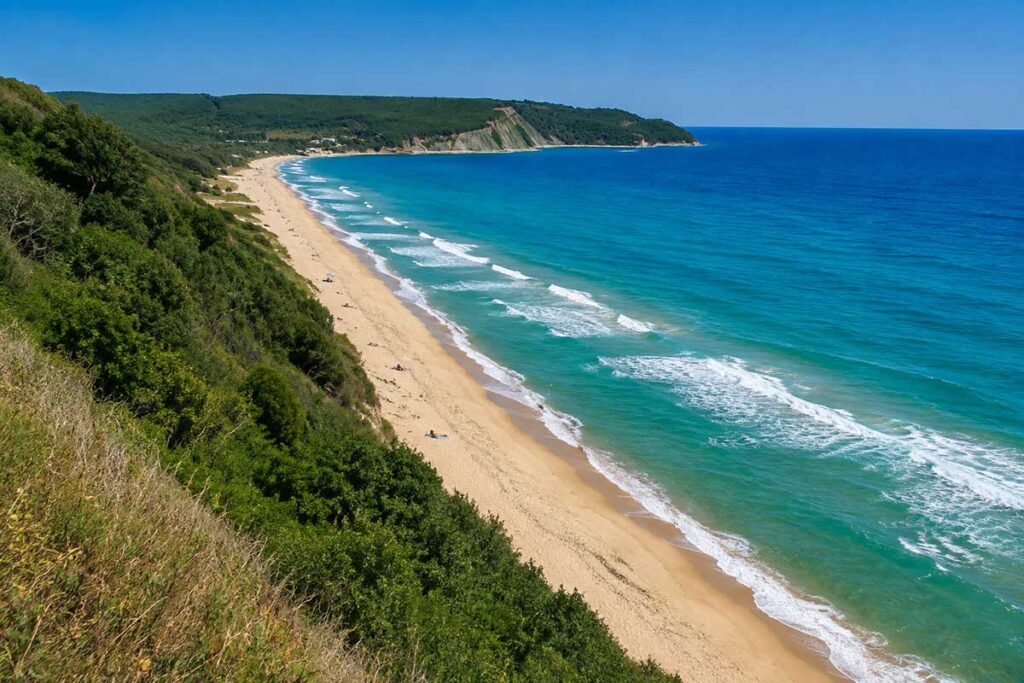
If you’re looking for a beach that genuinely feels removed from Bulgaria’s resort coastline, Kara Dere Beach is one of the strongest candidates on this list. Located south of Byala, this long stretch of sand has largely escaped the dense hotels, promenades, and beach clubs found at many better-known Black Sea destinations.
Kara Dere has a rugged simplicity to it. Green hills rise behind the beach, the shoreline stretches into the distance, and there is little development to interrupt the view. Rather than arriving at a neatly organized resort, you feel as though you’ve reached a much less polished corner of the Bulgarian coast.
For years, the beach has attracted campers, nature lovers, and travelers willing to trade convenience for space and independence. That’s still the best way to approach Kara Dere: come prepared and enjoy it for what it doesn’t have as much as for what it does.
What to Expect at Kara Dere
Don’t arrive expecting the infrastructure of Sunny Beach, Golden Sands, or Albena. Kara Dere’s limited development is central to its appeal, but it also means you’ll need to plan ahead.
Bring plenty of drinking water, food, sunscreen, and whatever else you expect to need during your visit. Shade can be scarce on exposed sections of the beach, particularly around midday in July and August.
More importantly, leave the beach exactly as you found it. Take all rubbish with you, stay off sensitive dunes and vegetation where possible, and resist the temptation to treat an undeveloped beach as somewhere without rules. Places like Kara Dere remain beautiful only when visitors take responsibility for protecting them.
Getting to Kara Dere Beach
Kara Dere lies south of Byala, along a relatively undeveloped section of Bulgaria’s central Black Sea coast.
Getting there is part of the adventure. The final approach has traditionally involved smaller unpaved roads and tracks, and their condition can vary considerably depending on weather and recent maintenance.
This is one place where blindly following a navigation app isn’t always the best idea. A route that looks perfectly reasonable on a screen may be much less appealing in a low-clearance car after heavy rain.
Check current conditions locally before making the final approach and don’t force your vehicle down a road that looks unsuitable. The slightly awkward access is inconvenient, but it has also helped Kara Dere retain much of its character.
What About Camping at Kara Dere?
Kara Dere has a long association with wild camping, and for many Bulgarians that history is part of the beach’s identity.
However, don’t interpret that tradition as permission to pitch a tent, park a camper, or light a fire anywhere you choose. Regulations concerning camping, vehicles, fires, and protected coastal areas can change, and restrictions may apply depending on where you are.
If you want to stay overnight, check the current local regulations before your trip and use designated areas whenever required.
This is especially important with fires. Bulgaria’s summers can become extremely hot and dry, and vegetation near the coast can be vulnerable to wildfire.
Is Kara Dere Good for Swimming?
When the Black Sea is calm, Kara Dere can be a wonderful place for a swim, but the beach faces open water rather than sitting inside a protected bay.
Check conditions before going in and follow warning flags or lifeguard instructions where available. At an undeveloped beach, you shouldn’t assume the same level of supervision and services you’ll find at an organized resort.
And if the water isn’t cooperating, Kara Dere hardly becomes a wasted trip. The long shoreline is excellent for walking, photography, reading on the sand, or simply spending a few hours somewhere that still feels far removed from Bulgaria’s busiest seaside destinations.
Why Visit Kara Dere Beach?
Come to Kara Dere if you value space, simplicity, and a little adventure more than convenience.
There are easier beaches to reach. There are certainly beaches with more facilities. But that’s precisely why Kara Dere belongs among the most memorable hidden beaches in Bulgaria.
It’s also easy to combine with Byala or Obzor, giving you the best of both worlds: restaurants and comfortable accommodation in town, followed by a day somewhere considerably more rugged.
Kara Dere isn’t about luxury. Its appeal is having a long stretch of the Black Sea coast where nature still sets the tone.
Best for: Nature lovers, adventurous road-trippers, long beach walks, photography, and travelers comfortable with limited facilities.
6. Bolata Bay
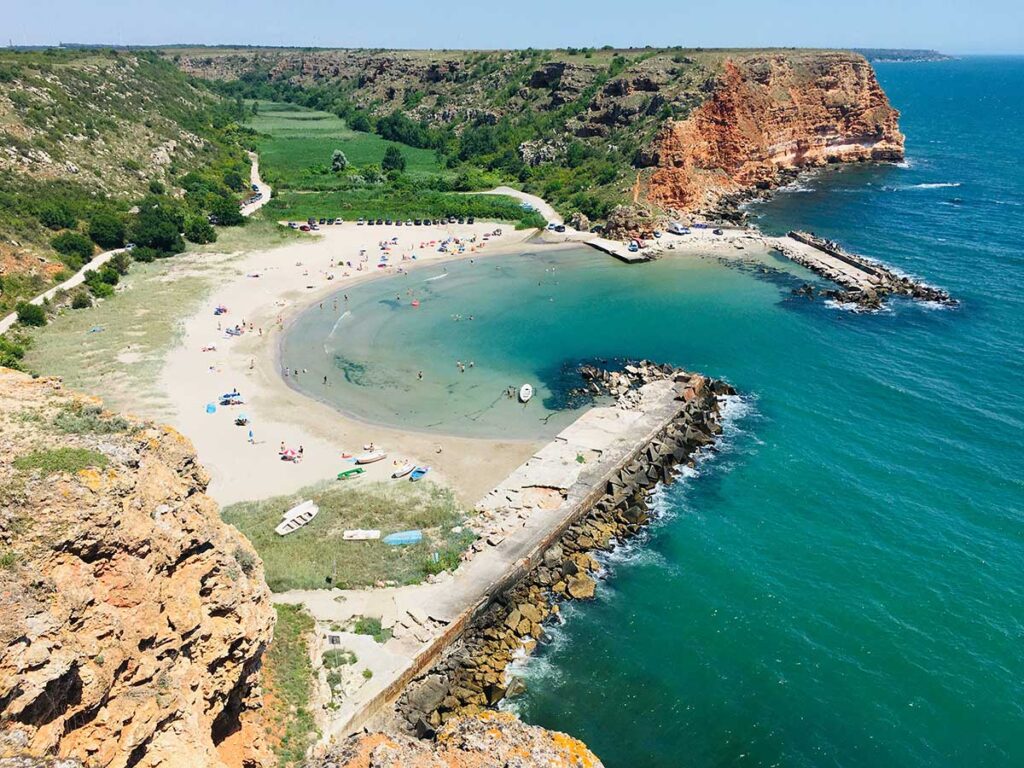
Tucked beneath the cliffs of Bulgaria’s northern Black Sea coast, Bolata Bay looks completely different from the long sandy beaches we’ve explored so far. Its small crescent of golden sand sits between steep reddish cliffs, creating one of the most recognizable coastal landscapes in Bulgaria.
Located near Cape Kaliakra, Bolata feels almost enclosed by the surrounding terrain. The curved shoreline and sheltered setting give the bay a much more intimate character than open beaches such as Irakli or Kara Dere.
It’s the contrast that makes Bolata so memorable. Blue-green water meets golden sand beneath rust-colored cliffs, while the dry grasses and open landscape of the northern coast stretch across the higher ground above.
Bolata is no longer much of a secret. Photographs of its distinctive shape have made the bay increasingly well known, and because the beach is relatively small, it can fill up quickly on busy summer days. Even so, it remains well worth seeking out—particularly if you’re already exploring the northern Black Sea coast.
See Bolata Bay From Above
Bolata is beautiful from the sand, but seeing it from higher ground reveals what makes the bay truly unusual.
From above, you can appreciate the entire curve of the beach, the cliffs wrapping around it, and the Black Sea extending toward the horizon. It’s easily one of the most photogenic coastal views in northern Bulgaria.
If you explore the higher terrain, stick to established paths and keep a safe distance from exposed cliff edges. The terrain can be steep and uneven, so keep well back from exposed cliff edges.
Swimming at Bolata Bay
Bolata’s sheltered shape can make the water appear calmer than at some of the more exposed beaches along this part of the coast, making the bay particularly inviting on a warm summer day.
As anywhere on the Black Sea, conditions can change. Check the water before swimming and follow posted warnings or lifeguard instructions where available.
The bigger consideration during peak season is often space. Because Bolata is small, arriving early in the morning can make a considerable difference in July and August. You’ll have a better chance of enjoying the bay before the busiest part of the day.
Combine Bolata With Cape Kaliakra
Don’t drive all the way to Bolata without leaving time for Cape Kaliakra. If you’re building a longer Bulgaria itinerary, you can also browse our top places to visit in Bulgaria for ideas beyond the coast.
The narrow headland extends dramatically into the Black Sea, with towering cliffs, archaeological remains, viewpoints, and centuries of Bulgarian history concentrated within a relatively small area.
Bolata and Kaliakra work particularly well together. Spend the morning around the bay, explore the cape afterward, and then continue toward Kavarna, Kamen Bryag, Shabla, or Tyulenovo if you have more time.
You’ll also notice how different northern Bulgaria feels from the forested Strandzha coast around Sinemorets. Here the landscape becomes more open and windswept, with high cliffs, grasslands, and expansive views across the sea.
Why Visit Bolata Bay?
Come to Bolata primarily for its extraordinary setting.
It wouldn’t be my first choice if your only goal is finding an empty beach for an entire August afternoon. Several places later in this guide offer far more space and solitude. Bolata is about experiencing an unusual piece of Bulgaria’s coastline and seeing it from both beach level and above.
Make it part of a northern Black Sea road trip rather than treating it as an isolated stop. Paired with Cape Kaliakra, Bolata becomes part of one of the most rewarding days you can spend exploring this corner of Bulgaria.
Best for: Photography, dramatic coastal scenery, road trips, couples, swimming when conditions allow, and travelers exploring Cape Kaliakra and northern Bulgaria.
7. Coral Beach
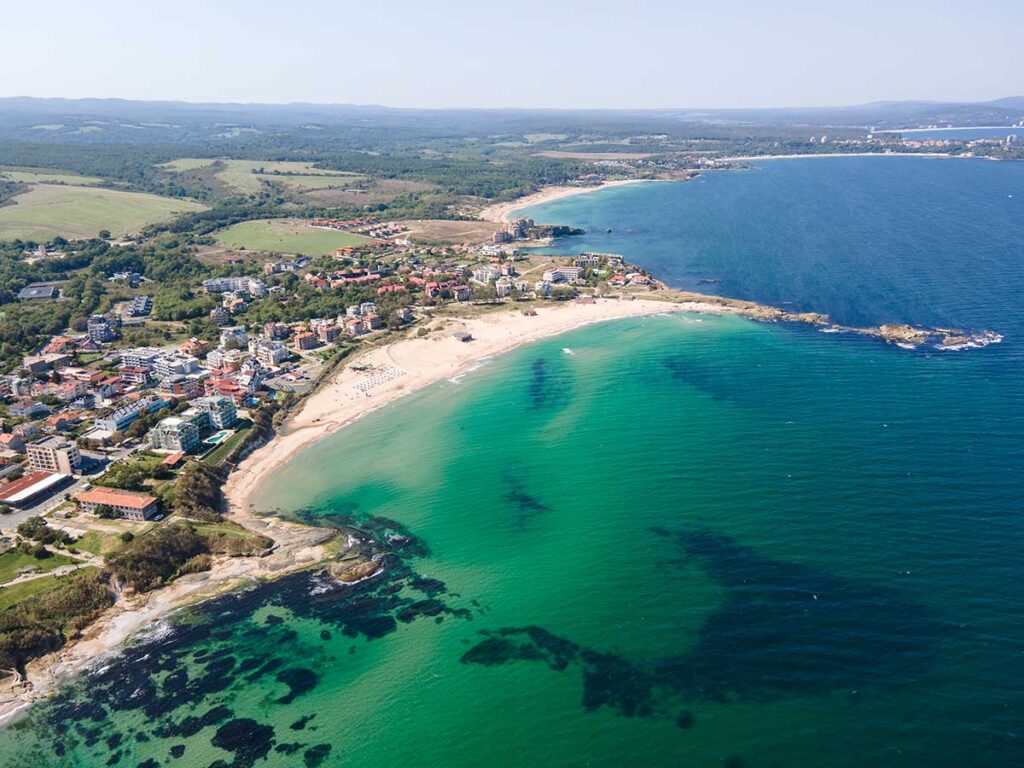
Between Lozenets and Tsarevo, Coral Beach, known in Bulgarian as Koral, is one of the southern Black Sea coast’s best examples of a beach where open space and natural surroundings still shape the experience.
Rather than a backdrop of large hotels and apartment complexes, you’ll find a broad sandy shoreline bordered by dunes and coastal vegetation. The beach feels open and spacious, particularly when compared with the smaller coves and more developed resort beaches elsewhere along the southern coast.
Coral is especially enjoyable if you like to walk. There’s enough shoreline to wander away from the busiest access points, find your own stretch of sand, and simply enjoy the sea without needing a schedule for the day.
But there’s another reason Coral stands out. For years, the area has been associated with efforts to preserve Bulgaria’s remaining undeveloped coastline, making the landscape behind the beach just as important as the sand itself.
A Beach Worth Protecting
At Coral, the dunes aren’t simply empty land behind the beach—they’re part of the coastal ecosystem.
Use established paths and access points rather than cutting across sensitive vegetation, and never treat dunes as convenient places to drive or park. Whatever you bring onto the beach should leave with you as well.
These might sound like small things, but they’re particularly important at places where the absence of intensive development is exactly what makes the destination worth visiting.
Coral offers a glimpse of what more of Bulgaria’s coastline once looked like before large seaside resorts transformed parts of the Black Sea shore.
Getting to Coral Beach
Coral lies between Lozenets and Tsarevo, making it relatively easy to include on a road trip through southern Bulgaria.
A car gives you the greatest flexibility, although parking and access arrangements can change. Follow current signs and established access routes rather than relying on an old online description that might direct you across unsuitable or protected terrain.
Its location is one of Coral’s advantages. You can stay in Lozenets or Tsarevo, enjoy restaurants and other conveniences there, and still escape to a beach that feels considerably less developed.
That also makes Coral a good option for travelers who want to experience a more natural stretch of coast without heading as far south as Sinemorets and the Turkish border.
When to Visit Coral Beach
July and August bring the warmest weather but also the largest number of visitors. Coral has enough space to absorb crowds better than a tiny bay such as Bolata, but don’t expect complete solitude during peak summer.
For a more relaxed experience, try a weekday morning or consider June and September, when the southern Black Sea coast can be noticeably quieter.
Coral faces the open sea, so always judge swimming by the conditions you find that day and follow warning flags and lifeguard instructions where available.
Why Visit Coral Beach?
Coral is for travelers who appreciate space, sand, dunes, and a coastline that hasn’t been completely reshaped around tourism.
It’s not difficult to combine with more developed destinations nearby, and that’s part of its appeal. You can enjoy dinner and accommodation in Lozenets or Tsarevo, then spend the next morning somewhere that feels much closer to the natural Black Sea coast.
Don’t come expecting a secret beach nobody else knows about. Come because Coral still offers something increasingly valuable along Europe’s coastlines: room for nature to remain part of the beach experience.
Best for: Long beach walks, nature, open space, road trips, couples, and travelers exploring Lozenets and Tsarevo.
8. Arkutino Beach
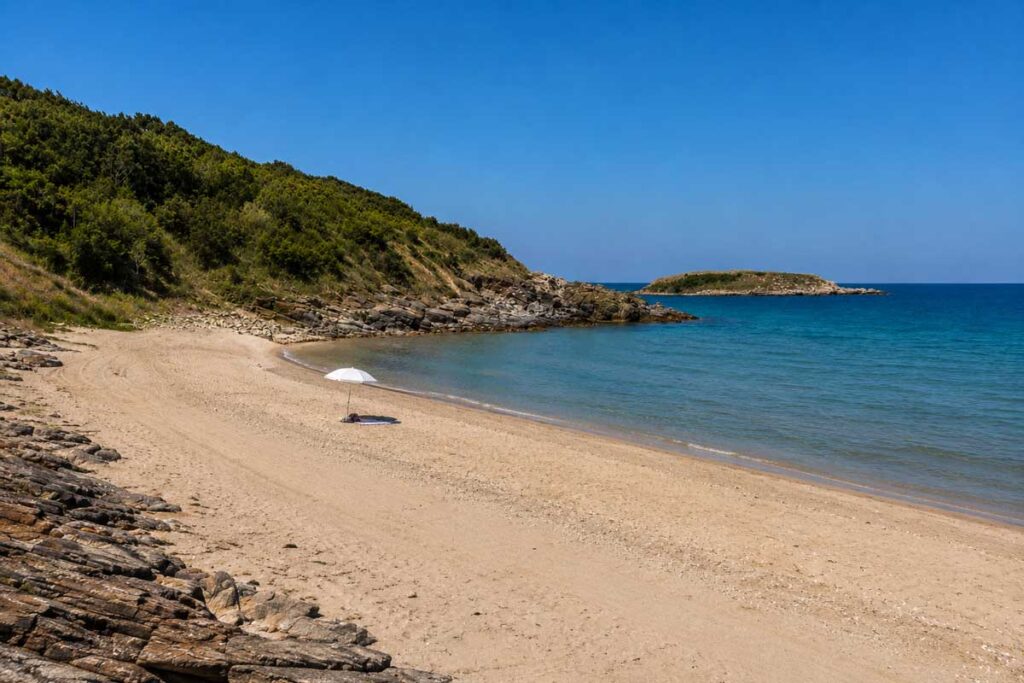
South of Sozopol, Arkutino Beach brings together several of the landscapes that make Bulgaria’s southern Black Sea coast so special. A broad sandy beach meets dunes and lush vegetation, while wetlands and forests spread through the wider Ropotamo area nearby.
Arkutino is easier to reach than many of the wilder beaches in this guide, but it doesn’t feel like you’ve arrived in the middle of a busy seaside town. Greenery and dunes form much of the backdrop, giving the beach a noticeably different atmosphere from Bulgaria’s large resort destinations.
There’s also enough shoreline to take a proper walk rather than simply finding a spot and staying there all day. But what really sets Arkutino apart is everything surrounding the sand. Beach, dunes, wetlands, forest, and the Black Sea all come together within a relatively small area.
The Dunes of Arkutino
The dunes are an important part of Arkutino’s character and deserve more than a quick walk through on the way to the water.
During the warmer months, you’ll find coastal vegetation adapted to this sandy environment, adding another dimension to a landscape that might otherwise look empty at first glance.
Use the established paths leading toward the beach rather than creating shortcuts across the dunes. These habitats are more fragile than they appear, and repeated foot traffic can damage vegetation that helps hold the sand in place.
If you enjoy photography or nature, slow down on the way to the shoreline. At Arkutino, the landscape behind the beach is part of the reason to visit.
Explore the Ropotamo Area
Arkutino makes more sense as part of a day exploring the Ropotamo area.
Nearby you’ll find a striking mixture of river, forest, marshes, coastal habitats, and the Black Sea. The Ropotamo River is particularly well known for the dense vegetation along its banks and the scenery surrounding its lower reaches.
Depending on the season and what’s operating during your visit, you may be able to combine your beach day with a boat trip on the river or explore other nearby natural attractions.
It’s one of those places where spending the entire day on your towel almost feels like missing the point. Arkutino works best when the beach becomes one stop in a day spent discovering the surrounding landscape.
Getting to Arkutino Beach
Arkutino lies between Sozopol and Primorsko, making it convenient for travelers driving along Bulgaria’s southern coast.
Unlike Lipite or Kara Dere, reaching Arkutino doesn’t require a long hike or particularly adventurous drive. That convenience also means the beach can attract plenty of visitors during July and August.
If you’d prefer a quieter experience, try arriving earlier in the morning or traveling in June or September, when this part of the coast generally feels less hectic.
Look for St. Thomas Island
Look out toward the Black Sea and you may spot St. Thomas Island, better known to many Bulgarians as Snake Island (Zmiyski Ostrov).
The small rocky island sits offshore from this part of the coast and is one of the few islands found along Bulgaria’s Black Sea shoreline. Its silhouette adds another interesting feature to an already unusual coastal landscape.
The island is also one of those details that makes Arkutino feel distinctly Bulgarian. Instead of simply another sandy beach, you’re looking across a landscape shaped by dunes, wetlands, forest, sea, and one of the country’s small Black Sea islands.
Why Visit Arkutino Beach?
Choose Arkutino if you want more than just a day of swimming and sunbathing.
You get an attractive sandy beach without the difficult access of Kara Dere or the hike required for Lipite, while the surrounding Ropotamo landscape gives you plenty more to explore.
Its location also makes it easy to combine with Sozopol, Primorsko, the Ropotamo River, and other destinations along the southern coast, making Arkutino an excellent stop on a Bulgarian Black Sea road trip.
Come for the beach, but leave enough time for everything around it. That’s what makes Arkutino stand out.
Best for: Nature, dunes, photography, road trips, beach walks, and travelers exploring Sozopol, Primorsko, and Ropotamo.
9. Krapets Beach
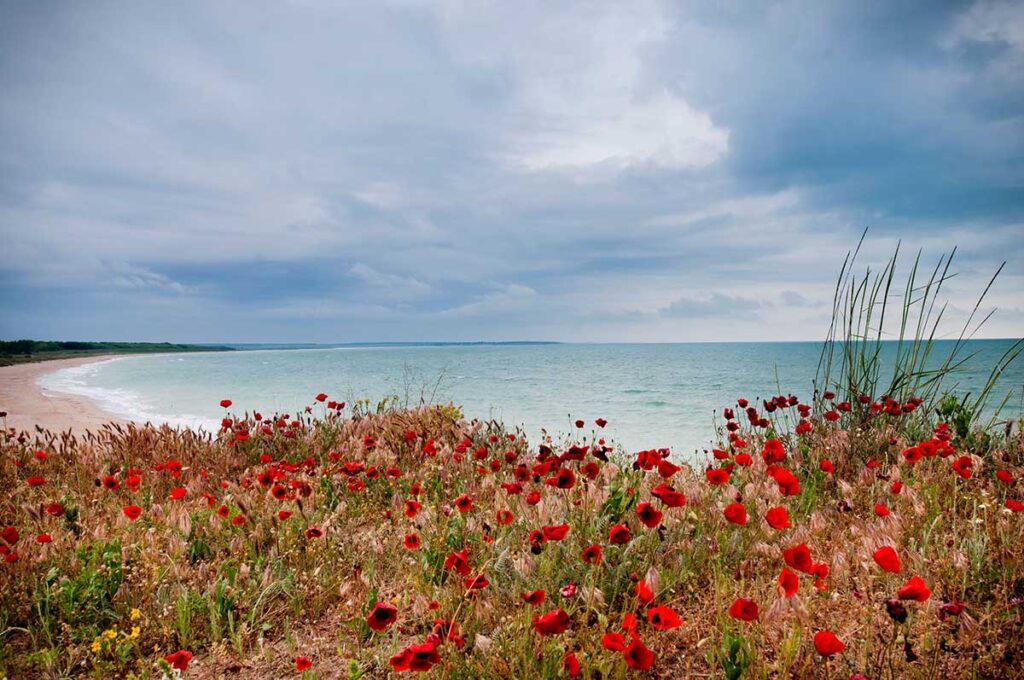
Far up Bulgaria’s northern Black Sea coast, Krapets Beach offers the kind of space and simplicity that’s becoming harder to find around the country’s major seaside resorts. Located beside the small village of Krapets, not far from the Romanian border, this part of the coast feels noticeably quieter than the beaches around Varna and Golden Sands.
Instead of high-rise hotels and crowded promenades, you’ll find a long sandy shoreline bordered by dunes and open coastal landscapes. There is plenty of room to walk beyond the main access points, making Krapets particularly appealing if your perfect beach day involves space rather than entertainment.
The village adds to the experience. Krapets has grown more popular with summer visitors over the years, but it still feels much more like a small coastal settlement than a purpose-built Black Sea resort.
A Different Side of Bulgaria’s Northern Coast
Northern Bulgaria is often associated with the dramatic cliffs around Kaliakra and Tyulenovo, but Krapets reveals another side of the region.
Here, the landscape opens into long sandy beaches, dunes, fields, and nearby wetlands. You won’t find the dramatic red cliffs of Bolata, but you gain something different: a shoreline where you can simply keep walking.
That’s really the attraction of Krapets. There isn’t one famous viewpoint everyone rushes toward or a landmark you need to photograph before leaving. Some of the best moments come from wandering farther along the sand, listening to the sea, and realizing you have nowhere you particularly need to be.
Explore the Wetlands Around Shabla
Krapets is also well positioned for exploring the important wetland landscapes of northeastern Bulgaria, including areas around Shabla and Durankulak.
These coastal lakes and wetlands provide valuable habitat for numerous bird species and are particularly interesting during migration periods, when this corner of Bulgaria attracts birdwatchers and nature photographers.
That makes the area worth considering outside the traditional summer beach season as well. Spring and autumn bring fewer beachgoers and a completely different reason to explore the northern coast.
If birdwatching interests you, pack binoculars alongside the beach gear and leave enough time to explore beyond the shoreline.
Getting to Krapets Beach
Krapets lies north of Shabla and is easiest to explore by car, particularly if you’re making a longer road trip through northeastern Bulgaria.
Several access points can bring you toward different sections of the coastline. As elsewhere along Bulgaria’s less-developed beaches, follow current signs, use established parking areas, and keep vehicles away from dunes and sensitive vegetation.
Krapets fits particularly well into a northern coastal itinerary. Cape Kaliakra, Kavarna, Tyulenovo, Shabla, Krapets, and Durankulak can all become stops on a road trip through a part of Bulgaria many international visitors never reach.
When to Visit Krapets Beach
July and August bring the warmest beach weather and the largest number of summer visitors. Fortunately, Krapets has something compact beaches such as Bolata don’t: plenty of shoreline.
For fewer people and a slower atmosphere, June and September are excellent alternatives. The weather can still be beautiful, while the coast generally feels less hectic than during the peak holiday period.
Krapets is also worth seeing outside summer. You might not be swimming, but long walks beneath open skies, photography, and nearby wetlands give the area an entirely different character in spring and autumn.
Why Visit Krapets Beach?
Krapets is a good reminder that the hidden beaches in Bulgaria aren’t all tiny secret coves. Some are long, peaceful stretches of coastline where the real luxury is simply having room to slow down.
There’s no need to rush through it. Walk the beach, explore the surrounding countryside, spend time around the region’s wetlands, and enjoy a corner of the Black Sea coast that feels far removed from Bulgaria’s biggest resorts.
Krapets can also make a useful base for exploring the far northeast before continuing to our final beach, Durankulak, where the combination of remote coastline and internationally important wetlands gives us the perfect place to finish this journey along Bulgaria’s lesser-known beaches.
Best for: Peace and quiet, long beach walks, birdwatching, nature, photography, road trips, and travelers exploring northeastern Bulgaria.
10. Durankulak Beach
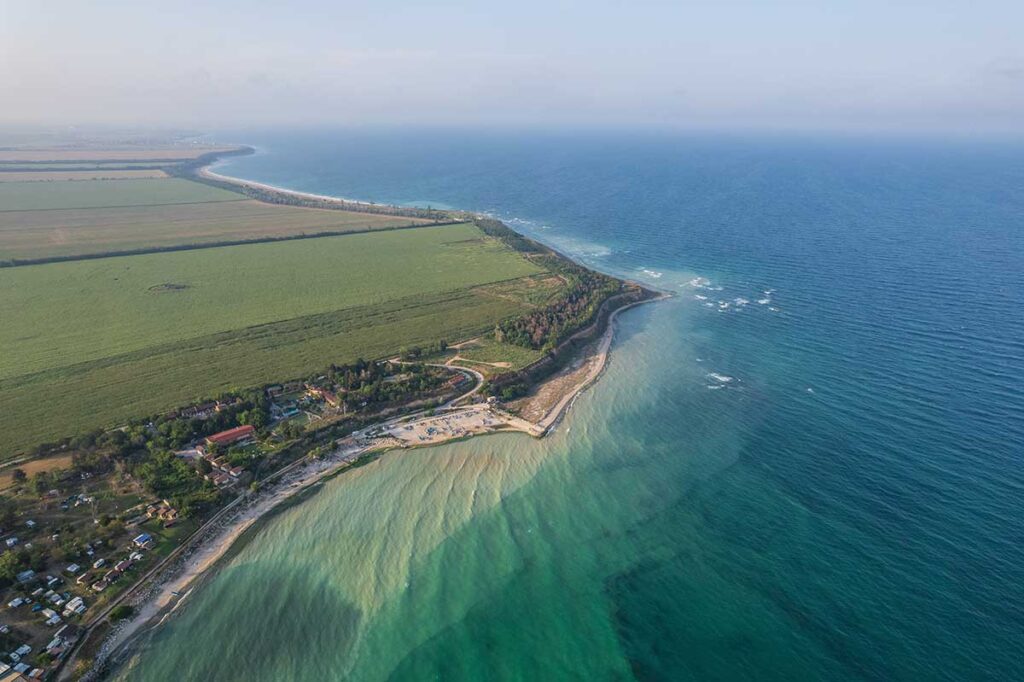
At the far northern end of Bulgaria’s Black Sea coast, Durankulak Beach is a fitting place to finish our journey through the country’s lesser-known seaside. Close to the Romanian border, this is a quieter corner of Bulgaria where long stretches of sand meet dunes, wetlands, and open countryside.
The landscape feels distinctly different from the resort areas farther south. There are no busy promenades defining the view. Instead, sand, water, reeds, fields, and enormous skies dominate the scenery.
Durankulak is particularly rewarding if you enjoy exploring beyond the beach itself. Just inland lies Durankulak Lake, an important wetland area and one of the most fascinating natural environments along Bulgaria’s northern Black Sea coast.
Together, the beach and lake turn Durankulak into much more than somewhere to stop for a swim. This is a destination worth slowing down for.
Durankulak Lake and Its Wildlife
Durankulak Lake lies just inland from the beach, separated from the Black Sea by a strip of sand and dunes.
The lake and surrounding wetlands provide valuable habitat for birds throughout the year. This part of Bulgaria lies along the Via Pontica migration route, making Durankulak Lake especially important for migrating and wintering birds.
Spring and autumn can therefore be particularly rewarding for birdwatchers and nature photographers, when migratory species pass through the wider region.
If wildlife is one of your reasons for visiting, bring binoculars and give yourself more than an hour or two. Explore from appropriate paths and observation areas, keep your distance from wildlife, and avoid disturbing birds that are feeding or nesting.
Thousands of Years of History Beside the Lake
Durankulak has another surprise waiting beyond the beach: an extraordinary archaeological landscape.
Archaeological discoveries around the Durankulak lake reveal human activity stretching back thousands of years, including prehistoric settlements and burial sites. The area is especially important for understanding some of the early farming communities that lived in this part of southeastern Europe.
The archaeological complex around Durankulak Lake’s Big Island adds an unexpected historical dimension to a destination most travelers initially visit for its nature. For more of Bulgaria’s major cultural and natural landmarks, see our guide to the UNESCO World Heritage Sites in Bulgaria.
It’s remarkable to stand beside this quiet corner of the Black Sea knowing that people were living around the lake thousands of years before Bulgaria’s modern coastal towns appeared.
Getting to Durankulak Beach
Durankulak is located in far northeastern Bulgaria, only a short distance south of the border with Romania. Having a car gives you the greatest freedom to explore the beach, lake, and surrounding region.
The village of Durankulak itself lies inland from the coast, with local roads leading toward different parts of the coastal area. Follow current signs and established access routes, particularly around dunes and protected wetland habitats.
If you’re approaching from farther south, don’t rush directly here. Turn the journey into a northern Black Sea road trip through Cape Kaliakra, Tyulenovo, Shabla, and Krapets before reaching Durankulak.
The farther north you travel, the more you’ll see a side of Bulgaria’s coastline that many international visitors never experience.
When to Visit Durankulak
For swimming and warm beach weather, June through September is the obvious season, with July and August bringing the hottest weather and the peak summer period.
Durankulak, however, has something many beach destinations don’t: compelling reasons to visit outside summer.
Spring and autumn bring bird migration, quieter beaches, cooler conditions for walking, and excellent opportunities for nature photography. You may not spend much time swimming, but the lake and surrounding landscape become attractions in their own right.
If birdwatching is a priority, check current migration and wildlife information before your trip rather than planning solely around beach weather.
Why Visit Durankulak Beach?
Durankulak is for travelers who want to go almost as far north as Bulgaria’s Black Sea coast allows and see what lies beyond the usual seaside itinerary.
Come for the long sandy coastline, but don’t stop there. Durankulak Lake, migratory birds, dunes, archaeological sites, and the open landscapes of northeastern Bulgaria make this one of the most interesting nature-focused stops in the entire guide.
It’s also the perfect contrast to where our journey began.
Around Sinemorets in the south, Bulgaria’s wild coastline is shaped by the forests and rivers of Strandzha. Here in the far north, the scenery opens into wetlands, dunes, fields, and seemingly endless skies.
Between those two extremes lies a Black Sea coast far more varied than its famous resorts might suggest—and that’s exactly why these quieter corners of Bulgaria are worth seeking out.
Best for: Remote beaches, birdwatching, nature, archaeology, photography, road trips, and travelers exploring Bulgaria’s far northeastern coast.
How to Choose the Right Hidden Beach in Bulgaria
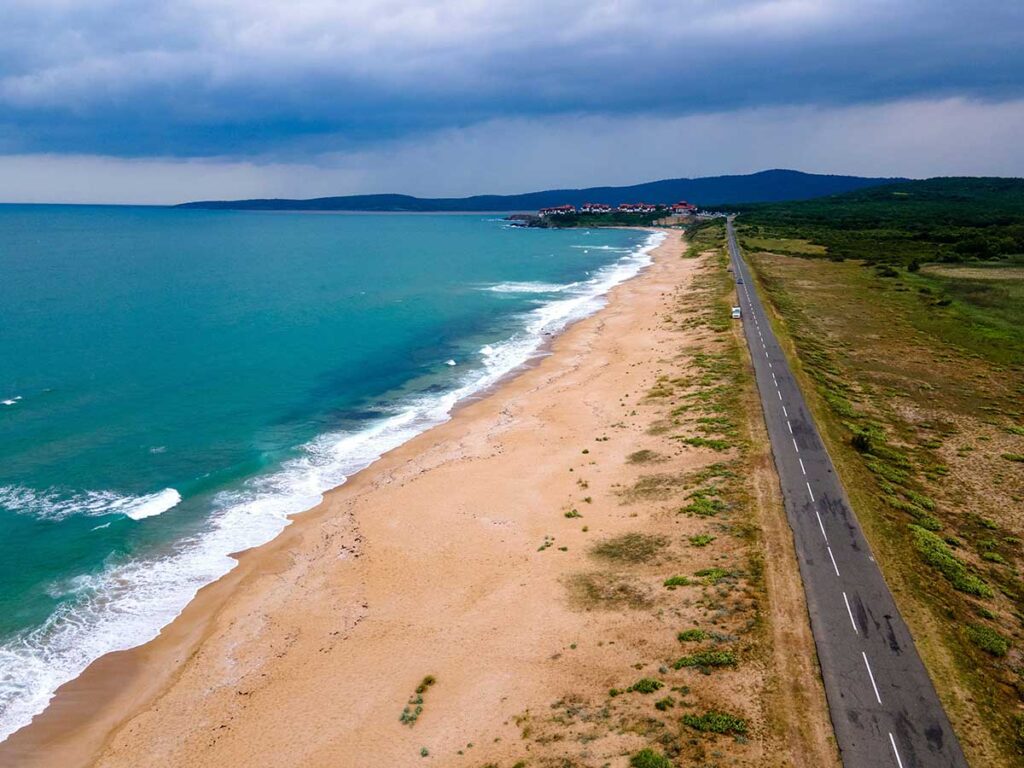
From tiny cliff-lined bays to long stretches of undeveloped sand, the right beach depends on what kind of experience you’re looking for.
Some of these hidden beaches in Bulgaria are relatively easy to reach, while others require a walk or a little more effort by car. Some are ideal for a relaxed day beside the sea; others are just as rewarding for photography, hiking, wildlife, or exploring the surrounding landscape.
Here’s a quick way to find the one that suits your trip.
| If You’re Looking For… | Try These Beaches | Why |
|---|---|---|
| Most secluded experience | Lipite, Kara Dere | More effort to reach and fewer resort-style conveniences |
| Best for photography | Veleka, Bolata, Arkutino | River mouths, cliffs, dunes, islands, and distinctive coastal views |
| Best for nature lovers | Silistar, Arkutino, Durankulak | Forests, dunes, wetlands, and beautiful natural landscapes |
| Best for long beach walks | Irakli, Kara Dere, Krapets | Long, open stretches of sandy coastline |
| Easier wild-beach experience | Silistar, Arkutino | Natural surroundings without requiring a substantial hike |
| Best for hiking and exploring | Lipite, Veleka | Coastal trails and varied landscapes around Sinemorets |
| Best for birdwatching | Krapets, Durankulak | Important wetland landscapes nearby |
| Best for a northern road trip | Bolata, Krapets, Durankulak | Easy to combine with other northern Black Sea attractions |
| Best southern coast escape | Silistar, Lipite, Veleka | Three very different beaches concentrated around Sinemorets |
| Best for open space | Irakli, Kara Dere, Coral | Broad shorelines with a less-developed atmosphere |
For the Most Seclusion
Start with Lipite or Kara Dere.
Lipite requires reaching the beach on foot, while Kara Dere’s more challenging access and limited infrastructure help preserve its remote character. Neither is the obvious choice if you want restaurants, showers, and other conveniences close by.
If space and solitude matter more than comfort, however, these are two of the strongest choices in the guide.
For the Most Beautiful Coastal Scenery
Choose Veleka Beach or Bolata Bay, but for completely different reasons.
At Veleka, the highlight is watching the river curve through the landscape before reaching the Black Sea. Bolata gives you a compact crescent of sand surrounded by colorful cliffs.
Both are particularly impressive from above, so don’t limit your visit to beach level.
For Long Walks and Open Space
Head toward Irakli, Kara Dere, or Krapets.
These beaches give you considerably more shoreline to explore than smaller places such as Bolata. Walk beyond the main access areas and you’ll have a better chance of finding the space you’re looking for.
Krapets works especially well if you also want to explore the wetlands and open landscapes of northeastern Bulgaria.
For Nature Beyond the Beach
Consider Arkutino or Durankulak.
Arkutino puts you close to the dunes, wetlands, forests, and river landscapes of the Ropotamo area. Durankulak combines its remote northern coastline with an important lake, birdlife, and fascinating archaeology.
Both are excellent choices when you want your day on the Black Sea to involve more than swimming and sunbathing.
North or South?
For a first introduction to Bulgaria’s wilder southern coastline, Sinemorets is difficult to beat as a base. Silistar, Lipite, and Veleka are all nearby, yet each offers a noticeably different experience.
The northern coast is particularly well suited to a road trip. Start around Cape Kaliakra and Bolata, continue toward Tyulenovo and Shabla, and finish with Krapets and Durankulak near the Romanian border.
If you have enough time, however, don’t choose between north and south. Traveling along the Black Sea coast reveals just how much Bulgaria’s seaside changes—from the forests and river mouths of Strandzha to the cliffs, wetlands, dunes, and open landscapes of the far north.
Best Time to Visit Bulgaria’s Hidden Black Sea Beaches
For the best balance of warm weather and fewer crowds, June and September are two of the best months to explore Bulgaria’s hidden Black Sea beaches.
June brings increasingly warm weather without the peak-season crowds of midsummer. It’s also a great time to combine the beaches with hiking, sightseeing, and road trips before the strongest summer heat arrives.
July and August offer the classic Bulgarian beach experience, with hot weather, warmer sea temperatures, and long summer days. They’re also the busiest months. Even natural beaches such as Silistar, Veleka, Bolata, and Irakli can attract plenty of visitors, particularly on weekends.
If you’re traveling during peak season, visit on weekdays and arrive earlier in the morning. At larger beaches, walking beyond the main access points can also help you find a quieter stretch of sand.
September is one of our favorite times to explore the Black Sea coast. Summer crowds begin to disappear while the sea can remain pleasantly warm, particularly during the first half of the month.
Spring and autumn are worth considering if swimming isn’t your priority. Cooler temperatures are excellent for coastal walks and photography, while the wetlands around Krapets and Durankulak become particularly interesting for birdwatching during migration periods.
Whatever month you visit, always judge swimming conditions on the day. Weather, waves, wind, and currents can change quickly, especially at less-developed beaches.
For most travelers: choose June or September for fewer crowds, and July or August if warm beach weather is your highest priority.
Practical Tips for Visiting Bulgaria’s Hidden Beaches
Bulgaria’s wilder Black Sea beaches require a little more planning than the large resort beaches, but that’s part of what keeps them special. If this is your first trip to the country, our guide to things not to do in Bulgaria covers a few additional travel mistakes worth avoiding.
Bring What You Need
Don’t assume you’ll find shops, restaurants, showers, or beach rentals nearby. At places such as Lipite, Kara Dere, and Durankulak, bring enough drinking water, food, sunscreen, and other essentials for the time you plan to stay.
Check Access Before You Go
Roads, parking arrangements, and walking routes around natural beaches can change from season to season. Check current local information before setting out, particularly for beaches with more adventurous access.
Navigation apps can get you close, but don’t blindly follow a route if the final road looks unsuitable for your vehicle.
Carry Some Cash
Card payments are widespread in Bulgaria, but smaller coastal businesses, seasonal vendors, and parking areas may not always accept them.
Keeping some euros in cash is useful when exploring more remote parts of the Black Sea coast.
Download Maps Beforehand
Mobile coverage is generally good along much of Bulgaria’s coast, but downloading an offline map is still useful when exploring trails, smaller roads, and less-developed areas.
This is particularly helpful around places such as Lipite, where part of the journey continues on foot.
Leave the Coast as You Found It
Many of the beaches in this guide remain beautiful precisely because development is limited.
Use established paths, keep vehicles away from dunes and vegetation, take your rubbish with you, and respect restrictions in protected areas.
The goal isn’t simply to discover Bulgaria’s quieter beaches. It’s to help make sure the next person finds them just as beautiful.
Frequently Asked Questions About Hidden Beaches in Bulgaria
Some of the best hidden beaches in Bulgaria include Silistar, Lipite, Veleka, Irakli, Kara Dere, Bolata Bay, Coral, Arkutino, Krapets, and Durankulak.
They range from secluded coves and forest-backed beaches in the south to long sandy shorelines, dramatic cliffs, dunes, and wetland landscapes in the north.
Lipite and Kara Dere are two of the best choices for travelers seeking a more secluded experience.
Lipite requires a walk to reach, while Kara Dere’s more challenging access and limited development help keep it removed from the atmosphere of Bulgaria’s major seaside resorts. Neither, however, should be expected to be completely empty during peak summer weekends.
Many of Bulgaria’s natural beaches can be accessed without paying an admission fee, although parking, beach services, or nearby attractions may cost extra.
Access and parking arrangements can change between seasons, so check current local information before visiting.
Can you swim at Bulgaria’s wild beaches?
Yes. Swimming is possible at many of Bulgaria’s wild beaches when sea conditions are suitable.
Less-developed beaches may not have the same lifeguard coverage and safety infrastructure as major resorts, so always pay attention to warning flags, waves, currents, weather conditions, and local instructions before entering the Black Sea.
Silistar, Lipite, and Veleka are three excellent choices around Sinemorets, but each offers a different experience.
Silistar combines beautiful natural surroundings with relatively convenient access. Lipite rewards travelers willing to reach it on foot, while Veleka stands out for its spectacular setting where the Veleka River reaches the Black Sea.
You don’t need a car for every beach, but having one makes exploring Bulgaria’s quieter Black Sea coast considerably easier.
Several beaches lie outside major resort towns, and public transportation won’t always take you directly to the shoreline. A car is especially useful for exploring the northern coast, where you can combine Bolata, Cape Kaliakra, Tyulenovo, Shabla, Krapets, and Durankulak into one longer road trip.
Discover the Wilder Side of Bulgaria’s Black Sea Coast
The hidden beaches in Bulgaria show just how much the country’s Black Sea coast has to offer beyond its famous seaside resorts. Venture beyond the busiest destinations and you’ll discover forest-backed coves, wild sandy beaches, dramatic cliffs, river mouths, dunes, wetlands, and long stretches of coastline where nature still shapes the experience.
In the south, places such as Silistar, Lipite, and Veleka reveal the greener, wilder side of the coast around Sinemorets and Strandzha. Farther north, Bolata, Krapets, and Durankulak introduce an entirely different landscape of cliffs, open beaches, wetlands, and enormous skies.
Some of these beaches require more effort to reach. Others are no longer particularly secret. But all offer an alternative to the highly developed side of Bulgaria’s seaside.
Take your time, explore beyond the obvious stops, and treat these natural places with care.
Because sometimes the best beach in Bulgaria isn’t the one everyone tells you to visit.
It’s the one you discover a little farther down the coast.
You May Also Like
Planning more adventures in Bulgaria? Continue with these guides:
- Best Beaches in Bulgaria — Find more beautiful places to swim, relax, and explore along Bulgaria’s Black Sea coast.
- The Bulgarian Riviera: Top Beaches to Visit — Follow the coast through beautiful beaches, seaside towns, and scenic stops worth adding to your trip.
- Top Places to Visit in Bulgaria — Go beyond the coast with historic towns, mountains, monasteries, waterfalls, caves, and some of Bulgaria’s most memorable landmarks.
- Things Not to Do in Bulgaria — Avoid common travel mistakes and pick up a few useful tips before exploring the country.
What’s Your Favorite Hidden Beach in Bulgaria?
Have you visited any of these hidden beaches in Bulgaria, or is there another quiet stretch of the Black Sea coast that deserves a place on the list?
Share your favorite in the comments. And if you’re exploring Bulgaria’s coast, tag @stunningbulgaria and use #stunningbulgaria so we can see where your adventures take you.