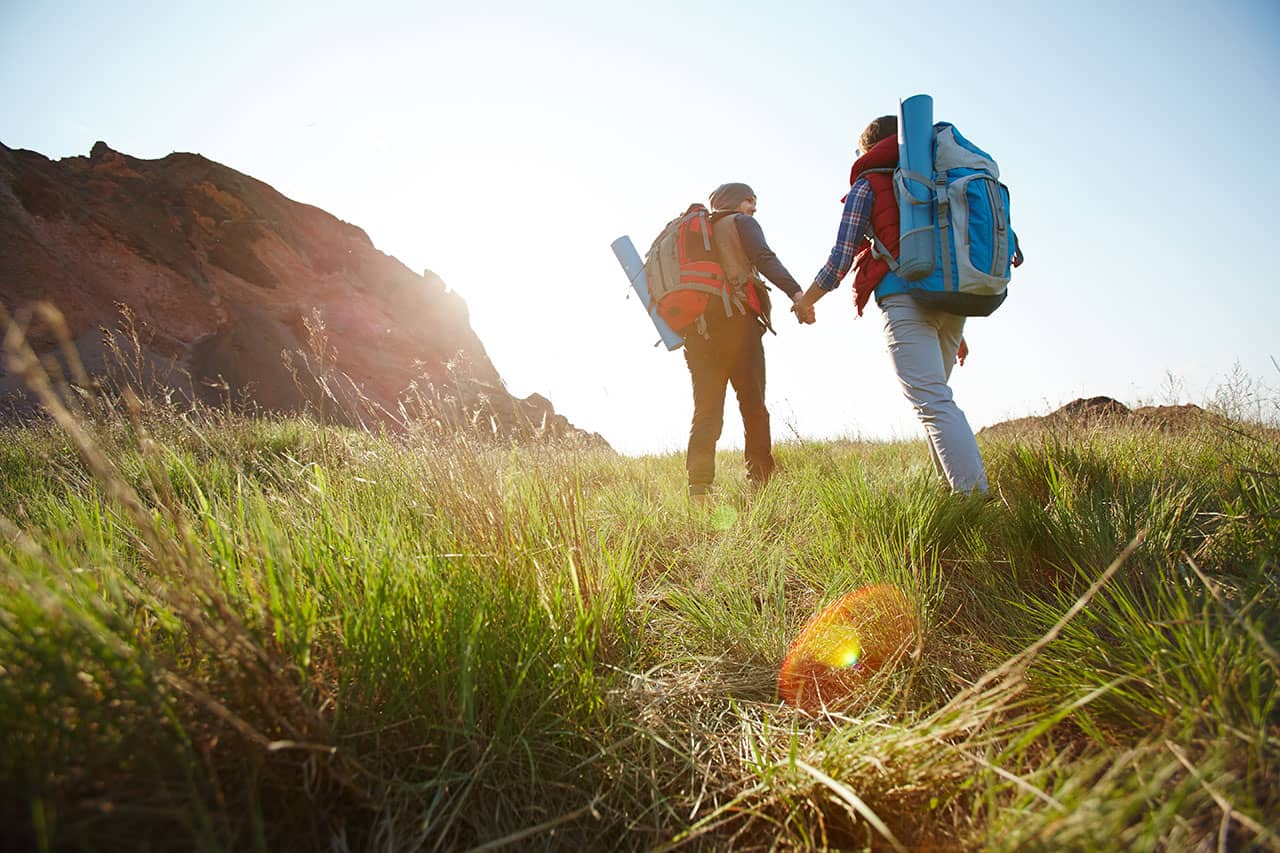
Bulgaria packs an impressive variety of hiking terrain into a relatively small country, from rugged alpine peaks and glacial lakes to deep forests, waterfalls, and rocky gorges. Trails range from relaxed day hikes to demanding routes high above the tree line.
Some of the best hiking in Bulgaria is found in the Rila and Pirin Mountains, where trails lead to alpine lakes and some of the highest peaks in the Balkans. The Rhodope Mountains offer a different experience, with forested paths, dramatic gorges, caves, and traditional mountain villages. Farther north, the Balkan Mountains stretch across the country and provide everything from short scenic walks to multi-day adventures.
Despite this variety, Bulgaria remains relatively overlooked by international hikers. Many trails are far less crowded than those in Europe’s better-known mountain destinations, and an extensive network of mountain huts makes multi-day routes easier to plan.
Below are 10 of the best hiking spots in Bulgaria, covering famous mountain routes as well as quieter places that deserve a place on your itinerary.
Hiking in Bulgaria at a Glance
Bulgaria’s hiking regions are surprisingly varied for a relatively small country. Rila and Pirin have the most dramatic alpine terrain, while the Rhodopes are known for forests, gorges, caves, and gentler mountain routes. The Balkan Mountains offer long-distance trails and impressive waterfalls, and Vitosha provides some of the easiest mountain access from Sofia.
| Hiking Area | Best For | Difficulty | Best Season |
|---|---|---|---|
| Rila Mountains | Glacial lakes and high peaks | Moderate–Hard | June–September |
| Pirin Mountains | Alpine scenery and rugged trails | Moderate–Hard | June–September |
| Rhodope Mountains | Forests, gorges and villages | Easy–Moderate | May–October |
| Balkan Mountains | Waterfalls and long-distance hiking | Moderate–Hard | May–October |
| Vitosha Mountain | Easy access from Sofia | Easy–Moderate | May–October |
Conditions at higher elevations can change quickly, and snow may remain on some routes well into late spring or early summer. Always check local conditions before setting out, especially for hikes in Rila and Pirin.
Get to know your homeland, so that you may love it!
Aleko Konstantinov
1. Rila Mountains
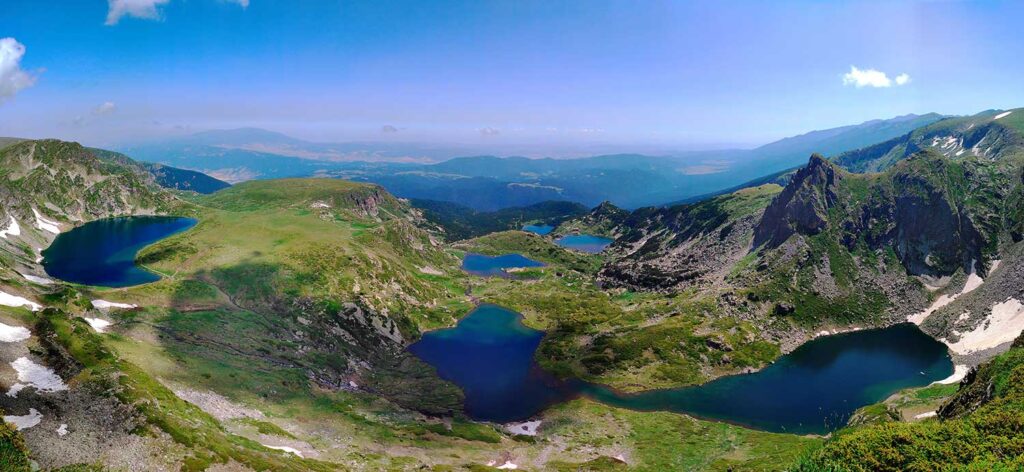
The Rila Mountains are the highest mountain range in Bulgaria and the Balkans, and they contain some of the country’s most memorable hiking routes. Alpine peaks, glacial lakes, pine forests, and mountain huts create plenty of options for both day hikes and longer adventures.
The best-known route is the Seven Rila Lakes, a chain of glacial lakes set between roughly 2,100 and 2,500 meters above sea level. A chairlift from the Panichishte area provides access to the upper mountain, from where hikers can follow a circular route past the lakes and climb to viewpoints overlooking the entire group.
Those looking for a bigger challenge can climb Musala Peak (2,925 m) is the highest point in Bulgaria and the entire Balkan Peninsula. The classic route begins near Borovets, with the gondola to Yastrebets shortening the approach before the trail continues through high-mountain terrain toward the summit.
Rila also rewards hikers who venture beyond its two famous routes. Trails connect mountain huts, remote valleys, waterfalls, and dozens of smaller glacial lakes, making the range an excellent choice for multi-day hiking.
Popular Hikes in Rila
- Seven Rila Lakes – moderate; famous glacial lake circuit
- Musala Peak – moderate to challenging; Bulgaria’s highest summit
- Malyovitsa – challenging; rugged alpine scenery and steep terrain
- Rila Monastery trails – varied routes through forests and mountain valleys
Best time to hike: June to September for the high mountains, although snow can remain at higher elevations into early summer.
2. Pirin Mountains
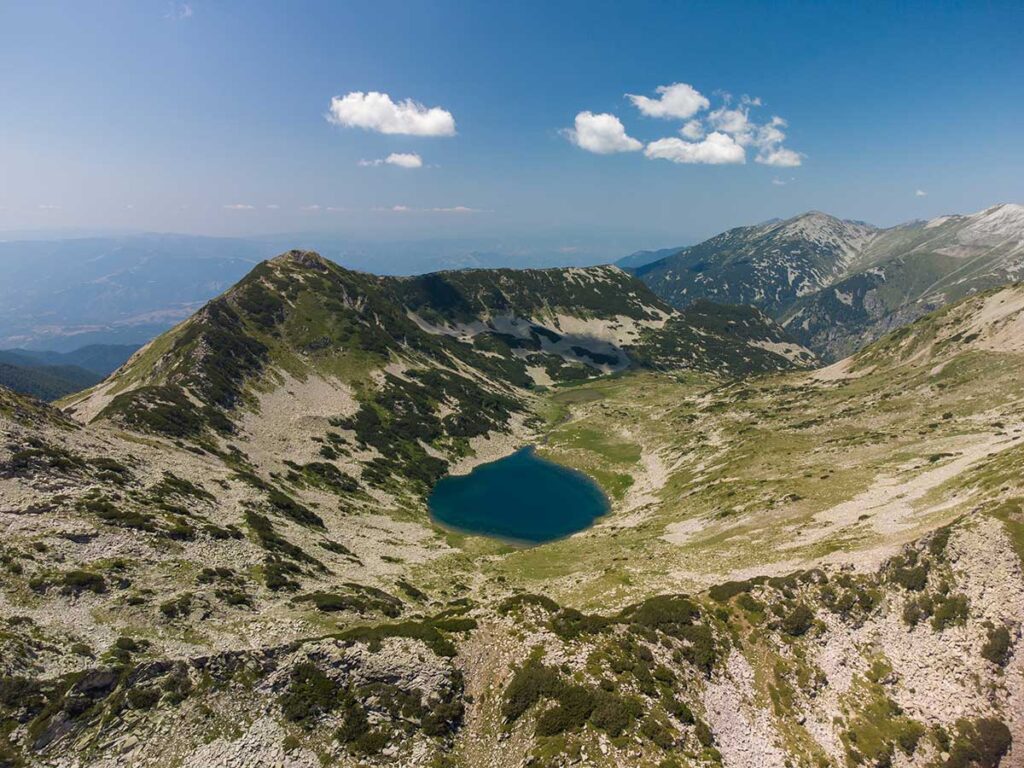
South of Rila, the Pirin Mountains offer a wilder and more rugged landscape of sharp marble and granite peaks, deep valleys, glacial lakes, and high-altitude trails. Much of the range lies within Pirin National Park, a UNESCO World Heritage Site known for its exceptional mountain scenery and biodiversity.
The most famous challenge is Vihren Peak (2,914 m), Bulgaria’s second-highest summit. The classic route begins at Vihren Hut above Bansko and climbs steadily through increasingly rocky terrain. From the summit, hikers are rewarded with sweeping views across Pirin and toward neighboring mountain ranges.
Farther into Pirin, Tevno Lake sits at 2,512 meters beneath some of the range’s highest peaks. Reaching it requires a longer hike, but the dramatic setting beneath Pirin’s high peaks. Experienced hikers often include it on longer routes through central Pirin. A mountain shelter beside the lake allows it to form part of a multi-day route.
For something less demanding, the trails around Bansko, Dobrinishte, and Bezbog Hut are an easier introduction to Pirin. The Bezbog chairlift takes hikers high into Pirin, where trails lead toward Popovo Lake and several other glacial lakes.
Popular Hikes in Pirin
- Vihren Peak – challenging; Bulgaria’s second-highest summit
- Popovo Lake – moderate; beautiful high-altitude lake route
- Tevno Lake – challenging; remote alpine scenery
- Bezbog Hut trails – easy to moderate; good access to the high mountains
Best time to hike: Late June to September, when most high-altitude trails are free of snow.
3. Rhodope Mountains
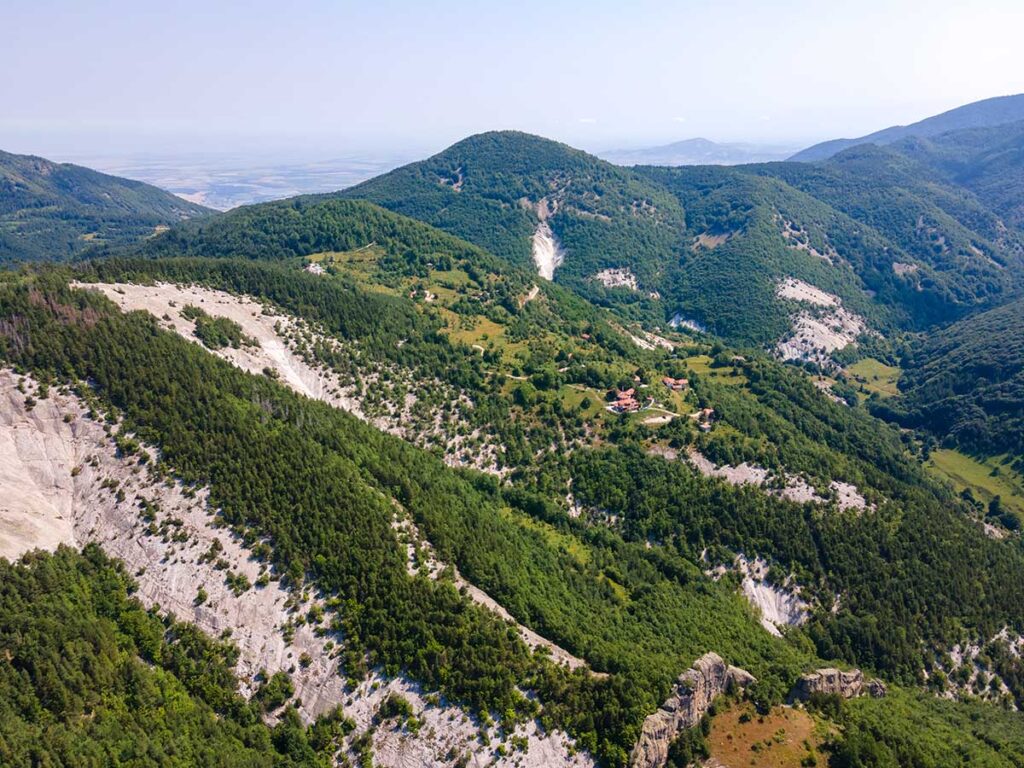
Hiking in the Rhodope Mountains feels completely different from exploring Bulgaria’s higher alpine ranges. Instead of sharp alpine summits, much of the landscape is shaped by rolling forested ridges, deep river gorges, caves, rocky viewpoints, and small mountain villages.
Trigrad Gorge is among the most dramatic landscapes in the western Rhodopes, where towering limestone cliffs rise above the Trigrad River. Trails around the gorge can be combined with a visit to Devil’s Throat Cave, while nearby paths lead deeper into the forests and limestone landscapes of the western Rhodopes.
Shiroka Laka makes a good base for exploring the western Rhodopes on foot. From here, hikers can explore routes toward Gela and nearby ridges, combining mountain scenery with some of the Rhodopes’ characteristic stone houses and old villages.
Near Smolyan, the Canyon of the Waterfalls follows the Elenska River through dense forest, past a series of cascades and waterfalls, including Orpheus Waterfall, with wooden bridges and viewpoints along the route.
Popular Hikes in the Rhodopes
- Canyon of the Waterfalls – moderate; forests, cascades, and waterfalls
- Trigrad Gorge – easy to moderate; limestone cliffs and caves
- Shiroka Laka and Gela – easy to moderate; villages and mountain scenery
- Eagle’s Eye near Yagodina – moderate; panoramic viewpoint above the Buynovsko Gorge
Best time to hike: May to October. The lower elevation and extensive forests make the Rhodopes suitable for a longer hiking season than the highest parts of Rila and Pirin.
4. Vitosha Mountain
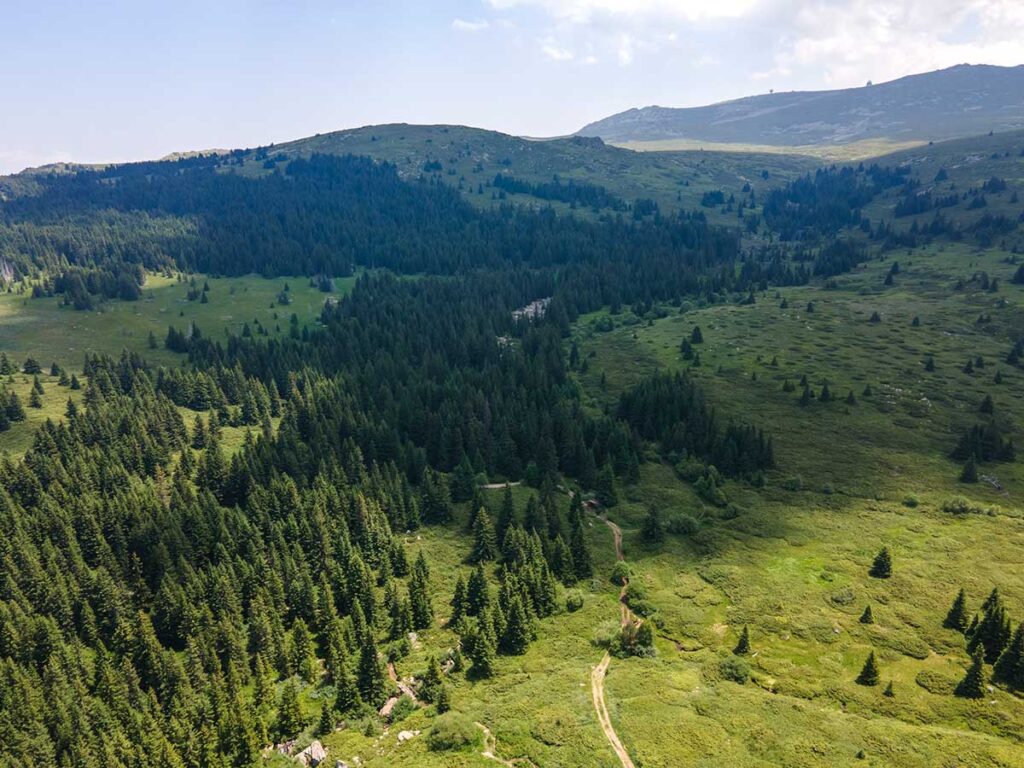
Rising directly above Sofia, Vitosha Mountain is the easiest place to combine a city break with hiking in Bulgaria. Within a short distance of the capital, urban streets give way to forests, open plateaus, rocky formations, waterfalls, and broad views over Sofia and the surrounding mountains.
The main goal for many hikers is Cherni Vrah (2,290 m), the highest point on Vitosha. Several trails reach the summit, including routes from Aleko Hut and the Zlatnite Mostove area. Much of the upper mountain consists of open terrain, so the views become increasingly impressive as you gain elevation.
Vitosha is also known for its unusual stone rivers. These long fields of rounded boulders appear to flow down the mountainside, with the best-known example at Zlatnite Mostove (Golden Bridges). Numerous forest trails begin here, including several suitable for shorter walks and relaxed day hikes.
Closer to Sofia, a forest trail climbs from Boyana toward Boyana Waterfall. The trail climbs through forest above Boyana and can be combined with nearby viewpoints or a visit to the medieval Boyana Church, a UNESCO World Heritage Site.
Popular Hikes on Vitosha
- Cherni Vrah – moderate; highest peak on Vitosha
- Boyana Waterfall – moderate; forest trail to one of Sofia’s best-known waterfalls
- Zlatnite Mostove – easy to moderate; stone rivers and woodland trails
- Aleko Hut area – easy to moderate; several routes across the upper mountain
Best time to hike: May to October for most trails. Vitosha is also accessible in winter, but snow, ice, fog, and rapidly changing conditions require appropriate equipment and experience.
5. Central Balkan National Park
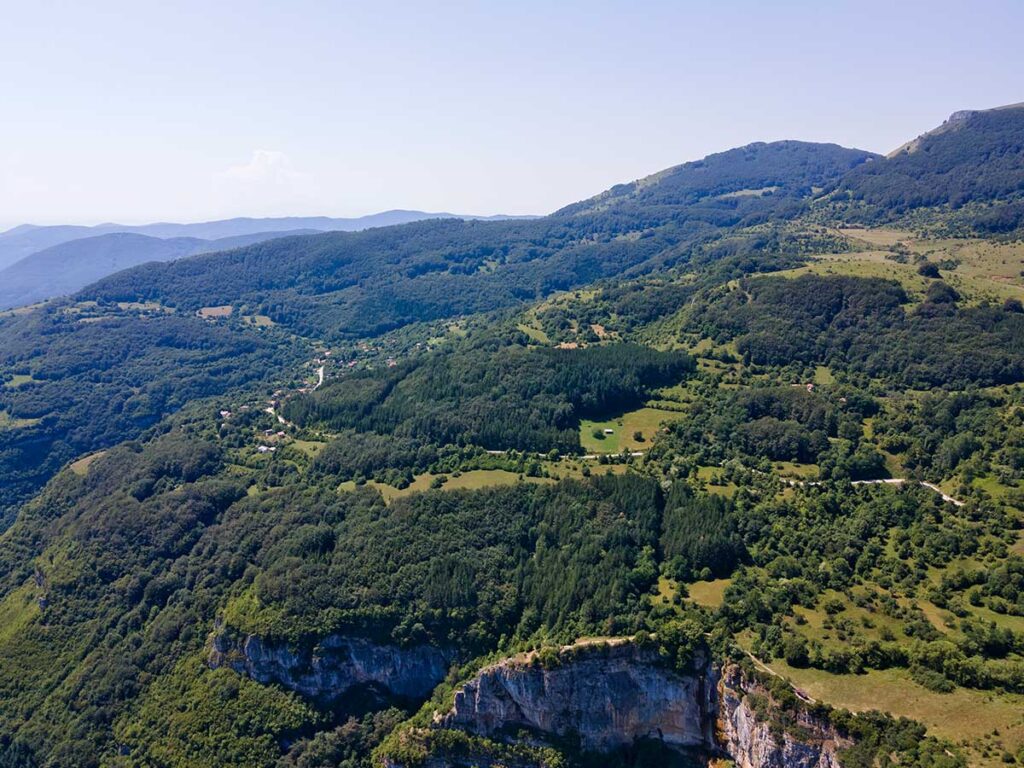
Stretching across the highest section of the Balkan Mountains, Central Balkan National Park is a superb destination for hikers who prefer long ridges, waterfalls, old forests, and wide mountain panoramas. The park protects some of the wildest terrain in central Bulgaria and contains an extensive network of marked trails and mountain huts.
Its highest point is Botev Peak (2,376 m). Several routes reach the summit, but the hike from the Kalofer area via Ray Hut is among the best known. The trail passes through forest before emerging into open mountain terrain beneath the steep slopes of the peak.
Close to Ray Hut is Raysko Praskalo, a spectacular 124.5-meter waterfall dropping from the cliffs below Botev Peak. It is the highest permanent waterfall in Bulgaria and provides another reason to explore this part of the park.
Long-distance hikers can also tackle sections of the Kom–Emine trail cross the Balkan Mountains. This legendary long-distance route follows the main ridge of the range from Kom Peak near Bulgaria’s western border all the way to Cape Emine on the Black Sea.
Popular Hikes in Central Balkan National Park
- Botev Peak – challenging; highest summit in the Balkan Mountains
- Ray Hut and Raysko Praskalo – moderate to challenging; mountain scenery and Bulgaria’s highest permanent waterfall
- Beklemeto and Kozya Stena – moderate to challenging; dramatic ridge walking
- Kom–Emine sections – varied; ideal for experienced long-distance hikers
Best time to hike: June to September for the highest routes. Lower trails can be enjoyable in late spring and autumn, but conditions on the exposed ridges can change quickly.
6. Belogradchik Rocks
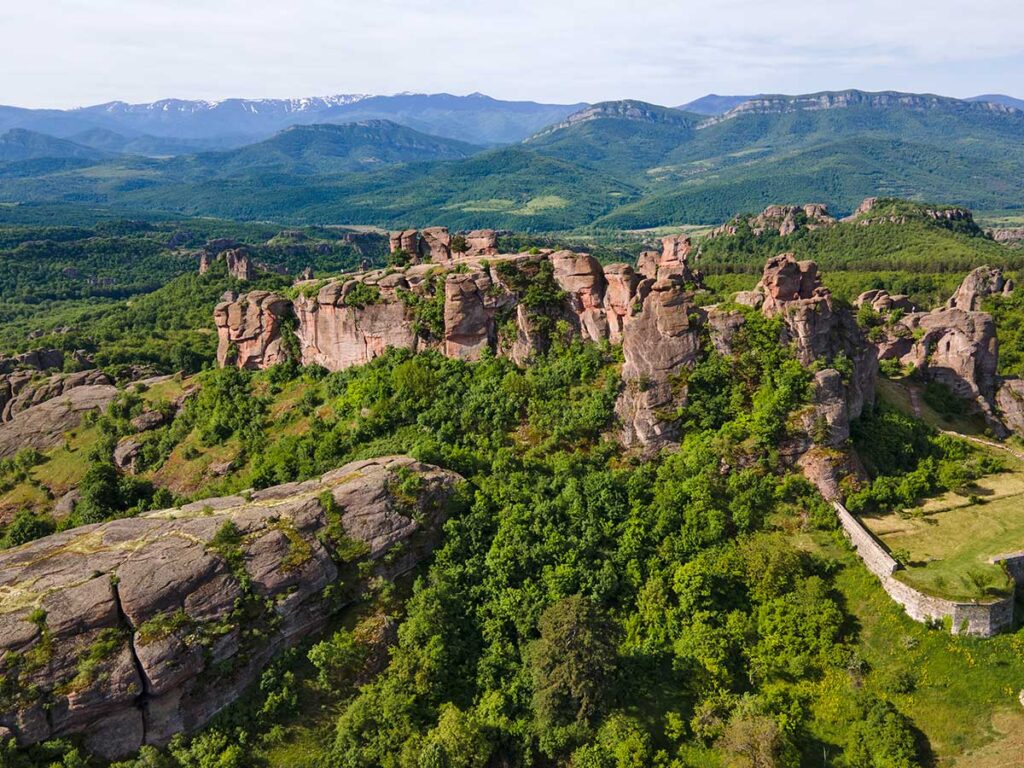
Hiking around the Belogradchik Rocks feels very different from Bulgaria’s high-mountain trails. Instead of alpine peaks and glacial lakes, enormous reddish sandstone and conglomerate formations rise from the forests of northwestern Bulgaria.
The rock formations extend across a large area around Belogradchik, with natural towers, cliffs, pinnacles, and narrow valleys shaped by millions of years of erosion. Many formations have names inspired by their unusual shapes and are connected with local legends.
A good starting point is Belogradchik Fortress, where paths and stone stairways lead between towering rocks to viewpoints over the town and surrounding countryside. Longer hiking routes continue beyond the fortress into quieter sections of the rock complex.
The area works particularly well for travelers looking for scenic hiking without the demanding elevations of Rila or Pirin. Spring and autumn are especially pleasant, when temperatures are cooler and the surrounding forests add even more color to the landscape.
Popular Hikes Around Belogradchik
- Belogradchik Fortress and surrounding rocks – easy to moderate; viewpoints and unusual rock formations
- Borov Kamak area – moderate; quieter trails through the rock landscape
- Belogradchik eco-trails – varied; forests, cliffs, and panoramic viewpoints
- Longer routes through the western rock groups – moderate; good for exploring beyond the main tourist area
Best time to hike: April to June and September to October. Summer hiking is possible, but exposed sections can become very hot during the middle of the day.
7. Iskar Gorge
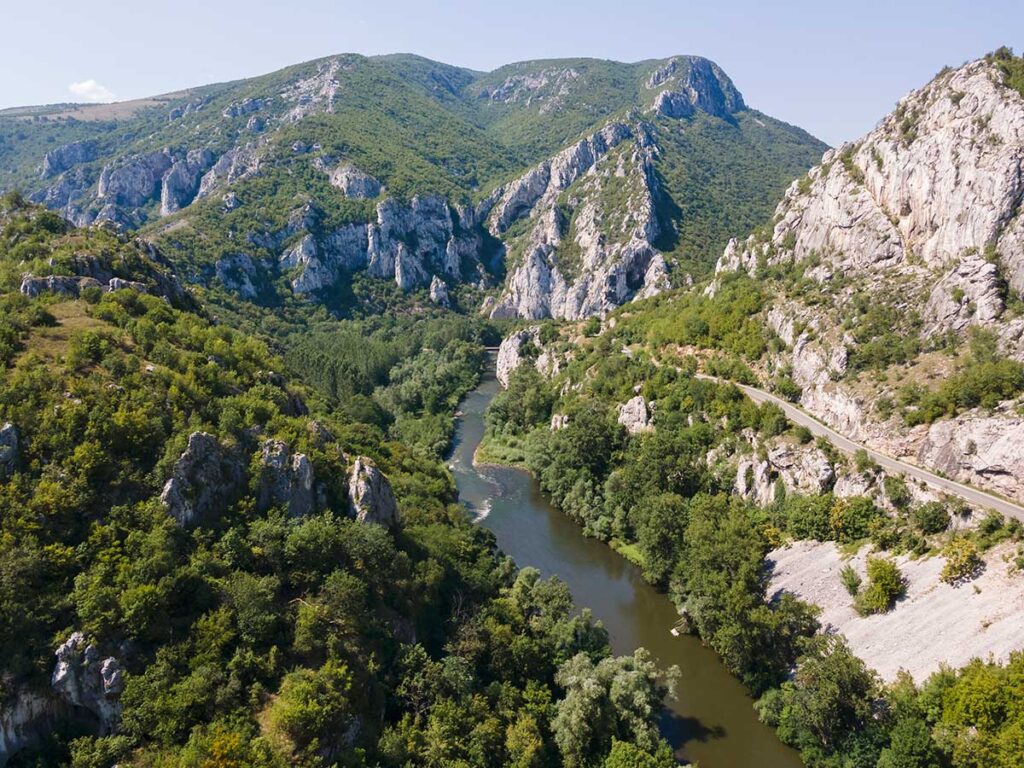
The Iskar Gorge cuts through the Balkan Mountains north of Sofia, creating a landscape of steep limestone cliffs, forested slopes, rocky formations, and river valleys. The gorge is close enough to Sofia for a day trip, yet many trails feel far removed from city life.
One of the best-known routes leads to Bovska Skaklya Waterfall, near the village of Bov. The waterfall is most impressive during spring and after periods of heavy rain, when water drops dramatically from the high cliffs. The surrounding eco-trail provides views across the gorge and passes through a mixture of forest and open terrain.
At Lakatnik, limestone cliffs rise high above the Iskar River. Trails climb from the valley toward panoramic viewpoints overlooking the river, railway, and surrounding mountains. The cliffs are also popular with rock climbers.
The railway running through the gorge makes several hiking areas accessible without a car. Small stations along the Sofia–Mezdra line provide convenient starting points for exploring villages, waterfalls, monasteries, and trails scattered throughout the valley.
Popular Hikes in the Iskar Gorge
- Bov and Bovska Skaklya Waterfall – moderate; waterfall and panoramic gorge views
- Lakatnik Rocks – moderate; limestone cliffs and viewpoints above the Iskar River
- Vazov Eco Trail – moderate; historic trail through the landscape around Bov
- Trails around Cherepish Monastery – easy to moderate; river scenery, forest, and cultural landmarks
Best time to hike: April to June and September to October. Spring is especially good for waterfalls, while autumn brings cooler temperatures and colorful forests.
8. Strandzha Mountains
In southeastern Bulgaria, the Strandzha Mountains offer a quieter kind of hiking shaped by dense forests, low rounded ridges, river valleys, traditional villages, and trails that eventually reach the Black Sea. The terrain is far gentler than Rila or Pirin, but its isolation and unusual vegetation give Strandzha a character of its own.
Much of the region is protected within Strandzha Nature Park, the largest protected area in Bulgaria. Its forests preserve plant communities influenced by the mild Black Sea climate, including species rarely encountered elsewhere in the country.
The village of Malko Tarnovo is a useful base for exploring the interior of the park, while trails around Brashlyan combine forest walking with traditional Strandzha architecture and historical sites. Farther east, routes near the Veleka River lead through wetlands and wooded hills toward the coast.
One of the most scenic areas lies around Sinemorets, where forested slopes meet secluded beaches and the Veleka River flows into the Black Sea. Here, a hike can begin beneath old trees and finish with views across the river mouth and coastline.
Popular Hikes in Strandzha
- Malko Tarnovo trails – easy to moderate; forests and cultural sites
- Brashlyan village routes – easy; traditional architecture and woodland scenery
- Veleka River trails – easy to moderate; river valleys, forests, and wildlife
- Sinemorets coastal trails – easy to moderate; cliffs, beaches, and Black Sea views
Best time to hike: April to June and September to October. Summers can be hot, while spring brings lush vegetation and comfortable temperatures for longer walks.
9. Vratsa Balkan
Rising above the city of Vratsa in northwestern Bulgaria, the Vratsa Balkan combines sheer limestone cliffs, deep valleys, caves, waterfalls, and panoramic mountain trails. Much of the area is protected within Vrachanski Balkan Nature Park, and its dramatic terrain makes it an excellent alternative to Bulgaria’s better-known southern mountain ranges.
Vratsata Gorge defines the landscape immediately south of Vratsa, where towering limestone walls form a narrow gateway into the mountains. Trails begin around the gorge and continue toward forests, ridges, villages, and viewpoints overlooking the surrounding region.
The mountains are also home to Vrachanska Skaklya, a seasonal waterfall with a drop of around 141 meters. It is often described as Bulgaria’s tallest waterfall by total drop, although unlike Raysko Praskalo in the Central Balkan, it does not flow throughout the year. The best chance of seeing it is during spring snowmelt or after substantial rainfall.
Higher in the mountains above Vratsa, trails around Ledenika Cave pass through forests and karst terrain. The surrounding area has several paths through forests and karst terrain. A hike here can easily be combined with a visit to Ledenika Cave.
Popular Hikes in the Vratsa Balkan
- Vratsata Gorge – easy to moderate; enormous limestone cliffs and mountain scenery
- Vrachanska Skaklya – moderate; seasonal waterfall and views over Vratsa
- Ledenika Cave area – easy to moderate; forest and karst landscapes
- Okolchitsa Peak – moderate; open mountain scenery and an important site connected with Hristo Botev
Best time to hike: April to June and September to October. Visit Vrachanska Skaklya in spring or after heavy rainfall for the best chance of seeing the waterfall flowing strongly.
10. Sredna Gora Mountains
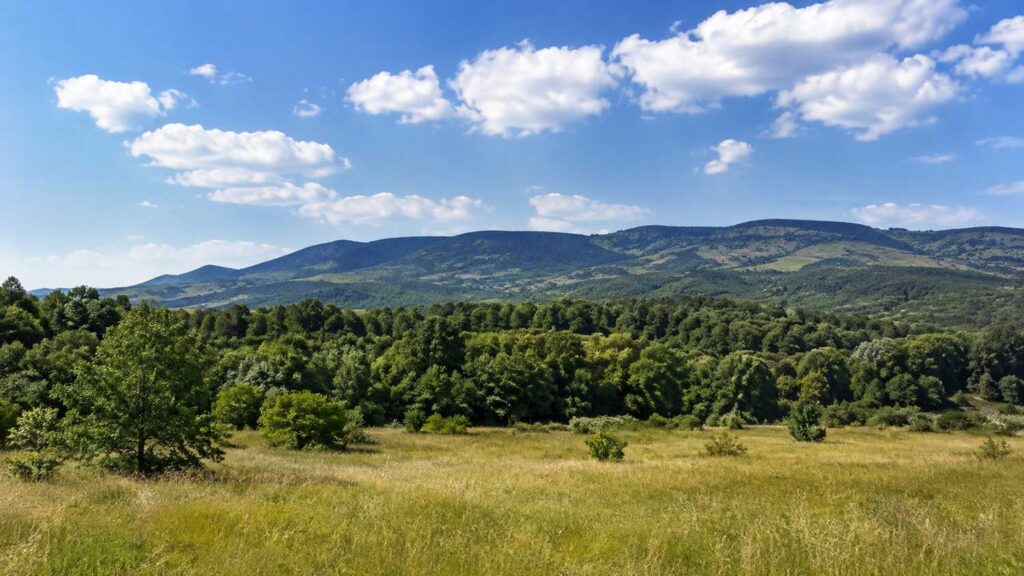
Running parallel to the Balkan Mountains through central Bulgaria, the Sredna Gora Mountains are often overlooked by international visitors. Here the trails tend to be lower and gentler, passing through wooded ridges, open countryside, historic towns, and areas known for mineral springs.
The range is closely associated with the Valley of the Roses, particularly around Kazanlak and the eastern slopes of Sredna Gora. The forests and meadows are at their greenest in spring and early summer.
Farther west, Koprivshtitsa provides an excellent base for combining walking with Bulgarian history. Paths climb into the surrounding hills and forests, while the town itself preserves colorful 19th-century houses connected with the Bulgarian National Revival.
Around Hisarya and Starosel, gentle foothill trails pass close to Thracian archaeological sites and some of central Bulgaria’s best-known mineral springs. Gentle trails through the foothills can be paired with visits to ancient Thracian sites and the mineral springs for which this part of central Bulgaria is known.
Popular Hikes in Sredna Gora
- Koprivshtitsa trails – easy to moderate; forests, hills, and historic surroundings
- Buzovgrad Megalith – easy to moderate; rocky viewpoint and surrounding countryside
- Starosel area – easy; foothill walks and Thracian heritage
- Hisarya surroundings – easy; gentle trails near mineral springs and historical sites
Best time to hike: April to June and September to October. The lower elevations also allow a longer hiking season than the high mountains of Rila and Pirin.
Best Time for Hiking in Bulgaria
The best time for hiking in Bulgaria depends largely on elevation. While lower mountains and forest trails can be accessible for much of the year, the high routes in Rila and Pirin have a considerably shorter hiking season.
Spring: April to May
Spring is excellent for lower-elevation hiking, particularly in the Rhodopes, Iskar Gorge, Strandzha, Sredna Gora, and around Vratsa. Rivers and waterfalls are often at their strongest, forests turn green, and temperatures are generally comfortable.
High-altitude routes are a different matter. Snow can remain across Rila and Pirin well into late spring, making some trails unsuitable without winter hiking experience and equipment.
Summer: June to August
Summer is the main season for Bulgaria’s high mountains. Routes to Musala, Vihren, the Seven Rila Lakes, and other alpine destinations become more accessible as the snow disappears.
July and August bring the warmest weather but also more visitors to famous trails. Afternoon thunderstorms can develop quickly in the mountains, so an early start is usually the safest approach for exposed summit routes.
Autumn: September to October
September is arguably one of the finest months for hiking in Bulgaria. Temperatures begin to cool, popular trails become quieter, and high-mountain routes can remain accessible during periods of stable weather.
By October, autumn colors transform the forests of the Rhodopes, Balkan Mountains, Vitosha, and Sredna Gora. Conditions at higher elevations become less predictable, however, and early snowfall is possible.
Winter: November to March
Winter transforms Bulgaria’s mountains completely. Snowshoeing and winter hiking are possible in several regions, but high-altitude routes require appropriate equipment, navigation skills, and experience with snow and ice.
Weather can deteriorate rapidly, particularly above the tree line. Travelers without winter mountain experience should stick to established lower routes or hike with an experienced local guide.
Essential Tips for Hiking in Bulgaria
Bulgaria has an extensive network of marked trails and mountain huts, but conditions vary considerably between popular routes and more remote areas. A little preparation makes exploring the mountains much easier and safer.
Check the Weather Before You Leave
Mountain weather can change quickly, particularly in Rila, Pirin, and the Balkan Mountains. Clear mornings can give way to thunderstorms, strong winds, fog, or sudden temperature drops later in the day. Check the forecast before leaving and start exposed summit hikes early.
Don’t Rely Only on Mobile Reception
Coverage can be unreliable in remote valleys and high mountain areas. Download an offline map before setting out and carry a power bank on longer hikes. Trail markings are common, but they should not be your only means of navigation.
Use Bulgaria’s Mountain Huts
Mountain huts, known locally as hizhi (хижи), are found throughout Bulgaria’s major ranges. Some provide meals and basic accommodation, while others have limited facilities. For overnight hikes, check whether the hut is operating and reserve ahead when possible rather than assuming a bed will be available.
Carry Enough Water
Natural springs are common on some routes but scarce on others, particularly across exposed ridges. Carry enough water for the planned hike and don’t assume every spring shown on an older map will still be flowing.
Wear Proper Hiking Shoes
Even popular trails can become rocky, muddy, or slippery. Sturdy hiking shoes with good grip are especially useful in Pirin, Rila, around waterfalls, and on steep limestone terrain.
Respect Protected Areas
Several of Bulgaria’s finest hiking regions lie within national parks, nature parks, and reserves. Stay on marked trails where required, take your rubbish with you, avoid disturbing wildlife, and follow restrictions on camping and fires.
Know the Emergency Number
The general emergency number in Bulgaria is 112. For serious incidents in mountain terrain, rescue may take time to reach you, so carry appropriate clothing, food, water, and basic first-aid supplies even on day hikes.
Where to Stay for Hiking in Bulgaria
Choosing the right base can save a surprising amount of travel time, especially when you plan several hikes in the same mountain range. Some destinations provide direct access to trails, while others work better as bases for day trips.
Sofia
Sofia is the most convenient base for hiking on Vitosha and works well for day trips to the Iskar Gorge. Rila can also be reached from the capital, although staying closer to the mountains makes early starts easier.
Borovets and Panichishte
Borovets is the obvious base for hiking toward Musala and exploring eastern Rila. Panichishte and Sapareva Banya are better positioned for the Seven Rila Lakes and several routes in northwestern Rila.
Bansko and Dobrinishte
For the Pirin Mountains, Bansko offers the widest range of accommodation and easy access toward Vihren Hut. Quieter Dobrinishte is convenient for the Bezbog chairlift and hikes toward Popovo Lake.
Smolyan, Shiroka Laka and Trigrad
The western Rhodopes are best explored from several smaller bases rather than one central resort. Smolyan is convenient for the Canyon of the Waterfalls, while Shiroka Laka and Trigrad put you closer to village trails, gorges, caves, and forest routes.
Kalofer
Kalofer is a useful base for the southern side of Central Balkan National Park. It is particularly convenient for hikers planning the route toward Ray Hut, Raysko Praskalo, and Botev Peak.
Vratsa and Belogradchik
Stay in Vratsa for Vratsata Gorge, Vrachanska Skaklya, and trails through the Vratsa Balkan. Belogradchik is the natural choice for exploring the rock formations and hiking routes of Bulgaria’s far northwest.
Frequently Asked Questions About Hiking in Bulgaria
Is Bulgaria good for hiking?
Yes. Bulgaria has numerous mountain ranges, hundreds of marked trails, mountain huts, glacial lakes, waterfalls, forests, and routes ranging from short walks to demanding summit hikes.
What is the best hike in Bulgaria?
There isn’t a single best route, but the Seven Rila Lakes is probably Bulgaria’s most famous hike. Musala and Vihren are better choices for summit hiking, while the Canyon of the Waterfalls and routes through the Rhodopes provide a less alpine experience.
What is the highest peak you can hike in Bulgaria?
Musala Peak, at 2,925 meters, is the highest mountain peak in Bulgaria and the entire Balkan Peninsula. The standard summer route is a demanding day hike rather than a technical climb in normal conditions, but weather at this elevation can change quickly.
Can beginners go hiking in Bulgaria?
Absolutely. Not every Bulgarian mountain trail involves climbing a major summit. Vitosha, the Rhodopes, Sredna Gora, Strandzha, and areas around Belogradchik have many shorter and less demanding routes suitable for casual hikers.
Do I need a guide to hike in Bulgaria?
A guide isn’t required for most established trails, provided you have suitable hiking experience and can navigate independently. Hiring a local mountain guide can be worthwhile for remote routes, winter hiking, multi-day trips, or challenging high-altitude terrain.
Are there mountain huts in Bulgaria?
Yes. Bulgaria has an extensive network of mountain huts, locally called hizhi (хижи). They range from simple shelters to staffed huts offering beds, food, and drinks. Facilities and opening periods vary, so check current information before planning an overnight stay.
When is the best month for hiking in Bulgaria?
For high-mountain hiking, September often brings a particularly good balance of milder temperatures, fewer visitors, and trails that are still largely accessible. May and June are better suited to waterfalls and many lower-elevation routes.
Is hiking in Bulgaria expensive?
Compared with many famous European mountain destinations, hiking in Bulgaria can be relatively affordable. Most trails themselves are free to access, while the main expenses are transportation, accommodation, food, mountain huts, and any lifts used to reach higher trailheads.
Explore Bulgaria on Foot
Hiking reveals a side of Bulgaria that is easy to miss when traveling only between its cities and famous landmarks. A single trip might take you past glacial lakes beneath the peaks of Rila, along Pirin’s rocky ridges, through quiet Rhodope forests, or above the limestone cliffs of the Iskar Gorge.
A good hiking day doesn’t have to end on a major summit. You might follow a forest trail to a waterfall, walk between Rhodope villages, or spend an afternoon climbing to a viewpoint with barely anyone else around.
For more ideas, explore our guides to the best mountains in Bulgaria, most beautiful waterfalls in Bulgaria, and other outdoor destinations around the country.
What’s Your Favorite Hiking Spot in Bulgaria?
Have you hiked any of these trails, or is there another Bulgarian mountain route that belongs on the list?
Share your favorite place in the comments. And if you’re exploring Bulgaria, tag @stunningbulgaria and use #stunningbulgaria so we can see where your adventures take you.