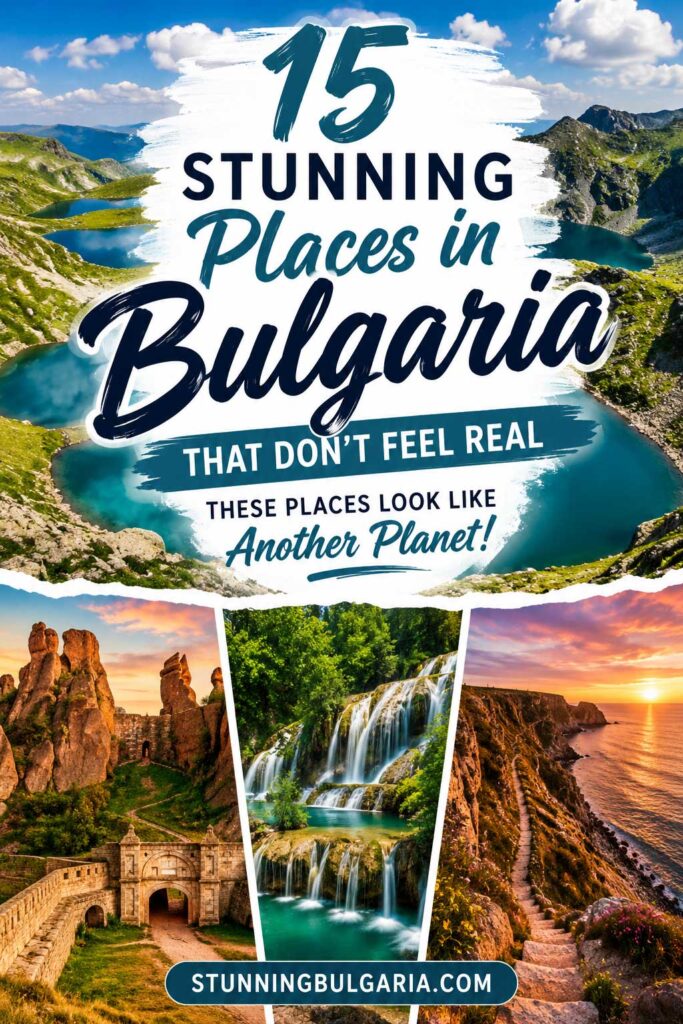
Bulgaria has a way of catching first-time visitors off guard. You might arrive expecting beautiful mountains, historic towns, and a few days on the Black Sea, only to discover just how much variety is packed into this relatively small corner of Europe.
High in the Rila Mountains, glacial lakes sit between rugged peaks. In the northwest, enormous rock formations rise above Belogradchik like the ruins of a natural fortress. Elsewhere, waterfalls spill through green forests, caves open beneath the mountains, and centuries-old villages still line their narrow streets with stone houses and traditional rooftops.
Some of these places are well known in Bulgaria, while others rarely make it onto a first-time visitor’s itinerary. What they share is that moment when you stop, look around, and think: this doesn’t quite look real.
Here are 15 stunning places in Bulgaria that deliver exactly that feeling — and are worth building a trip around.
Why Bulgaria Is Full of Unreal Beauty
One of the things that makes Bulgaria so interesting to explore is how quickly the landscape changes. You can wake up surrounded by mountain peaks, spend the afternoon wandering through a centuries-old village, and reach the Black Sea coast the next day.
Despite its relatively compact size, Bulgaria packs an impressive variety of scenery into one country:
- Snow-capped mountains and high alpine trails
- Glacial lakes hidden among rugged peaks
- Deep caves filled with unusual rock formations
- Dramatic cliffs overlooking valleys and the Black Sea
- Old-growth forests and protected mountain landscapes
- Waterfalls tucked into green mountain landscapes
- Historic monasteries surrounded by spectacular scenery
- Black Sea beaches ranging from lively resort areas to quiet stretches of coastline
What makes many of these places even more memorable is that you don’t always have to share them with enormous crowds. Venture beyond Bulgaria’s busiest attractions, especially outside July and August, and it is still possible to find mountain trails, villages, viewpoints, and natural landmarks where the surroundings become the main event.
Most Stunning Places in Bulgaria
From high mountain lakes and enormous rock formations to waterfalls, caves, historic villages, and dramatic stretches of coastline, the places below show just how varied Bulgaria can be. Some are famous landmarks, while others take you well beyond the country’s usual tourist routes.
Here are 15 of the most stunning places in Bulgaria and what makes each one worth seeing.
1. Seven Rila Lakes
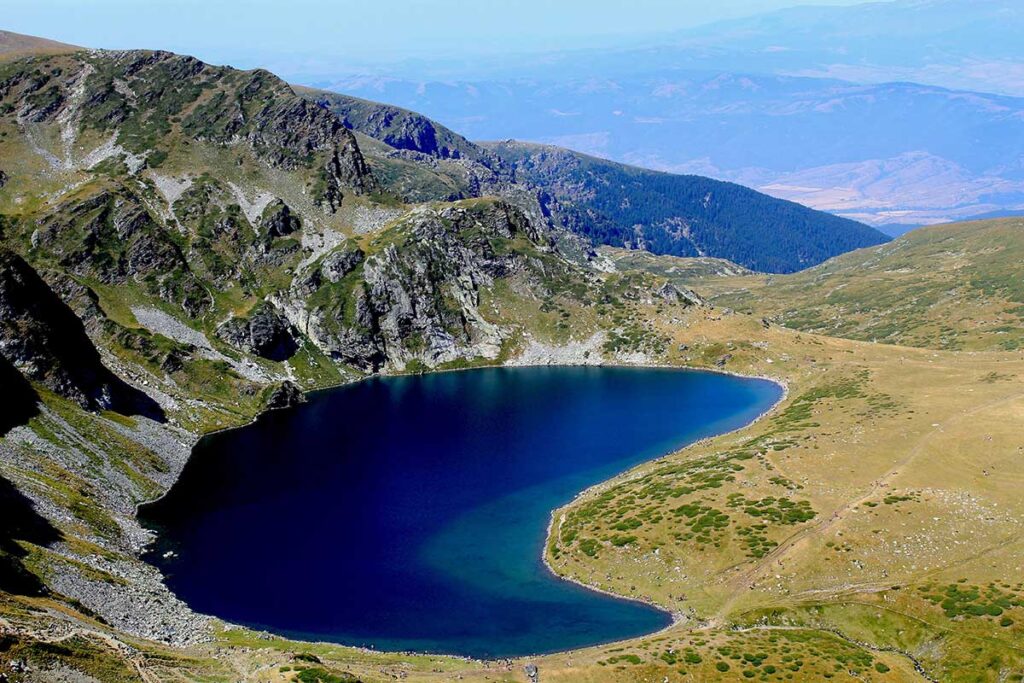
High in the Rila Mountains, the Seven Rila Lakes form one of Bulgaria’s most recognizable landscapes. The seven glacial lakes sit at different elevations, surrounded by rocky slopes, alpine meadows, and sweeping mountain views.
Each lake has a name inspired by its shape or appearance. Among the best known are The Eye, the deepest of the seven; The Tear, the highest; and The Kidney, named for its distinctive curved shape. Following the trail between them reveals a different perspective at almost every turn.
Summer and early autumn are the most popular times to hike here, when the trails are generally more accessible and the surrounding slopes are green. The higher you climb, the more impressive the view becomes, especially from the viewpoints where several of the lakes can be seen at once.
What makes the Seven Rila Lakes feel almost unreal isn’t simply the color of the water. It’s the way the lakes appear one after another across the high mountain landscape, each tucked naturally into the terrain. On a clear day, standing above them and looking across the Rila Mountains is easily one of the most memorable views in Bulgaria.
2. Belogradchik Rocks
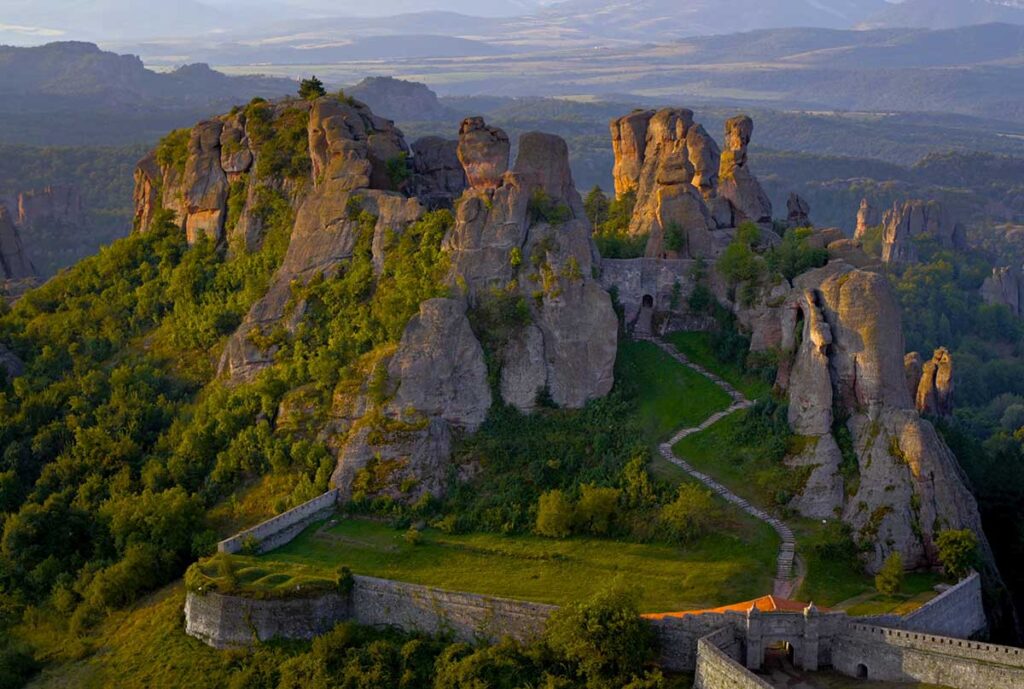
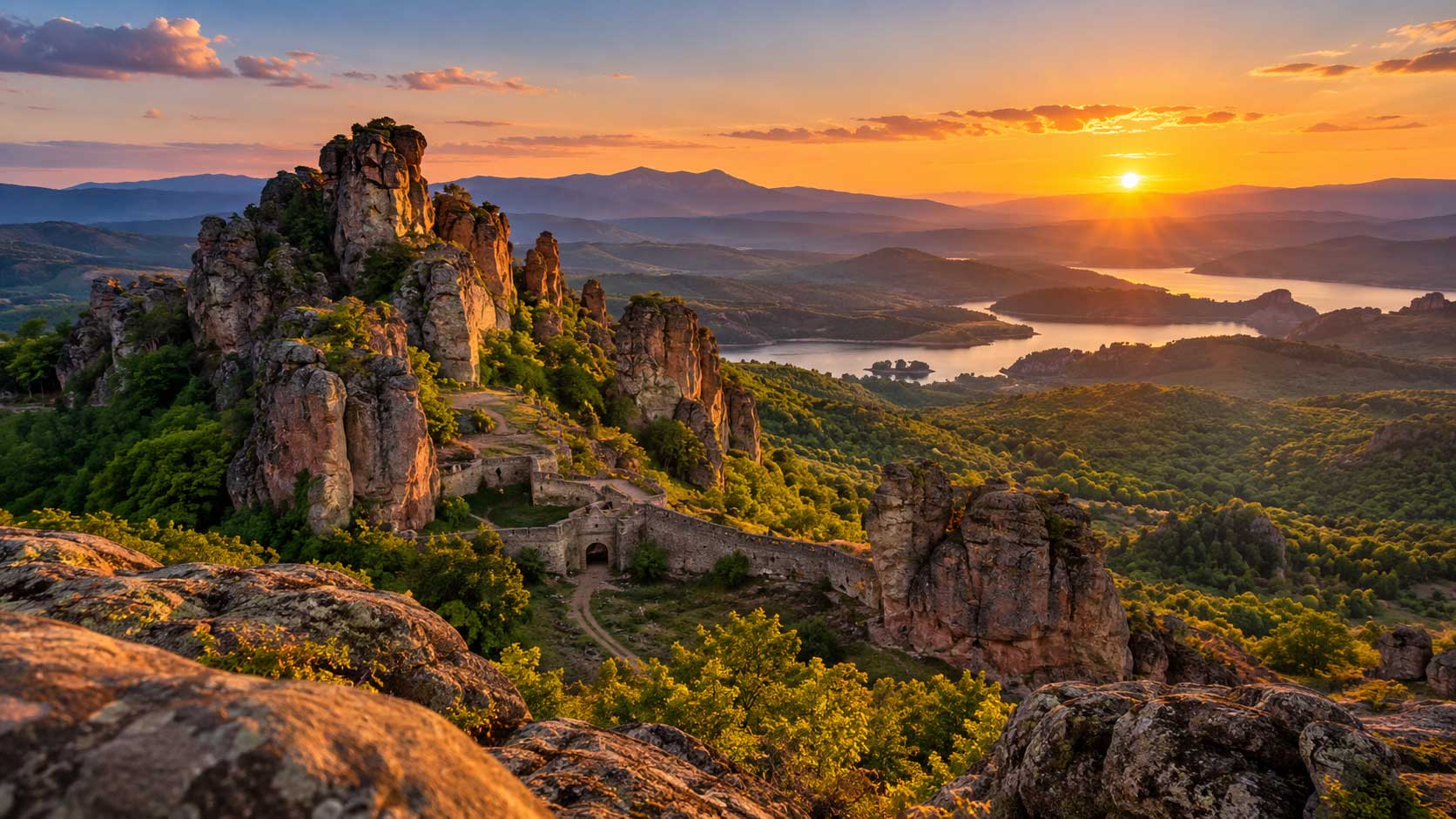
Rising above the town of Belogradchik in northwestern Bulgaria, the Belogradchik Rocks are one of the country’s strangest and most spectacular natural landmarks. Huge reddish rock formations stretch across the landscape, forming cliffs, towers, pillars, and shapes that have inspired local stories for generations.
Many of the formations have been given names based on what people imagine they resemble, from human figures and animals to castles and enormous stone guardians. Depending on the light and the angle from which you see them, the same rocks can look completely different.
The experience becomes even more impressive at Belogradchik Fortress, where historic defensive walls were built directly among the natural rock formations. Climbing through the fortress leads to viewpoints overlooking a seemingly endless maze of red and orange rocks, green hills, and the Balkan Mountains in the distance.
Late afternoon light brings out the reddish and orange tones of the rocks particularly well. From the highest viewpoints, the fortress walls almost disappear into the surrounding rocks, with the strange formations continuing across the hills in every direction.
3. Prohodna Cave
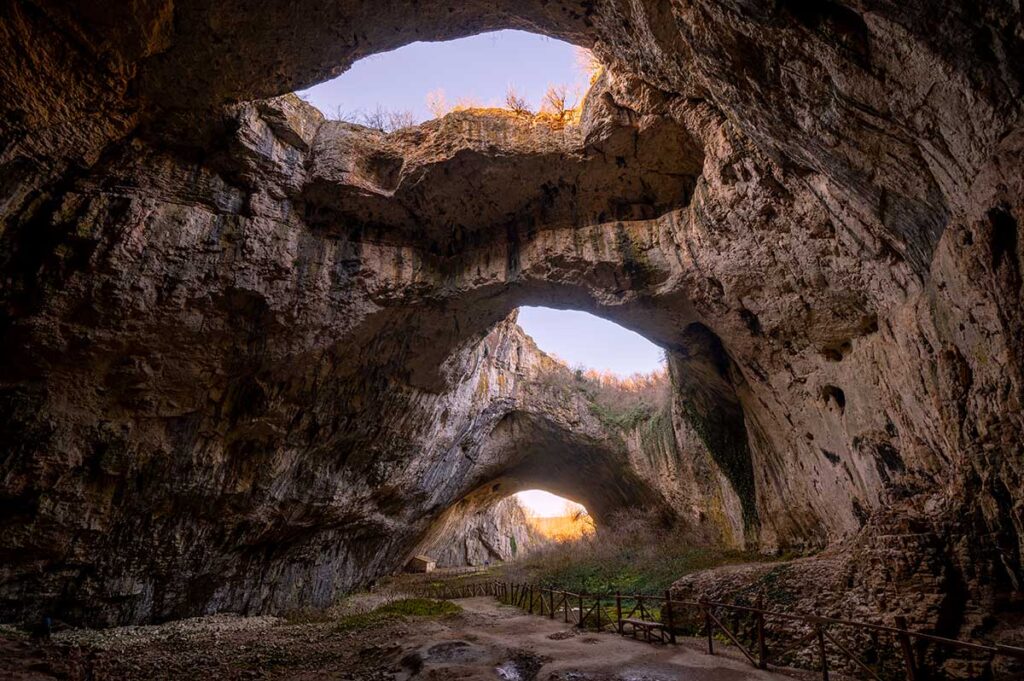
Walk into Prohodna Cave and it doesn’t take long to understand why this is one of the most photographed caves in Bulgaria. Look toward the ceiling and you’ll see two enormous, naturally formed openings staring back at you — the famous “Eyes of God.”
The openings sit side by side in the rock ceiling and allow daylight to pour directly into the cave. From certain positions below, their shape really does resemble a pair of giant eyes looking down into the cavern. The appearance changes with the weather and time of day, making the cave feel different from one visit to another.
Prohodna is also impressive for its sheer scale. The enormous entrances and high ceiling create a bright, open cavern rather than the narrow, enclosed experience you might expect from a cave. You can walk through the main passage and see daylight at both ends.
The cave is located near the village of Karlukovo in northern Bulgaria and is part of the Karlukovo karst region, an area known for its unusual limestone formations and caves.
But it’s those two openings overhead that make Prohodna unforgettable. Stand beneath them and you’ll quickly see why a natural geological formation became one of Bulgaria’s most recognizable and slightly surreal sights.
4. Melnik Earth Pyramids
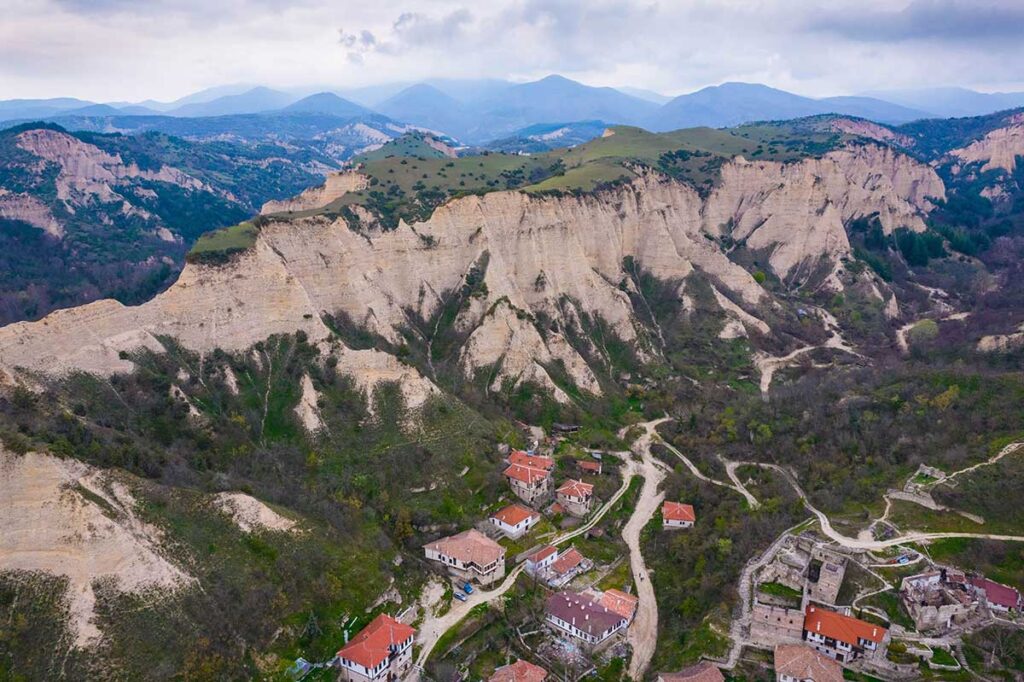
Just outside the tiny town of Melnik, the landscape suddenly changes. Rising above the surrounding valleys are the Melnik Earth Pyramids, a collection of unusual sandy formations shaped into steep ridges, narrow pinnacles, and towering slopes.
The formations have been sculpted over time by erosion, creating shapes that look surprisingly fragile from a distance. Their warm yellow and reddish tones are especially striking against the green vegetation covering parts of the surrounding hills.
Several walking routes around Melnik provide closer views of the pyramids, but one of the most rewarding ways to experience the landscape is on the trail between Melnik and Rozhen Monastery. Along the way, viewpoints open across the formations and the wider Melnik region.
What makes this corner of Bulgaria particularly memorable is the contrast. Below the strange, almost desert-like formations are traditional houses, vineyards, and a town famous for its winemaking heritage. It’s a combination you won’t encounter anywhere else in the country.
Visit in the softer light of morning or late afternoon, when the shadows emphasize the unusual shapes of the pyramids and make the landscape look even more dramatic.
5. Devil’s Throat Cave
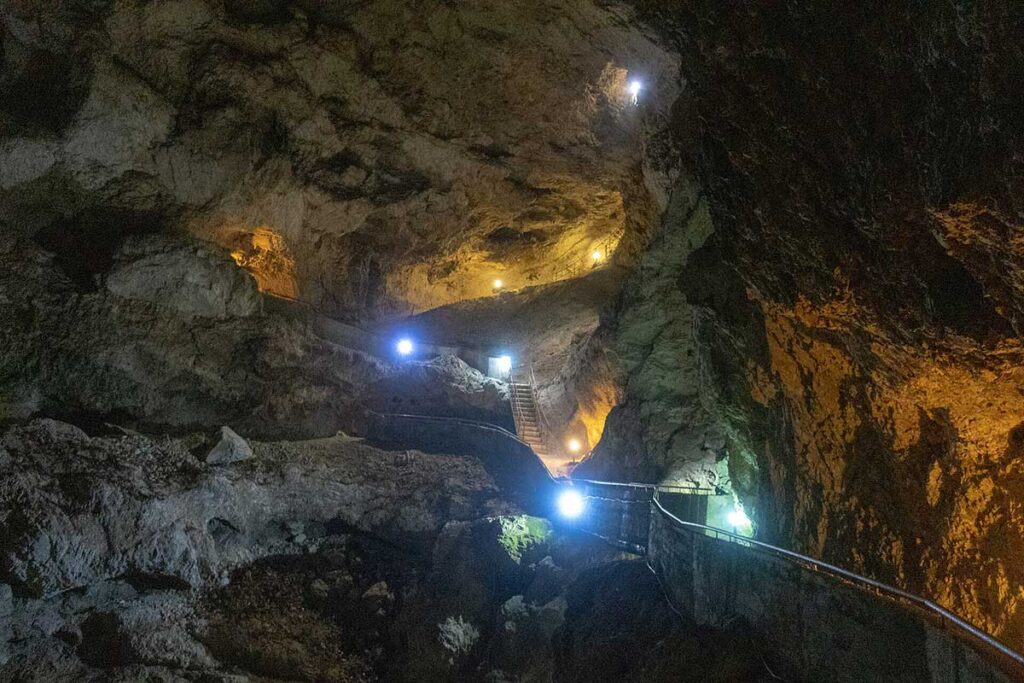
Deep in the Rhodope Mountains, near the village of Trigrad, Devil’s Throat Cave feels very different from the colorful stalactite-filled caves you might expect. Here, the experience is darker, louder, and far more dramatic.
Water from the Trigrad River disappears underground and plunges into the cave, creating a powerful underground waterfall before continuing through the subterranean system. Visitors follow a route into the cavern, where the sound of rushing water grows louder as you approach the enormous main chamber.
Part of the cave’s fascination comes from the legends surrounding it. Local tradition connects Devil’s Throat with the ancient Greek myth of Orpheus and Eurydice, with the cave sometimes described as an entrance to the underworld. There is no historical evidence that the myth originated here, but the dark chambers and disappearing river make it easy to understand how the association developed.
The experience doesn’t end underground. Leaving the cave involves climbing a long, steep staircase back toward daylight, emerging once again into the dramatic scenery of the Trigrad Gorge.
Devil’s Throat isn’t beautiful in the conventional sense. It’s the combination of darkness, rushing water, enormous underground spaces, and centuries of legend that makes it one of the most atmospheric places in Bulgaria.
6. The Wonderful Bridges
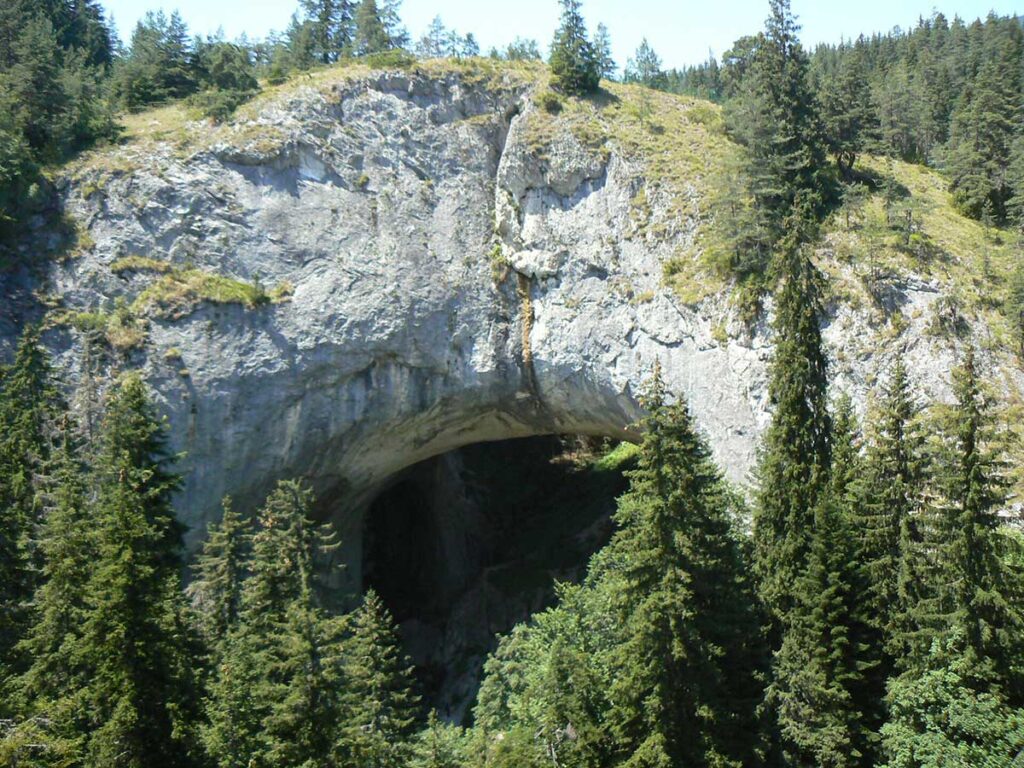
Hidden among the forests of the western Rhodope Mountains, the Wonderful Bridges — known in Bulgarian as Chudnite Mostove — are enormous natural rock arches that look almost as if someone carved them deliberately into the mountain.
The arches are remnants of a former cave system, shaped over time by erosion and water. Today, massive marble arches span the rocky valley below, with paths that let visitors see them from several angles.
Seeing photographs doesn’t quite prepare you for their scale. Walk beneath the largest arch and the surrounding rock rises high above you, while trees growing around and even on parts of the formations make the entire scene feel surprisingly wild.
The setting is part of what makes the Wonderful Bridges so memorable. Dense Rhodope forest surrounds the formations, providing plenty of greenery in summer and beautiful shades of yellow, orange, and red as autumn arrives.
You don’t need a long mountain expedition to experience them, either. The main formations are relatively easy to explore once you reach the site, making the Wonderful Bridges one of the more accessible natural wonders to include on a road trip through the Rhodopes.
7. Cape Kaliakra
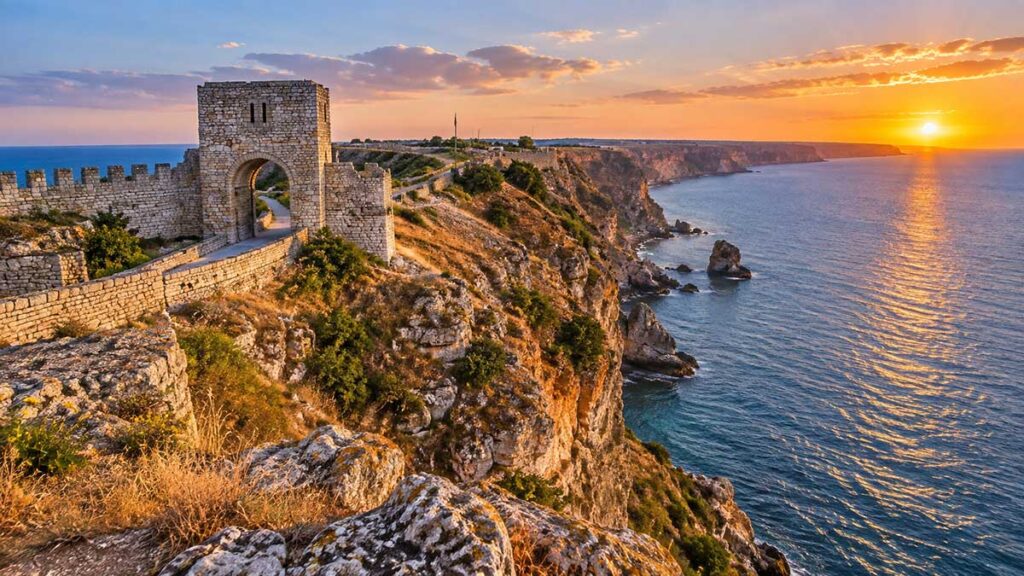
On Bulgaria’s northern Black Sea coast, Cape Kaliakra pushes out into the water as a long, narrow headland bordered by steep reddish cliffs. Standing near the edge and looking across the open sea, it feels very different from the sandy beaches and resort towns found farther south along the coast.
The cliffs are the first thing you’ll notice. Their warm red and rust-colored tones contrast sharply with the blue of the Black Sea, while viewpoints along the cape reveal stretches of rocky coastline in both directions. On clear days, the horizon seems to disappear into the sea.
But Kaliakra is more than a viewpoint. The cape has been inhabited and fortified by different civilizations over the centuries, and visitors pass through the remains of old defensive walls and archaeological sites while walking toward the end of the peninsula. History and scenery are layered together throughout the site.
Kaliakra is also surrounded by legends, including one of the best known stories from Bulgaria’s Black Sea coast — the tale of 40 Bulgarian maidens who, according to tradition, chose to leap from the cliffs rather than be captured by Ottoman forces. The story is commemorated locally, although it should be understood as legend rather than documented history.
Give yourself time to walk all the way through the site instead of stopping at the first viewpoint. The farther you go toward the end of the cape, the more the landscape opens around you, with cliffs on either side and the Black Sea stretching ahead.
For an especially atmospheric visit, come later in the day when the light softens across the reddish cliffs. Cape Kaliakra is one of those rare places in Bulgaria where dramatic nature, archaeology, and centuries of legend occupy the same narrow strip of land.
8. Krushuna Waterfalls
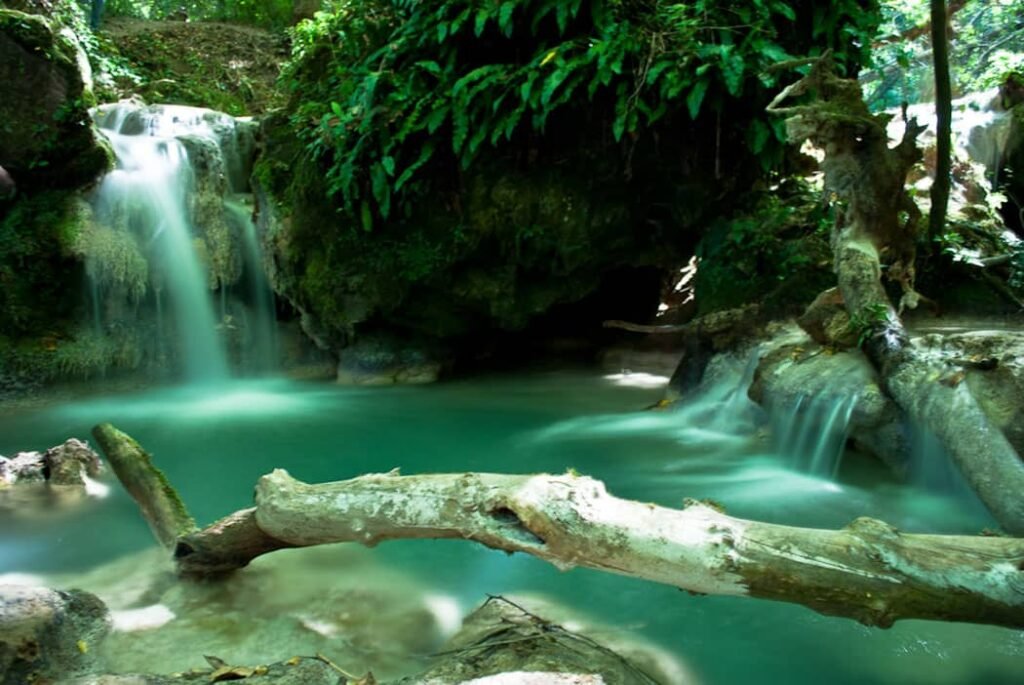
Tucked into a forest near the village of Krushuna in northern Bulgaria, the Krushuna Waterfalls are a series of cascades, small pools, and streams surrounded by thick greenery. The combination of flowing water, pale rock, and vivid vegetation gives this corner of the country a completely different character from Bulgaria’s mountain peaks and Black Sea cliffs.
Rather than a single dramatic drop, Krushuna is best experienced as a collection of waterfalls. Water moves through the landscape in stages, spilling over limestone formations and gathering in pools before continuing farther downstream.
Walking paths and footbridges lead through the area, allowing visitors to explore different levels of the cascades and see the water from several viewpoints. After periods of heavier rainfall, the falls can be particularly impressive, although conditions naturally vary with the season and recent weather.
Spring and early summer bring especially lush surroundings, when the forest is intensely green and the contrast with the light-colored rock is at its strongest. Autumn creates a completely different scene as the leaves begin to change around the cascades.
Krushuna doesn’t feel tropical so much as unexpectedly lush. Hidden beneath the trees, with water appearing around bends in the trail and cascading through the forest, it feels like discovering a small world separate from the surrounding countryside.
9. Vrachanski Balkan
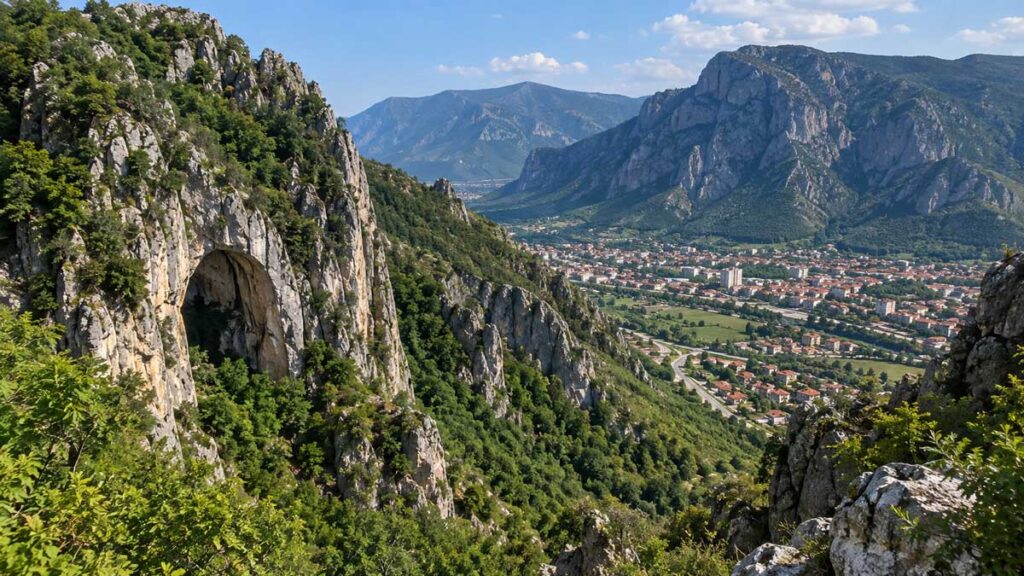
Rising immediately behind the city of Vratsa, Vrachanski Balkan Nature Park is one of the most dramatic mountain landscapes in northwestern Bulgaria. Limestone cliffs, forested slopes, caves, deep valleys, and rocky peaks give the area a rugged character that feels surprisingly wild considering how close it is to the city.
One of the park’s most impressive sights is Vratsata Gorge, where enormous limestone walls rise on either side of the road leading into the mountains. The cliffs are a well-known destination for rock climbing, but you don’t need climbing equipment to appreciate their scale — simply standing beneath them is enough.
The park also contains numerous hiking routes and viewpoints, making it easy to spend anything from a few hours to an entire day exploring. Trails lead through forests, across open mountain terrain, and toward panoramic views over Vratsa and the surrounding countryside.
Another remarkable sight is Vrachanska Skaklya, a tall seasonal waterfall that descends from the cliffs above Vratsa. Unlike waterfalls that flow strongly throughout the year, Vrachanska Skaklya depends heavily on snowmelt and rainfall, so it can look spectacular during wetter periods and nearly disappear during dry weather.
That unpredictability is part of what makes Vrachanski Balkan interesting. The landscape changes dramatically with the season and weather, but the towering cliffs of Vratsata remain the defining sight — a huge natural gateway into one of northwestern Bulgaria’s most dramatic mountain regions.
10. Tsarevets Fortress
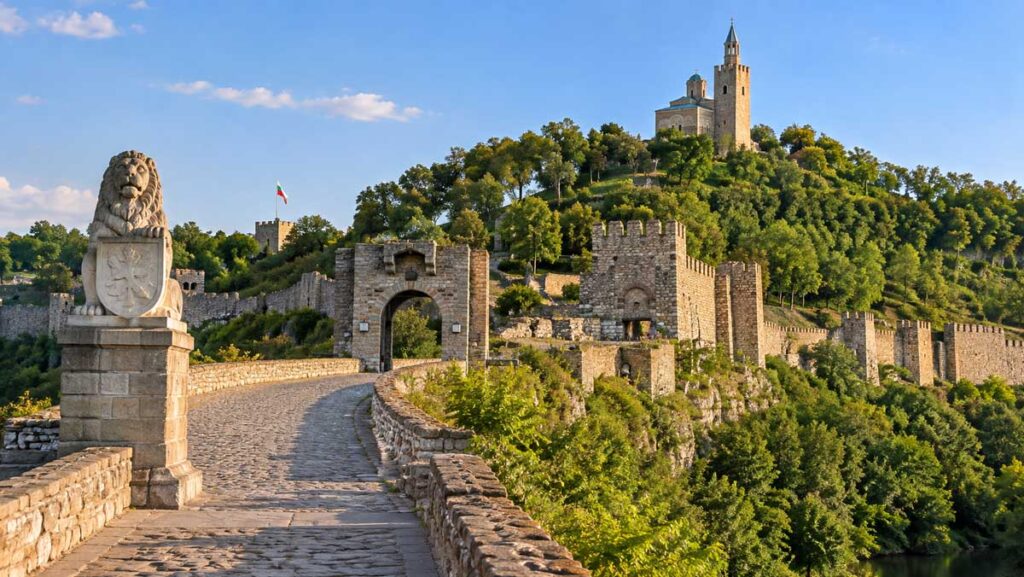
Rising above Veliko Tarnovo on a steep hill surrounded by bends of the Yantra River, Tsarevets Fortress is one of Bulgaria’s most important medieval landmarks. From a distance, its stone walls following the contours of the hill make it easy to see why this location was chosen as a center of power centuries ago.
During the Second Bulgarian Empire, when Tarnovo served as the capital, Tsarevets was a fortified center containing royal, religious, and administrative buildings. Today, visitors enter through the reconstructed fortress gates and follow paths past sections of defensive walls, towers, foundations, and the remains of medieval structures.
The climb toward the top is worth it for the views alone. From the higher parts of Tsarevets, you can look across the red rooftops of Veliko Tarnovo, the surrounding hills, and the Yantra River winding through the valley below.
At the summit stands the Patriarchal Church, one of the fortress’s most recognizable landmarks. Its interior is particularly unusual: instead of a conventional restoration, it contains modern murals depicting themes from medieval Bulgarian history.
What makes Tsarevets belong on a list of places that don’t feel real is the setting as much as the fortress itself. Stone walls climb across the hillside, the old city spreads over neighboring slopes, and the river curves far below. From the right viewpoint, Veliko Tarnovo still has the dramatic appearance of a medieval capital built into the hills.
11. Raysko Praskalo Waterfall
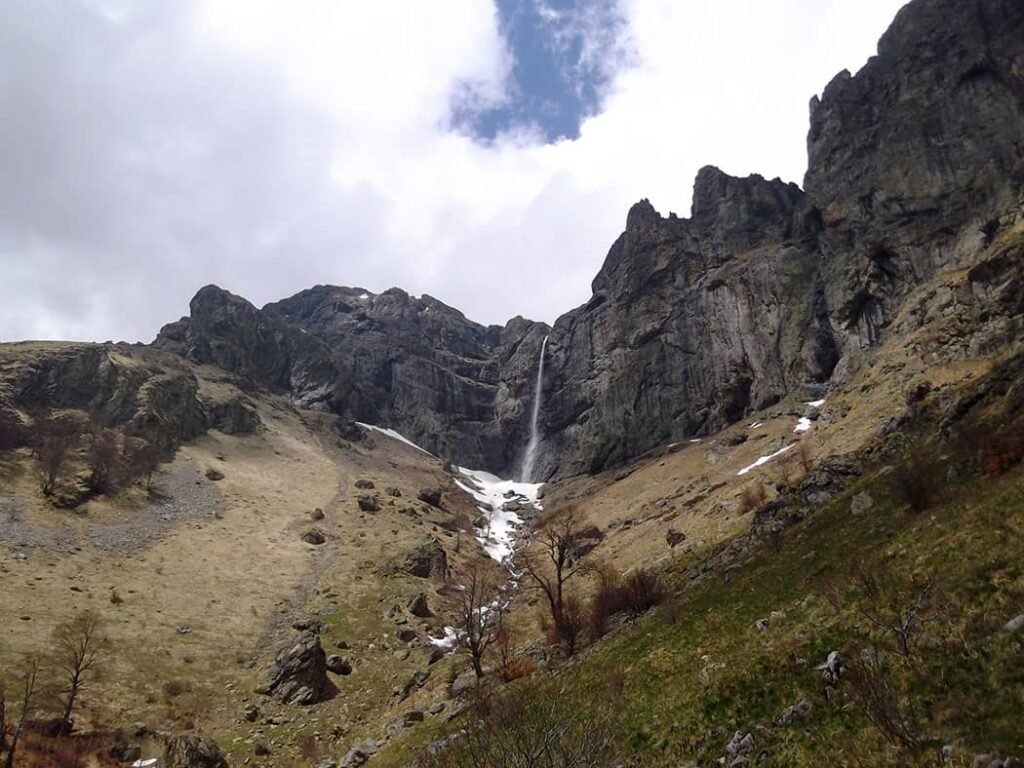
High in the Central Balkan Mountains, Raysko Praskalo drops from the rocky slopes beneath Botev Peak in one of the most dramatic settings in Bulgaria. With a height of 124.5 meters, it is the tallest permanent waterfall in the country.
Part of what makes Raysko Praskalo special is that you don’t simply pull over beside the road to see it. Reaching the waterfall involves hiking into Central Balkan National Park, with one of the best-known approaches beginning near the town of Kalofer and leading through the Dzhendema Reserve toward Rai Hut.
As the trail climbs higher, forests gradually give way to open mountain scenery. Eventually, the enormous rock face beneath Botev Peak comes into view, with the waterfall descending from high above. From a distance, the water can look like a thin white ribbon against the dark cliffs.
The waterfall’s appearance changes considerably with the season and recent conditions. Spring and early summer generally offer stronger water flow, while drier periods can make it noticeably thinner.
Unlike some of Bulgaria’s easier roadside attractions, Raysko Praskalo rewards travelers willing to hike for the experience. The combination of the towering waterfall, rugged cliffs, and wild Central Balkan landscape makes the journey itself part of what makes this place unforgettable.
12. Pirin National Park
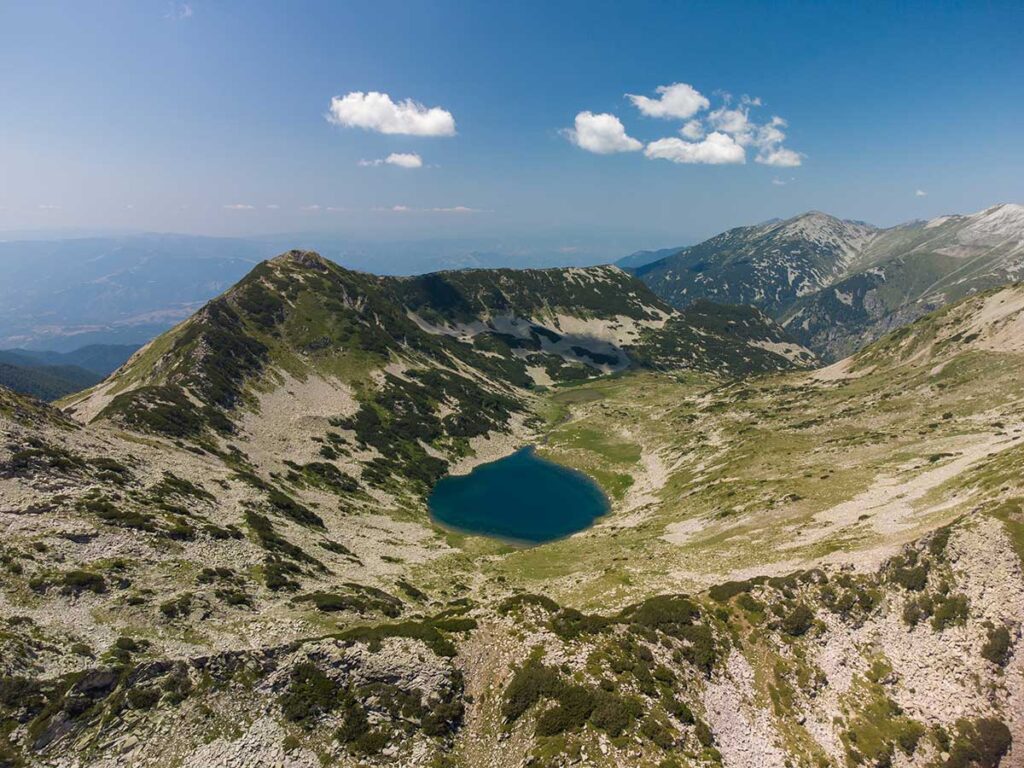
Sharp granite peaks, clear mountain lakes, alpine meadows, and old mountain forests make Pirin National Park one of the wildest-looking landscapes in Bulgaria. Located in the southwest of the country, the park protects much of the Pirin Mountains and has been recognized as a UNESCO World Heritage Site for its exceptional natural value. Pirin has been on UNESCO’s World Heritage List since 1983.
The scenery becomes increasingly dramatic as you move into the higher mountains. Rocky ridgelines rise above deep valleys, while glacial lakes appear between the peaks. Among the most recognizable sights are the Banderishki Lakes, Popovo Lake, and the imposing summit of Vihren, Bulgaria’s second-highest mountain.
Pirin is particularly rewarding for hikers because the landscape changes so much along the trails. A route can begin beneath tall conifers, cross open alpine meadows, pass a clear mountain lake, and eventually emerge beneath steep walls of exposed rock.
The park is also home to Baykusheva Mura, an exceptionally old Bosnian pine near the road between Bansko and Vihren Hut. Its twisted trunk and enormous size offer a very different kind of natural landmark from the mountain panoramas surrounding it.
Summer into early autumn is the main hiking season in the high Pirin, although mountain conditions can change quickly and higher routes require proper preparation.
Standing beside a glacial lake with granite peaks rising around you, Pirin has a rugged character entirely its own — and easily earns its place among the most stunning landscapes in Bulgaria.
13. Kovachevitsa
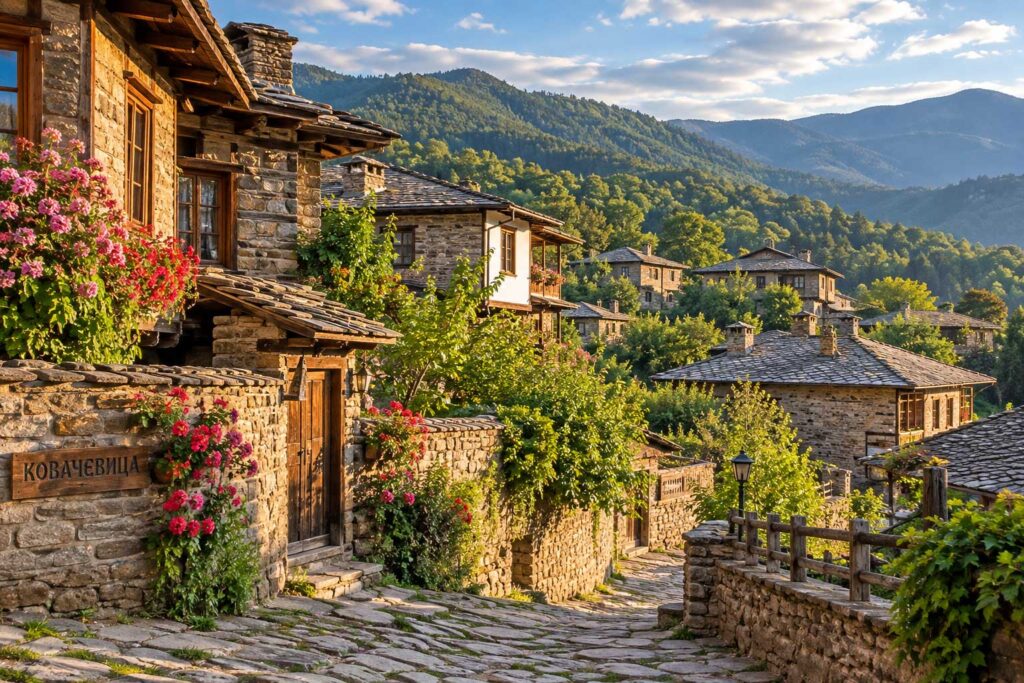
Tucked into the western Rhodope Mountains, Kovachevitsa is one of those villages where the streets themselves are the attraction. Stone houses rise along narrow lanes, heavy wooden gates open into hidden courtyards, and traditional rooftops seem to tumble down the hillside toward the surrounding forest.
Much of Kovachevitsa’s distinctive appearance comes from its Bulgarian National Revival architecture. Many of the traditional houses were built using stone on the lower levels and wood above, creating a style that feels perfectly suited to the rugged mountain landscape.
There isn’t a long checklist of attractions to rush between here. The best way to experience Kovachevitsa is simply to walk. Follow the cobbled and stone-paved lanes, look between the old houses toward the mountains, and take time to notice details such as wooden balconies, stone walls, tiled roofs, and old gateways.
The village feels particularly atmospheric in the quieter hours of the morning and evening, when the narrow streets empty and the surrounding mountains seem even closer.
What makes Kovachevitsa feel almost unreal isn’t a single monument or viewpoint. It’s the fact that an entire village has retained such a strong architectural identity. Turn down the right lane, with stone houses rising on either side and forested Rhodope slopes beyond the rooftops, and the modern world can feel surprisingly far away.
14. Uhlovitsa Cave
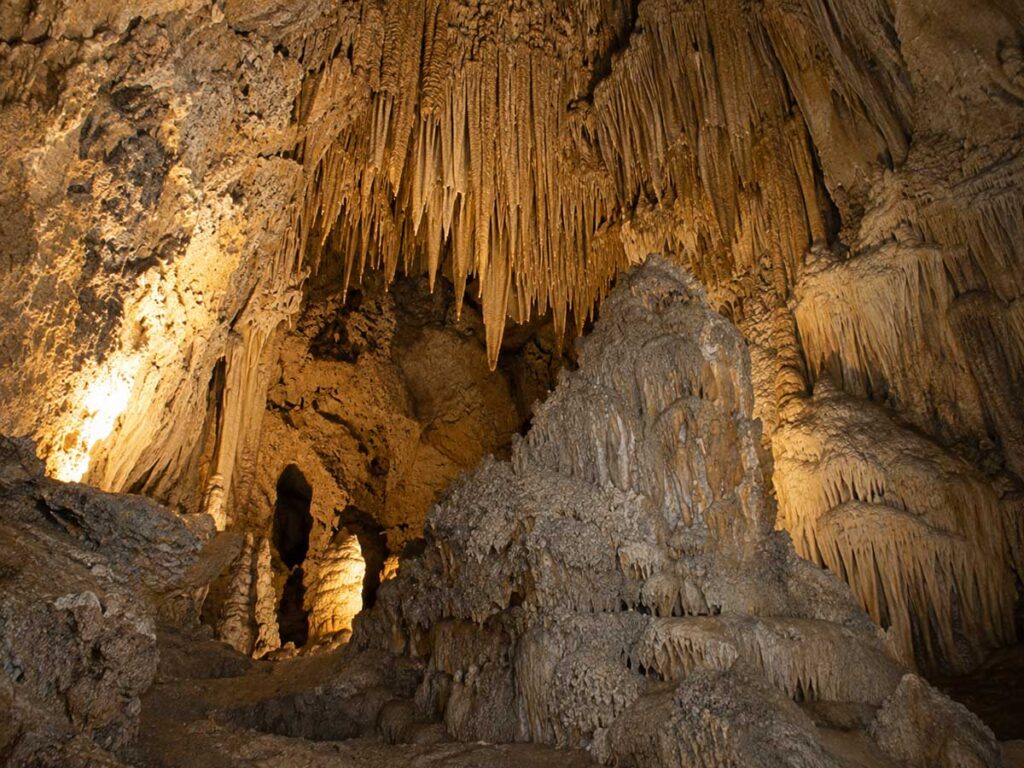
Hidden in the Rhodope Mountains near the village of Mogilitsa, Uhlovitsa Cave is known for its intricate formations, underground chambers, and small pools.
Inside, visitors move through a series of passages and chambers filled with stalactites, stalagmites, flowstone, and other formations created slowly by mineral-rich water. Artificial lighting highlights the shapes and textures of the rock, revealing details that would otherwise disappear into the darkness.
One of the most memorable parts of Uhlovitsa is deeper inside the cave, where formations surround a series of small pools. The combination of water, sculpted rock, and narrow underground spaces gives the interior an almost otherworldly appearance.
Getting there is part of the experience. The cave entrance sits above the surrounding road, so reaching it requires a climb through the forest. It’s worth wearing shoes with good grip and allowing enough time for the ascent rather than treating Uhlovitsa as a quick roadside stop.
The surrounding region also deserves attention. This is a quieter corner of the Rhodopes, close to mountain villages and winding roads where the scenery can be just as memorable as the destination itself.
Uhlovitsa may not have the instant visual drama of the “Eyes of God” at Prohodna or the underground waterfall at Devil’s Throat. Its appeal is more intimate — a hidden world of delicate formations waiting inside a forested Rhodope hillside.
15. Beklemeto Pass
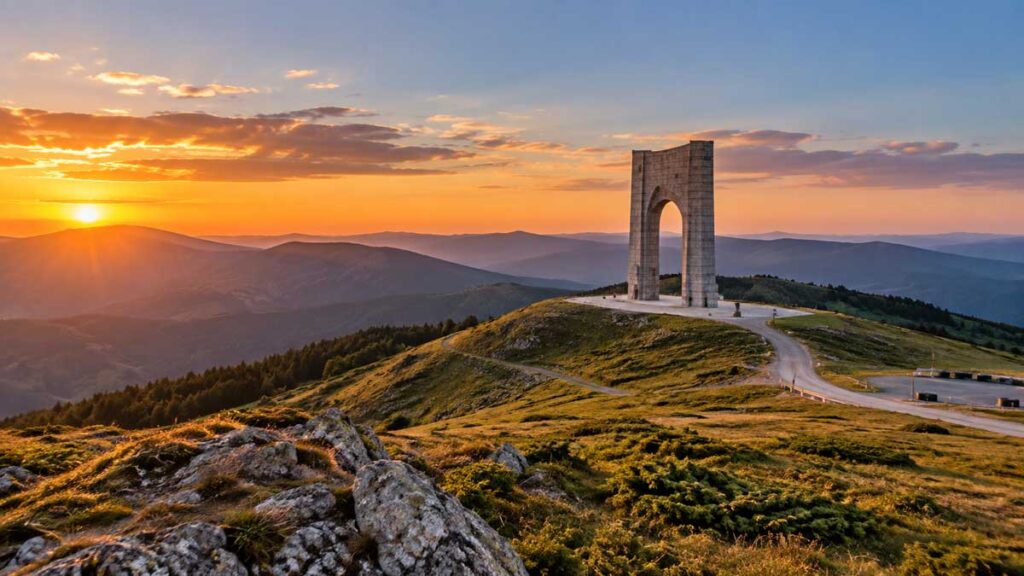
High in the Balkan Mountains, Beklemeto Pass opens onto some of the widest mountain views in central Bulgaria. Also known as the Troyan Pass, the road climbs between Troyan and Karnare, crossing the Balkan range through a landscape of open ridges, forests, and distant peaks.
One of the most recognizable landmarks here is the Arch of Freedom, which stands high above the pass. Reaching the monument brings you to an exposed mountain ridge where the landscape unfolds in almost every direction.
On a clear day, layer after layer of mountains seems to fade into the horizon. The scenery changes dramatically with the seasons — deep green slopes in summer, warm colors in autumn, and snow-covered ridges during winter.
Part of Beklemeto’s appeal is the journey itself. The winding mountain road gradually climbs away from the towns below, with viewpoints appearing as you gain elevation. Rather than arriving at one single attraction, you experience the landscape throughout the drive.
Weather can change quickly at this elevation, and winter conditions can make the pass far more challenging, so it’s worth checking road and weather conditions before setting out during the colder months.
Beklemeto is a fitting final stop on this list because there is no single lake, waterfall, fortress, or cave demanding your attention. The landscape itself is the attraction. Stand high above the pass with the Balkan Mountains stretching toward the horizon, and Bulgaria suddenly feels much larger and wilder than it appears on a map.
If you prefer quieter alternatives, discover these underrated destinations in Bulgaria that deserve more attention in 2027.
Best Time to Visit These Stunning Places in Bulgaria
There isn’t one perfect month for seeing every place on this list. Bulgaria’s high mountains, waterfalls, caves, historic sites, and Black Sea coast all have different seasons when they are at their best. For a trip combining several regions, late May through June and September offer a particularly good balance of comfortable weather, green or colorful landscapes, and fewer peak-summer crowds.
Spring: April to June
Spring is one of the best times to see Bulgaria at its greenest. Forests come back to life, wildflowers begin appearing, and waterfalls generally benefit from seasonal rainfall and mountain snowmelt.
This can be an especially rewarding period for Krushuna Waterfalls, Vrachanski Balkan, and Raysko Praskalo, although conditions vary from year to year.
Higher mountain areas are a different story. Snow can remain on trails in the Rila and Pirin Mountains well into spring, so don’t assume that warm weather in Sofia or Plovdiv means summer hiking conditions at higher elevations.
Summer: July and August
Summer provides the most reliable period for exploring Bulgaria’s high mountains. This is prime season for hiking around the Seven Rila Lakes and in Pirin National Park, when high-altitude trails are generally at their most accessible.
It’s also the busiest period at many of Bulgaria’s major attractions. Starting early can make a noticeable difference at popular destinations, particularly on weekends.
For places such as Melnik, Belogradchik, and Tsarevets, midday temperatures can become hot. Morning and later-afternoon visits are often more comfortable.
Autumn: September and October
September is one of the best all-around months for traveling through Bulgaria. The weather can still be pleasant, high-mountain hiking may remain possible early in the season, and the busiest summer travel period has passed.
As autumn progresses, forests throughout the Rhodope and Balkan Mountains begin changing color. Places such as the Wonderful Bridges, Kovachevitsa, Vrachanski Balkan, and Beklemeto can look completely different surrounded by autumn foliage.
Days become shorter and mountain weather increasingly unpredictable later in the season, so flexibility becomes more important by October.
Winter: December to March
Winter transforms many of these destinations, but it also requires the most planning. Snow can turn the Rila, Pirin, Rhodopes, and Balkan Mountains into spectacular landscapes while making hiking trails and mountain roads considerably more difficult.
Some destinations remain possible to visit during winter, while others may be affected by snow, ice, road conditions, seasonal access, or reduced hours.
If you’re traveling through Bulgaria in winter, check local conditions before heading toward places such as Beklemeto Pass, the Seven Rila Lakes, or high-elevation areas of Pirin National Park.
For most first-time visitors hoping to experience several of the places on this list in one trip, June or September would be my first choices. Both months give you a realistic chance to combine mountains, villages, historic landmarks, caves, and road-trip scenery without building the entire itinerary around the extremes of summer heat or winter weather.
If you prefer quieter alternatives, discover these underrated destinations in Bulgaria that deserve more attention in 2026.
Travel Tips for Visiting These Places in Bulgaria

Seeing several of these destinations on one trip is completely realistic, but a little planning makes a big difference. Bulgaria isn’t a huge country, yet mountain roads, winding passes, and rural routes can make driving times longer than the distance on a map might suggest.
Consider Renting a Car
A car gives you considerably more freedom once you begin exploring beyond Bulgaria’s major cities. If you’re planning a road trip through Bulgaria, places such as Kovachevitsa, Krushuna Waterfalls, Cape Kaliakra, the Wonderful Bridges, and Beklemeto Pass are much easier to combine when you aren’t dependent on public transportation.
You don’t necessarily need a car for your entire trip. If you’re spending several days in Sofia, Plovdiv, or another major city first, renting one only for the road-trip portion can make more sense.
Don’t Underestimate Driving Times
A destination that looks close on the map may involve mountain passes, narrow roads, or slower rural sections. Avoid packing too many places into a single day simply because the distances appear short.
Building extra time into your itinerary also gives you room to stop at viewpoints, villages, roadside restaurants, and unexpected places along the way — often some of the best parts of a Bulgarian road trip.
Bring Proper Shoes
Not every destination on this list requires serious hiking boots, but comfortable shoes with reliable grip are a good idea.
The Seven Rila Lakes, Raysko Praskalo, Pirin National Park, Uhlovitsa Cave, and several other locations involve trails, uneven surfaces, steep sections, or steps. Conditions can also become slippery after rain.
Start Popular Places Early
Some of Bulgaria’s best-known attractions become noticeably busier during summer weekends and holidays. Starting early gives you cooler temperatures, easier parking in some locations, and more time to explore without rushing.
This is particularly useful for places such as the Seven Rila Lakes and Tsarevets Fortress during the main travel season.
Check Conditions Before Heading Into the Mountains
Weather at higher elevations can be very different from conditions in the nearest town. Clouds, wind, rain, and temperature changes can arrive quickly in the Rila, Pirin, Rhodope, and Balkan Mountains.
Check the forecast before longer hikes and don’t rely entirely on what the weather looks like when you leave your hotel.
Carry Some Cash
Cards are widely accepted in Bulgaria, but carrying a small amount of cash is still useful in villages, mountain areas, small parking lots, and places with modest entrance fees.
Leave Space for Unplanned Stops
One of the easiest mistakes to make on a Bulgaria road trip is scheduling every hour. Some of the country’s most memorable moments aren’t necessarily major attractions — they might be a mountain viewpoint, an old village you hadn’t planned to visit, or a roadside stop overlooking a valley.
Give yourself enough flexibility to stop when something catches your eye. In a country with this much variety packed into relatively short distances, it probably will.
Is Bulgaria Worth Visiting for Nature Lovers?
Yes — especially if you enjoy mountains, hiking, waterfalls, caves, forests, and road trips. Bulgaria’s real advantage is the amount of variety you can experience without crossing enormous distances.
The Rila and Pirin Mountains offer high-altitude trails and glacial lakes, while the Rhodope Mountains are known for forests, caves, rock formations, and traditional mountain villages. Farther north, the Balkan Mountains provide waterfalls, limestone cliffs, panoramic passes, and some of the country’s wildest scenery.
Then there is the Black Sea coast, where the landscape changes again. Beyond the busy resort areas, you’ll find rocky headlands such as Cape Kaliakra, coastal nature areas, wetlands, and quieter stretches of shoreline.
Bulgaria also works well for travelers who want nature without spending an entire vacation on difficult hikes. Some places require a real mountain trek, such as Raysko Praskalo, while others can be experienced with relatively short walks or scenic drives.
That combination is one of Bulgaria’s biggest strengths. You can hike beside alpine lakes one day, explore a cave or waterfall the next, wander through a centuries-old mountain village, and finish the trip beside the Black Sea.
For nature lovers who also enjoy history, traditional architecture, and road trips, Bulgaria offers far more variety than its size might suggest.
Frequently Asked Questions About Stunning Places in Bulgaria
What Is the Most Beautiful Place in Bulgaria?
There isn’t one definitive answer, but the Seven Rila Lakes are among Bulgaria’s most recognizable natural landscapes. For dramatic rock formations, Belogradchik is difficult to beat, while Pirin National Park offers some of the country’s finest high-mountain scenery. The best choice really depends on whether you prefer lakes, mountains, villages, waterfalls, or the coast.
What Are the Best Hidden Gems in Bulgaria?
If you want to go beyond Bulgaria’s headline attractions, Kovachevitsa, Uhlovitsa Cave, Vrachanski Balkan, and Beklemeto Pass are good places to start. The Rhodope Mountains are particularly rewarding if you have a car and enough time to explore smaller villages and mountain roads along the way.
What Natural Wonders Should I See in Bulgaria?
The Seven Rila Lakes, Belogradchik Rocks, Prohodna Cave, Melnik Earth Pyramids, Wonderful Bridges, Krushuna Waterfalls, and Raysko Praskalo are excellent places to start. Together, they show just how varied Bulgaria’s landscapes can be.
What Is the Best Mountain Region to Visit in Bulgaria?
It depends on the experience you’re looking for. Rila is famous for its glacial lakes and high peaks, Pirin offers rugged alpine hiking, the Rhodope Mountains combine forests, caves, villages, and unusual rock formations, while the Balkan Mountains are excellent for waterfalls, panoramic ridges, and scenic drives.
Can You Visit These Places Without a Car?
Some can be reached using public transportation, organized excursions, or a combination of buses and taxis, but a car makes it considerably easier to explore several destinations on the same trip. This is particularly true for rural areas, mountain villages, and places where public transportation is limited.
How Many Days Do You Need to Explore Bulgaria?
For a first trip, 7 to 10 days gives you enough time to combine several regions without rushing constantly. With two weeks, you can build a much broader road trip incorporating mountains, historic towns, villages, and the Black Sea coast. Trying to visit all 15 places in a single short trip would mean spending too much time driving.
What Is the Best Time of Year to See Bulgaria’s Natural Beauty?
Late spring through early autumn offers the greatest flexibility. June is excellent for green landscapes and longer days, July and August are best suited to high-mountain hiking, and September combines pleasant temperatures with fewer peak-season crowds. Waterfalls, mountain roads, and high-altitude trails can all be strongly affected by seasonal conditions.
Is Bulgaria Expensive to Travel Around?
Bulgaria can still offer good value compared with many heavily visited European destinations, but costs vary considerably by location, season, accommodation type, and travel style. Mountain resorts and Black Sea destinations can become more expensive during their busiest seasons, while smaller towns and rural areas may cost considerably less.
You May Also Like
Ready to see more of Bulgaria? Continue planning your trip with these guides:
- Top Places to Visit in Bulgaria — Discover more cities, mountain destinations, historic landmarks, and natural attractions worth adding to your itinerary.
- 25 Best Waterfalls in Bulgaria — Explore spectacular waterfalls hidden throughout Bulgaria’s mountains, forests, and valleys.
- Best Beaches in Bulgaria — Find beautiful places to swim, relax, and explore along the Black Sea coast.
- The Bulgarian Riviera: Top Beaches to Visit — Follow Bulgaria’s coastline through beaches, seaside towns, and scenic Black Sea stops.
- Best Time to Visit Bulgaria — Compare the seasons and choose the right time for mountains, sightseeing, beaches, road trips, and outdoor adventures.
Ready to Discover Bulgaria’s Most Stunning Places?
The most memorable stunning places in Bulgaria aren’t all impressive for the same reason. Some overwhelm you with scale, like the cliffs of Belogradchik or the peaks of Pirin. Others are quieter — a stone lane in Kovachevitsa, sunlight entering Prohodna Cave, or layers of mountain ridges disappearing beyond Beklemeto Pass.
That’s what makes exploring Bulgaria so rewarding. The landscape can change dramatically within a relatively short distance, and history is rarely far away. A road trip can take you from glacial lakes and waterfalls to medieval fortresses, mountain villages, caves, and the Black Sea coast.
You don’t need to see all 15 places in a single trip. Choose a region, give yourself enough time to explore it properly, and leave some room for places you didn’t originally plan to find.
Because in Bulgaria, some of the views that stay with you longest are often the ones you weren’t expecting.
Which Stunning Place in Bulgaria Is Your Favorite?
Have you visited any of these stunning places in Bulgaria, or is there another mountain, village, waterfall, cave, or viewpoint you think deserves a place on the list?
Share your favorite in the comments. And if you’re exploring Bulgaria, tag @stunningbulgaria on Instagram and use #stunningbulgaria so we can see where your adventures take you.