Some places are difficult to describe with words alone. Bulgaria is one of them. From wild Black Sea beaches and high mountain lakes to centuries-old monasteries, colorful Revival towns, waterfalls, rock formations, and endless fields of roses and lavender, the country can look completely different from one region to the next.
I started Stunning Bulgaria to share that side of the country with more people. Through this website and @stunningbulgaria on Instagram, I want to show travelers how much there is to discover beyond the places they may already know.
Bulgaria is also a country where history and nature are rarely far apart. You can walk through the cobbled streets of an ancient city in the morning, hike in the mountains in the afternoon, or spend the day exploring quiet villages, monasteries, caves, waterfalls, and the Black Sea coast.
The photos of Bulgaria below capture just a small part of that variety. Some show famous landmarks, while others reveal landscapes and corners of the country that international travelers may never have heard of.
If Bulgaria isn’t already on your travel list, these 25 photos might change that.
Photos of Bulgaria That Will Make You Want to Visit
Bulgaria packs an extraordinary range of scenery into a relatively small country. The following Bulgaria photos take us from the Black Sea coast to the Rhodope, Rila, and Balkan Mountains, with stops at historic towns, natural landmarks, and places closely connected with Bulgarian culture.
Get to know your motherland and you will fall in love with it!
Aleko Konstantinov
Rather than simply looking at beautiful scenery, you’ll also find a little background about each location and why it deserves a place on your Bulgaria itinerary.
Also Read: 10 Reasons Why Visit Bulgaria
1. Bolata Beach
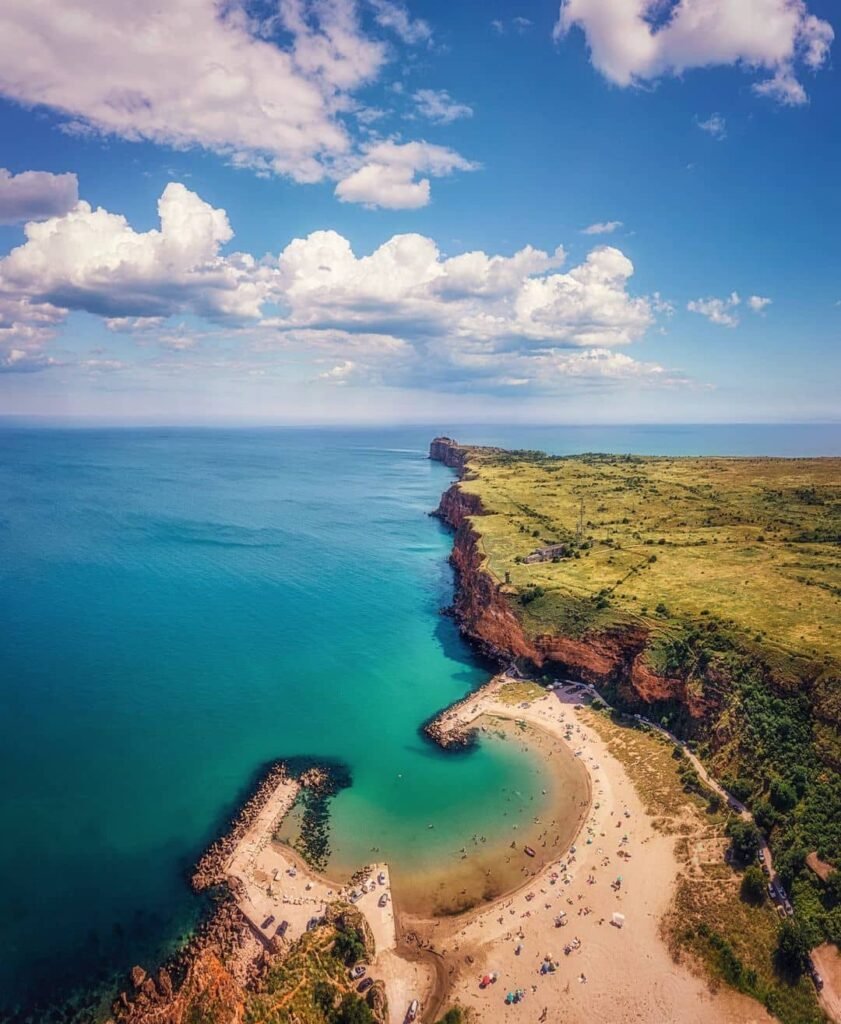
© Instagram | @peter_naydenov_pierre
Tucked between the cliffs of Bulgaria’s northern Black Sea coast, Bolata Beach is instantly recognizable for its small horseshoe-shaped bay and calm blue water. The beach lies near the village of Bulgarevo and Cape Kaliakra, making it an easy place to combine with several other sights in this part of the coast.
Bolata is especially photogenic because of the contrast between the sandy beach, blue water, and reddish cliffs surrounding the bay. A short climb above the beach opens up a beautiful view over the entire cove and the Black Sea beyond it.
Bolata is relatively small, so summer weekends can become busy. Visiting early in the morning or outside the peak July and August period gives you a better chance to experience its more peaceful side.
The surrounding coastline is also known for its wildlife and dramatic landscapes, a very different experience from Bulgaria’s larger Black Sea resorts.
Also Read: Best Beaches in Bulgaria for Summer Travelers
2. Shabla
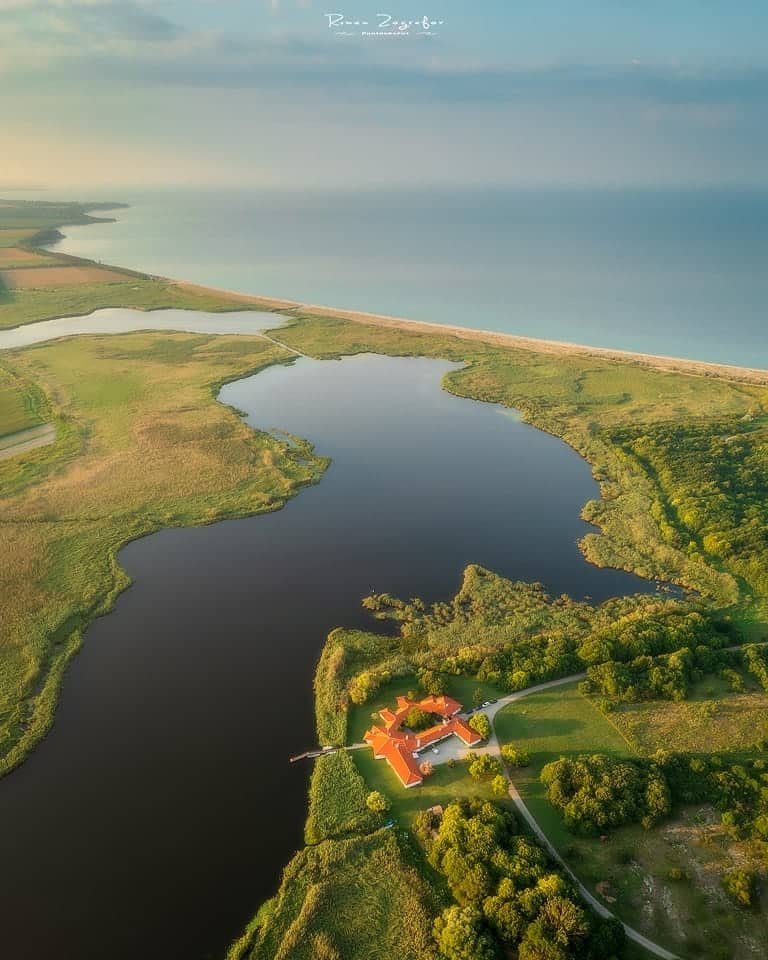
© Instagram | @rumen_zografov
Far from the busy resorts of Bulgaria’s southern Black Sea coast, Shabla offers a quieter and wilder seaside landscape. The small town is located in northeastern Bulgaria, while the coast and its long stretches of sand lie only a few kilometers away.
Near the coast stands the Shabla Lighthouse, at Cape Shabla close to Bulgaria’s easternmost point. The red-and-white lighthouse has guided ships along this part of the Black Sea coast since the 19th century and remains an impressive sight against the open sea.
Nature is another reason to explore the area. Shabla Lake and the nearby coastal wetlands provide important habitats for numerous bird species, especially during migration periods. Combined with the beaches, dunes, farmland, and open horizons, they give this corner of Bulgaria a character quite different from the country’s developed seaside resorts.
Shabla is the kind of place to visit when you want to see the more natural side of the Bulgarian Black Sea coast.
3. Veleka Beach, Sinemorets

© Instagram | @alevchukbg
Few photos of Bulgaria capture the wild character of the southern Black Sea coast as well as Veleka Beach near Sinemorets. Here, the Veleka River curves behind a long strip of sand before reaching the Black Sea, creating one of the country’s most distinctive coastal landscapes.
The beach lies just north of Sinemorets, a small seaside village in southeastern Bulgaria near the Turkish border. Unlike the heavily developed resorts farther north, this part of the coast is surrounded by the forests and protected landscapes of Strandzha Nature Park.
For the classic view, head to the cliffs overlooking the northern end of the beach. From above, you can see the blue Black Sea on one side of the sandbar and the calmer Veleka River on the other.
The river adds another dimension to a visit. Boat trips travel upstream through dense vegetation and quiet stretches of water, offering a chance to experience the area’s wildlife and scenery away from the beach.
Veleka Beach is beautiful at ground level, but seeing its unusual shape from the cliffs is what makes this corner of Bulgaria unforgettable.
Also Read: Best Beaches in Bulgaria for Summer Travelers
4. Old Plovdiv
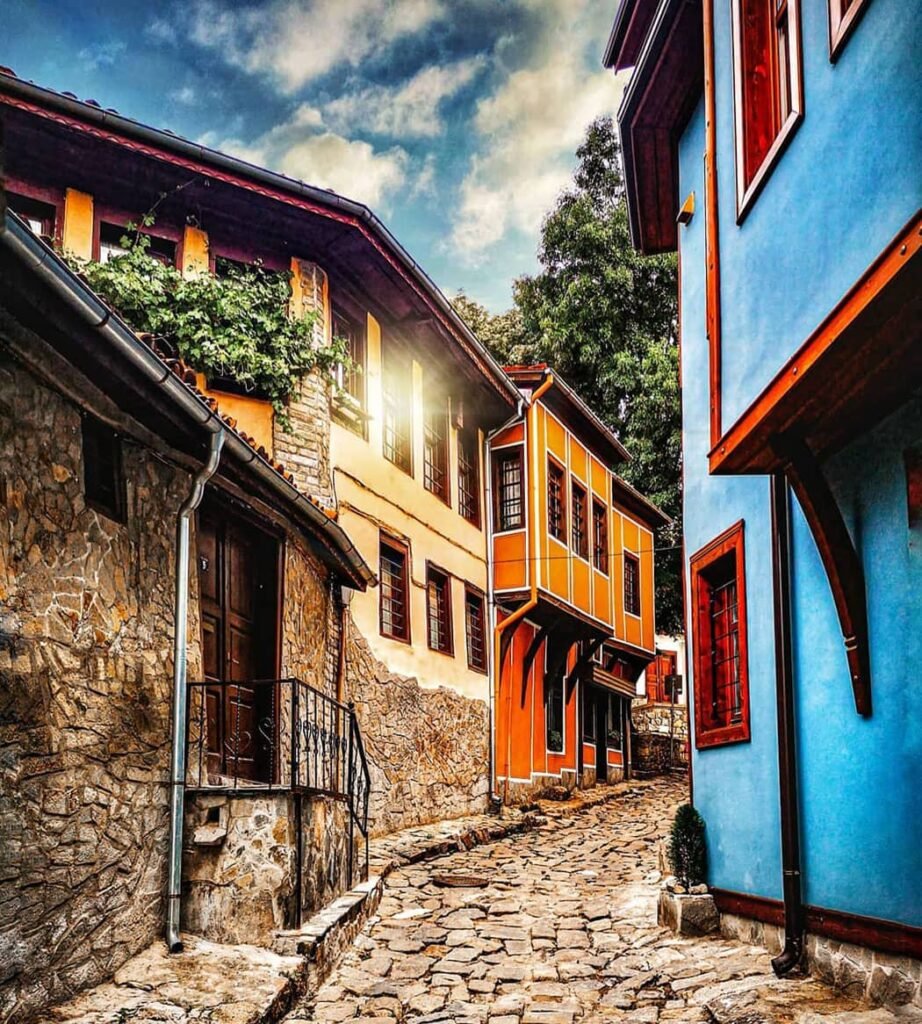
© Instagram | @dlikedisaster
With cobbled streets, colorful Bulgarian Revival houses, Roman ruins, and views from its hills, Plovdiv is easily one of the most photogenic cities in Bulgaria. It is also among Europe’s oldest continuously inhabited cities, with archaeological evidence of settlement stretching back thousands of years.
The historic Old Town of Plovdiv spreads across three of the city’s hills. Walking through it feels very different from exploring a typical modern city center. Narrow stone streets lead past beautifully preserved 18th- and 19th-century houses, small museums, galleries, churches, and quiet courtyards.
The Ancient Theatre of Philippopolis, built during the Roman period, is still used for concerts and performances today. Elsewhere in the city, remains of the Roman Stadium can be seen directly beneath the modern pedestrian center.
Plovdiv isn’t frozen in the past, either. The nearby Kapana Creative District is filled with cafés, restaurants, galleries, workshops, and colorful streets that give the city a completely different atmosphere.
In 2019, Plovdiv became the first Bulgarian city to hold the title of European Capital of Culture, sharing the designation that year with Matera, Italy.
If you’re traveling through Bulgaria, give Plovdiv enough time to wander rather than treating it as a quick photo stop. Much of its charm is found between the major landmarks.
5. Rhodope Mountains
© Instagram | @alevchukbg
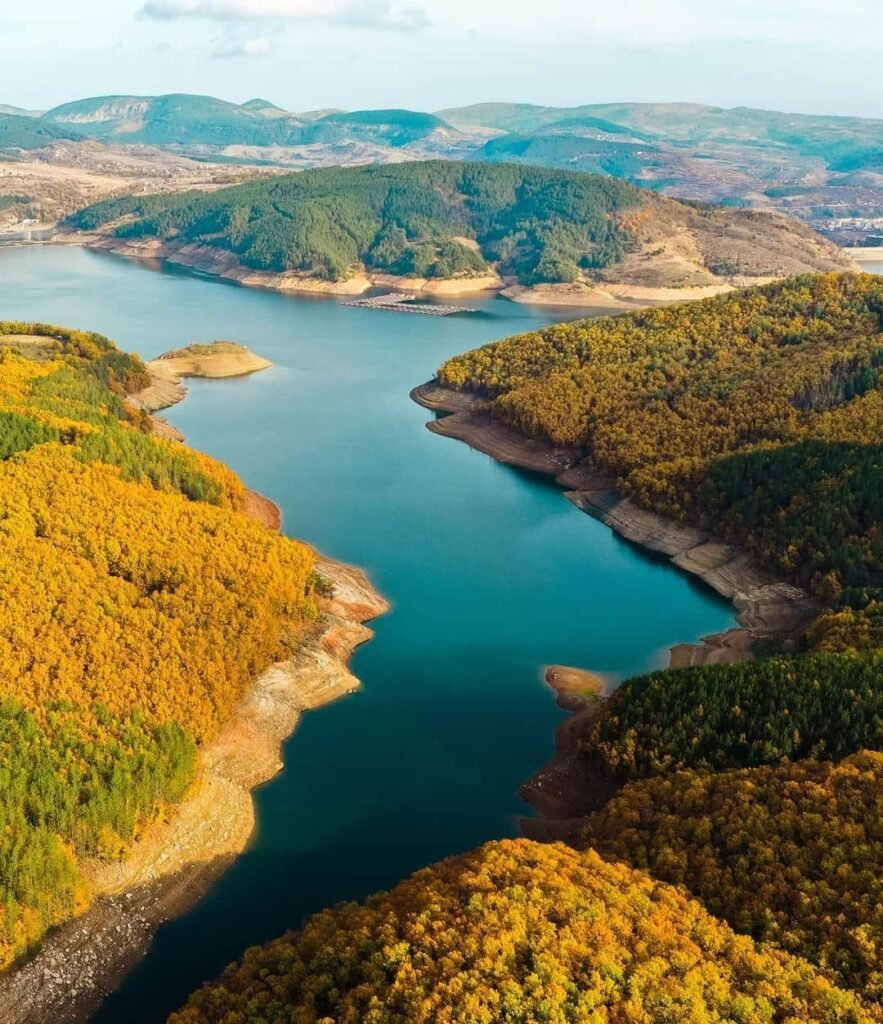
Rolling green ridges, deep river valleys, pine forests, traditional villages, and rocky peaks make the Rhodope Mountains one of Bulgaria’s most atmospheric regions. Most of the mountain range lies in southern Bulgaria, with the remainder extending across the border into Greece.
The Rhodopes feel different from the sharper alpine landscapes of Rila and Pirin. Here, roads wind slowly through forests and valleys, connecting small mountain towns and villages where stone houses and traditional architecture are still part of the landscape.
The mountains are also closely connected with Thracian history and legends. Ancient sanctuaries and archaeological sites such as Perperikon, Tatul, and Belintash are scattered throughout the region, adding another layer to a trip through the Rhodopes.
Some of Bulgaria’s most memorable natural attractions are here as well, including caves, gorges, waterfalls, reservoirs, and panoramic viewpoints. The region is also known for its distinctive folklore, music, and traditional cuisine.
For travelers who enjoy taking the slower road, stopping in small villages and discovering places away from Bulgaria’s busiest tourist routes, the Rhodopes could easily fill several days of a trip.
6. Rila Monastery and the Rilska River Valley

© Instagram | @rumen_zografov
Surrounded by forested mountains in the Rilska River Valley, Rila Monastery is a place where Bulgaria’s history and natural scenery come together. Its striped arches, colorful frescoes, stone walls, and mountain backdrop make it one of the most recognizable sights in the country.
The monastery traces its origins to the 10th century and is closely connected with St. Ivan of Rila (St. John of Rila), Bulgaria’s patron saint. Over the centuries, the complex was rebuilt and expanded, becoming an important spiritual, cultural, and educational center.
Much of what visitors see today dates from the Bulgarian National Revival period. Inside the fortified walls, the richly decorated Church of the Nativity of the Virgin, the medieval Hrelyo’s Tower, wooden balconies, arches, and extensive frescoes create an extraordinary architectural ensemble.
Rila Monastery was added to the UNESCO World Heritage List in 1983, recognizing its exceptional importance to Bulgarian history and culture.
Don’t limit your visit to the monastery courtyard. The surrounding Rila Mountains are part of the experience, with forests, rivers, hiking trails, and mountain scenery beginning almost immediately outside the complex.
Also Read: 20 Fascinating Facts About Rila Monastery
7. Sofia
© Instagram | @giannis_bek1
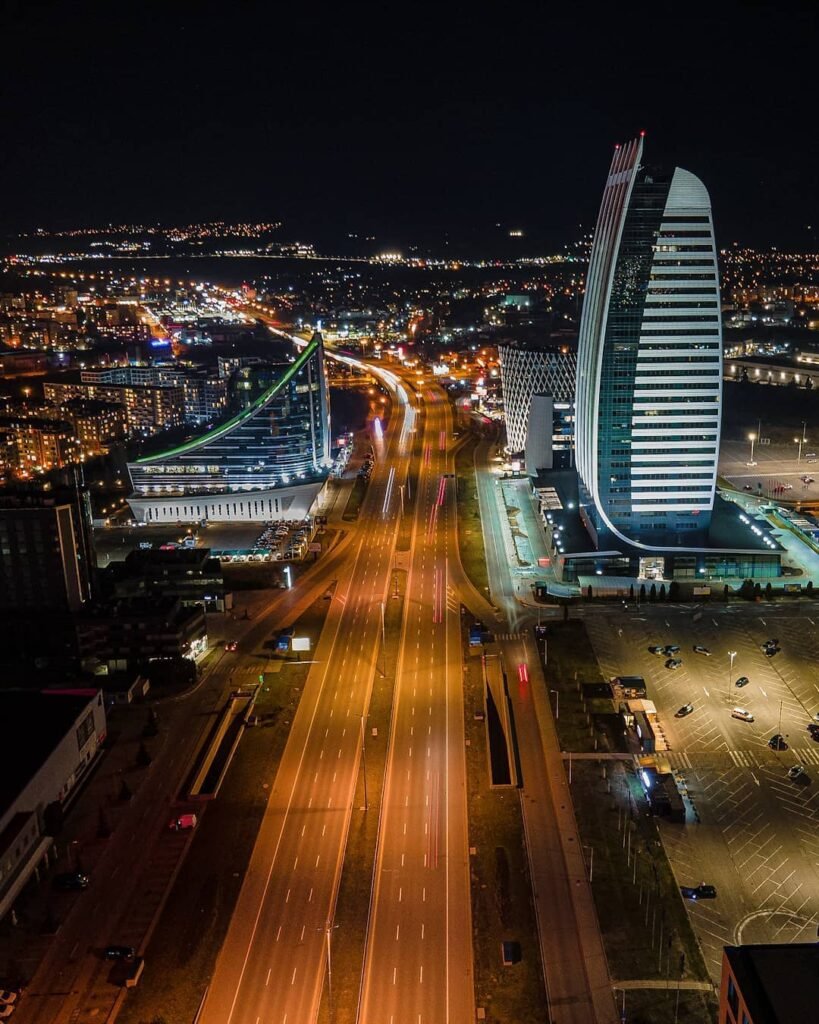
Bulgaria’s capital is a city where different periods of history sit surprisingly close together. In central Sofia, you can walk from Roman ruins to medieval churches, Ottoman-era buildings and grand early-20th-century architecture within a matter of minutes.
The city’s best-known landmark is the Alexander Nevsky Cathedral, whose golden domes dominate the skyline around the historic center. Nearby are the ancient Church of St. Sophia, the National Assembly, the Russian Church, and several of Sofia’s major museums and galleries.
One of the most interesting places to see the city’s layers of history is around the Serdica archaeological complex, where remains of the ancient Roman city are displayed beside modern streets and metro entrances.
Sofia also has a connection with mineral water stretching back centuries. Locals still collect warm mineral water from public fountains near the former Central Mineral Baths, one of the city’s most distinctive buildings.
And unlike many European capitals, Sofia has a mountain rising directly behind it. Vitosha Mountain provides a dramatic mountain backdrop and gives visitors access to hiking, viewpoints, waterfalls, and winter activities without traveling far from the city.
Sofia deserves more than being treated simply as the place where your flight lands. Give it a day or two and you’ll discover a capital with a character very different from Europe’s more heavily visited cities.
8. Zlatograd
© Instagram | @dlikedisaster
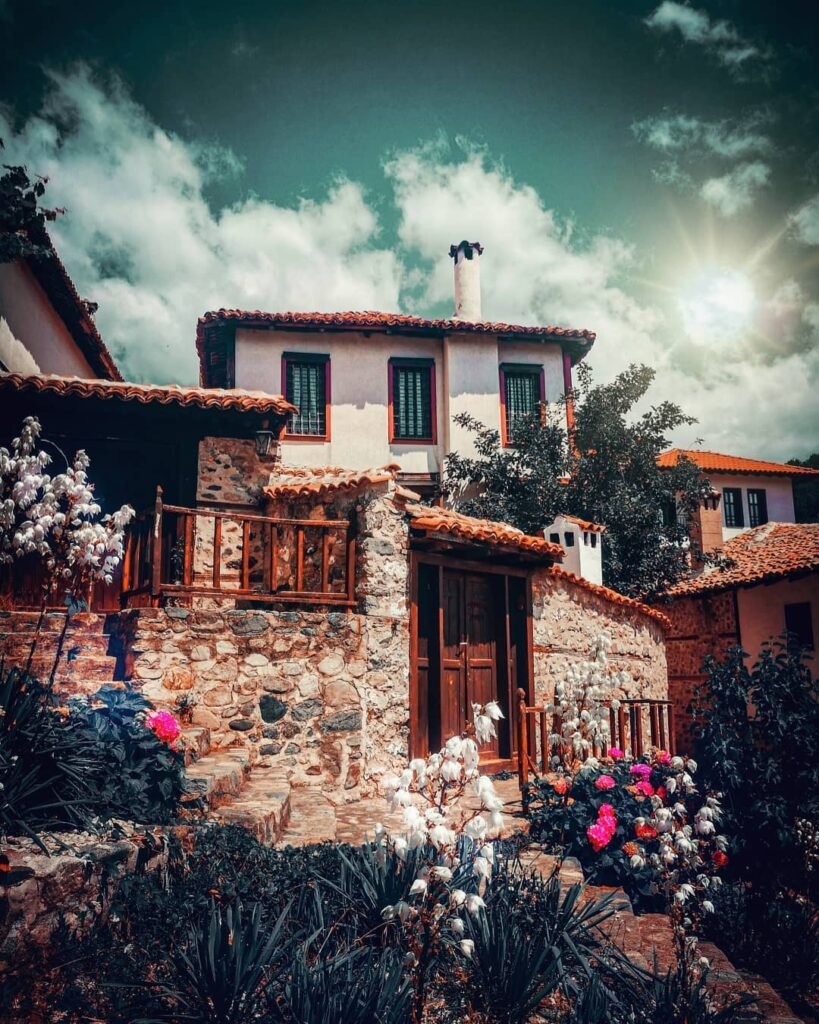
Near Bulgaria’s southern border with Greece, Zlatograd is a small Rhodope town where traditional architecture has been carefully preserved alongside everyday modern life. Whitewashed houses with dark wooden beams, stone walls, tiled roofs, and narrow streets give its historic quarter a distinctive appearance.
The highlight is the Zlatograd Ethnographic Areal Complex, an open-air cultural area created within the old part of town. Rather than functioning as a single museum building, the complex spreads through historic streets where visitors can see traditional craft workshops, restored houses, ethnographic collections, and old water-powered equipment.
Artisans continue to demonstrate crafts associated with the region, adding life to buildings that might otherwise feel like static museum exhibits. Small cafés and restaurants also make it easy to spend a few hours wandering rather than rushing from one attraction to another.
The surrounding mountains are an important part of the experience. Zlatograd sits among the rolling landscapes of the Rhodope Mountains, an area known for its villages, folklore, distinctive cuisine, archaeological sites, and winding mountain roads.
It may not appear on every first-time Bulgaria itinerary, but that’s part of its appeal. Zlatograd reveals a quieter side of the country that travelers can easily miss when concentrating only on Sofia, Plovdiv, and the Black Sea coast.
9. Lavender Fields near Dobrich
© Instagram | @sviretsov_photography
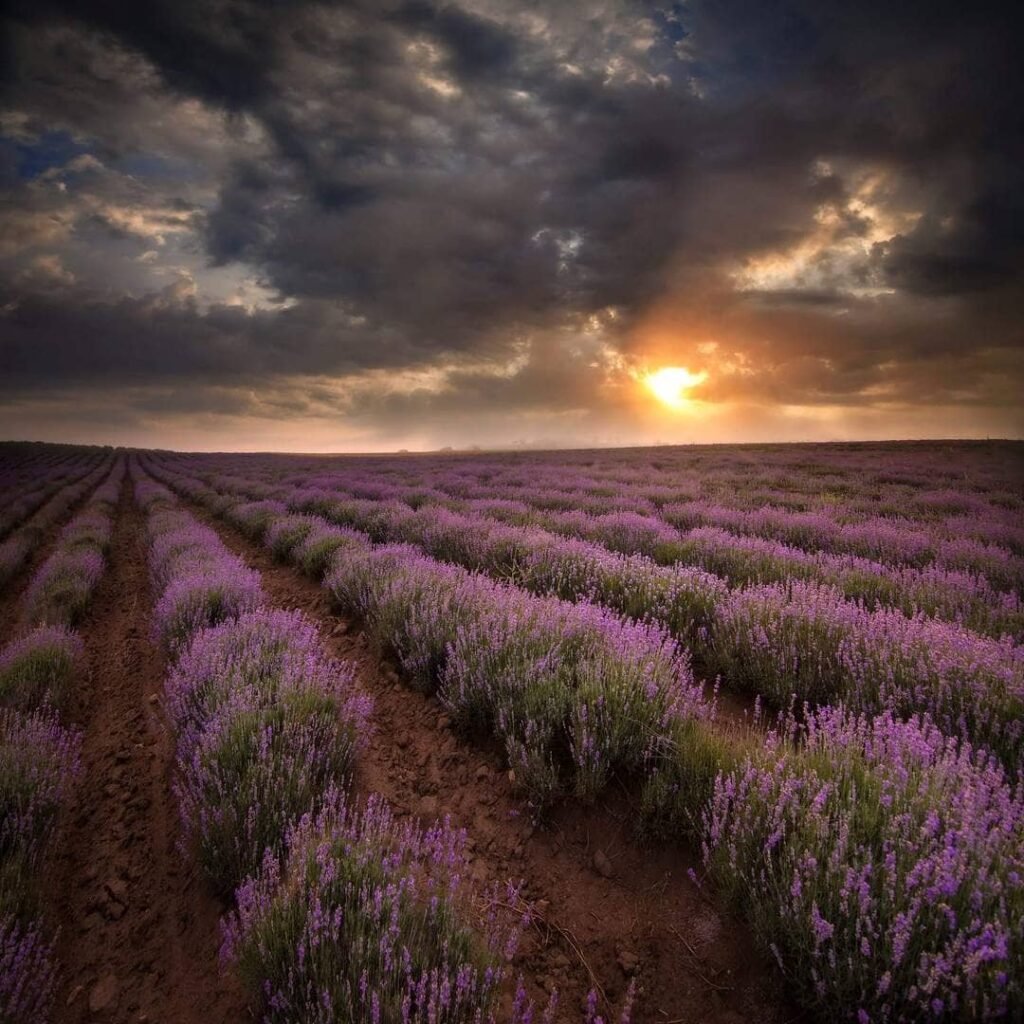
For a few weeks each summer, parts of northeastern Bulgaria are transformed by rows of flowering lavender stretching across the countryside. The fields around Dobrich and the wider Dobrudzha region have become particularly popular with photographers, especially when the plants reach their deepest shades of purple.
Bulgaria became the world’s leading producer of lavender oil, overtaking France, a country traditionally associated with lavender cultivation. Research into Bulgaria’s rapidly expanding lavender industry has documented the country’s rise as a major producer of high-quality lavender essential oil. The dry, sunny conditions of northeastern Bulgaria are particularly well suited to the crop, and large lavender fields can now be found throughout the Dobrudzha region.
The most beautiful time to see them is generally around late June and July, although flowering and harvesting dates vary from year to year depending on the weather and location.
If you stop to photograph a lavender field, remember that these are working farms rather than tourist attractions. Avoid walking between the rows without permission, damaging plants, or entering private property simply to get a photograph.
Lavender season reveals another side of Bulgaria’s landscape. The endless purple rows, open skies, and agricultural landscape of Dobrudzha look completely different from the mountains and Black Sea beaches elsewhere in this collection.
10. Ivan Vazov National Theatre, Sofia
© Instagram | @petarbonevphoto
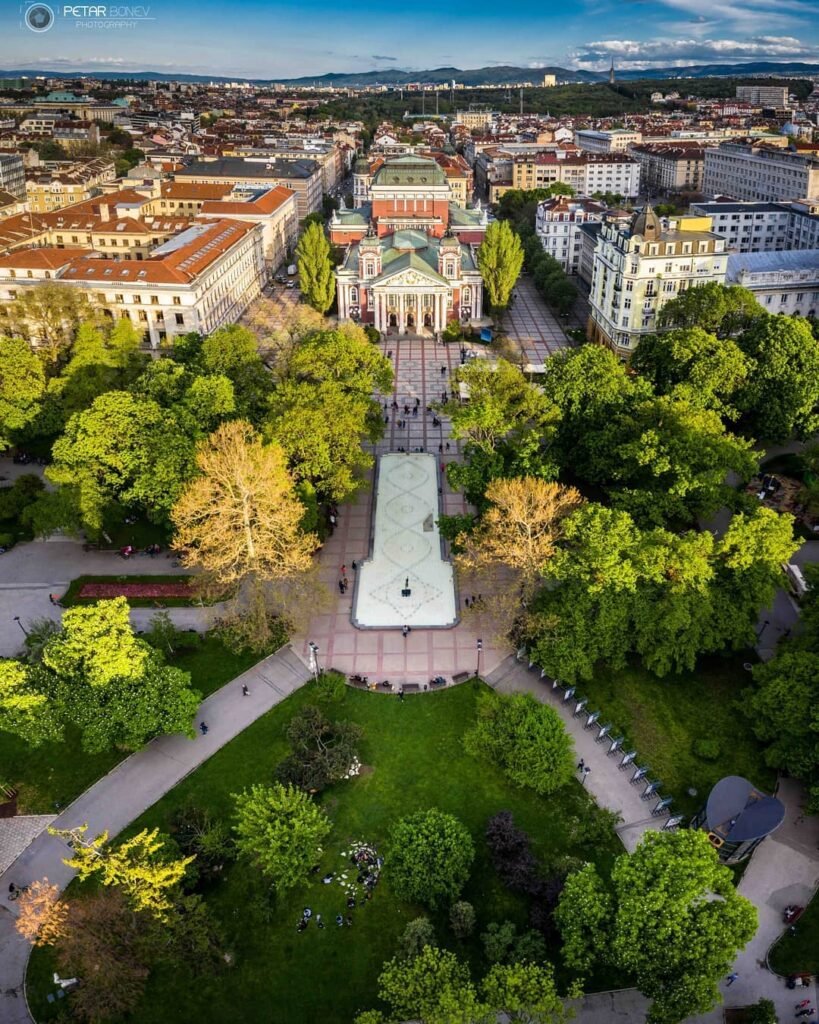
With its grand red-and-white façade, tall columns, and landscaped gardens, the Ivan Vazov National Theatre is one of the most elegant buildings in central Sofia. It stands beside City Garden, a popular meeting place just a short walk from many of the capital’s major landmarks.
The theatre opened in 1907 and takes its name from Ivan Vazov, one of Bulgaria’s most celebrated writers and the author of Under the Yoke. Its architecture and prominent location have made the building an enduring symbol of Bulgarian cultural life.
The front façade is the view most visitors recognize, with its six columns supporting a triangular pediment decorated with mythological figures. Fountains and gardens in front of the theatre make the area particularly photogenic during the warmer months.
City Garden itself is worth enjoying rather than simply crossing on the way to another attraction. Locals gather here to talk, play chess, listen to street musicians, or relax beneath the trees, giving this historic corner of Sofia a lively everyday atmosphere.
Come back after sunset as well. Illuminated at night, the theatre offers a completely different photograph and shows why Sofia’s architectural details deserve as much attention as its famous churches and ancient ruins.
11. Balkan Mountains (Stara Planina)

© Instagram | @k.n.madjarov
Stretching across Bulgaria from the Serbian border almost all the way to the Black Sea, the Balkan Mountains, known in Bulgarian as Stara Planina, form one of the country’s great natural backbones. The range runs for roughly 550 kilometers, ending near Cape Emine on the Black Sea coast.
The mountains gave their name to the Balkan Peninsula, but for Bulgarians, Stara Planina carries an importance that goes far beyond geography. Its mountain passes, villages, monasteries, and peaks are closely connected with the country’s history, folklore, and struggle for national liberation.
The highest point is Botev Peak at 2,376 meters, rising in the Central Balkan Mountains. This part of the range contains some particularly dramatic scenery, with steep slopes, forests, high meadows, rock formations, and waterfalls. It is also home to Raysko Praskalo, the highest permanent waterfall in Bulgaria and the Balkans at 124.5 meters.
Several famous hiking routes cross the mountains, including sections of the long-distance Kom–Emine trail, which follows the main ridge from western Bulgaria to the Black Sea.
For travelers, Stara Planina offers much more than a mountain panorama. Places such as Shipka Pass, Botev Peak, Central Balkan National Park, Apriltsi, Troyan, and the Iskar Gorge reveal completely different sides of the range.
Also Read: 25 Best Waterfalls in Bulgaria: A Complete Travel Guide
12. Fotinski Waterfalls
© Instagram | @kriso.ivanov.photography
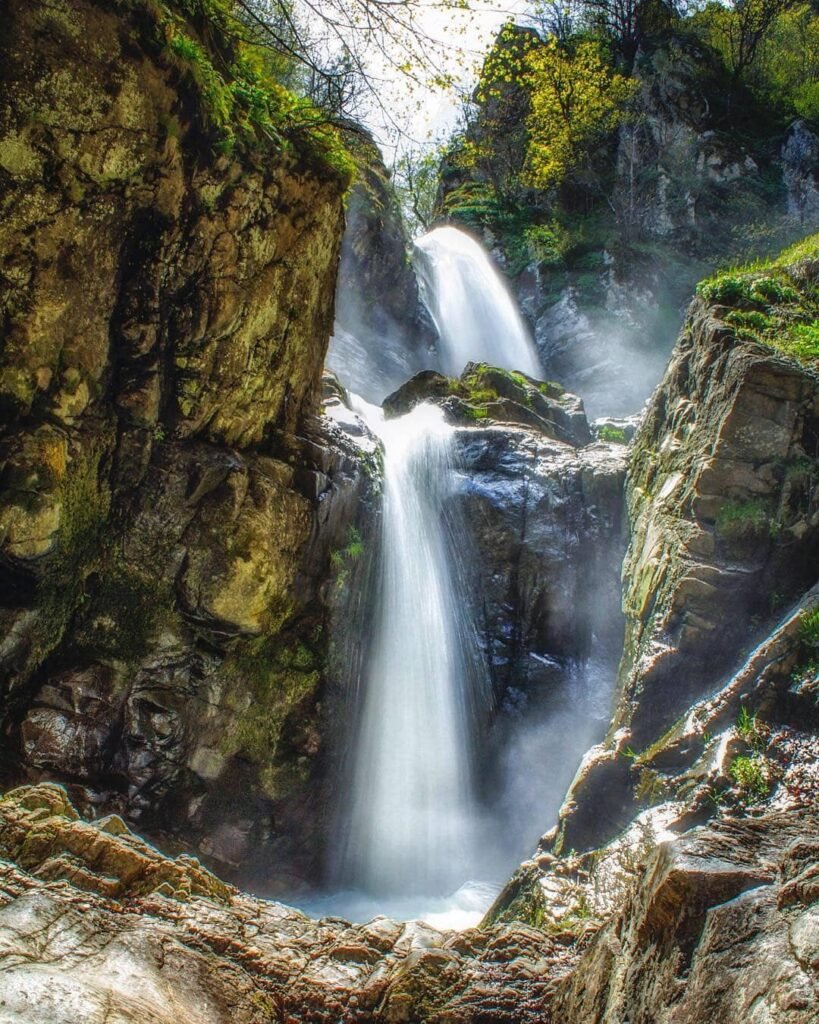
Hidden among the forests of the Western Rhodope Mountains, the Fotinski Waterfalls are a series of beautiful cascades near the village of Fotinovo. Reaching them requires a short hike through the mountain landscape, which makes the experience feel much more rewarding than simply stopping beside the road for a photograph.
The waterfalls are formed along the Fotinska River, where the water drops through a narrow rocky gorge surrounded by dense forest. Rather than a single fall, the site consists of three main waterfalls, with the largest reaching roughly 16–18 meters. Together, the cascades create one of the most picturesque waterfall settings in this part of the Rhodopes.
Spring and early summer are usually the most impressive times to visit, when snowmelt and seasonal rainfall bring stronger water flow. The surrounding forest also makes the area beautiful later in the year as the leaves begin to change.
The trail can become wet and slippery around the gorge, so sturdy footwear is a much better choice than sandals, particularly after rain.
Fotinski is a good example of why some of the most memorable photos of Bulgaria come from places beyond the country’s famous monuments and cities. Here, the attraction is simply the sound of rushing water, the forest, and the rugged scenery of the Rhodope Mountains.
Also Read: 25 Best Waterfalls in Bulgaria: A Complete Travel Guide
13. Lakatnik Rocks
© Instagram | @marriyast
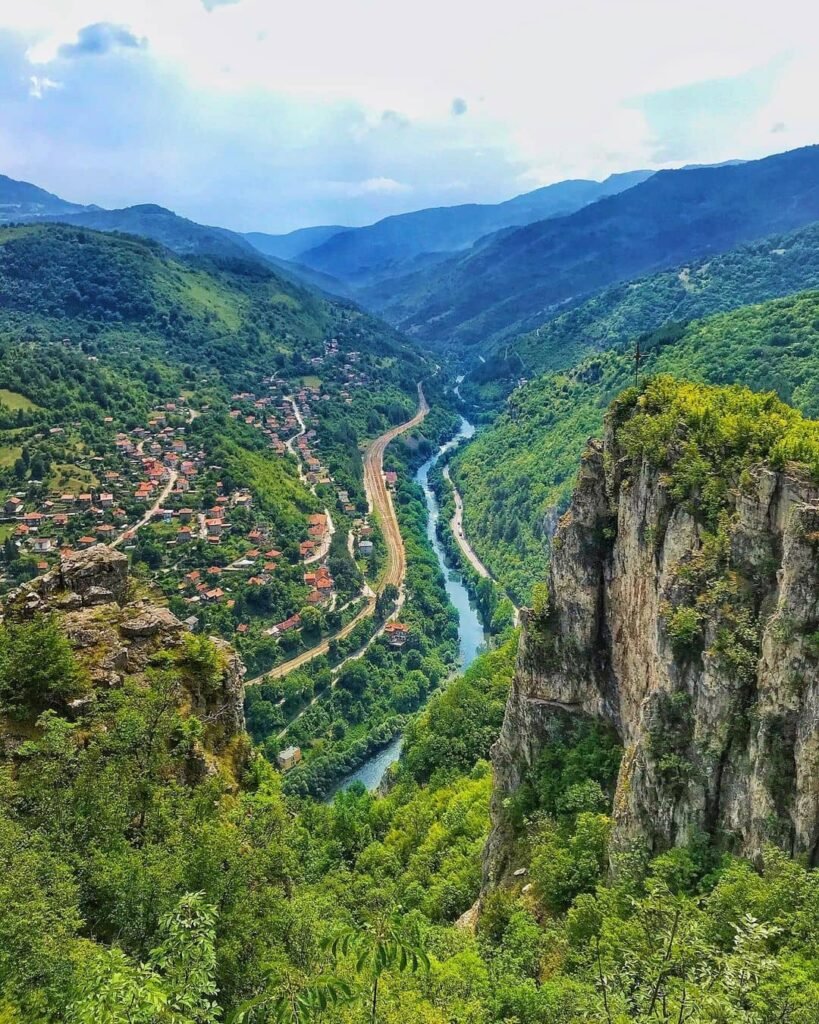
Rising dramatically above the Iskar Gorge, the Lakatnik Rocks are among the most impressive rock formations in the western Balkan Mountains. Their sheer limestone cliffs tower above the Iskar River and the railway connecting Sofia with northern Bulgaria, creating a landscape that feels surprisingly wild for somewhere so accessible from the capital.
The rocks are located near Gara Lakatnik, roughly 60 kilometers north of Sofia. Trails climb from the valley toward viewpoints high above the river, where you can look across the gorge, surrounding mountains, railway, and small settlements below.
Lakatnik has a long connection with rock climbing and mountaineering in Bulgaria. The steep cliffs contain numerous climbing routes, while hikers can explore caves, rock formations, and paths leading through the surrounding landscape.
High on the rock face you’ll even spot the tiny Alpine Shelter, while a monument and cross overlook the gorge nearby.
The train journey itself adds to the experience. The railway follows the winding Iskar River through the gorge, making Lakatnik an appealing nature escape for travelers visiting Sofia without a car.
From the viewpoints above the river, the scale of the Iskar Gorge becomes much easier to appreciate.
14. Belogradchik Rocks
© Instagram | @yordannedialkov
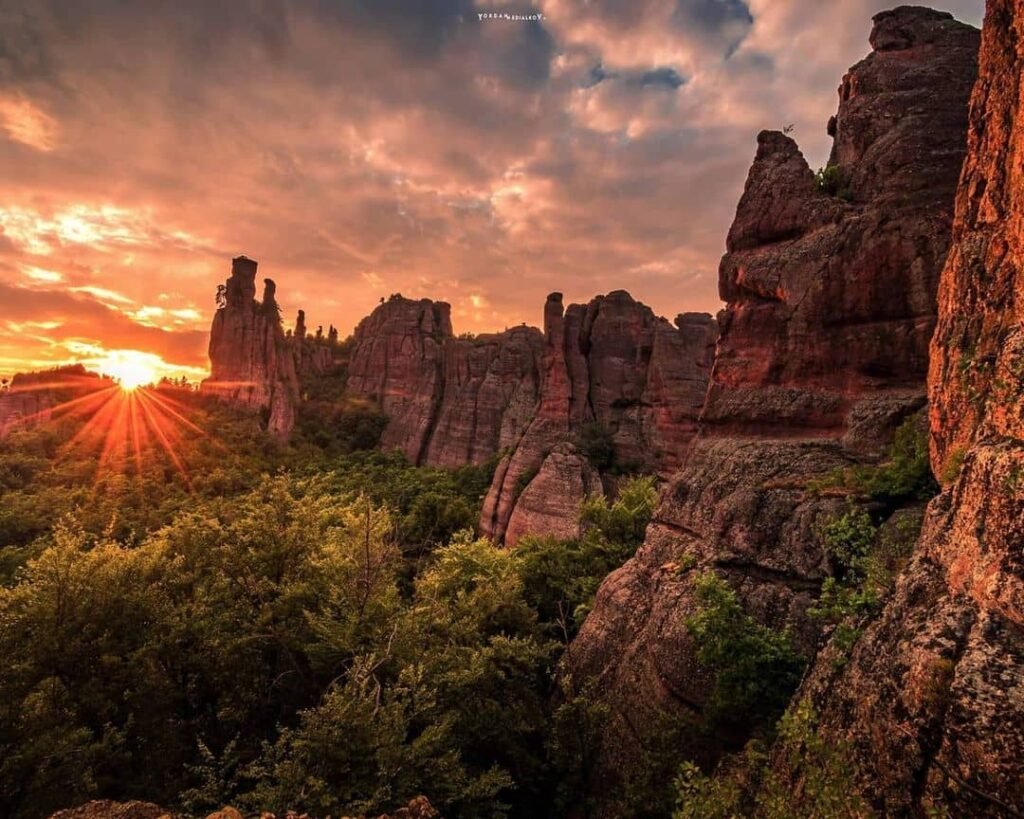
The Belogradchik Rocks are among Bulgaria’s most extraordinary natural landmarks. Rising above the town of Belogradchik in northwestern Bulgaria, the reddish rock formations stretch across the foothills of the western Balkan Mountains, creating a landscape of towers, cliffs, pillars, and shapes sculpted by nature over millions of years.
Some formations reach approximately 200 meters in height, and many have been given names inspired by their shapes or the legends surrounding them. Among the best known are The Madonna, The Horseman, The Monks, Adam and Eve, and The Schoolgirl.
Built directly into the rocks is another remarkable sight: Belogradchik Fortress, also known as Kaleto. The natural cliffs were incorporated into its defenses, allowing the fortress walls and rock formations to merge into a single dramatic structure.
Climb to the upper sections of the fortress and the view opens across the surrounding rocks, forests, and mountains. On a clear day, the panorama alone is worth the journey to this relatively remote corner of Bulgaria.
The colors also change noticeably with the light. Early morning and late afternoon can bring out deeper shades of red and orange in the rocks, especially when the surrounding landscape falls into shadow.
Belogradchik is far from Bulgaria’s main tourist corridor, but that’s no reason to leave it off an itinerary. Few places in the country combine geology, history, legends, and panoramic scenery quite like this.
15. Apriltsi
© Instagram | @kanchev7303
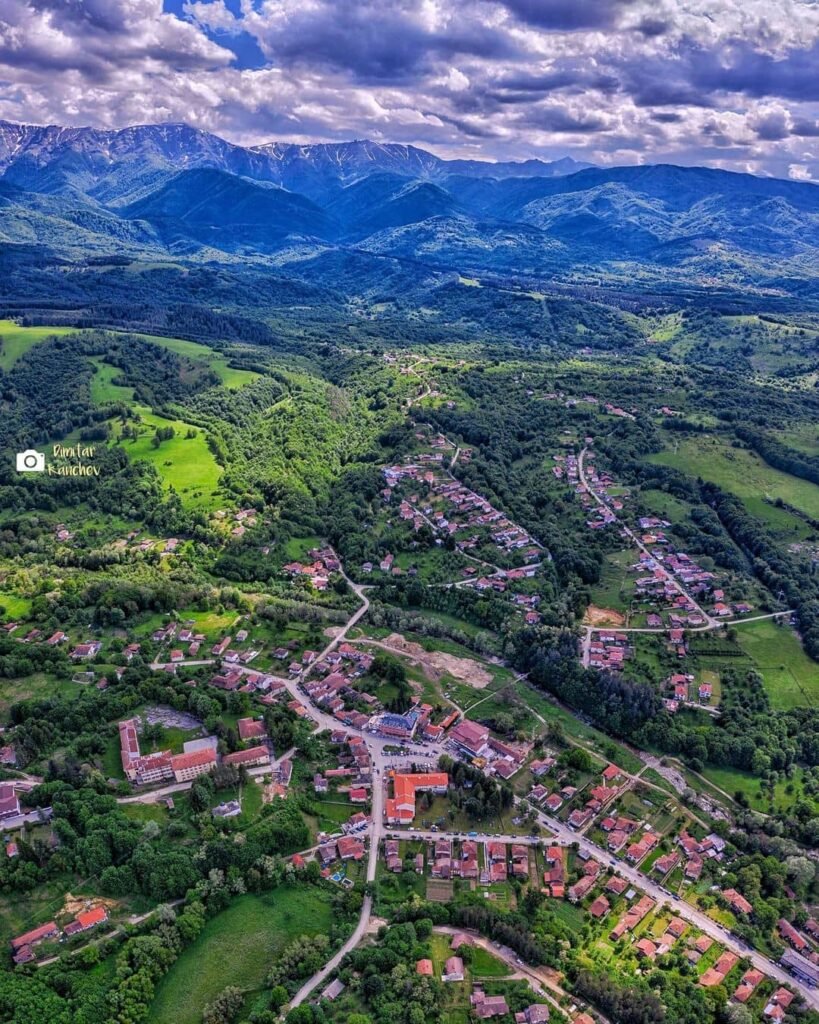
Set beneath some of the highest peaks of the Balkan Mountains, Apriltsi is a small mountain town surrounded by forests, rivers, green meadows, and impressive views of the Central Balkan range. Its setting alone makes it easy to see why the area has developed into a popular base for nature lovers.
Apriltsi lies near Botev Peak, which rises to 2,376 meters and is the highest point in the Balkan Mountains. Other prominent peaks visible around the area include Maragidik and Triglav, giving the valley a dramatic mountain backdrop in almost every direction.
The town itself is unusual because it was formed by combining several historic villages, so Apriltsi feels more spread out than a typical compact Bulgarian town. Traditional houses, small guesthouses, gardens, and quiet roads are scattered throughout the valley.
Hiking is one of the main reasons to come here. Trails lead into the surrounding mountains and toward Central Balkan National Park, a vast protected area of old forests, alpine meadows, waterfalls, wildlife, and some of Bulgaria’s finest mountain scenery.
Apriltsi changes character with the seasons. Spring brings rushing rivers and fresh green slopes, summer is ideal for hiking, autumn covers the surrounding forests in color, and winter can transform the peaks into a snowy backdrop.
It is the kind of place that rarely receives the international attention of Rila or Pirin, yet photographs from Apriltsi reveal just how beautiful the Balkan Mountains can be.
16. Seven Rila Lakes
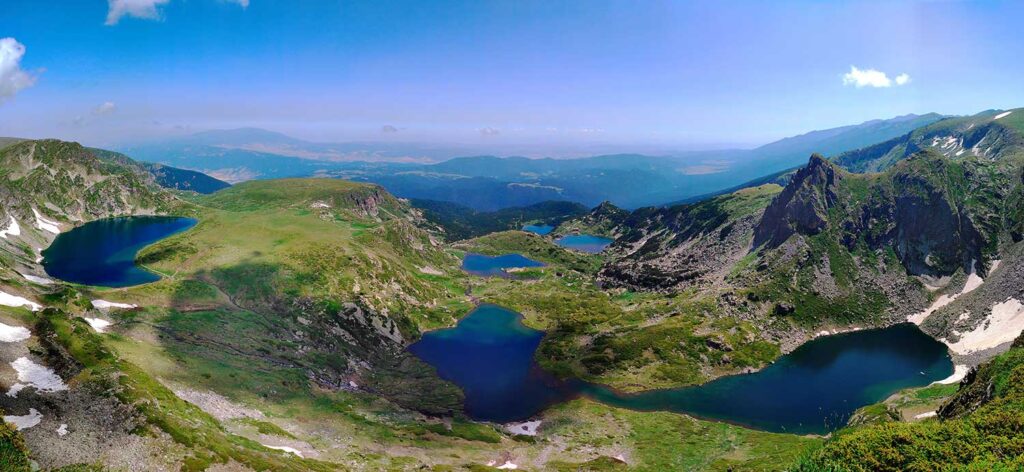
High in the Rila Mountains, a chain of seven glacial lakes creates one of Bulgaria’s most recognizable mountain landscapes. The Seven Rila Lakes sit at different elevations between roughly 2,100 and 2,500 meters, connected by small streams and surrounded by rocky peaks and alpine meadows.
Each lake has a Bulgarian name inspired by its shape or character: The Tear, The Eye, The Kidney, The Twin, The Trefoil, The Fish Lake, and The Lower Lake. The Eye is the deepest of the seven, while The Tear sits highest in the group.
Seeing one lake is beautiful, but the classic view comes from climbing above them. From the higher sections of the trail, several lakes appear at once, scattered across the mountain slopes below. On a clear day, it creates one of those photos of Bulgaria that hardly looks real.
The lakes can be reached from the Panichishte area, with a chairlift providing access toward the higher part of the mountain. From there, hiking trails connect the individual lakes and continue toward panoramic viewpoints above the cirque.
Summer and early autumn are the most popular times to hike here, although mountain weather can change quickly even on warm days. Visitors should stick to the marked trails and help protect the fragile alpine environment around the lakes.
The Seven Rila Lakes are no secret, and summer weekends can be busy. Still, the first time you stand above the entire glacial valley and look down across the lakes, it’s difficult not to understand why this has become one of Bulgaria’s signature mountain views.
17. Old Nessebar
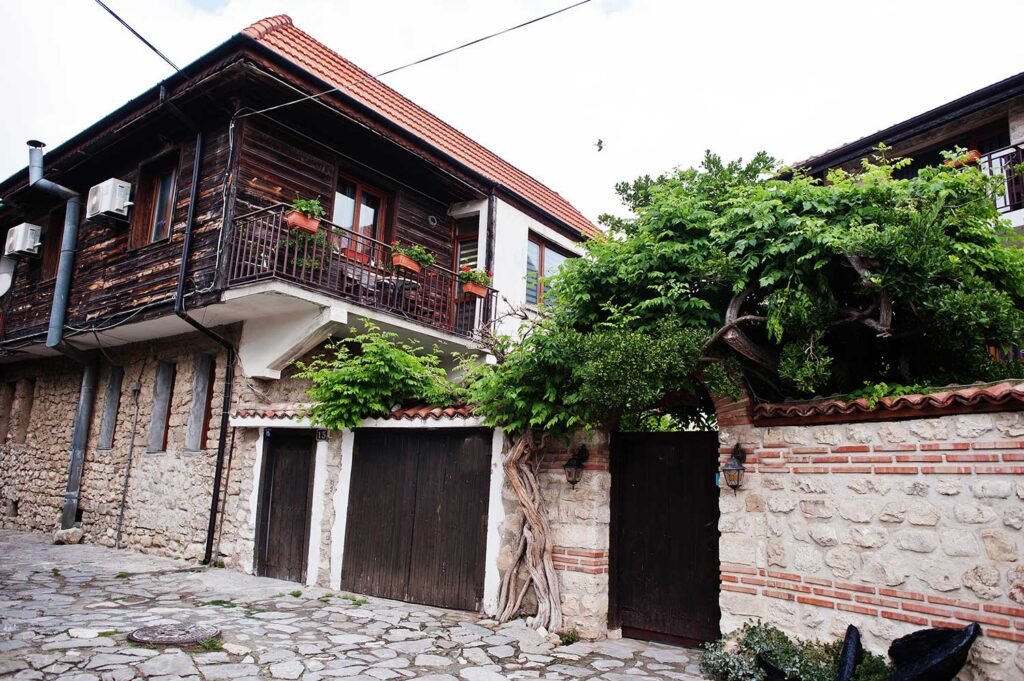
Extending into the Black Sea on a small rocky peninsula, Old Nessebar brings together ancient ruins, medieval churches, traditional houses, cobbled streets, and sea views within an area small enough to explore on foot.
Nessebar has a history stretching back more than 3,000 years. The ancient settlement was known as Mesembria, and traces left by Thracian, Greek, Roman, Byzantine, and medieval Bulgarian civilizations can still be found around the Old Town.
The peninsula is particularly famous for its historic churches. Although not all have survived intact, their remains reveal several periods of medieval architecture. Among the most recognizable are the Church of Christ Pantocrator, Church of St. John the Baptist, Church of St. Stephen, and Church of St. John Aliturgetos.
Another distinctive feature is the traditional architecture from Bulgaria’s National Revival period. Houses with stone lower floors and projecting wooden upper stories line the narrow streets, creating some of the most characteristic Bulgaria photos from the Black Sea coast.
In 1983, the Ancient City of Nessebar was added to the UNESCO World Heritage List, recognizing the exceptional concentration of cultural remains preserved on the peninsula.
Nessebar becomes extremely busy during the summer, especially in the middle of the day. Arriving early in the morning gives you a quieter look at the historic streets, while evening brings warm light over the old buildings and Black Sea.
It may be surrounded by some of Bulgaria’s busiest seaside resorts, but step into the historic peninsula and Nessebar tells a much older story.
Also Read: 9 Fascinating UNESCO World Heritage Sites in Bulgaria
18. Koprivshtitsa
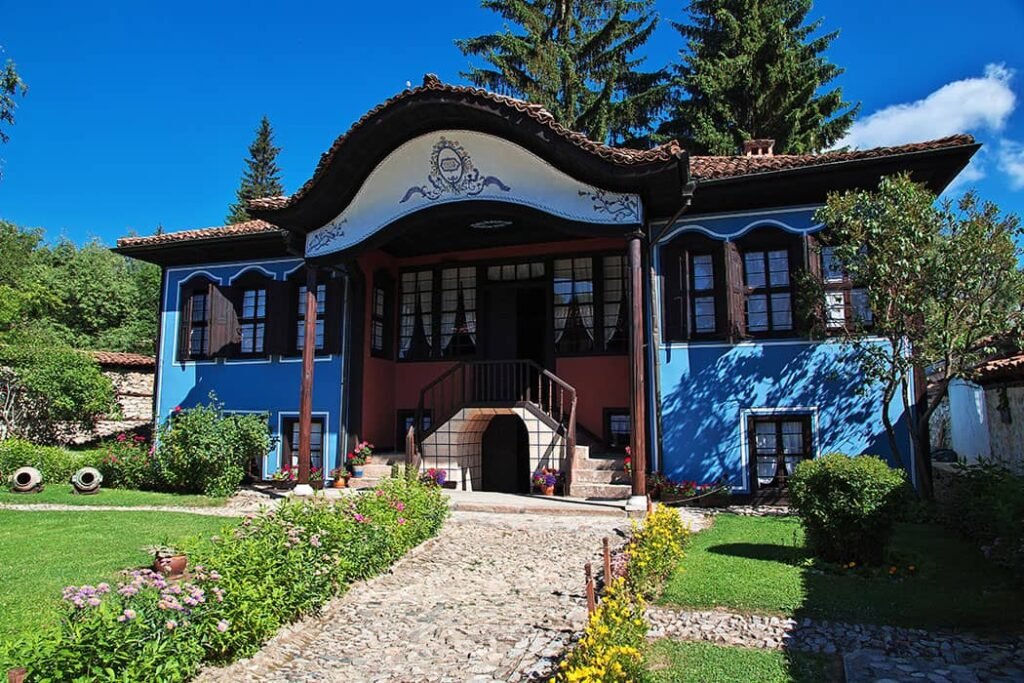
Hidden in the Sredna Gora Mountains, Koprivshtitsa looks very different from Bulgaria’s larger historic cities. Cobbled streets wind between colorful 19th-century houses, stone bridges cross the small Topolnitsa River, and forested hills surround the town on every side.
Koprivshtitsa preserves an exceptional collection of architecture from the Bulgarian National Revival. Many of its historic houses have been converted into museums, allowing visitors to step inside buildings once occupied by important revolutionaries, writers, merchants, and other figures from Bulgaria’s past.
The town also occupies an important place in the country’s struggle for liberation from Ottoman rule. On 20 April 1876 according to the old calendar (2 May in today’s calendar), the first shot of the April Uprising was fired here, turning Koprivshtitsa into one of the symbolic places of the Bulgarian revolutionary movement.
Among the historic homes you can visit are those associated with Todor Kableshkov, Georgi Benkovski, Dimcho Debelyanov, and Lyuben Karavelov. Their brightly painted façades, carved wooden ceilings, courtyards, and period interiors offer a glimpse into life during the Bulgarian Revival.
Yet Koprivshtitsa doesn’t feel like one large museum. People still live behind its stone walls and wooden gates, flowers spill from gardens in summer, and smoke rises from chimneys when winter covers the surrounding mountains with snow.
For photography, simply wandering away from the main streets can be as rewarding as visiting the famous houses. Blue, yellow, and red façades appear between stone walls and mountain greenery, producing some of the most unmistakably Bulgarian scenes in this collection.
Also Read: 17 Authentic Bulgarian Crafting Places to Visit
19. Devil’s Bridge (Dyavolski Most)
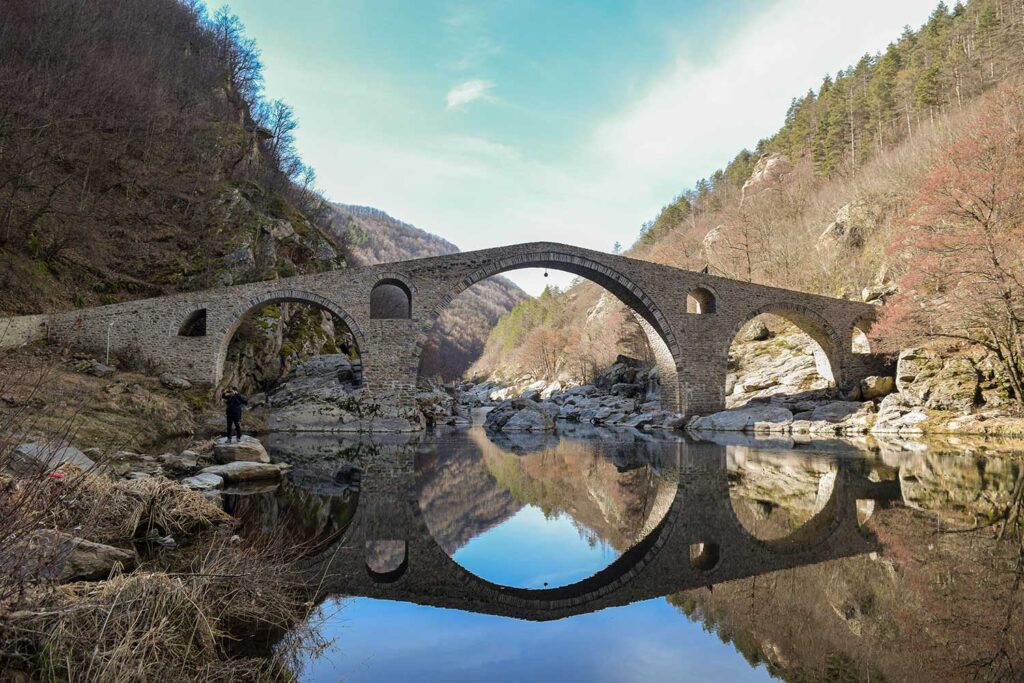
Deep in the Eastern Rhodope Mountains, the centuries-old Devil’s Bridge, or Dyavolski Most, crosses the Arda River in a narrow, rocky valley surrounded by forest. Its isolated setting makes the bridge look almost as though it belongs to another time.
The present stone bridge was built in the early 16th century, during the Ottoman period, on an older route connecting the interior of the Rhodopes with the Thracian lowlands and the Aegean region. It stretches for roughly 56 meters across the river and rises on three stone arches, with the central arch reaching about 12 meters above the water.
Its unusual name has inspired numerous local legends. Stories involving the devil, a master builder, and mysterious shapes hidden within the bridge have been told for generations, adding a little mystery to an already dramatic location.
The most famous photograph is taken when the central arch reflects in the calm water below. Together, the arch and its reflection create a near-complete circle, framed by the steep slopes of the Rhodope Mountains.
Devil’s Bridge is located near Ardino, away from Bulgaria’s main tourist routes. Reaching it takes a little more effort than visiting attractions beside the major highways, but the journey through the Rhodopes is part of its appeal.
Among the historic landmarks featured in these photos of Bulgaria, few feel as remote or mysterious as Dyavolski Most.
20. Krushuna Waterfalls
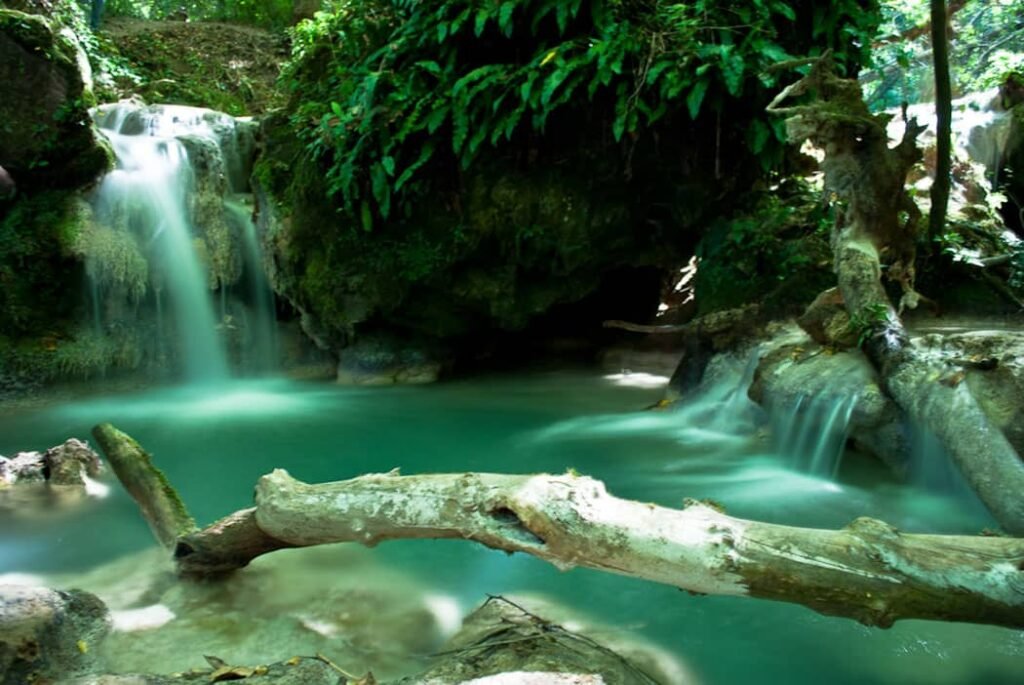
Hidden in a lush forest near the village of Krushuna in northern Bulgaria, the Krushuna Waterfalls are known for their series of small cascades, pools, and pale blue-green water flowing over limestone formations.
Rather than one enormous drop, Krushuna is a travertine cascade system. Mineral-rich water has shaped terraces and formations along the stream, while moss and thick vegetation cover much of the surrounding rock. The result is a landscape that looks very different from Bulgaria’s tall mountain waterfalls.
Wooden bridges, stairs, and walking paths allow visitors to explore different levels of the cascades. The main waterfall is the centerpiece, but some of the prettiest views appear along the smaller pools and streams encountered on the way.
Spring and early summer are particularly beautiful times to visit, when the forest is intensely green and water levels are generally stronger. Conditions vary with rainfall, however, and paths around the cascades can become slippery when wet.
Krushuna is also easy to combine with other attractions in this part of Bulgaria. Devetashka Cave, one of the country’s most impressive caves, is only a short drive away, making the two a popular combination for a day trip.
These waterfalls show how varied Bulgaria’s natural landscapes can be. They may not have the enormous vertical drop of Raysko Praskalo, but their turquoise pools, limestone terraces, and forest setting make Krushuna Waterfalls one of the country’s most photogenic natural attractions.
Also Read: 25 Best Waterfalls in Bulgaria: A Complete Travel Guide
21. Shipka Monument
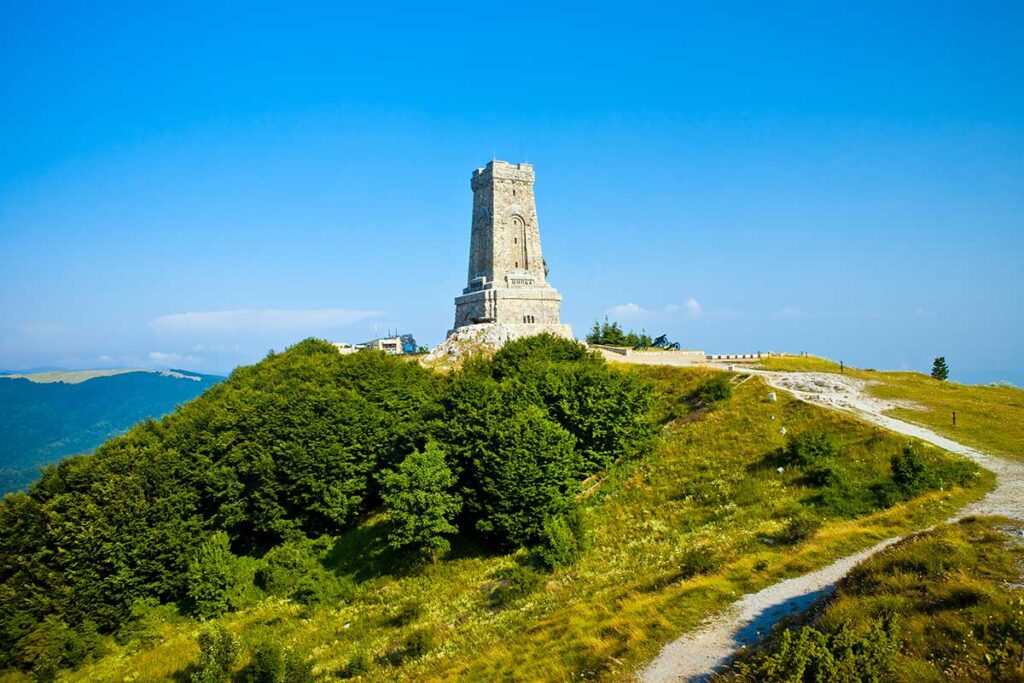
Standing high above Shipka Pass in the Balkan Mountains, the Monument to Freedom at Shipka is both an impressive viewpoint and one of Bulgaria’s most important historical landmarks.
The monument commemorates the battles fought at Shipka Pass during the Russo-Turkish War of 1877–1878. Bulgarian volunteers, known as opalchentsi, fought alongside Russian forces to defend the mountain pass against Ottoman troops. The battles became a defining episode in the events that led to Bulgaria’s liberation and the restoration of Bulgarian statehood in 1878.
Completed in 1934, the stone monument rises prominently from Shipka Peak. A large bronze lion guards the entrance, while inside are exhibitions and memorial spaces dedicated to those who fought in the battles.
Reaching the monument involves climbing a long stone staircase, but the reward is one of the finest panoramas in this part of Stara Planina. From the top, views extend across mountain ridges, forests, valleys, and, in clear weather, far into central Bulgaria.
Shipka is particularly striking in autumn, when the surrounding forests turn gold and red, and in winter, when snow can cover the entire ridge. The mountain weather can change quickly, however, so conditions at the monument may be very different from those in the valleys below.
The views alone justify the climb, but Shipka means much more than its mountain scenery. For Bulgarians, it represents courage, sacrifice, and a pivotal chapter in the country’s history.
22. Melnik and the Melnik Pyramids
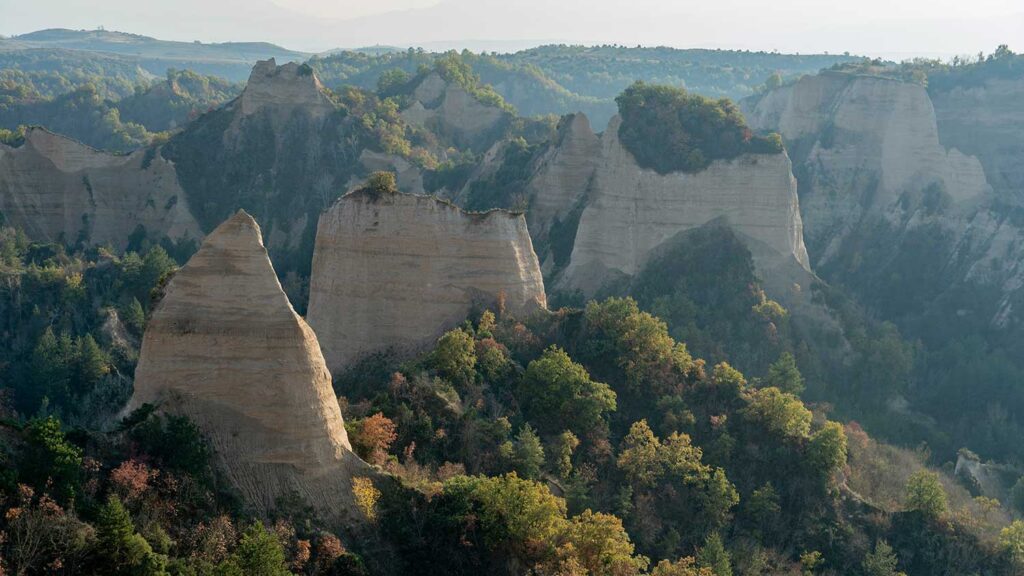
At the southwestern edge of the Pirin Mountains, the tiny town of Melnik sits beneath some of Bulgaria’s most unusual natural formations. Traditional houses line its narrow streets while enormous pale sandstone cliffs rise behind them, creating a combination of architecture and landscape found nowhere else in the country.
The surrounding Melnik Pyramids have been shaped over time by erosion into steep ridges, pinnacles, and almost vertical walls. Some formations rise more than 100 meters, and their sandy colors change noticeably as the sunlight moves across them.
Melnik itself is officially Bulgaria’s smallest town, but its size hides a surprisingly rich history. During the Bulgarian National Revival, it developed into an important commercial center, and several impressive historic houses survive from that period.
The most famous is Kordopulov House, built in the 18th century for a wealthy merchant family. Its spacious rooms, decorated windows, and underground tunnels carved into the sandstone offer a glimpse of Melnik’s prosperous past.
The landscape becomes even more impressive from the trails above town. One rewarding route connects Melnik with Rozhen Monastery, passing directly through the sandstone formations and opening onto broad views of the surrounding countryside.
Melnik is a place where Bulgaria’s natural and cultural landscapes seem to merge. The historic houses would be worth seeing on their own, and so would the strange sandstone pyramids. Together, the historic town and its sandstone pyramids create a landscape unlike anywhere else in Bulgaria.
23. Prohodna Cave — The Eyes of God
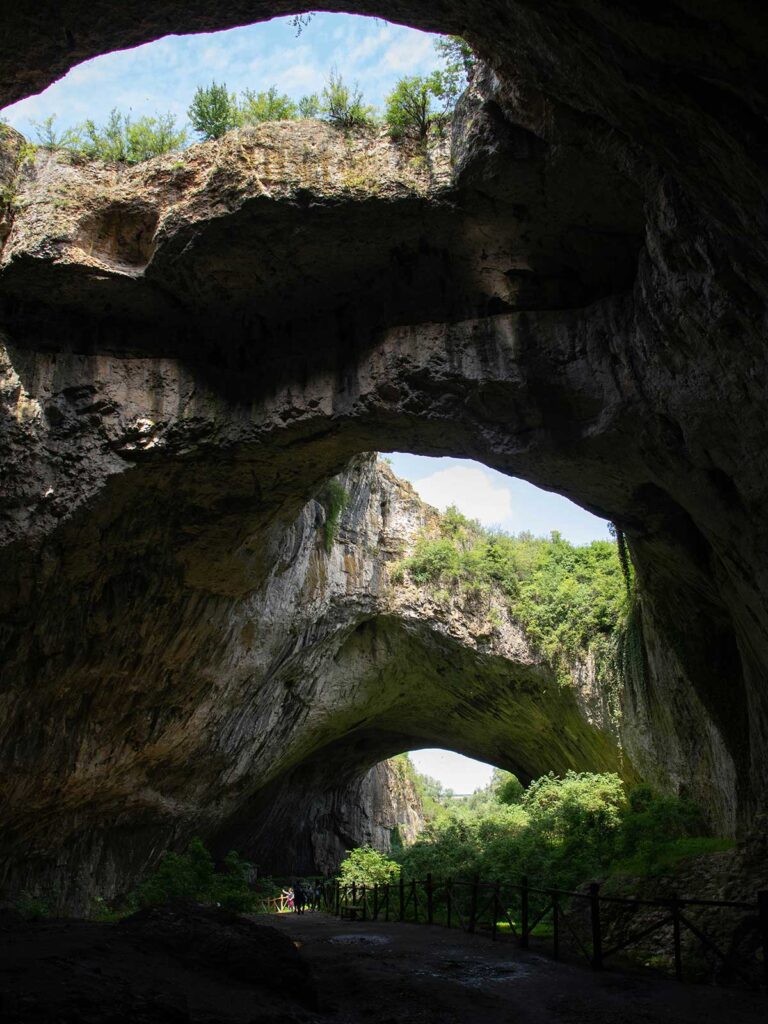
Look toward the ceiling inside Prohodna Cave and you’ll immediately understand how it earned its famous nickname. Two enormous, similarly shaped openings pierce the rock overhead, creating the appearance of a pair of eyes staring down into the cavern.
Known as the Eyes of God (Bozhite Ochi), these natural openings have made Prohodna one of the most recognizable caves in Bulgaria. Sunlight streams through them during the day, while rain can fall directly into the cavern, producing an even more dramatic scene.
Prohodna lies in the Karlukovo Karst region of northern Bulgaria near the village of Karlukovo. The cave is approximately 262 meters long and has two entrances, including an enormous arch rising roughly 45 meters, which makes the interior feel exceptionally open compared with the narrow passages of many other caves.
Its scale has also made Prohodna popular with climbers, and the cave has appeared in Bulgarian and international film productions.
Unlike many developed show caves, Prohodna can be explored without a traditional guided tour or elaborate interior lighting. That relatively natural setting is part of its appeal, although visitors should still take care on uneven or wet surfaces.
Photographs capture the resemblance remarkably well, but standing beneath the openings is a different experience. Their size, symmetry, and position high above the cave floor make the Eyes of God one of the strangest natural sights in Bulgaria.
24. Cape Kaliakra
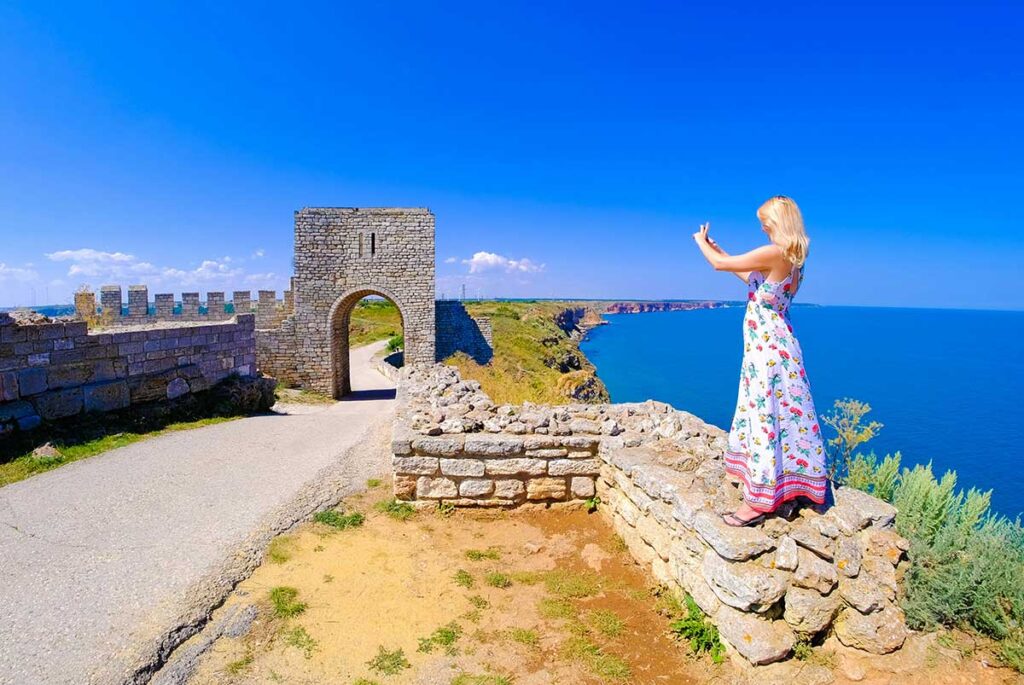
Few places show the dramatic side of Bulgaria’s Black Sea coast better than Cape Kaliakra. The narrow headland stretches approximately two kilometers into the sea, with steep reddish cliffs rising around 70 meters above the water.
Located on Bulgaria’s northern Black Sea coast, not far from Bolata Beach and Kavarna, Kaliakra feels very different from the sandy resorts usually associated with a Bulgarian seaside holiday. Here, the landscape is dominated by open sea, wind, rock, and panoramic views along the coastline.
The cape has also been occupied for thousands of years. Thracians established a settlement here in antiquity, and later inhabitants expanded its fortifications. Remains of defensive walls, gates, buildings, and other archaeological structures can still be seen while walking toward the end of the headland.
Kaliakra is also connected with one of Bulgaria’s best-known legends. According to tradition, 40 Bulgarian maidens tied their hair together and jumped from the cliffs into the Black Sea rather than be captured by Ottoman soldiers. A monument near the entrance commemorates the legend.
The surrounding waters and cliffs are important for wildlife as well. The area lies along Via Pontica, a major bird migration route along the western Black Sea coast, and dolphins can occasionally be spotted offshore.
Walk all the way toward the end of the cape if conditions allow. Looking back at the red cliffs against the deep blue water is one of the most memorable views along Bulgaria’s northern Black Sea coast.
And because Bolata Beach is nearby, the two locations work perfectly together on the same northern Black Sea coast trip.
25. The Rose Valley of Bulgaria
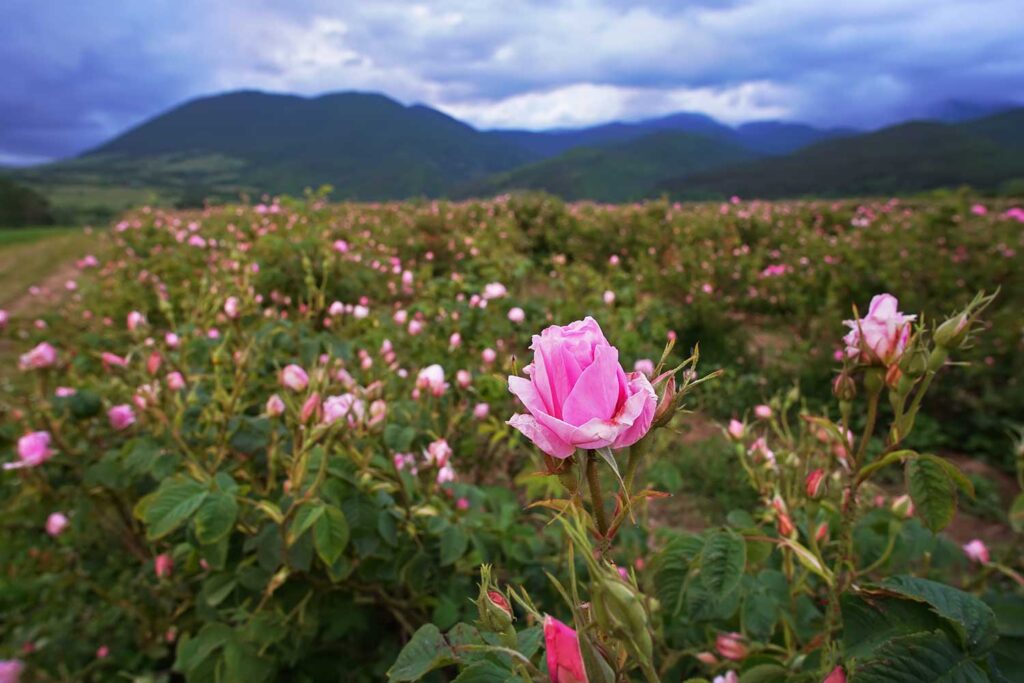
Few landscapes are as closely connected with Bulgaria as the Rose Valley, where fields of fragrant pink roses bloom beneath the mountains of central Bulgaria each year.
The valley around Kazanlak and Karlovo is famous for cultivating the Damask rose (Rosa damascena), used to produce Bulgarian rose oil. The combination of climate, soil, rainfall, and generations of cultivation has helped turn rose growing and distillation into an enduring tradition in this part of the country.
The harvest usually takes place from late May into June, depending on weather conditions. Rose picking traditionally begins early in the morning, when the flowers are fresh and their aromatic compounds are best preserved. The blossoms are then taken for distillation as soon as possible.
Producing rose oil requires an extraordinary quantity of flowers. Several thousand kilograms of rose petals may be needed to produce just one kilogram of rose oil, which helps explain why genuine Bulgarian rose oil is so valuable.
The best-known celebration of this tradition is the annual Rose Festival in Kazanlak, with rose-picking rituals, folklore, music, parades, and events connected with the region’s rose-growing heritage.
Yet the most memorable experience can be much simpler: standing beside a field early in the morning when thousands of pink roses are in bloom and the scent carries across the valley.
It feels fitting to end the journey in the Rose Valley. Bulgaria has spectacular mountains, beaches, waterfalls, ancient cities, caves, and monasteries, but the Bulgarian rose has become a symbol of the country far beyond its borders.
Also Read: What Are the Benefits of Rose Oil and How to Use It?
Frequently Asked Questions About Photos and Photography in Bulgaria
Is Bulgaria a beautiful country to visit?
Yes. Bulgaria combines Black Sea beaches, high mountains, glacial lakes, waterfalls, caves, historic towns, monasteries, traditional villages, and large areas of countryside within a relatively compact country. The scenery changes considerably between regions, which makes traveling around Bulgaria especially rewarding.
What is the most photographed place in Bulgaria?
Rila Monastery, the Seven Rila Lakes, Alexander Nevsky Cathedral, Old Plovdiv, Nessebar, and the Belogradchik Rocks are among Bulgaria’s most recognizable and frequently photographed landmarks.
Where can I take the best photos in Bulgaria?
For mountain photography, consider the Seven Rila Lakes, Rhodope Mountains, Pirin Mountains, and Central Balkan Mountains. Along the Black Sea, Cape Kaliakra, Bolata, Veleka Beach, and Old Nessebar offer very different coastal scenes. Plovdiv, Koprivshtitsa, Rila Monastery, Melnik, and Sofia are excellent choices for architecture and history.
When is the best time to photograph Bulgaria?
It depends on what you want to capture. Spring brings green landscapes and stronger waterfalls, while late May and June are associated with the rose harvest. Lavender fields generally bloom around late June and July. Summer works well for the mountains and Black Sea, autumn brings beautiful colors to Bulgaria’s forests, and winter can completely transform mountain towns, monasteries, and high-altitude landscapes.
Where are the famous rose fields in Bulgaria?
Bulgaria’s best-known rose-growing area is the Rose Valley in central Bulgaria, particularly around Kazanlak and Karlovo. The main flowering and harvesting season generally falls between late May and June, although exact timing varies with the weather.
Can I visit all of these places on one trip to Bulgaria?
Technically you could cover many of them on a long road trip, but trying to see all 25 would mean spending too much time traveling. For a first visit, choose a few regions and explore them properly. Sofia and western Bulgaria, the Rila and Pirin Mountains, the Rhodopes, central Bulgaria, and the Black Sea coast can each form a separate part of a longer itinerary.
Which Part of Bulgaria Would You Visit First?
Even after choosing 25 places, I could easily add another 25. That’s one of the things I love about Bulgaria. Drive for a few hours and the scenery can change from Black Sea cliffs and sandy beaches to rose fields, old mountain villages, caves, waterfalls, monasteries, and high alpine lakes.
Some of the places in this collection are famous throughout Bulgaria. Others are exactly the kind of places you discover after leaving the main tourist routes.
If you’ve already traveled around the country, I’d love to know which place left the strongest impression on you. And if Bulgaria is still on your travel list, which of these 25 would you visit first?
You can also follow @stunningbulgaria on Instagram for more photos and travel inspiration from around the country. If you have an amazing photo of Bulgaria you’d like us to see, tag @stunningbulgaria and use #stunningbulgaria.
Continue Exploring Bulgaria
If these photos have given you a few ideas for your next trip, continue exploring with these Stunning Bulgaria guides: