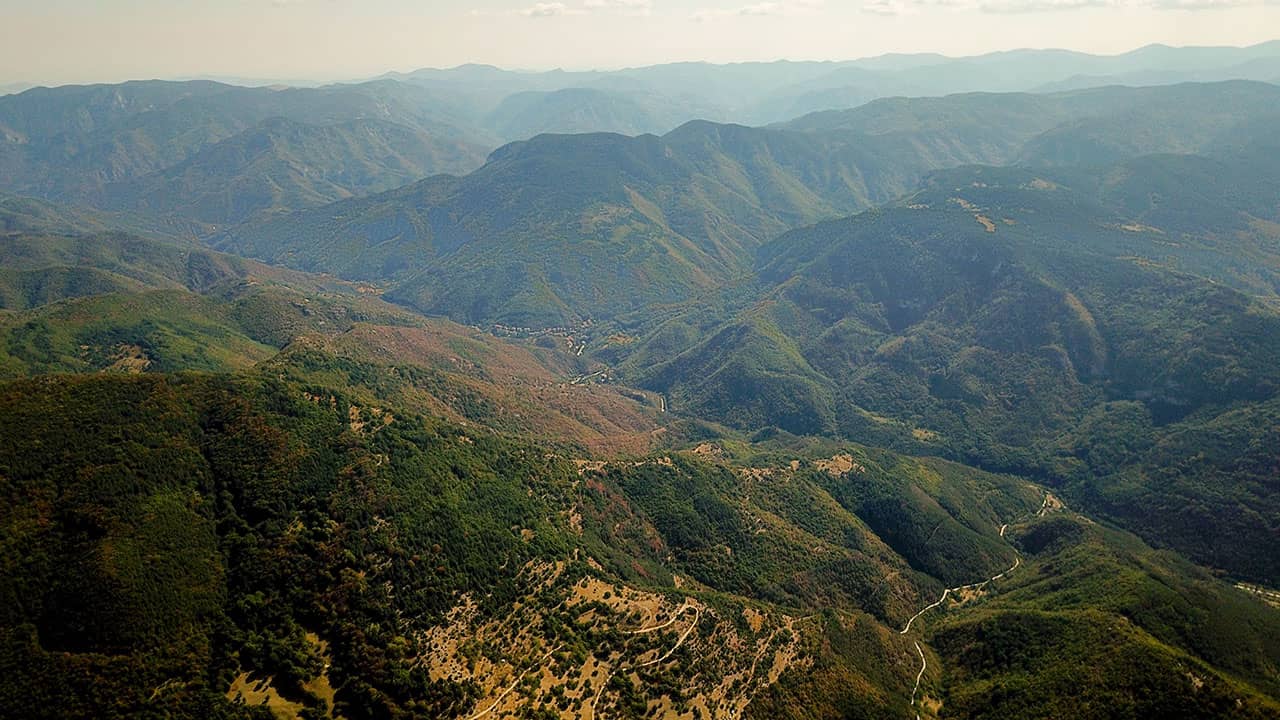
Bulgaria may be a relatively small country, but mountains cover a large part of its landscape. From the rugged alpine peaks of Rila and Pirin to the forested slopes of the Rhodopes and the long ridge of the Balkan Mountains, each range has its own character.
The mountains in Bulgaria offer far more than beautiful scenery. They are home to glacial lakes, waterfalls, centuries-old forests, monasteries, traditional villages, and an extensive network of hiking trails. Some areas work well for day trips, while others take you far from Bulgaria’s cities and busiest resorts.
Bulgaria is also home to Musala (2,925 m), the highest mountain peak in both Bulgaria and the entire Balkan Peninsula. Rila and neighboring Pirin are also known for dramatic summits and glacial lakes, although the two ranges have noticeably different landscapes. Farther south, the Rhodopes offer a completely different experience, with gentler ridges, deep gorges, dense forests, and villages where old traditions remain part of everyday life.
You can build an entire trip around these mountains or add one to a visit to Sofia, Plovdiv, or another part of the country.
In this guide, we’ll explore the best mountains in Bulgaria, from their highest peaks and hiking trails to the villages, natural landmarks, and historic places you can discover along the way.
Why Bulgaria Is a Great Mountain Destination
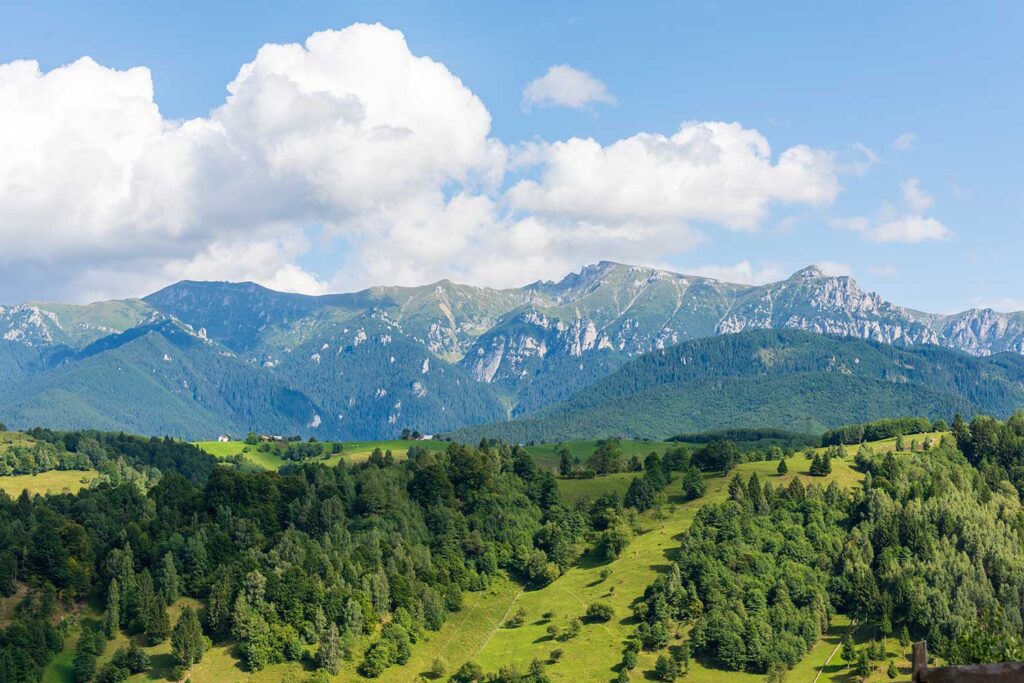
One reason Bulgaria works so well for mountain travel is the short distance between very different regions. Rila, Pirin, the Rhodopes, Vitosha, and Stara Planina can all form part of a wider trip rather than requiring a separate mountain holiday.
Mountains Cover a Large Part of Bulgaria
Mountain and hilly landscapes shape much of Bulgaria’s territory. The country’s ranges differ considerably in height and character, from the towering peaks of Rila and Pirin to the softer outlines of the Rhodopes and Sredna Gora.
This variety means you don’t need to be an experienced mountaineer to enjoy the mountains in Bulgaria. Serious summit routes are only part of the picture. Many mountain areas can be enjoyed on short walks or scenic drives, and some of Bulgaria’s monasteries, caves, waterfalls, and historic villages require little hiking at all.
Four Distinct Seasons
The mountains look and feel different with each season. Spring brings waterfalls and wildflowers, summer opens up the high-altitude hiking routes, and autumn transforms many forested slopes with seasonal color.
Winter draws skiers and snowboarders to resorts such as Bansko, Borovets, and Pamporovo, while snowshoeing and winter hiking offer quieter ways to experience the mountains.
Nature, History, and Traditional Culture
Bulgaria’s mountain landscapes are closely tied to the country’s history and culture. Ancient Thracian sites, medieval monasteries, old stone bridges, historic towns, and traditional villages appear throughout the mountain regions.
Dear homeland, how beautiful you are!
Ivan Vazov
You can hike among the Seven Rila Lakes, visit Rila Monastery, explore villages in the Rhodopes, or walk through places connected with Bulgaria’s National Revival, liberation struggles, and centuries of religious history.
The mountains are not simply a backdrop to Bulgaria. They have helped shape the country’s communities, traditions, folklore, and identity for centuries.
Also Read: Top 10 Places to Visit in Bulgaria
Best Mountains in Bulgaria at a Glance
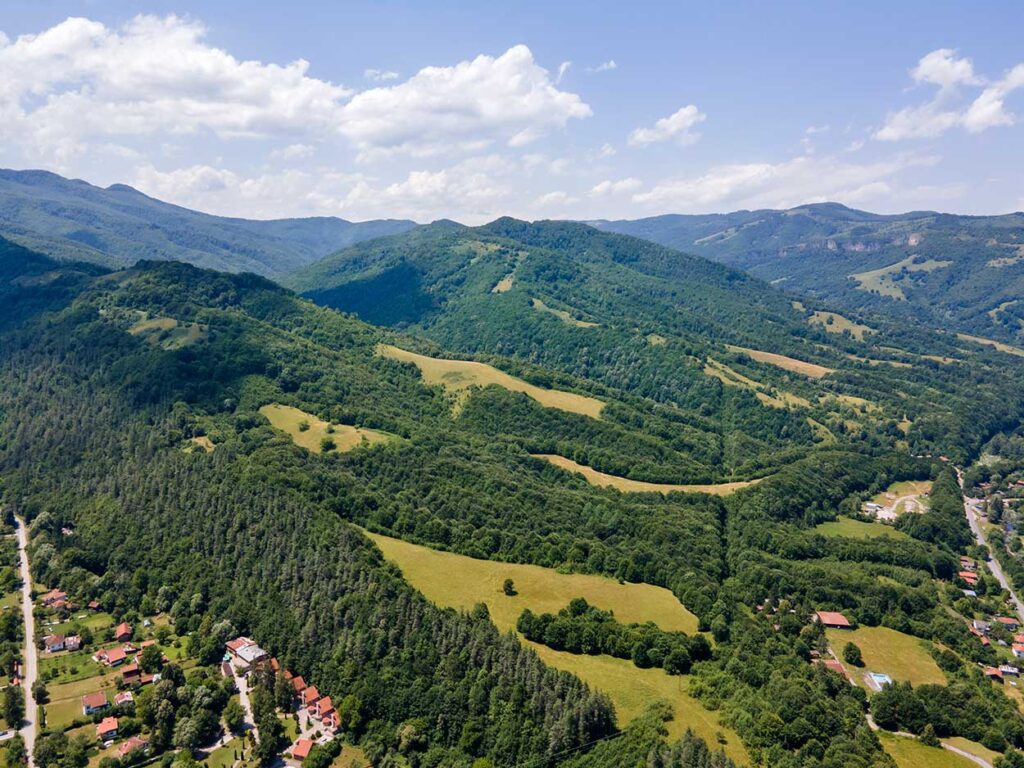
Bulgaria has many mountain ranges, but the ten below are especially useful for travelers because each offers a distinctly different reason to visit.
| Mountain | Highest Peak | Elevation | Best Known For |
|---|---|---|---|
| Rila | Musala | 2,925 m | Bulgaria’s highest peaks, glacial lakes, Rila Monastery |
| Pirin | Vihren | 2,914 m | Dramatic alpine scenery, hiking, UNESCO-listed Pirin National Park |
| Rhodope Mountains | Golyam Perelik | 2,191 m | Forests, caves, gorges, folklore, traditional villages |
| Balkan Mountains (Stara Planina) | Botev Peak | 2,376 m | Long-distance hiking, waterfalls, historic mountain passes |
| Vitosha | Cherni Vrah | 2,290 m | Hiking and nature immediately outside Sofia |
| Sredna Gora | Golyam Bogdan | 1,604 m | Forested trails, historic towns, quieter hiking |
| Osogovo | Ruen | 2,251 m | Border landscapes, forests, peaceful mountain routes |
| Belasitsa | Radomir | 2,029 m | Waterfalls, biodiversity, views across three countries |
| Slavyanka | Gotsev Vrah | 2,212 m | Limestone landscapes, rare plants, remote hiking |
| Strandzha | Gradishte* | 710 m | Ancient forests, traditional villages, Black Sea hinterland |
*Gradishte is the highest point of the Bulgarian part of Strandzha. The mountain range continues into Turkey, where its highest elevations are found.
The best choice depends on the kind of trip you have in mind. Rila and Pirin are the obvious choices for high-altitude scenery, while the Rhodope Mountains combine nature with some of Bulgaria’s strongest surviving folk traditions. Vitosha is exceptionally convenient for visitors staying in Sofia, and Osogovo, Belasitsa, and Slavyanka see far fewer international visitors and are better choices when quieter trails matter more than resort infrastructure.
1. Rila Mountains
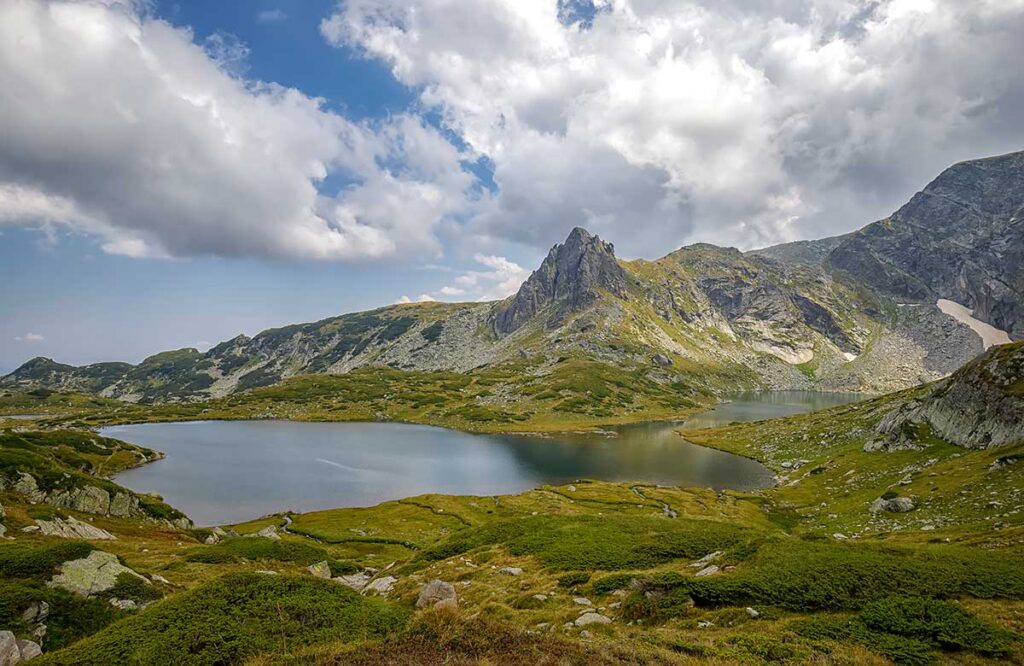
The Rila Mountains rise in southwestern Bulgaria and contain the highest terrain in the country. The name is thought to have Thracian origins connected with water, fitting for a range where lakes, rivers, springs, and waterfalls are common.
Rila’s best-known landmark is Musala Peak, which reaches 2,925 meters (9,596 ft). It is the highest summit in Bulgaria and the entire Balkan Peninsula. Musala can be reached on a well-established hiking route, although the altitude, changing weather, and length of the climb still require proper preparation. Borovets is the usual starting point.
Seven Rila Lakes
The Seven Rila Lakes are among Bulgaria’s most recognizable natural landmarks. The glacial lakes sit at different elevations between roughly 2,100 and 2,500 meters and are connected by streams and small waterfalls.
Each lake has a name inspired by its shape or character, including the Eye, the Kidney, the Tear, and the Twin. A network of trails allows hikers to see several or all seven, with panoramic viewpoints above the upper lakes opening up views across the entire lake cirque.
Summer and early autumn generally provide the easiest hiking conditions, although this is also when the area receives the most visitors.
Rila Monastery
Rila isn’t only about high peaks. Hidden in a forested valley is Rila Monastery, Bulgaria’s largest and most famous Eastern Orthodox monastery.
Founded in the 10th century and closely associated with the hermit St. Ivan of Rila, the monastery became an important spiritual and cultural center. Today, the complex is recognized as a UNESCO World Heritage Site and fits easily into a wider trip through Rila.
What to See and Do in Rila
Some of the highlights worth adding to a Rila Mountains trip include:
- Climb Musala Peak
- Hike around the Seven Rila Lakes
- Visit Rila Monastery
- Spend time around Borovets
- Hike to Skakavitsa Waterfall
- Visit Stob’s Pyramids near the western foothills
- Explore the quieter trails and lakes around Malyovitsa
For a first mountain trip in Bulgaria, Rila is an easy place to start: major hiking routes, the Seven Rila Lakes, Musala, and Rila Monastery are all found within the same region.
2. Pirin Mountains
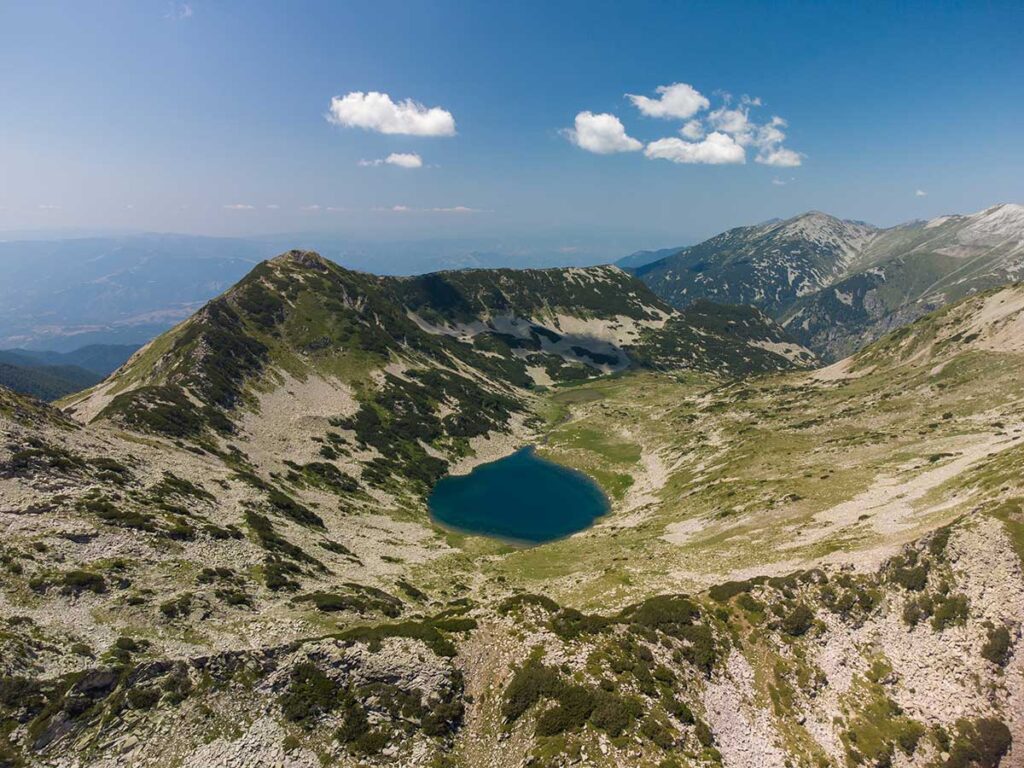
South of Rila, the Pirin Mountains offer some of the most dramatic alpine scenery in Bulgaria. Marble and granite ridges give Pirin a sharper profile than neighboring Rila, particularly around Vihren and the northern part of the range.
The highest point is Vihren Peak, reaching 2,914 meters (9,560 ft). It is Bulgaria’s second-highest summit after Musala and a popular challenge for experienced hikers. The mountain has dozens of peaks above 2,500 meters, making it a major destination for high-altitude hiking.
Pirin National Park
Much of the range is protected within Pirin National Park, which was added to the UNESCO World Heritage List in 1983. The protected area covers much of Pirin’s highest terrain and shelters important forests, alpine habitats, lakes, and wildlife.
Pirin’s forests are another important part of the national park. Macedonian and Bosnian pine grow here, including some exceptionally old specimens.
The most famous is Baikushev’s Pine, a Bosnian pine estimated to be more than 1,300 years old. Standing near the road between Bansko and Vihren Hut, it is considered among the oldest trees in Bulgaria.
Vihren Peak
The climb to Vihren Peak is among the classic mountain hikes in Bulgaria. A common route begins at Vihren Hut above Bansko and climbs through increasingly rocky terrain toward the summit.
From the top, the views extend across Pirin’s surrounding peaks and valleys, with Rila visible in the distance in clear weather. The route requires proper preparation, suitable footwear, and stable weather conditions.
Bansko and the Pirin Mountains
At the foot of Pirin lies Bansko, Bulgaria’s best-known ski resort and a convenient base for exploring the northern part of the mountain.
Although Bansko is busiest during the ski season, summer brings a completely different atmosphere. Hiking trails lead from the surrounding area toward mountain huts, lakes, forests, and some of Pirin’s highest peaks.
What to See and Do in Pirin
Highlights of a trip to the Pirin Mountains include:
- Hike to Vihren Peak
- Explore Pirin National Park
- See the ancient Baikushev’s Pine
- Visit some of Pirin’s many glacial lakes
- Explore Bansko’s Old Town
- Hike from Vihren Hut
- Visit the mountain huts and trails around Dobrinishte
- Ski or snowboard in Bansko during winter
Pirin feels noticeably rougher and more exposed than Rila in places, which is precisely why experienced hikers often give it several days rather than treating it as a single excursion.
3. Rhodope Mountains
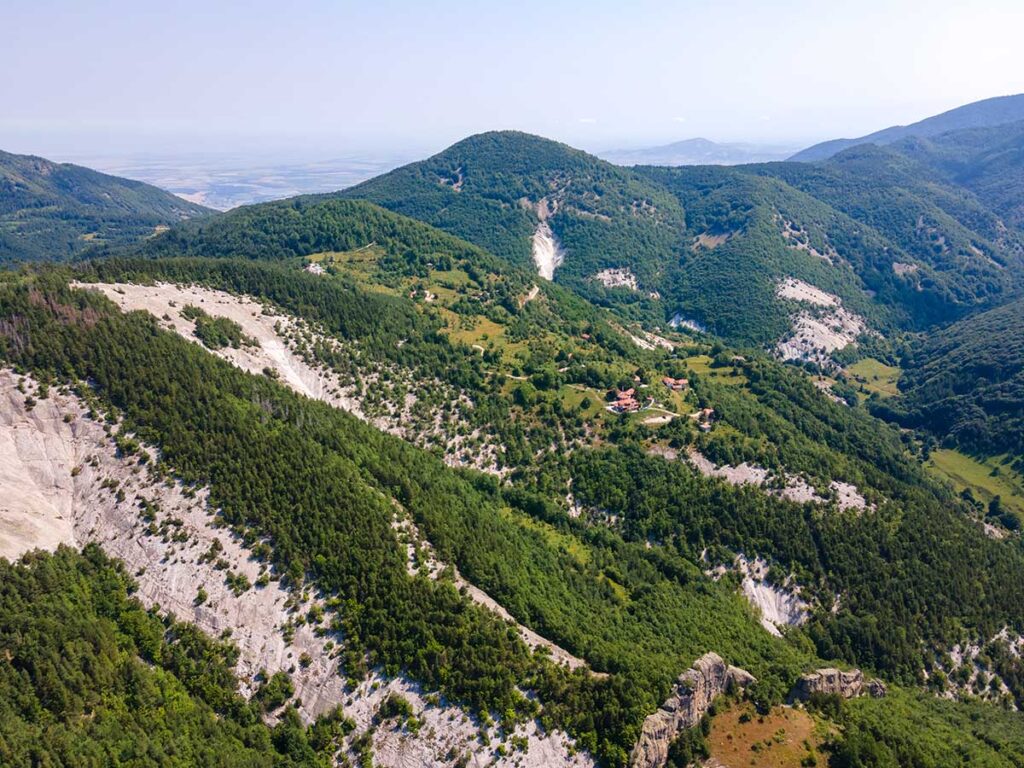
South of Bulgaria’s highest ranges, the Rhodope Mountains spread across southern Bulgaria and into northern Greece. Rolling forested ridges are cut by deep valleys, gorges, caves, and winding roads connecting traditional mountain villages.
The highest point in the Bulgarian Rhodopes is Golyam Perelik, at 2,191 meters (7,188 ft), near Smolyan. But the Rhodopes aren’t really a mountain you visit simply to reach the highest summit. Give yourself time for the villages, caves, viewpoints, waterfalls, and winding roads between them.
A Mountain of Legends and Folklore
Folklore remains especially visible in the Rhodopes, from local festivals and songs to the unmistakable sound of the kaba gaida.
The region is also linked to the ancient Thracians and numerous legends. In Greek mythology, Orpheus is traditionally associated with the Rhodope region, a connection that remains deeply woven into local tourism and storytelling.
Small villages scattered through the mountains preserve distinctive architecture, local dishes, crafts, music, and customs. Shiroka Laka is among the best-known examples, with stone houses lining the slopes above the river.
Caves and Gorges
Some of Bulgaria’s most impressive caves are hidden within the Rhodopes.
Devil’s Throat Cave, near Trigrad, is famous for its enormous underground chamber and waterfall. Nearby, the narrow cliffs of Trigrad Gorge rise dramatically on both sides of the road.
Yagodina Cave is another major attraction in the western Rhodopes, with extensive passages and striking cave formations. The surrounding area also offers viewpoints over the Buynovsko Gorge and numerous opportunities for hiking.
Smolyan and the Canyon of Waterfalls
The area around Smolyan provides an excellent base for exploring the central Rhodopes. Nearby you’ll find the Smolyan Lakes, mountain trails, traditional villages, and the Canyon of Waterfalls.
The eco-trail follows the Elenska River through dense forest and passes numerous cascades and waterfalls. Spring and early summer are especially beautiful when water levels are higher and the surrounding vegetation is lush.
What to See and Do in the Rhodope Mountains
Highlights worth considering include:
- Walk through Shiroka Laka
- Visit Devil’s Throat Cave
- Walk through Trigrad Gorge
- Visit Yagodina Cave
- Hike the Canyon of Waterfalls
- Visit the Smolyan Lakes
- Hike around Pamporovo
- See the Wonderful Bridges rock formation
- Visit traditional villages such as Gela
- Experience authentic Rhodope music and cuisine
A trip through the Rhodopes tends to unfold on the road as much as on the trail, with villages, caves, viewpoints, and unexpected stops often becoming as memorable as the planned destinations.
4. Balkan Mountains (Stara Planina)
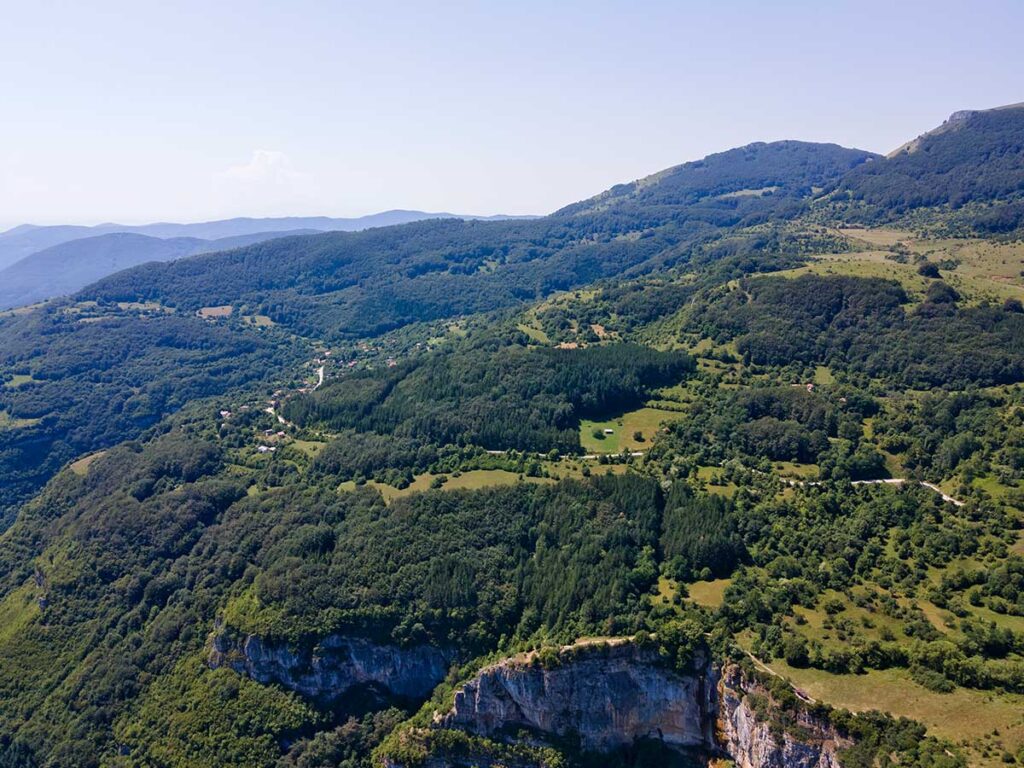
Running across Bulgaria from west to east, the Balkan Mountains, known in Bulgarian as Stara Planina, form the country’s great central mountain chain. The range stretches for roughly 550 kilometers, from near the Serbian border almost to the Black Sea. For centuries, its passes have linked northern and southern Bulgaria, while its ridges have formed a natural barrier across the center of the country.
The name Balkan eventually came to be used for the wider Balkan Peninsula. Its highest point is Botev Peak, which rises to 2,376 meters (7,795 ft) in the Central Balkan Mountains.
Botev Peak and Central Balkan National Park
Botev Peak stands within Central Balkan National Park, one of Bulgaria’s largest protected mountain areas, extending across much of the highest part of central Stara Planina.
Reaching the summit is a serious mountain hike rather than a casual walk. Several routes approach Botev from different directions, including trails from the areas around Kalofer and Apriltsi. Weather on the exposed upper sections can change quickly, so preparation is essential.
The peak is also recognizable by the large television and radio tower standing at its summit.
Raysko Praskalo Waterfall
Below Botev Peak lies Raysko Praskalo, a spectacular waterfall dropping approximately 124.5 meters from the cliffs beneath the mountain.
It is the highest permanent waterfall in Bulgaria and on the Balkan Peninsula. The hike toward the waterfall passes through the landscapes of Central Balkan National Park, with Rai Hut providing a popular base beneath the surrounding cliffs.
Water flow varies throughout the year, with spring and early summer generally offering the strongest conditions.
Shipka Pass and Bulgarian History
Stara Planina occupies an important place in Bulgarian history. Mountain passes through the range connected northern and southern Bulgaria and became strategically important routes over many centuries.
The best known is Shipka Pass, the site of crucial battles during the Russo-Turkish War of 1877–1878. Today, the Shipka Monument rises above the pass and commemorates those who fought in the battles.
The summit area also provides wide views across Stara Planina and toward the valleys below.
Kom–Emine Trail
For long-distance hikers, Stara Planina is home to Bulgaria’s legendary Kom–Emine trail. The route follows the main ridge from Kom Peak near the Serbian border to Cape Emine on the Black Sea.
Covering roughly 600 kilometers, it is Bulgaria’s best-known long-distance mountain route and forms part of the European E3 long-distance path. Completing the entire trail normally takes several weeks, although individual sections can be hiked separately.
What to See and Do in the Balkan Mountains
Highlights across this enormous mountain range include:
- Climb Botev Peak
- Hike to Raysko Praskalo Waterfall
- Explore Central Balkan National Park
- Visit Shipka Pass and the Shipka Monument
- Hike sections of the Kom–Emine trail
- Explore the mountain landscapes around Kalofer
- Visit Troyan Pass
- Discover traditional towns and villages along the foothills
5. Vitosha Mountain
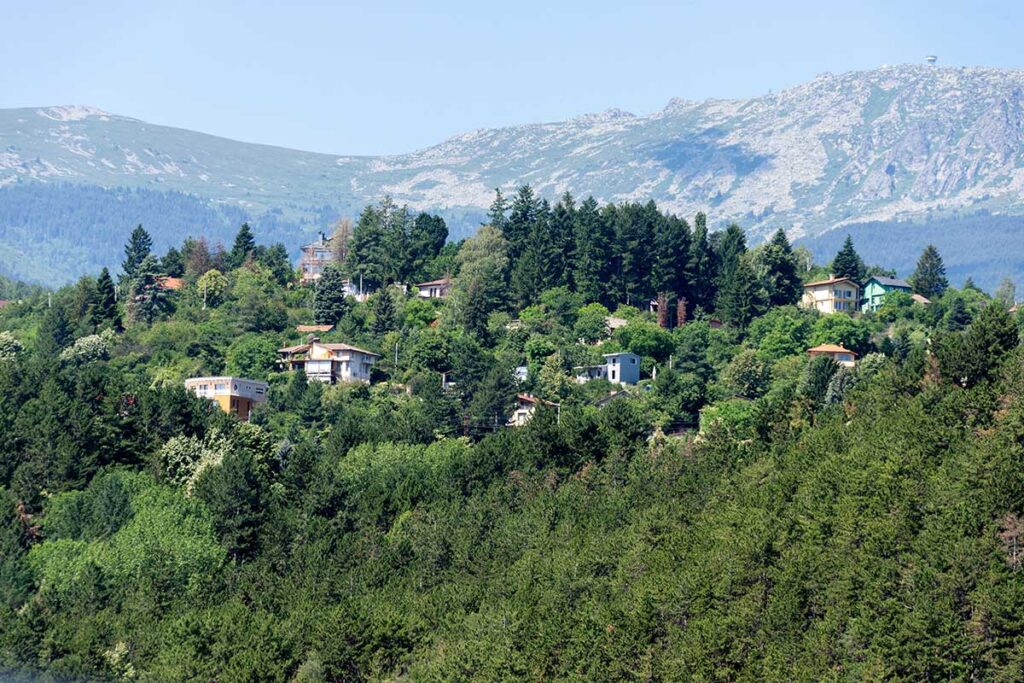
Rising directly beside Sofia, Vitosha Mountain gives Sofia unusually easy access to a major mountain landscape. From central Sofia, its broad silhouette dominates the southern horizon, and many of its trails can be reached in less than an hour.
The highest point is Cherni Vrah, at 2,290 meters (7,513 ft). Although Vitosha does not have the dramatic alpine peaks of Rila or Pirin, its accessibility, forests, open plateaus, waterfalls, rock formations, and panoramic views make it a favorite outdoor escape for Sofia residents.
Cherni Vrah
Cherni Vrah, meaning “Black Peak,” is the classic summit destination on Vitosha. Several routes reach the top, with trails approaching from areas such as Aleko Hut and Zlatnite Mostove.
Much of the upper mountain consists of broad open terrain rather than steep rocky ridges. On clear days, the summit offers expansive views over Sofia and toward surrounding mountain ranges.
Cherni Vrah also has an important place in Bulgarian hiking history. An organized climb to the summit in 1895, initiated by Bulgarian writer Aleko Konstantinov, is widely associated with the beginning of the organized tourist movement in Bulgaria.
The Golden Bridges
One of Vitosha’s most unusual natural features is Zlatnite Mostove, or the Golden Bridges. Despite the name, there are no bridges here.
Instead, enormous rounded boulders form a broad stone river descending through the forest. These formations developed through long-term weathering and movement of rock material and are now among Vitosha’s most distinctive natural features.
The surrounding forest trails make Zlatnite Mostove a popular starting point for walks deeper into the mountain.
Boyana Waterfall
Another favorite destination is Boyana Waterfall, located above Sofia’s Boyana neighborhood. At around 25 meters high, it is the tallest waterfall on Vitosha.
Several hiking routes lead to the falls, and the trail can be combined with a visit to Boyana Church, a UNESCO World Heritage Site famous for its medieval frescoes.
The waterfall is generally most impressive during spring snowmelt and after periods of heavier rainfall.
What to See and Do on Vitosha
Popular experiences include:
- Hike to Cherni Vrah
- Walk through the Golden Bridges
- Hike to Boyana Waterfall
- Visit Boyana Church
- Explore the trails around Aleko Hut
- Walk through Vitosha’s forests and high plateaus
- Enjoy panoramic views over Sofia
- Ski and snowboard during the winter season
Vitosha is particularly useful on a short Sofia stay. You can explore the capital in the morning and be walking through forests or across an open mountain plateau later the same day.
6. Sredna Gora
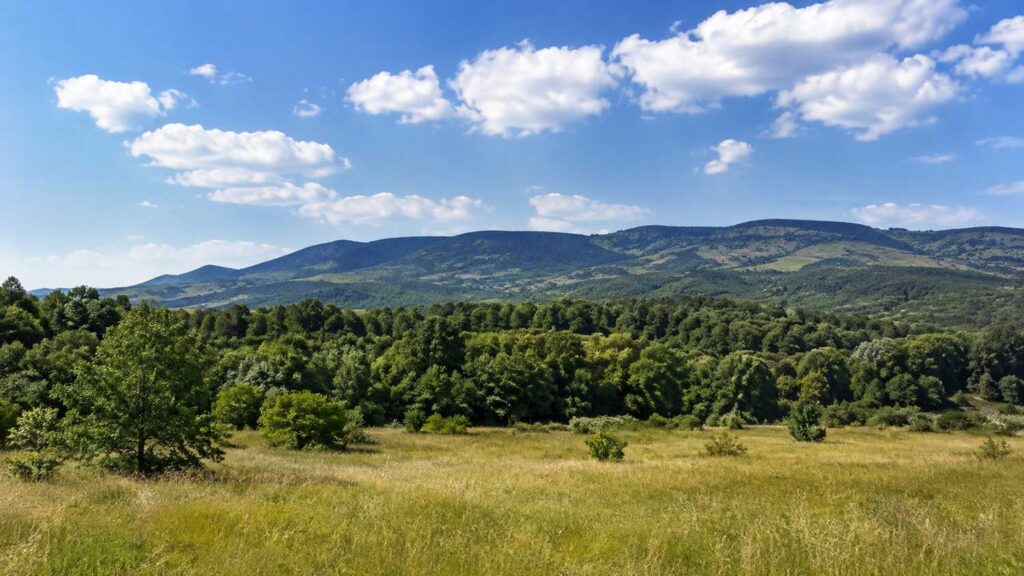
Running roughly parallel to the Balkan Mountains, Sredna Gora stretches across central Bulgaria between the valleys of the Maritsa River to the south and the Sub-Balkan valleys to the north. It lacks the towering summits of Rila and Pirin, but its forested hills, mineral springs, historic towns, and quieter trails give it a character of its own.
The highest point is Golyam Bogdan, at 1,604 meters (5,262 ft). Much of Sredna Gora is covered in deciduous and mixed forests, making the mountain especially attractive in autumn.
Koprivshtitsa and Bulgaria’s Revival History
Koprivshtitsa is the cultural highlight of Sredna Gora, surrounded by wooded hills in the central part of the range.
Its colorful 19th-century houses, cobbled streets, stone bridges, and museums preserve an important part of Bulgaria’s National Revival period. Koprivshtitsa also played a central role in the April Uprising of 1876, one of the defining events in the struggle for Bulgarian liberation from Ottoman rule.
The surrounding hills have walking routes and viewpoints, so a visit can easily combine history with time outdoors.
Hisarya and the Mineral Springs
On the southern slopes of Sredna Gora lies Hisarya, known since antiquity for its mineral springs.
The town preserves substantial remains from the Roman period, including sections of defensive walls and gates. Its combination of archaeology, parks, mineral water, and mountain surroundings makes Hisarya an easy addition to a journey through central Bulgaria.
Starosel and the Thracians
The Sredna Gora region also contains important traces of ancient Thracian civilization. Near the village of Starosel, archaeologists uncovered a major Thracian cult complex dating to the late first millennium BC.
Together with Hisarya and Koprivshtitsa, Starosel makes Sredna Gora particularly interesting for travelers who want history alongside easy mountain walks.
What to See and Do in Sredna Gora
Highlights include:
- Walk through historic Koprivshtitsa
- Hike to Golyam Bogdan
- Visit the mineral springs and Roman remains of Hisarya
- Visit the Thracian complex at Starosel
- Walk through the forests surrounding Koprivshtitsa
- Visit small villages and historic sites across the region
- Enjoy the mountain’s autumn colors
7. Osogovo Mountains
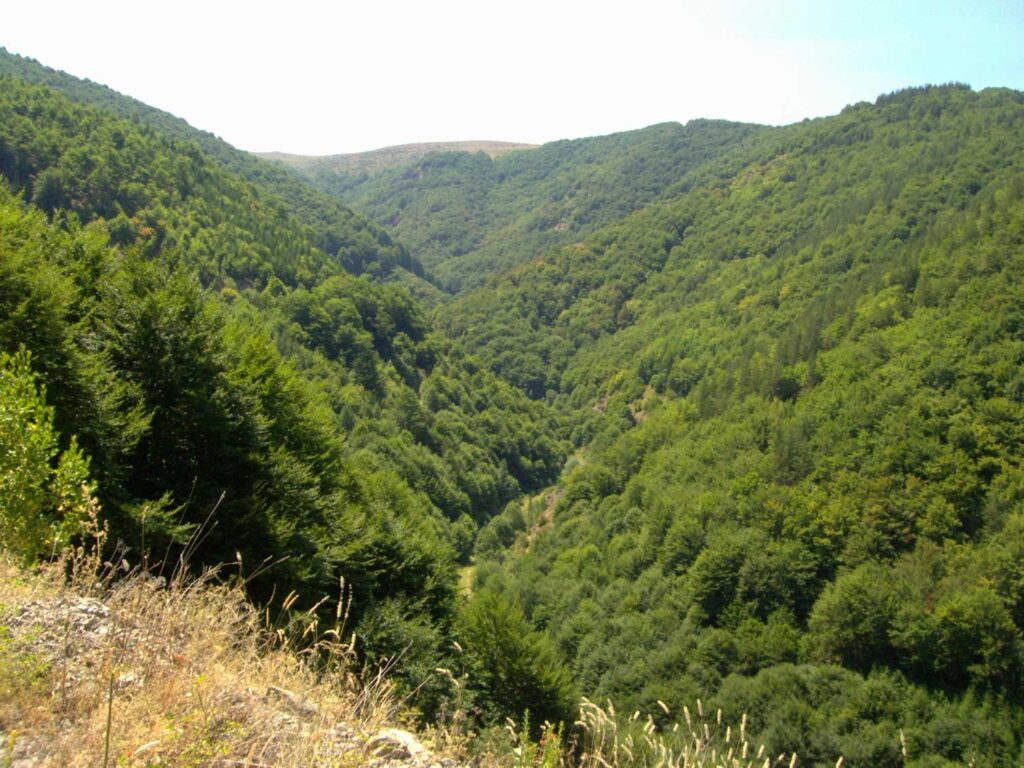
The Osogovo Mountains rise along Bulgaria’s western border with North Macedonia, southwest of the city of Kyustendil. Compared with Rila, Pirin, and Vitosha, Osogovo receives far fewer international visitors, which is part of its appeal.
Forested slopes, broad ridges, mountain meadows, and open views dominate the landscape. The highest summit is Ruen Peak, at 2,251 meters (7,385 ft), located directly on the border between Bulgaria and North Macedonia.
Ruen Peak
Ruen Peak is the main hiking objective in Osogovo and ranks among Bulgaria’s highest summits. The approach crosses forests and open mountain terrain before reaching the broad summit area.
Unlike the rocky alpine landscapes of Pirin, much of Osogovo has softer contours and expansive grassy ridges. This gives hikers long views across the surrounding mountains and valleys.
Because Ruen lies on an international border, hikers should check current access requirements and route conditions before setting out.
Hisarlaka and Kyustendil
The city of Kyustendil makes a practical base for exploring the Bulgarian side of Osogovo. Known for its mineral springs, the city has a history stretching back to antiquity.
Above Kyustendil, Hisarlaka is a forested park containing the remains of a late antique and medieval fortress. Walking paths and viewpoints overlook the city and the surrounding valley, while the higher slopes of Osogovo rise beyond.
What to See and Do in Osogovo
Highlights include:
- Hike toward Ruen Peak
- Walk through Osogovo’s forests and mountain meadows
- Visit Kyustendil
- Walk through Hisarlaka
- Enjoy the area’s mineral springs
- Follow quieter routes away from Bulgaria’s major resorts
- Photograph the wide borderland landscapes
8. Belasitsa Mountain
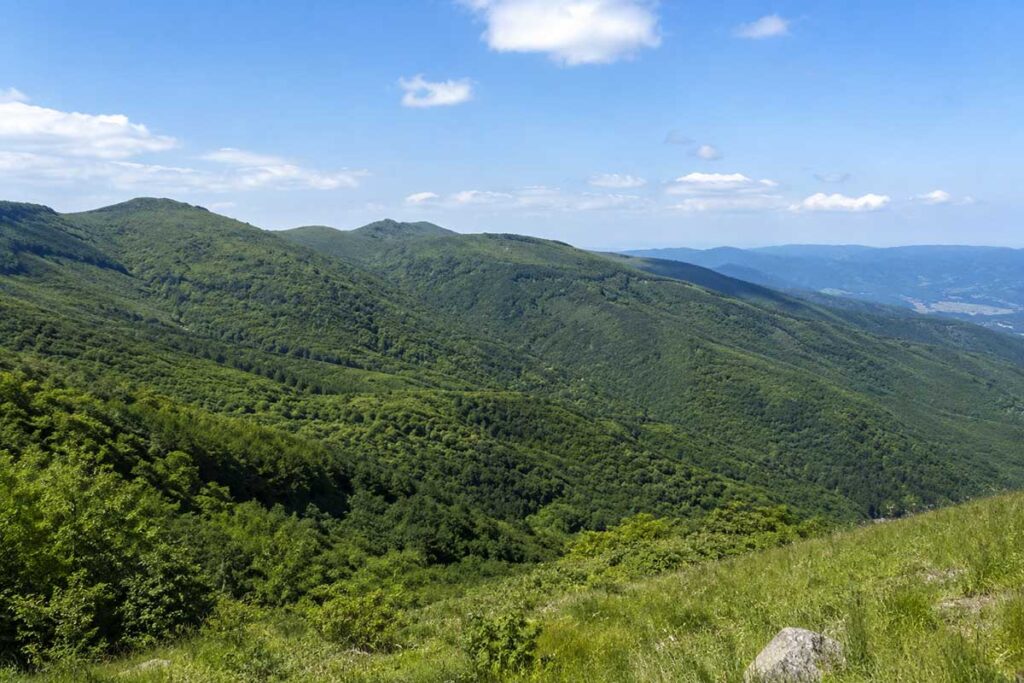
In Bulgaria’s far southwest, Belasitsa Mountain rises above the Strumeshnitsa Valley near the town of Petrich. The range stretches across the borders of Bulgaria, Greece, and North Macedonia, giving its higher slopes impressive views across three countries.
The highest point of the entire mountain is Radomir Peak, at 2,029 meters (6,657 ft), situated on the Bulgarian-Greek border. Belasitsa is heavily forested at lower elevations, while its upper ridges open into mountain meadows with far-reaching views.
Waterfalls of Belasitsa
Several waterfalls lie in the forests above the villages on Belasitsa’s northern slopes. Marked eco-trails lead through shady valleys to cascades that are strongest during periods of higher water flow.
Among the better-known are Kameshnishki Waterfall near the village of Kamena and the waterfalls around Kolarovo and Yavornitsa. These routes offer an easier alternative to the longer hikes toward the mountain’s highest ridges.
Spring usually brings stronger water flow, while the surrounding forests turn intensely green.
Belasitsa Nature Park
Much of the Bulgarian section of the mountain is protected within Belasitsa Nature Park. The park preserves extensive forests, mountain habitats, streams, waterfalls, and a rich variety of plant and animal life.
A network of marked trails and eco-routes provides access from villages along the northern foothills. Compared with Bulgaria’s major national parks, the area feels noticeably quieter.
Petrich and the Rupite Area
Belasitsa can easily be combined with attractions around Petrich. A short drive away is Rupite, an area known for its hot mineral springs, volcanic landscape, and association with the Bulgarian mystic Baba Vanga.
Nearby are the archaeological remains of Heraclea Sintica, an ancient city whose ongoing excavations have revealed streets, public buildings, inscriptions, sculptures, and other traces of life in this part of the ancient Balkans.
What to See and Do in Belasitsa
Highlights include:
- Hike toward Radomir Peak
- Follow the mountain’s waterfall eco-trails
- Hike in Belasitsa Nature Park
- Visit the villages along the northern foothills
- Spend time in Petrich
- Visit Rupite
- Visit ancient Heraclea Sintica
- Enjoy panoramic views across Bulgaria, Greece, and North Macedonia
Belasitsa sees only a fraction of the international tourism of nearby Rila and Pirin, and its waterfall trails can feel surprisingly quiet outside weekends and holidays.
9. Slavyanka Mountain
Tucked into Bulgaria’s southwestern corner along the border with Greece, Slavyanka Mountain is a relatively small limestone range immediately south of Pirin. Despite their proximity, the two mountains have noticeably different geology and landscapes.
The highest point is Gotsev Vrah, at 2,212 meters (7,257 ft), standing on the Bulgarian-Greek border. Slavyanka’s lower slopes are forested, but the terrain becomes increasingly open and exposed as the ridges approach the Bulgarian-Greek border.
Ali Botush Nature Reserve
Much of Slavyanka’s natural importance is concentrated in the Ali Botush Nature Reserve, which protects forests and an exceptional variety of plant species.
The mountain’s limestone geology, southern location, and Mediterranean influence have created habitats for plants rarely found elsewhere in Bulgaria. Slavyanka is particularly important botanically because of its endemic and rare plant species.
The reserve has strict conservation rules, and access to some areas may be limited. Travelers should check current regulations before planning a hike through protected territory.
Gotsev Vrah
Gotsev Vrah is the mountain’s highest summit and a demanding destination for hikers. Routes toward the peak cross forested lower slopes before reaching more exposed terrain near the Bulgarian-Greek border.
From the higher ridges, views extend toward Pirin and across the mountains of northern Greece. The relative lack of tourist development gives Slavyanka a much more remote atmosphere than nearby destinations around Bansko and northern Pirin.
What to See and Do in Slavyanka
The main reasons to explore the mountain include:
- Hike toward Gotsev Vrah
- Experience Slavyanka’s distinctive limestone landscapes
- Discover its exceptional botanical diversity
- Explore trails around the mountain’s northern foothills
- Enjoy views toward Pirin and northern Greece
- Visit nearby villages in the Gotse Delchev region
- Experience a quieter mountain far from Bulgaria’s major resorts
Slavyanka isn’t the easiest mountain in Bulgaria to explore. Its protected habitats, unusual geology, rare plants, and remote border ridges make it better suited to experienced hikers and nature enthusiasts than casual sightseeing.
10. Strandzha Mountain
In southeastern Bulgaria, Strandzha Mountain offers a landscape unlike any of the high ranges farther west. There are no alpine summits or glacial lakes here. Instead, low forested ridges spread toward the Black Sea, crossed by rivers and dotted with small villages.
The range continues across the border into Turkey. On the Bulgarian side, the highest point is Gradishte, at around 710 meters (2,329 ft), near the town of Malko Tarnovo.
Strandzha’s appeal comes not from elevation but from its ancient forests, traditional culture, archaeological heritage, and proximity to the sea.
Strandzha Nature Park
Much of the Bulgarian mountain is protected within Strandzha Nature Park, the largest nature park in Bulgaria.
The area’s humid climate has helped preserve forests containing plant communities with ancient origins. Some valleys shelter species more commonly associated with warmer and wetter climates, giving parts of Strandzha an almost subtropical appearance during the lushest months of the year.
One of its signature plants is Strandzha periwinkle (Rhododendron ponticum), which produces striking purple-pink flowers beneath the forest canopy, usually in late spring.
Traditional Strandzha Villages
Much of Strandzha’s character is found in its villages. Brashlyan, with its preserved traditional houses and quiet streets, provides a glimpse into the architecture and rural character of old Strandzha.
The village of Bulgari is famous for its connection with Nestinarstvo, the traditional fire-dancing ritual performed on glowing embers. The ritual has deep roots in the region and is included on UNESCO’s Representative List of the Intangible Cultural Heritage of Humanity.
Rivers, Forests, and the Black Sea
Strandzha eventually descends toward Bulgaria’s southern Black Sea coast, creating an unusual transition from forested mountain to beaches and river estuaries.
The Veleka River is especially beautiful near the village of Sinemorets, where it winds between wooded hills before reaching the Black Sea beside a long sandy beach.
This means a trip through Strandzha can combine forest walks and traditional villages with some of the wildest coastal scenery in Bulgaria.
What to See and Do in Strandzha
Highlights include:
- Travel through Strandzha Nature Park
- Visit traditional Brashlyan
- Discover the fire-dancing traditions of Bulgari
- Spend time in Malko Tarnovo
- Walk through the mountain’s old forests
- Look for blooming Strandzha periwinkle in late spring
- Follow the Veleka River toward the coast
- Visit Sinemorets and the southern Black Sea coast
- Discover Thracian sanctuaries, tombs, and archaeological sites throughout the region
Strandzha is a reminder that Bulgaria’s most interesting mountain landscapes aren’t always the highest. Here, mountain roads eventually reach river estuaries and Black Sea beaches—a transition you won’t find in Bulgaria’s high western ranges.
Which Mountain in Bulgaria Should You Visit?
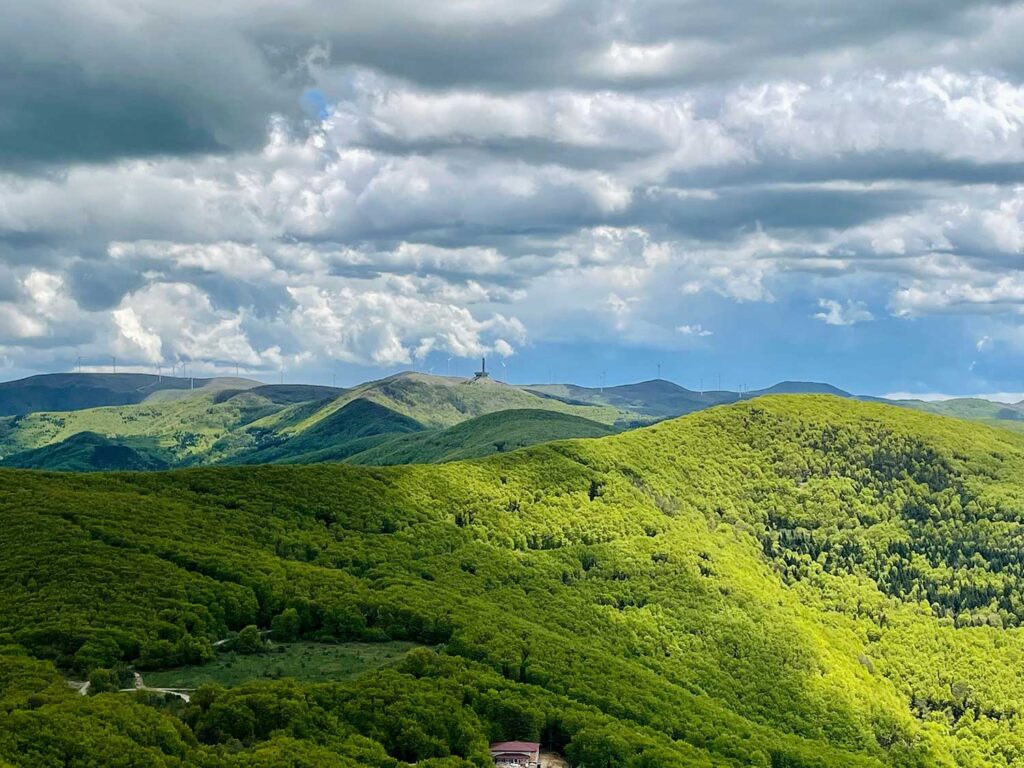
The right mountain depends on the trip you’re planning. Some ranges are ideal for serious hiking, while others are better for villages, history, waterfalls, caves, or an easy escape into nature.
Best for First-Time Visitors: Rila
Choose Rila if this is your first mountain trip in Bulgaria. Musala, the Seven Rila Lakes, Rila Monastery, and Malyovitsa put several of the country’s signature mountain experiences within the same region.
Best for Serious Hiking: Pirin
For rugged alpine terrain and challenging trails, Pirin is hard to beat. Vihren, high ridges, glacial lakes, and the extensive trail network of Pirin National Park give experienced hikers some of Bulgaria’s most demanding high-altitude routes.
Best for Culture and Traditional Villages: Rhodopes
Choose the Rhodope Mountains for a slower trip built around villages, local food, folklore, caves, gorges, and forest scenery. Shiroka Laka, Gela, Trigrad, and the area around Smolyan can easily fill several days.
Best for History and Long-Distance Hiking: Balkan Mountains
The Balkan Mountains combine major historic sites with some of Bulgaria’s longest mountain routes. Shipka Pass, Botev Peak, Central Balkan National Park, and the Kom–Emine trail bring history and hiking into the same part of the country.
Best Mountain Near Sofia: Vitosha
For convenience, Vitosha wins easily. You can stay in Sofia and still hike to waterfalls, walk among the stone rivers, climb Cherni Vrah, or spend a few hours in the forests without organizing a separate mountain trip.
Best for Quiet Hiking: Osogovo
Osogovo sees fewer visitors than Bulgaria’s famous ranges. Its broad ridges, forests, and routes around Ruen Peak suit hikers looking for quieter trails and open landscapes.
Best for Waterfalls: Belasitsa
The forested northern slopes of Belasitsa hide a series of waterfalls reached by eco-trails from villages near Petrich. Many of these routes work as shorter walks, so you don’t need to spend a full day on the high ridges.
Best for Wild Nature and Rare Plants: Slavyanka
The limestone landscapes and botanical diversity of Slavyanka set it apart. This is a more specialized destination, best suited to experienced hikers and travelers with a strong interest in plants, geology, and protected mountain environments.
Best for Mountains and the Black Sea: Strandzha
Strandzha offers something none of Bulgaria’s high mountains can: the chance to move from deep forest and traditional villages to wild stretches of the Black Sea coast. It works particularly well as a road trip, especially when combined with Malko Tarnovo, the Veleka River, and the southern coast.
Highest Mountains in Bulgaria
Bulgaria has several ranges rising above 2,000 meters, but Rila and Pirin dominate the country’s highest terrain. The two mountains contain Bulgaria’s highest summits and some of its most demanding hiking routes.
Musala, in Rila, reaches 2,925 meters (9,596 ft), making it the highest peak not only in Bulgaria but across the entire Balkan Peninsula. Vihren, the highest point in Pirin, follows closely at 2,914 meters (9,560 ft).
| Mountain | Highest Peak | Elevation |
|---|---|---|
| Rila | Musala | 2,925 m |
| Pirin | Vihren | 2,914 m |
| Balkan Mountains (Stara Planina) | Botev | 2,376 m |
| Vitosha | Cherni Vrah | 2,290 m |
| Osogovo | Ruen | 2,251 m |
| Slavyanka | Gotsev Vrah | 2,212 m |
| Rhodope Mountains | Golyam Perelik | 2,191 m |
| Belasitsa | Radomir | 2,029 m |
| Sredna Gora | Golyam Bogdan | 1,604 m |
| Strandzha (Bulgarian section) | Gradishte | about 710 m |
The numbers tell only part of the story. The lower Rhodope Mountains, for example, offer an extraordinary mix of caves, gorges, forests, villages, and cultural traditions, while low-lying Strandzha preserves ecosystems and landscapes found nowhere else in Bulgaria.
Best Time to Visit the Mountains in Bulgaria
The ideal season depends on where you’re going and what you plan to do. Conditions vary considerably with elevation, especially between the high trails of Rila and Pirin and Bulgaria’s lower forested ranges.
Spring: Waterfalls and Green Landscapes
From April into June, the lower mountains become lush and green, while melting snow feeds rivers and waterfalls. Belasitsa, Strandzha, Vitosha, and the Rhodopes are particularly attractive during this period.
Higher parts of Rila and Pirin can still hold significant snow well into spring, so summer hiking conditions should not be assumed at altitude.
Summer: Best for High-Mountain Hiking
July through September is generally the most practical period for hiking the high trails of Rila and Pirin. Mountain huts are more accessible, days are long, and most high-altitude routes are free of winter snow.
Summer thunderstorms can develop quickly, especially in the afternoon. Starting longer hikes early in the morning gives you more time to finish before conditions change.
Autumn: Forests and Fewer Crowds
September and October bring cooler temperatures and autumn color to Bulgaria’s forested mountains. Autumn color is particularly noticeable across Sredna Gora, the Rhodopes, Vitosha, Osogovo, and Strandzha.
At higher elevations, however, temperatures fall quickly and the first snow can arrive surprisingly early.
Winter: Skiing and Snow-Covered Mountains
Winter transforms Bulgaria’s major ranges. Bansko in Pirin, Borovets in Rila, and Pamporovo in the Rhodopes are the country’s best-known ski destinations.
Snowshoeing and winter hiking are also possible, but high-mountain conditions require appropriate equipment and experience. Heavy snow, ice, strong winds, poor visibility, and avalanche risk can turn familiar summer routes into serious winter terrain.
For most visitors interested primarily in hiking, late June through September provides the widest choice of accessible mountain routes. For forests, waterfalls, villages, and lower-elevation walks, spring and autumn can be just as rewarding.
Hiking in the Mountains of Bulgaria
Bulgaria’s hiking routes range from short forest walks and waterfall trails to demanding summit climbs and multi-day mountain crossings.
Rila and Pirin attract many experienced hikers, while Vitosha offers easy access from Sofia. The Rhodopes, Sredna Gora, Strandzha, and Belasitsa have plenty of gentler routes where the scenery and villages matter more than reaching a high summit.
Mountain Huts
Bulgaria has a large network of mountain huts, known locally as hizhi. Many sit directly on established routes to peaks, lakes, and remote valleys.
Facilities vary considerably. Some huts offer meals, showers, electricity, and private rooms, while others are much more basic. Check current opening dates and conditions before relying on a hut for food or overnight accommodation.
Trail Markings
Many established hiking routes use painted trail markings on rocks, trees, posts, and signs. However, the quality of signage varies between regions, and markings can be faded, damaged, or difficult to follow.
Carry an offline map or GPS route rather than depending entirely on trail markers, especially on longer hikes.
Mountain Safety
Conditions in Bulgaria’s high mountains can change quickly. Sunshine in a valley does not guarantee good weather near a summit, and summer afternoons can bring thunderstorms, strong winds, and sudden drops in temperature.
Before heading out:
- Check the mountain weather forecast
- Start long hikes early
- Carry sufficient water and food
- Wear suitable hiking footwear
- Bring an extra warm and waterproof layer
- Download an offline map
- Tell someone where you’re going on remote routes
- Turn around if weather or trail conditions deteriorate
Winter and early-spring hiking require additional experience and equipment. Snow and ice can remain on high routes long after conditions at lower elevations have become warm and dry.
Mountain Rescue in Bulgaria
Bulgaria’s Mountain Rescue Service (Planinska Spasitelna Sluzhba) operates across the country’s major mountain regions. The European emergency number 112 can be used in an emergency.
Saving the relevant emergency information before heading into remote terrain is sensible, particularly when hiking without a guide.
Best Mountain Towns and Villages in Bulgaria
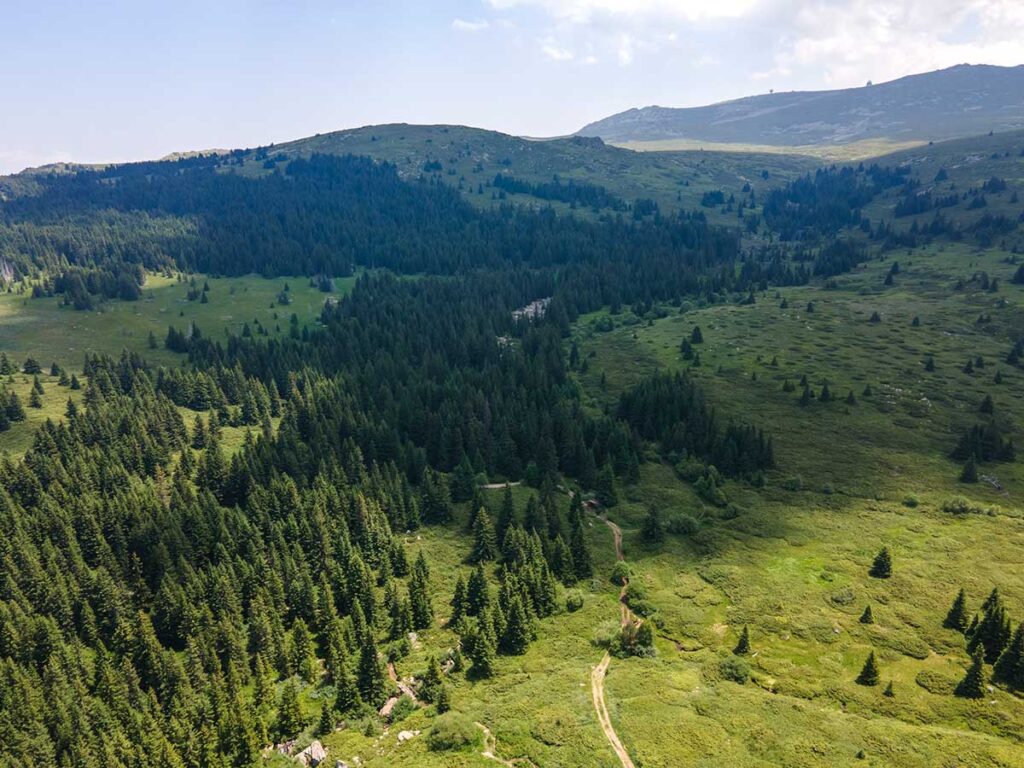
A mountain trip in Bulgaria doesn’t have to mean hiking from morning to evening. Several historic towns and villages sit at the foot of the major ranges and make practical bases between days on the trail.
Bansko
At the foot of Pirin, Bansko is Bulgaria’s best-known ski destination, but the town is worth exploring beyond winter. Its historic center contains traditional stone-and-timber houses, cobbled streets, old churches, and mehanas serving Bulgarian food.
For hikers, roads and trails from Bansko lead toward Pirin National Park, Vihren Hut, mountain lakes, and several of the range’s highest peaks.
Borovets
Surrounded by the forests of Rila, Borovets is one of Bulgaria’s oldest mountain resorts. Winter centers on skiing and snowboarding, while the warmer months bring hiking, mountain biking, and access to routes toward Musala.
Its proximity to Sofia also makes Borovets practical for travelers who don’t have time for a longer mountain road trip.
Shiroka Laka
The Rhodope village of Shiroka Laka is known for its traditional architecture, stone bridges, narrow streets, and strong musical heritage.
Rather than using it simply as a stop between attractions, spend some time walking through the village and exploring the surrounding Rhodope landscape. Nearby destinations include Gela, Smolyan, Trigrad, and several caves and hiking routes.
Koprivshtitsa
Set among the wooded hills of Sredna Gora, Koprivshtitsa combines mountain scenery with some of Bulgaria’s finest National Revival architecture.
Dozens of preserved houses, museums, cobbled lanes, and historic sites make it possible to spend much of a day exploring on foot. Trails into the surrounding hills provide an easy way to add nature to the visit.
Smolyan
Smolyan stretches through a long valley in the central Rhodopes and works well for a multi-day stay in the region.
The Smolyan Lakes, Canyon of Waterfalls, Pamporovo, Shiroka Laka, and several mountain trails are all within reach. This is a good option for travelers planning several days in the Rhodopes rather than passing through on a single-day excursion.
Kalofer
Sitting beneath the central Balkan Mountains, Kalofer is closely connected with Bulgarian history and with the landscapes around Botev Peak.
The town is a common starting point for hikes into Central Balkan National Park, including routes toward Rai Hut and Raysko Praskalo. It is also the birthplace of Bulgarian revolutionary and poet Hristo Botev, whose legacy remains an important part of the town.
Staying overnight also changes the pace of the trip. You have time for an evening in town, local food, and an early start into the mountains the following morning.
How to Get to Bulgaria’s Mountains
The major resorts are fairly easy to reach, but transportation becomes thinner once you head toward smaller villages and remote trailheads. A rental car is useful for a multi-region trip, though it isn’t essential everywhere.
From Sofia
Sofia is the most convenient starting point for Vitosha, Rila, Pirin, Osogovo, and parts of the Balkan Mountains.
Vitosha rises directly south of the capital, while Borovets and other parts of Rila can be reached on a day trip. Bansko provides a practical base for northern Pirin, and Kyustendil is the main gateway to Osogovo.
Public buses connect Sofia with many larger mountain towns, but reaching individual trailheads may require a taxi, shuttle, or additional local transportation.
From Plovdiv
Plovdiv works well as a gateway to the Rhodope Mountains and Sredna Gora.
Roads lead south toward destinations such as Pamporovo, Smolyan, Shiroka Laka, and the western and central Rhodopes. To the north, towns including Hisarya and Koprivshtitsa provide access to Sredna Gora and the southern side of the Balkan Mountains.
From the Black Sea Coast
Travelers staying around Burgas and Bulgaria’s southern Black Sea coast can combine a beach trip with Strandzha.
Roads lead inland toward Malko Tarnovo and the villages of Strandzha Nature Park, while coastal places such as Sinemorets provide access to the lower reaches of the Veleka River and the mountain’s eastern landscapes.
Do You Need a Car?
Not always. Popular destinations such as Bansko, Borovets, and some parts of Vitosha can be reached without one.
A car becomes much more useful when exploring the Rhodopes, Strandzha, Belasitsa, Osogovo, or smaller mountain villages where public transport can be limited or infrequent.
On a multi-mountain road trip, driving also makes spontaneous stops and less accessible trailheads much easier.
Quick Tips for Visiting Bulgaria’s Mountains
A few practical details are easy to overlook when planning a mountain trip in Bulgaria:
- Check lift schedules before you go. Some mountain lifts run only during particular seasons or days of the week, and operations can stop because of weather or maintenance.
- Don’t assume a mountain hut will be open. Hours, overnight accommodation, meals, and other services vary considerably, so confirm ahead when your route depends on a hut.
- Carry some cash. Card payments aren’t guaranteed at mountain huts, small village shops, or other remote stops.
- Check winter road access. Snow and ice can affect roads to resorts, huts, viewpoints, and trailheads even when conditions in the nearest town look clear.
- Respect protected areas. National parks, nature parks, and reserves may have restrictions on camping, fires, vehicles, dogs, or access to sensitive areas.
- Give wildlife space. Never approach or feed wild animals, and don’t leave food behind on the trail.
- Don’t count on services at every trailhead. Parking, toilets, drinking water, food, and mobile coverage can be limited once you leave the major resorts.
- Save 112 for emergencies. Bulgaria uses the European emergency number 112.
Choose routes that fit your experience rather than simply aiming for the highest summit. Some of the most enjoyable days in Bulgaria’s mountains are spent on forest trails, beside lakes and waterfalls, or walking between villages.
Frequently Asked Questions About the Mountains in Bulgaria
What is the highest mountain in Bulgaria?
Rila is the highest mountain range in Bulgaria. Its highest summit, Musala Peak, reaches 2,925 meters (9,596 ft) above sea level. Musala is also the highest peak on the Balkan Peninsula.
What are the main mountains in Bulgaria?
Bulgaria has numerous mountain ranges, but the best known include Rila, Pirin, the Rhodope Mountains, the Balkan Mountains (Stara Planina), Vitosha, Sredna Gora, Osogovo, Belasitsa, Slavyanka, and Strandzha.
Which is the most beautiful mountain in Bulgaria?
There isn’t a single answer, since the landscapes are very different. Rila is famous for glacial lakes and high peaks, while Pirin has a more rugged alpine character. The Rhodopes stand out for forests, gorges, caves, villages, and traditional culture.
Which mountain is best for hiking in Bulgaria?
For high-mountain hiking, Rila and Pirin offer some of the country’s most impressive routes. The Balkan Mountains are excellent for long-distance hiking, while Vitosha is the easiest option for hikers staying in Sofia.
Can you visit Bulgaria’s mountains without hiking?
Absolutely. Rila Monastery, historic Koprivshtitsa, Shiroka Laka, Shipka Pass, caves in the Rhodopes, mineral-spring towns, mountain resorts, and numerous scenic roads allow you to experience the mountains without undertaking a demanding hike.
When is the best time to hike in Bulgaria?
For most high-altitude routes, summer through early autumn provides the most reliable hiking conditions. Snow can remain at higher elevations well into spring, while winter conditions require appropriate equipment and experience.
Are there bears in the mountains of Bulgaria?
Yes. Brown bears live in Bulgaria, particularly in larger forested mountain regions such as Rila, Pirin, the Rhodopes, and the Balkan Mountains. Encounters with hikers are uncommon, but visitors should respect wildlife and avoid approaching or feeding wild animals.
Can you ski in Bulgaria’s mountains?
Yes. Bulgaria has several ski areas, with Bansko, Borovets, and Pamporovo being the best known. Smaller ski areas can also be found in other mountain regions.
Can I visit the mountains from Sofia on a day trip?
Yes. Vitosha is immediately outside Sofia and is the easiest choice. Parts of Rila, including Rila Monastery and Borovets, are also commonly visited on day trips from the capital, although combining distant attractions in a single day can mean spending considerable time on the road.
Do I need a guide to hike in Bulgaria?
A guide isn’t required for many established routes, but hiring one can be worthwhile for difficult summits, winter hiking, unfamiliar terrain, or remote areas. Whatever the route, check current weather and trail conditions and carry reliable navigation.
Final Thoughts: Exploring the Mountains in Bulgaria
No single mountain represents Bulgaria particularly well. Rila may be the place for a first high-altitude hike, while another trip could revolve around Rhodope villages, the long ridge of Stara Planina, or the forests of Strandzha.
That’s part of the pleasure of traveling through the country: the landscape changes quickly, and the next mountain rarely feels like a repeat of the last.
You don’t have to climb the highest peaks to appreciate them. Spend a morning beside a glacial lake, follow a forest trail to a waterfall, explore an old mountain village, visit a monastery, or simply stop at a viewpoint along the road.
And don’t try to fit everything into one trip. Bulgaria’s mountains change with the seasons, and there will always be another trail, village, or road worth returning for.
What’s Your Favorite Mountain in Bulgaria?
Have you explored any of these mountains in Bulgaria, or is there another mountain, hiking trail, peak, village, or hidden place you think deserves a spot on the list? We’d love to hear about your experience, especially if you’ve discovered a memorable viewpoint, peaceful trail, mountain hut, waterfall, or small village along the way.
Share your favorite in the comments below, or follow us on Instagram and tag @stunningbulgaria in your Bulgarian mountain photos. You can also use #stunningbulgaria so we can see where your adventures take you.
Continue Exploring Bulgaria
If you’re planning more adventures around Bulgaria, these guides will help you discover even more of the country:
- Top 10 Traditional Bulgarian Dishes — discover what to eat after a day exploring Bulgaria’s mountains.
- 25 Best Waterfalls in Bulgaria: A Complete Travel Guide — discover waterfalls hidden throughout Rila, the Rhodopes, Stara Planina, and other mountain regions.
- 9 Fascinating UNESCO World Heritage Sites in Bulgaria — explore Rila Monastery and other cultural and natural treasures around the country.
- Top 10 Places to Visit in Bulgaria — start here if you’re building a larger Bulgaria itinerary.
- Best Places for Backpackers in Bulgaria — find affordable destinations, mountain towns, hiking areas, and places worth adding to a longer trip.
- Most Beautiful Towns and Villages in Bulgaria — discover historic towns and traditional villages surrounded by some of Bulgaria’s most beautiful landscapes.