Bulgaria may be a relatively small country, but thousands of years of history have left it with an extraordinary collection of ancient tombs, medieval churches, monasteries, archaeological sites, and protected landscapes.
Some of the country’s most remarkable places have been recognized by UNESCO for their outstanding universal value. They range from the medieval frescoes of Boyana Church and the mysterious Madara Rider to the alpine landscapes of Pirin National Park.
For travelers, exploring the UNESCO World Heritage Sites in Bulgaria is also a wonderful way to experience just how varied the country can be. You can explore a Thracian tomb in the morning, walk through a medieval monastery another day, and hike among glacial lakes and rugged mountain peaks on the next.
Here are the 9 UNESCO World Heritage Sites in Bulgaria traditionally listed as the country’s individual World Heritage properties, what makes each one special, and what you should know before visiting.
Cultural and Natural UNESCO Sites in Bulgaria
The UNESCO World Heritage Sites in Bulgaria can be divided into two main groups: cultural sites and natural sites.
Seven of the nine individual properties in this guide are cultural. They preserve traces of several important periods in Bulgarian history, from the Thracians and the early Bulgarian state to medieval Christianity and the Bulgarian National Revival.
The Thracian Tombs of Kazanlak and Sveshtari reveal two remarkable examples of ancient Thracian culture. The Madara Rider is closely connected with the early medieval Bulgarian state, while Boyana Church, Rila Monastery, and the Rock-Hewn Churches of Ivanovo preserve exceptional examples of Bulgaria’s Christian and artistic heritage.
Ancient Nessebar is different again. Its layers of Thracian, Greek, Roman, Byzantine, Bulgarian, and Ottoman history make the entire Old Town feel like an open-air journey through different periods.
Bulgaria’s two individual natural UNESCO properties are Pirin National Park and Srebarna Nature Reserve.
They could hardly be more different. Pirin protects rugged mountains, forests, alpine landscapes, and glacial lakes, while Srebarna protects wetlands and internationally important bird habitat near the Danube.
UNESCO World Heritage Sites in Bulgaria
Bulgaria became a member of UNESCO in 1974, and its first World Heritage properties were inscribed only a few years later.
The country’s UNESCO heritage includes both cultural and natural sites. Seven of the nine sites covered in this guide are cultural properties, while Pirin National Park and Srebarna Nature Reserve are recognized for their natural importance.
Bulgaria also participates in the transnational UNESCO property Ancient and Primeval Beech Forests of the Carpathians and Other Regions of Europe, which stretches across multiple European countries.
To love is the work of the soul. Don’t interfere in its work.
Petar Deunov
Together, these places tell a remarkable story spanning Thracian civilization, the First and Second Bulgarian Empires, medieval Christianity, and some of Bulgaria’s most important protected natural landscapes.
That’s also why exploring the UNESCO World Heritage Sites in Bulgaria never feels repetitive. No two places on this list offer quite the same experience.
Also Read: Best Mountains in Bulgaria You Must Visit
1. Rila Monastery
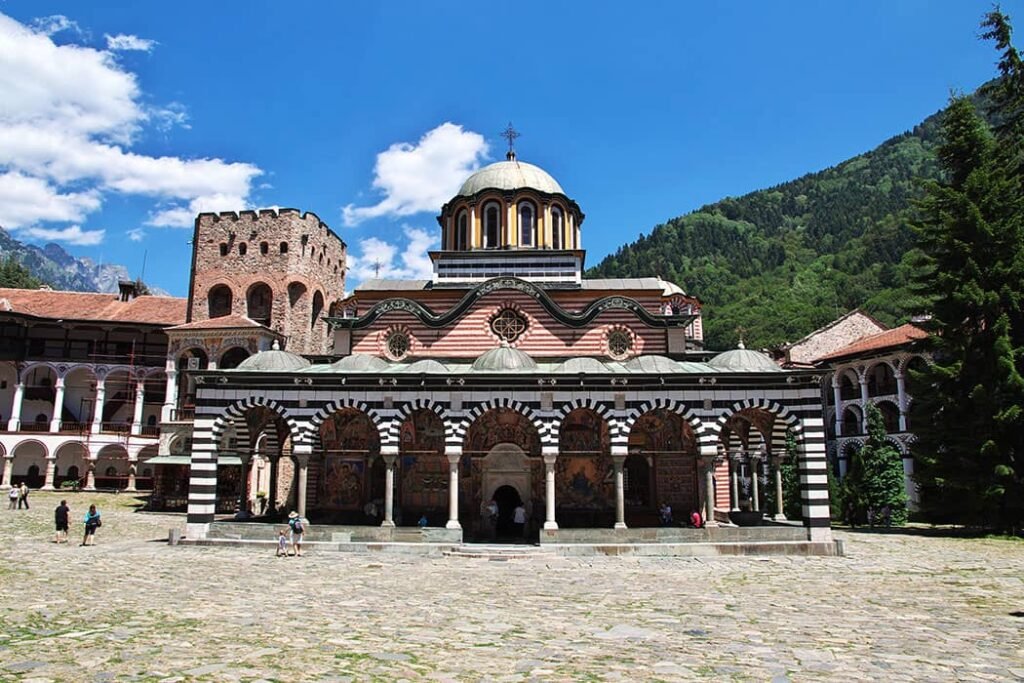
Hidden in the forested Rila Mountains, Rila Monastery is one of Bulgaria’s most recognizable landmarks and one of the country’s most rewarding places to visit.
The monastery traces its origins to Saint Ivan of Rila, a 10th-century hermit who became Bulgaria’s patron saint. Over the centuries, the monastery developed into an important religious, cultural, and educational center.
Its significance became particularly important during centuries of Ottoman rule, when monasteries helped preserve Bulgarian Christian traditions, manuscripts, literature, and cultural identity.
The complex visitors see today is spectacular. Massive striped arcades surround a stone courtyard dominated by the Church of the Nativity of the Virgin, while colorful frescoes cover its exterior galleries.
Don’t miss Hrelyo’s Tower, the oldest surviving structure in the monastery complex, dating to the 14th century.
Rila Monastery was inscribed on the UNESCO World Heritage List in 1983.
Why Visit Rila Monastery?
Come for the architecture and frescoes, but don’t rush back to Sofia as soon as you’ve seen the church. Spend some time in the courtyard and take in the forested peaks surrounding the monastery. Rila’s mountain setting is part of the experience.
From Sofia, Rila Monastery also makes one of the country’s classic day trips, although staying in the region gives you more time to explore.
Also Read: Our complete Rila Monastery guide for history, highlights, practical visiting information, and nearby attractions.
Location: Rila Monastery
2. Thracian Tomb of Kazanlak

Beneath an unassuming burial mound near Kazanlak lies one of Bulgaria’s greatest archaeological treasures.
The Thracian Tomb of Kazanlak, dating to the Hellenistic period around the end of the 4th century BC, is famous for the extraordinary paintings covering its corridor and burial chamber.
The frescoes depict horses, warriors, attendants, and a funerary banquet, offering a rare glimpse into the beliefs and burial traditions of ancient Thracian society.
The original tomb is extremely fragile and access is restricted to protect the paintings. Fortunately, visitors can enter a carefully constructed replica nearby, where the artwork and interior can be seen without damaging the original.
UNESCO inscribed the Thracian Tomb of Kazanlak in 1979.
Why Visit the Thracian Tomb of Kazanlak?
Don’t stop with the UNESCO tomb. Kazanlak sits in the famous Valley of the Thracian Kings, where burial mounds and archaeological discoveries are scattered across the surrounding countryside.
If you enjoy ancient history, this is one of the best regions in Bulgaria to explore.
Location: Thracian Tomb of Kazanlak
3. Madara Rider
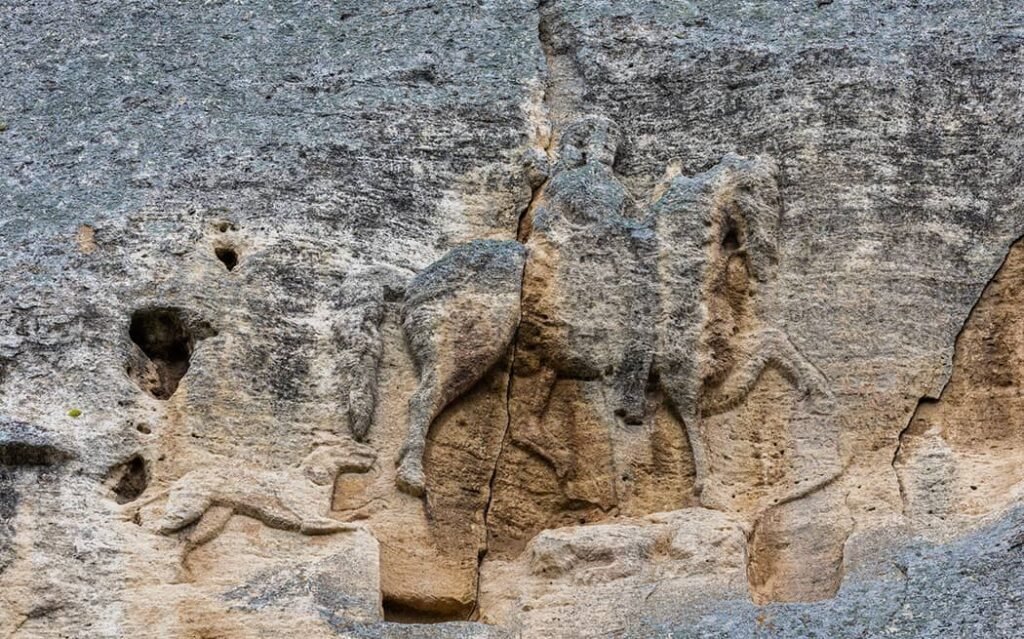
Few Bulgarian landmarks are as mysterious as the Madara Rider.
Carved high into a limestone cliff near the village of Madara in northeastern Bulgaria, the monumental relief shows a horseman accompanied by a dog, with a lion beneath the horse.
The carving stands approximately 23 meters above the ground on an enormous cliff face.
Created during the early medieval period, the monument is generally associated with the early Bulgarian state and the 8th century. Greek inscriptions carved around the relief record events connected with early Bulgarian rulers.
Its scale, location, and symbolism make the Madara Rider unlike almost anything else preserved from medieval Europe.
UNESCO added the monument to the World Heritage List in 1979.
Why Visit the Madara Rider?
Seeing photographs doesn’t quite prepare you for its location.
The relief appears high above you on the sheer rock face, and the surrounding Madara National Historical and Archaeological Reserve contains additional archaeological remains, caves, trails, and viewpoints.
Location: Madara Rider
4. Thracian Tomb of Sveshtari
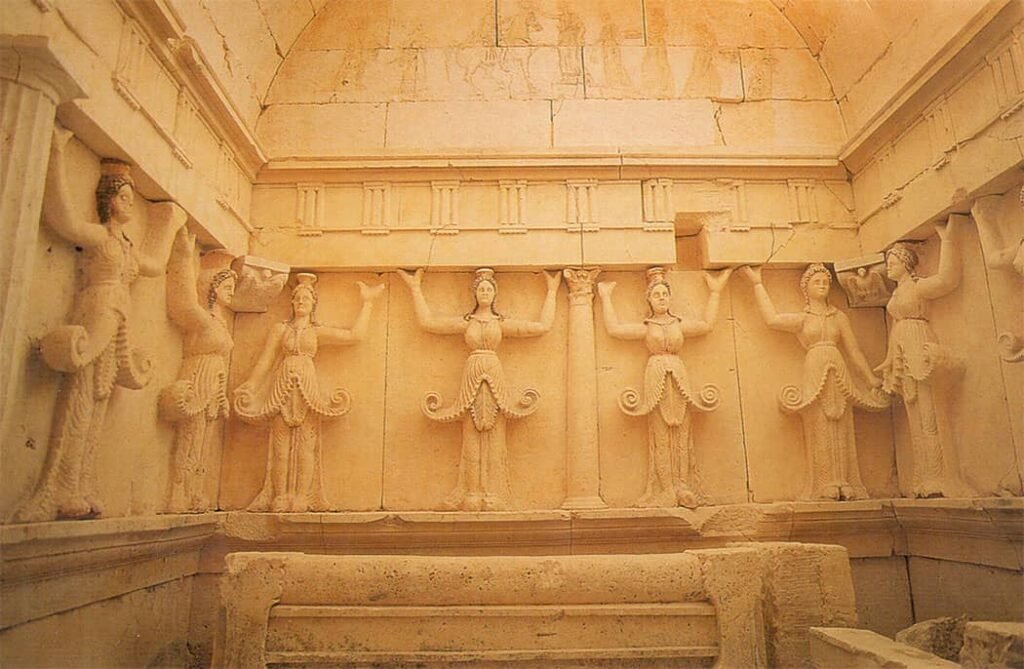
The Thracian Tomb of Sveshtari is one of Bulgaria’s most unusual archaeological sites.
Discovered in 1982, the 3rd-century BC tomb is associated with the Getae, a Thracian people who inhabited this part of northeastern Bulgaria.
The real surprise is inside the burial chamber, where ten sculpted female figures known as caryatids stand against the walls. Their unusual combination of human forms and stylized garments gives the tomb an appearance unlike any other Thracian burial site in Bulgaria.
Inside the burial chamber stand ten sculpted female figures known as caryatids. Their unusual combination of human forms and stylized garments gives the chamber an appearance unlike other surviving Thracian tombs.
The tomb’s architecture and decoration provide valuable evidence of the religious beliefs and funerary traditions of the Getae.
UNESCO inscribed the Thracian Tomb of Sveshtari in 1985.
Why Visit the Thracian Tomb of Sveshtari?
The tomb forms part of the larger Sboryanovo Archaeological Reserve, where ancient settlements, sanctuaries, burial mounds, and other archaeological remains are scattered across the landscape.
It is considerably less famous among international travelers than Rila Monastery or Nessebar, making it an especially interesting stop for anyone exploring northeastern Bulgaria.
Location: Thracian tomb of Sveshtari
5. Boyana Church
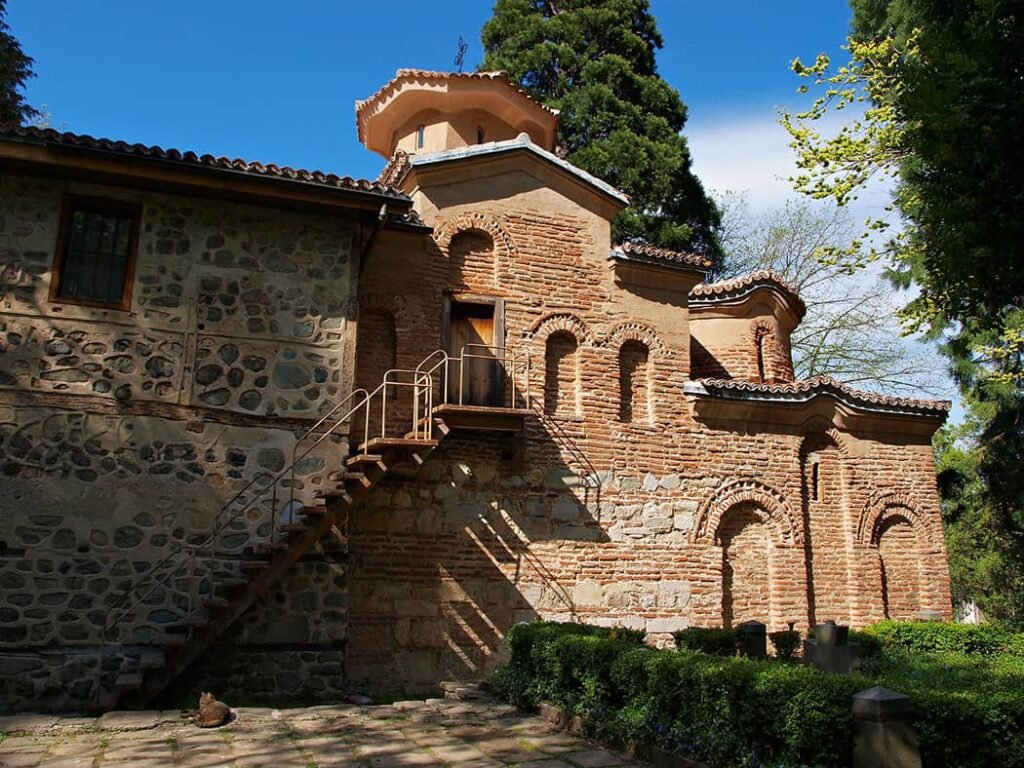
You don’t have to travel far from Sofia to see one of Bulgaria’s UNESCO treasures.
At the foot of Vitosha Mountain, Boyana Church looks modest from the outside. Inside, however, are some of the most celebrated medieval paintings in Bulgaria.
The church consists of structures built during several different periods, but its greatest treasures are the 13th-century frescoes.
Created in 1259, these paintings include remarkably expressive portraits and religious scenes. The individuality and realism of many of the figures have helped make the frescoes famous well beyond Bulgaria.
Altogether, the interior contains numerous scenes and hundreds of painted figures from different periods.
Boyana Church became one of Bulgaria’s first UNESCO World Heritage Sites in 1979.
Why Visit Boyana Church?
Its location makes it one of the easiest UNESCO sites to combine with a visit to Sofia.
Because the historic interior is small and carefully protected, visitor numbers and time inside may be controlled. Check current entry arrangements before going.
You can also combine Boyana Church with Vitosha Mountain and nearby Boyana Waterfall for a longer day outside central Sofia.
Location: Boyana Church
6. Rock-Hewn Churches of Ivanovo
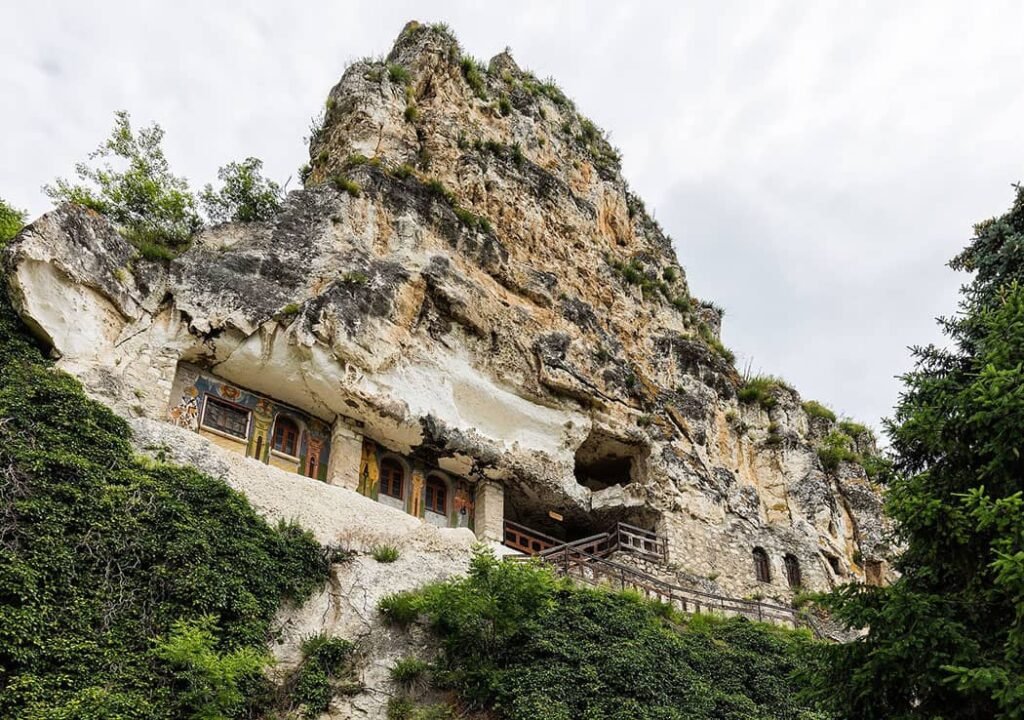
High above the Rusenski Lom River, medieval monks carved churches, chapels, cells, and monasteries directly into the limestone cliffs.
Today these structures are known as the Rock-Hewn Churches of Ivanovo.
Religious communities began developing in the area during the Middle Ages, eventually creating an extensive monastic network within the cliffs.
Inside some of the rock-hewn churches, remarkable 14th-century frescoes have survived for centuries. Their expressive figures and detailed religious scenes offer a glimpse into the sophisticated artistic culture that flourished during the Second Bulgarian Empire.
UNESCO inscribed the Rock-Hewn Churches of Ivanovo in 1979.
Why Visit the Rock-Hewn Churches of Ivanovo?
Part of the experience is simply getting there.
The churches overlook the dramatic landscape of the Rusenski Lom River valley, giving this UNESCO site a very different atmosphere from Bulgaria’s urban churches and large monasteries.
The site is near Ruse, making it a good addition to a trip through northern Bulgaria.
Location: Rock-Hewn Churches of Ivanovo
7. Pirin National Park
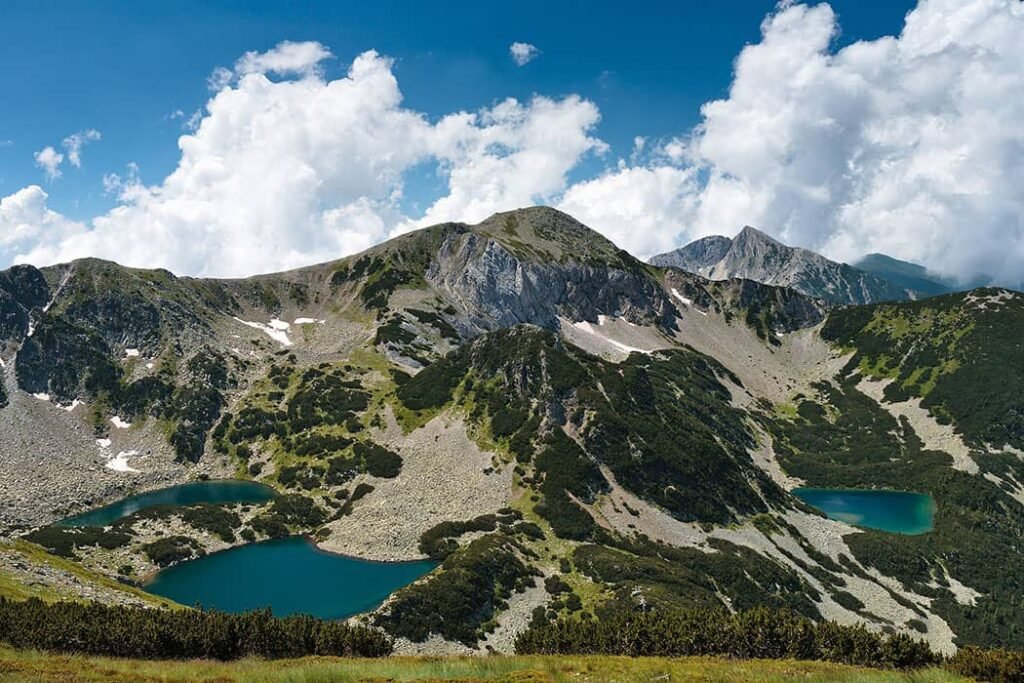
Not all of Bulgaria’s UNESCO treasures were created by people.
Pirin National Park protects one of the country’s most dramatic mountain landscapes, filled with jagged peaks, glacial lakes, alpine meadows, forests, and valleys.
The highest summit is Vihren, which rises to 2,914 meters (9,560 ft) and is Bulgaria’s second-highest mountain peak after Musala in the Rila Mountains.
Pirin is also famous for its glacial lakes. They are scattered throughout the mountains beneath sharp granite and marble peaks, creating some of Bulgaria’s finest hiking scenery.
The park supports diverse plant and animal life, including species adapted to its forests and high mountain environments.
Pirin National Park was first inscribed on the UNESCO World Heritage List in 1983, with the protected World Heritage area later expanded.
Why Visit Pirin National Park?
This is the UNESCO site for travelers who would rather put on hiking boots than walk through a museum.
Bansko is one of the most convenient gateways into the mountains, while numerous trails lead toward lakes, huts, ridges, and high peaks.
Also Read: Best Mountains in Bulgaria You Must Visit
Location: National Park Pirin
8. Ancient City of Nessebar

Sitting on a rocky peninsula extending into the Black Sea, Nessebar combines ancient ruins, medieval churches, traditional houses, cobbled lanes, and sea views in one remarkably compact place.
Its history stretches back thousands of years.
The settlement began long before the medieval period and became an important Greek colony known as Mesembria. Romans, Byzantines, medieval Bulgarians, and Ottomans all left their mark on the town.
Today you can walk among archaeological remains and medieval churches while traditional 19th-century houses line the narrow streets around them.
The Ancient City of Nessebar was inscribed on the UNESCO World Heritage List in 1983.
Why Visit Nessebar?
Nessebar is one of the easiest UNESCO sites in Bulgaria to incorporate into a summer vacation.
You can spend several hours exploring the Old Town, stop for lunch overlooking the Black Sea, and combine the visit with nearby beaches.
For the best experience, wander beyond the busiest streets and explore the smaller lanes around the peninsula.
Location: Nessebar
9. Srebarna Nature Reserve
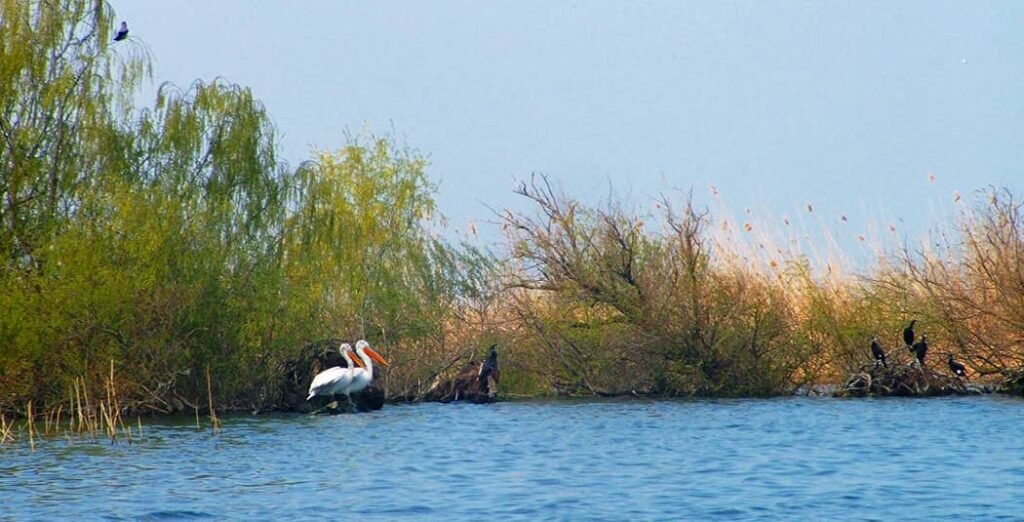
Near the Danube in northeastern Bulgaria, Srebarna Nature Reserve protects an important freshwater lake and wetland ecosystem.
The reserve is particularly famous for its birdlife.
Its wetlands provide breeding and migratory habitat for numerous species, including the impressive Dalmatian pelican, one of Europe’s largest birds.
Srebarna’s location along a major bird migration route makes the reserve especially important for migratory waterbirds traveling between Europe and Africa.
UNESCO inscribed Srebarna Nature Reserve on the World Heritage List in 1983.
Why Visit Srebarna Nature Reserve?
Srebarna offers something completely different from Bulgaria’s archaeological and architectural UNESCO sites.
This is a destination for birdwatching, wildlife, wetlands, and quiet nature, rather than monumental architecture.
Spring and migration periods can be particularly interesting for birdlife, although conditions and species vary throughout the year.
Location: Srebarna Nature Reserve
Together, these nine UNESCO World Heritage Sites in Bulgaria span thousands of years of history and some of the country’s most distinctive natural landscapes.
Which UNESCO Sites in Bulgaria Should You Visit First?
If you’re visiting the UNESCO World Heritage Sites in Bulgaria for the first time, Rila Monastery, Nessebar, Boyana Church, and Pirin National Park are among the easiest to work into a typical itinerary.
Staying in Sofia? Start with Boyana Church and make a day trip to Rila Monastery. Heading to the Black Sea in summer? Don’t miss a few hours wandering through Old Nessebar. If mountains are more your thing, set aside time for Pirin National Park.
For ancient history, I’d put the Thracian Tomb of Kazanlak high on the list, especially because you can explore more of the Valley of the Thracian Kings while you’re there.
The Madara Rider, Sveshtari Tomb, and Rock-Hewn Churches of Ivanovo take a little more planning, but that’s also part of their appeal. They take you into parts of Bulgaria that many international visitors never reach.
And then there’s Srebarna. It won’t give you medieval frescoes or Thracian treasures, but if you enjoy birds and quiet natural landscapes, that’s exactly the point.
Where Are UNESCO World Heritage Sites in Bulgaria?
The UNESCO World Heritage Sites in Bulgaria are spread across almost the entire country, from Sofia and the mountains of the southwest to the Black Sea coast and Danube region.
In and around Sofia, you can visit Boyana Church, while Rila Monastery lies to the south in the Rila Mountains. Continue farther into southwestern Bulgaria and you reach Pirin National Park.
Central Bulgaria is home to the Thracian Tomb of Kazanlak, surrounded by one of the country’s richest regions for Thracian archaeology.
Along the Black Sea coast, Ancient Nessebar occupies a small peninsula surrounded by the sea.
Several UNESCO sites are found farther north. The Madara Rider and Thracian Tomb of Sveshtari are in northeastern Bulgaria, while the Rock-Hewn Churches of Ivanovo lie near Ruse and the Romanian border. Srebarna Nature Reserve is farther east along the Danube.
Because of these distances, seeing all nine is much easier as part of a Bulgaria road trip than from a single base.
UNESCO Sites by Region
| Region | UNESCO Site |
|---|---|
| Sofia | Boyana Church |
| Rila Mountains | Rila Monastery |
| Pirin Mountains | Pirin National Park |
| Central Bulgaria | Thracian Tomb of Kazanlak |
| Black Sea Coast | Ancient City of Nessebar |
| Northeastern Bulgaria | Madara Rider |
| Northeastern Bulgaria | Thracian Tomb of Sveshtari |
| Northern Bulgaria | Rock-Hewn Churches of Ivanovo |
| Danube Region | Srebarna Nature Reserve |
Best Time to Visit UNESCO World Heritage Sites in Bulgaria
There isn’t one perfect month for visiting every UNESCO site in Bulgaria because they include everything from mountain wilderness to churches and archaeological monuments.
For a trip combining several sites, late spring and early autumn are particularly convenient. Temperatures are generally more comfortable for sightseeing than during the hottest part of summer, while mountain and countryside destinations can be especially beautiful.
Spring
Spring brings greener landscapes and comfortable sightseeing weather across much of Bulgaria.
It can be a particularly interesting season for Srebarna Nature Reserve, where birdlife is one of the main reasons to visit.
Mountain conditions are less predictable. Snow can remain at higher elevations in Rila and Pirin long after temperatures have warmed in Sofia and the lowlands.
Summer
Summer is ideal if you’re combining Bulgaria’s UNESCO sites with the Black Sea coast.
Nessebar is at its busiest during this period, particularly in July and August. Visiting the Old Town earlier in the morning or later in the day can make exploring its narrow streets much more enjoyable.
Summer is also the main hiking season in Pirin National Park, although conditions in high mountains can change quickly.
Autumn
Early autumn is one of the nicest periods for a wider Bulgaria road trip.
Crowds begin to decrease along the coast, daytime temperatures can remain pleasant, and the forests surrounding places such as Rila Monastery gradually take on their autumn colors.
Winter
Most of Bulgaria’s cultural UNESCO sites can still be visited in winter, but weather can affect driving conditions and opening arrangements.
Rila Monastery surrounded by snow is particularly beautiful, while Bansko and the Pirin Mountains become major winter destinations.
Always check current opening hours, road conditions, trail conditions, and visitor restrictions before traveling.
How to Plan a UNESCO Road Trip Through Bulgaria
Visiting all nine UNESCO World Heritage Sites in Bulgaria on a single trip is possible, but don’t underestimate the distances between them.
Instead of racing from one site to another, divide the country into regions.
Sofia, Rila and Pirin
Start with Boyana Church while exploring Sofia.
From the capital, continue south toward Rila Monastery before traveling toward Bansko and Pirin National Park. This creates one of the easiest UNESCO combinations in Bulgaria and mixes history, architecture, and mountain scenery.
Central Bulgaria and the Valley of the Thracian Kings
Travel east toward Kazanlak for the Thracian Tomb of Kazanlak.
Don’t treat the UNESCO tomb as the only attraction here. The surrounding Valley of the Thracian Kings contains numerous archaeological sites and gives much more context to the Thracian civilization that once flourished in the region.
Nessebar and the Black Sea
Continue toward the coast to explore the Ancient City of Nessebar.
Allow at least several hours for the Old Town rather than treating it as a quick photo stop. Its churches, ruins, traditional houses, small streets, and sea views are best explored on foot.
Northern and Northeastern Bulgaria
The northern sites require more driving but make an excellent historical route of their own.
The Madara Rider, Thracian Tomb of Sveshtari, Rock-Hewn Churches of Ivanovo, and Srebarna Nature Reserve can be combined with other destinations in northeastern Bulgaria and along the Danube.
Nearby places such as Shumen, Veliki Preslav, Ruse, and Silistra can turn this portion of the trip into a much broader exploration of Bulgarian history and culture.
If your trip is shorter, don’t worry about seeing all nine. Choosing three or four UNESCO sites that fit naturally into your route will usually give you a better experience than spending most of your vacation driving.
UNESCO World Heritage Sites in Bulgaria FAQ
How many UNESCO World Heritage Sites are in Bulgaria?
Bulgaria has nine individual World Heritage properties commonly counted as its national UNESCO sites: seven cultural and two natural. Bulgaria also participates in the transnational Ancient and Primeval Beech Forests of the Carpathians and Other Regions of Europe World Heritage property.
What is the most famous UNESCO site in Bulgaria?
Rila Monastery is probably Bulgaria’s best-known UNESCO World Heritage Site and one of the country’s most recognizable attractions.
Which UNESCO sites are closest to Sofia?
Boyana Church is located within Sofia, at the foot of Vitosha Mountain. Rila Monastery is farther south but remains one of the most popular excursions from the capital.
Are there natural UNESCO World Heritage Sites in Bulgaria?
Yes. Pirin National Park and Srebarna Nature Reserve are Bulgaria’s two individual natural World Heritage properties. Bulgaria also forms part of the transnational Ancient and Primeval Beech Forests World Heritage property.
Can you visit all of Bulgaria’s UNESCO sites on one trip?
Yes, but they are spread across the country. Visiting all of them makes more sense as part of a longer Bulgaria road trip than trying to squeeze them into a short vacation.
Have You Visited Any UNESCO World Heritage Sites in Bulgaria?
Have you explored Rila Monastery, walked through the ancient streets of Nessebar, or visited one of Bulgaria’s lesser-known UNESCO sites?
We’d love to hear which one impressed you most. Share your experience or favorite photos with us on Instagram by tagging @stunningbulgaria on Instagram and hashtag it #stunningbulgaria
And if there’s a UNESCO site in Bulgaria you haven’t visited yet, which one is at the top of your list?.
Discover More of Bulgaria
The UNESCO World Heritage Sites in Bulgaria only scratch the surface of what the country has to offer.
Ancient Thracian history, medieval monasteries, mountain landscapes, Black Sea towns, waterfalls, caves, fortresses, and traditional villages are scattered throughout the country. Some of Bulgaria’s most memorable places aren’t UNESCO-listed at all.
Continue exploring with:
- The Best Attractions in Bulgaria
- Top 10 Traditional Bulgarian Dishes
- Rila Monastery: Complete Visitor’s Guide