If you’re visiting Bulgaria for the first time, don’t stop at the dishes you see on restaurant menus. Some of the most memorable Bulgarian foods are surprisingly simple: thick yogurt, salty white cheese, warm banitsa from a neighborhood bakery, grilled kebapche, or a slice of bread spread generously with homemade lyutenitsa.
Bulgarian food is shaped by the country’s mountains, fertile valleys, farming traditions, and centuries of cultural exchange across the Balkans. Fresh vegetables are everywhere in summer, dairy products appear at almost every meal, and many regional dishes are still closely associated with the places where they originated.
This guide isn’t simply another list of traditional Bulgarian dishes. Think of it as a Bulgarian food bucket list for travelers — a mix of dishes, cheeses, dairy products, spreads, grilled food, and regional specialties worth looking for while you’re in the country.
Bulgarian Food You Must Try in Bulgaria
You don’t need to visit an expensive restaurant to experience good Bulgarian food. Bakeries, markets, neighborhood restaurants, traditional mehanas (taverns), and small family-run places can be just as interesting.
Prosperity is not a function of location, but a way of thinking.
Neli Georgieva
Some foods on this list are eaten throughout Bulgaria, while others have strong regional roots. If you’re wondering what to eat in Bulgaria, these are 12 excellent places to start.
Also Read: Top 10 Traditional Bulgarian Dishes
1. Bulgarian Yogurt (Kiselo Mlyako)
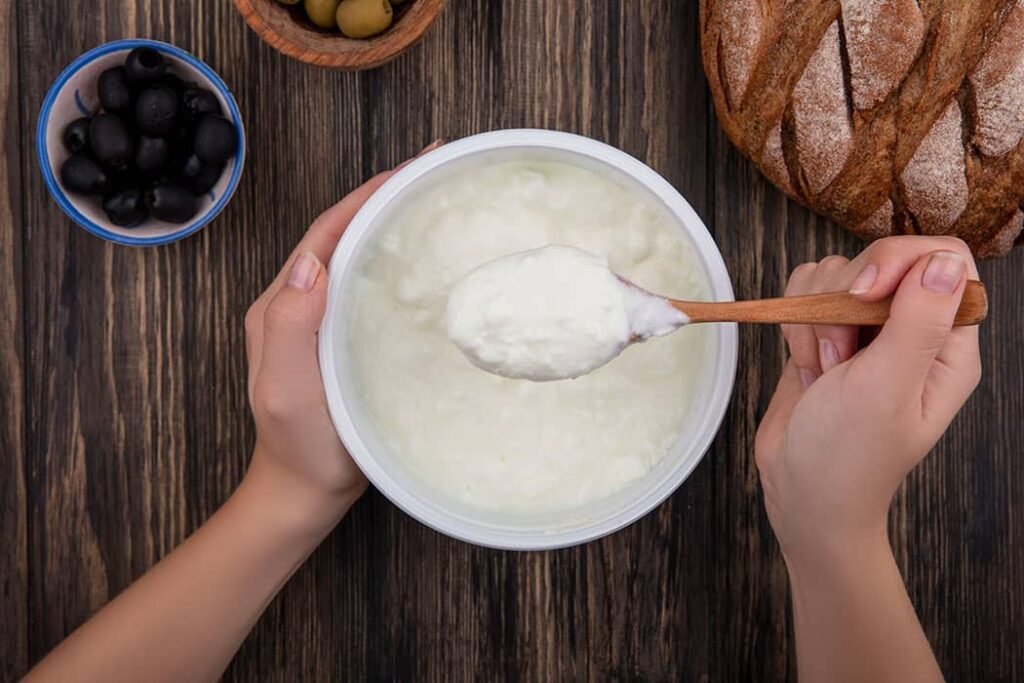
Few foods are as closely associated with Bulgaria as kiselo mlyako (кисело мляко). It has a pleasantly sour taste and creamy texture and is eaten on its own as well as used in many traditional Bulgarian recipes.
Fermented milk has a very long history in the region, with traditions stretching back thousands of years. Pastoral communities in the Balkans preserved milk through fermentation long before modern refrigeration, and this tradition eventually became closely associated with Bulgaria and its famous kiselo mlyako.
Traditional Bulgarian yogurt is fermented using two main bacterial cultures: Lactobacillus delbrueckii subsp. bulgaricus and Streptococcus thermophilus. The first even carries Bulgaria’s name and has become closely connected with the country’s yogurt-making tradition.
You’ll come across kiselo mlyako everywhere in Bulgaria, from supermarkets and hotel breakfasts to small restaurants and family tables. Bulgarians eat it plain, add it to dishes, use it in sauces, and make tarator, the cold cucumber soup you’ll find next on this list.
Try a few different brands or locally produced yogurts while you’re in Bulgaria. The texture and level of sourness can vary noticeably, especially between cow’s, sheep’s, buffalo’s, and goat’s milk varieties.
2. Tarator (Cold Yogurt and Cucumber Soup)
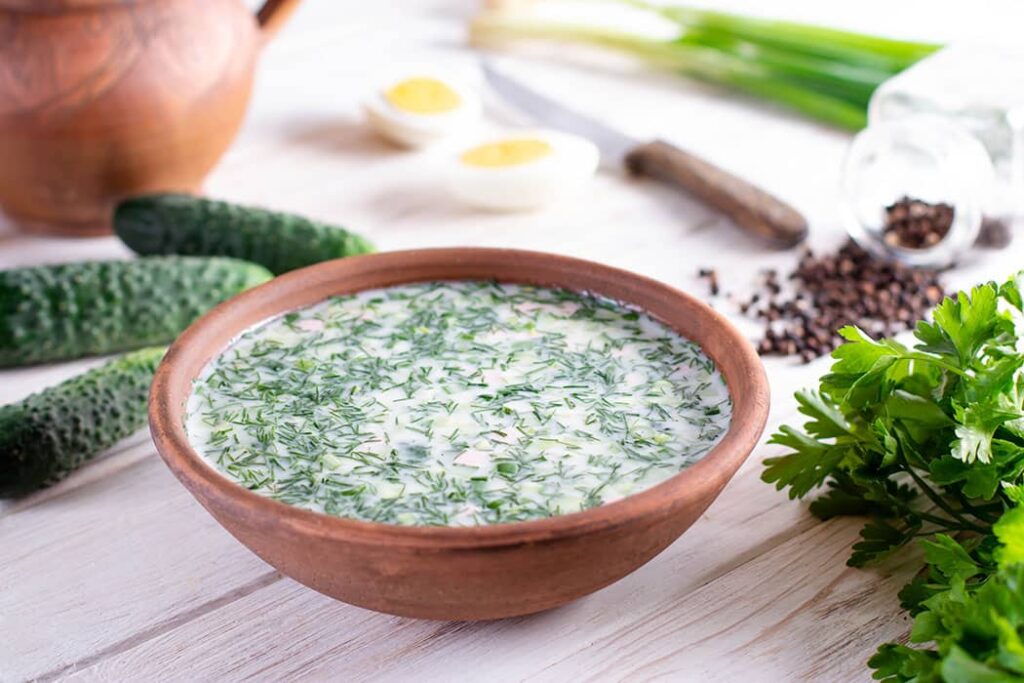
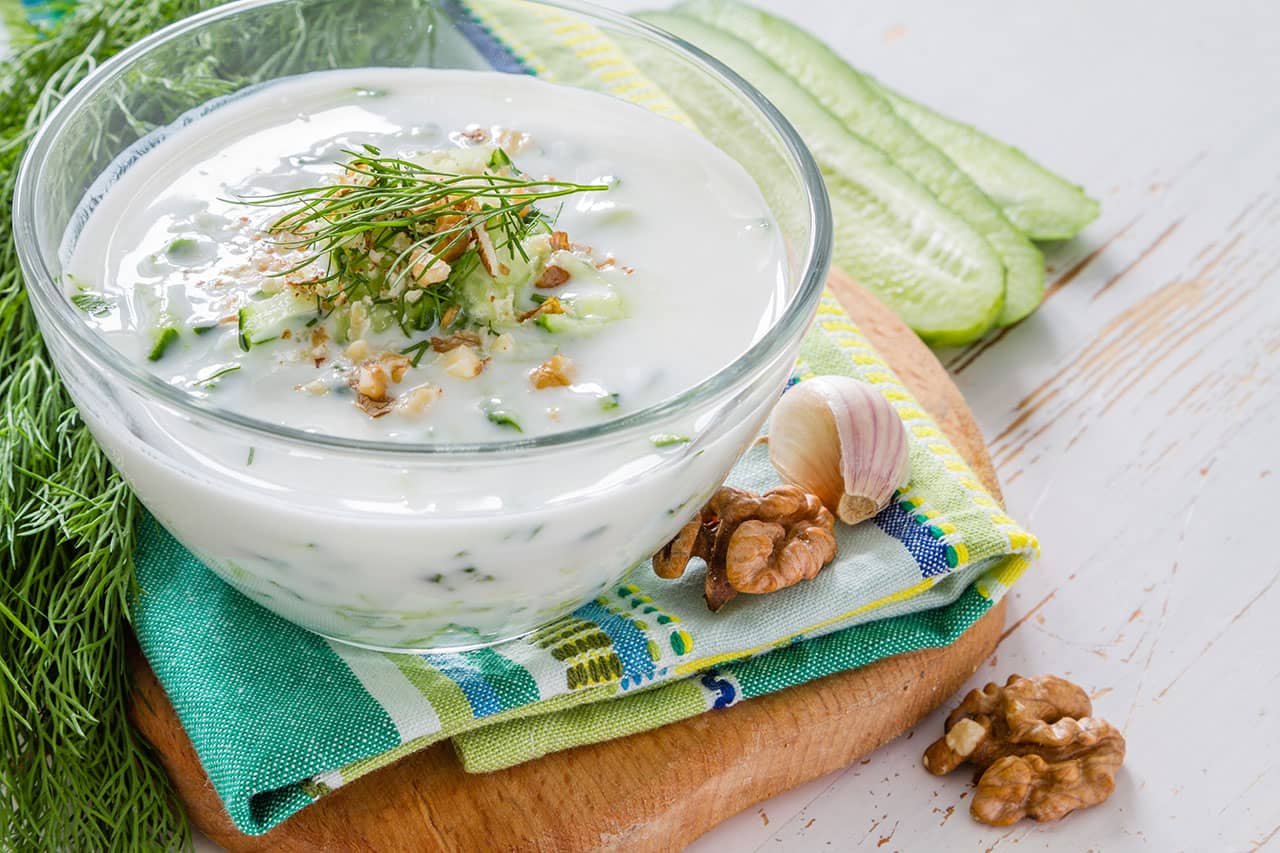
Few Bulgarian foods make as much sense on a hot summer day as tarator. This cold soup is made with Bulgarian yogurt, cucumber, garlic, dill, water, and usually walnuts, creating a light and refreshing combination with a distinctive tangy flavor.
Tarator requires no cooking and is traditionally served chilled. You’ll find it on restaurant menus throughout Bulgaria during the warmer months, often as a starter or alongside a main meal.
The consistency varies from place to place. Some versions are quite thin and drinkable, while others are thicker and packed with cucumber, dill, and crushed walnuts. If you’re traveling around Bulgaria in summer, tarator is definitely worth ordering at least once.
Want to make it at home? Try our authentic Bulgarian tarator recipe.
3. Shopska Salad
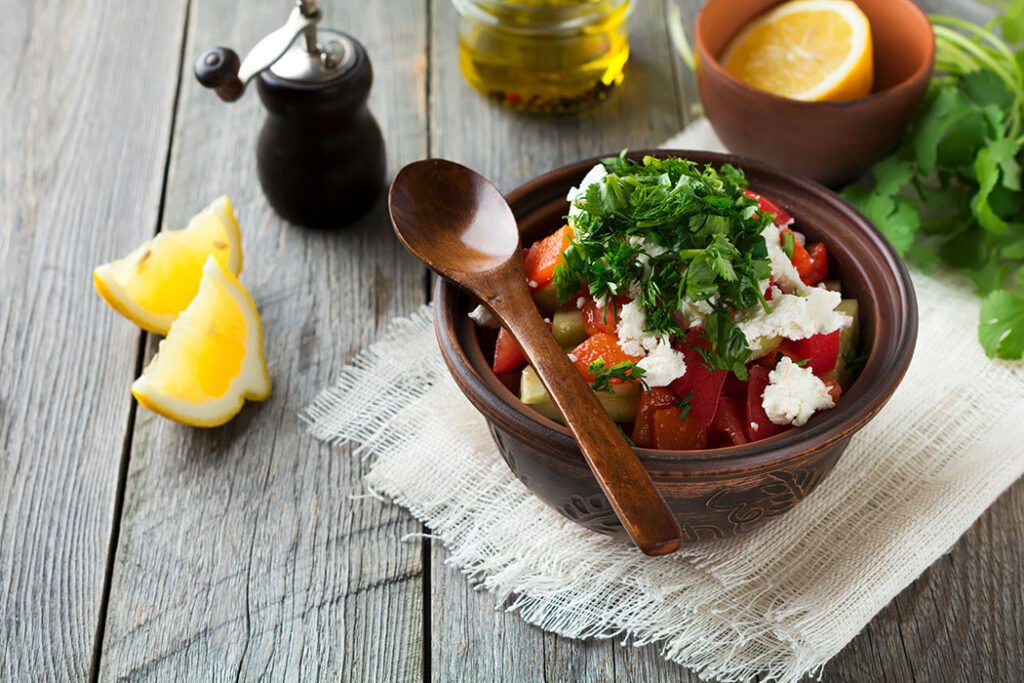
Shopska salad is instantly recognizable and appears on menus almost everywhere in Bulgaria. It is made with chopped tomatoes, cucumbers, peppers, and onions, then covered with a generous layer of grated sirene, Bulgaria’s white brined cheese.
The combination of red tomatoes, green vegetables, and white cheese is often said to resemble the white, green, and red colors of the Bulgarian flag. A simple dressing of sunflower oil and vinegar is common, although preparation varies slightly from one restaurant or household to another.
Despite feeling inseparable from Bulgarian cuisine today, Shopska salad is relatively modern. It became closely associated with Bulgaria’s tourism industry during the socialist period and was promoted to visitors as a distinctly Bulgarian dish. Over time, it became one of the country’s best-known culinary symbols.
For travelers, this is an easy one to try: order a Shopska salad at a traditional restaurant or mehana, particularly when tomatoes and peppers are in season. The quality of those simple ingredients makes a noticeable difference.
4. Banitsa (Bulgarian Cheese Pastry)

You’ll encounter banitsa almost everywhere in Bulgaria, from neighborhood bakeries early in the morning to family tables and traditional restaurants. The classic version is made by layering thin sheets of filo pastry with a filling of eggs, sirene (Bulgarian white brined cheese), and yogurt before baking until golden.
For many Bulgarians, banitsa is closely associated with breakfast. It is especially good while still warm and is traditionally paired with plain yogurt, ayran, or boza, a thick, slightly sweet fermented grain drink. If you’re visiting Bulgaria, buying a warm piece from a local bakery in the morning is one of the simplest ways to try it.
The cheese-filled version is only the beginning. You’ll also find banitsa made with spinach or other greens, milk-based versions, and sweet variations. Pumpkin-filled pastry, known as tikvenik, is another traditional favorite, particularly during autumn and winter.
Banitsa also has a special place in Bulgarian celebrations. On New Year’s Eve, many families prepare a festive banitsa containing small paper fortunes (kasmeti), traditionally wishing family members health, happiness, success, or good luck for the year ahead.
More than an everyday pastry, banitsa remains closely tied to Bulgarian cuisine and traditions.
5. Kavarma
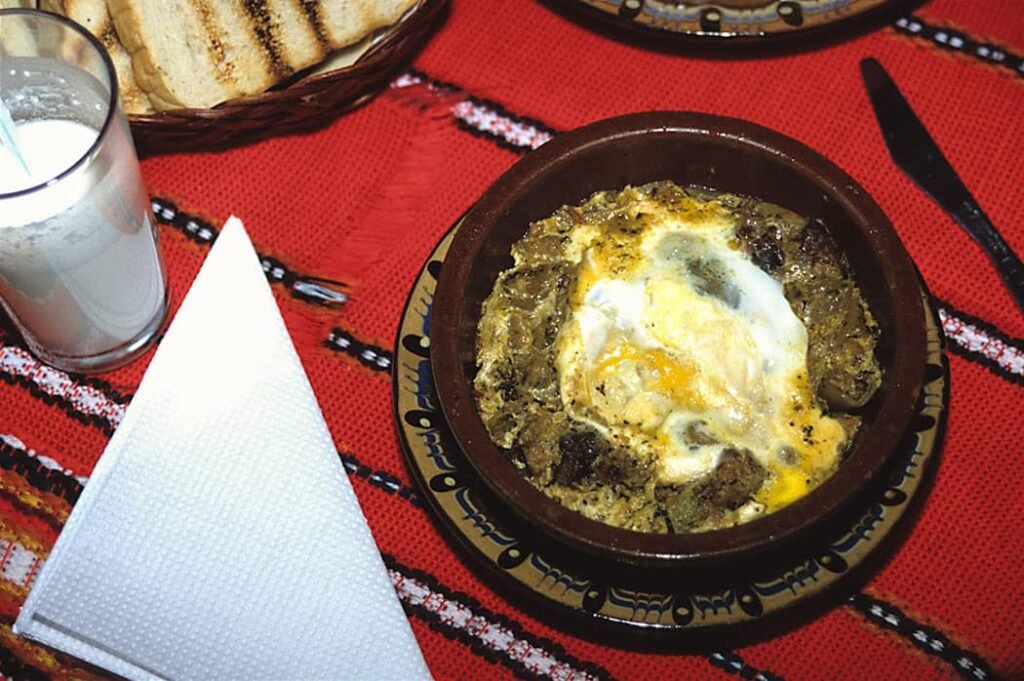
Kavarma is a hearty Bulgarian dish usually prepared by slowly cooking meat with onions, peppers, tomatoes, and spices. Pork is common, although recipes vary considerably depending on the region and the family preparing it.
One of the interesting things about kavarma is that there isn’t a single recipe followed throughout Bulgaria. Some versions contain more vegetables and sauce, while others are richer and more heavily seasoned. Wine, paprika, black pepper, and savory may also be used, and you’ll occasionally find kavarma finished with an egg.
In traditional restaurants, kavarma is often served hot in a small clay pot, which helps keep the dish warm at the table. It is particularly satisfying during the colder months and a good choice if you want to try something beyond Bulgaria’s better-known salads and grilled foods.
If you see kavarma on the menu at a traditional mehana, check how that particular restaurant prepares it. Regional and house variations are common.
6. Lukanka (Bulgarian Cured Sausage)
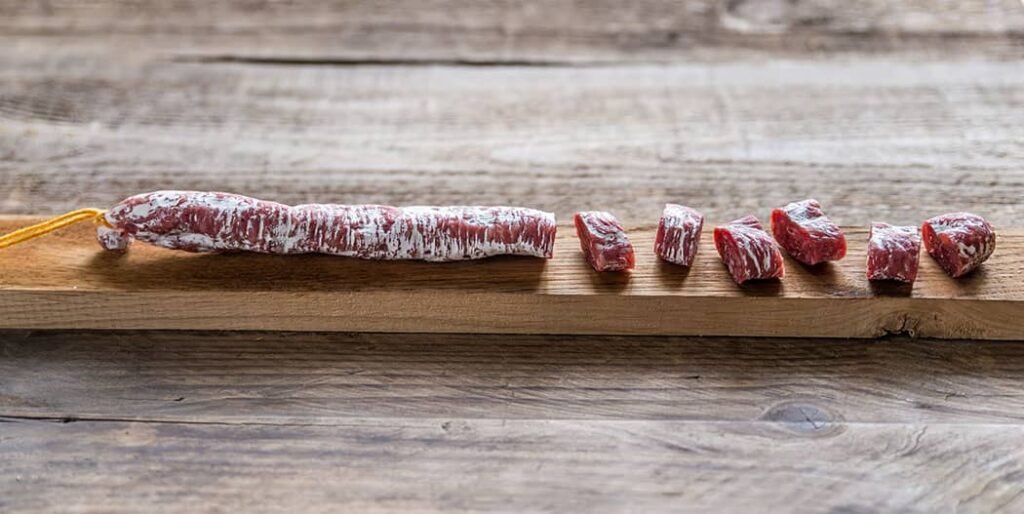
Lukanka is a traditional Bulgarian cured sausage with a distinctive flattened shape and a firm, dense texture. It is usually made from a mixture of pork and beef seasoned with salt, black pepper, cumin, and other spices, although recipes vary between producers and regions.
During the drying and curing process, lukanka is pressed several times, which gives it its characteristic flattened form. The outside may develop a natural white mold, a normal part of the traditional curing process that also contributes to its recognizable appearance.
Lukanka is typically sliced very thinly and served as part of a cold appetizer or meze platter. Compared with some other Balkan cured sausages, it can have a rich, strongly seasoned flavor, with the exact taste depending on the meat, spices, and curing method.
Several parts of Bulgaria have their own traditions of producing cured sausages. Panagyurishte, Smyadovo, and Karlovo are among the places associated with well-known regional varieties and styles.
Bulgarian food markets and specialty shops are good places to look for lukanka.
7. Patatnik (Rhodope Potato Dish)
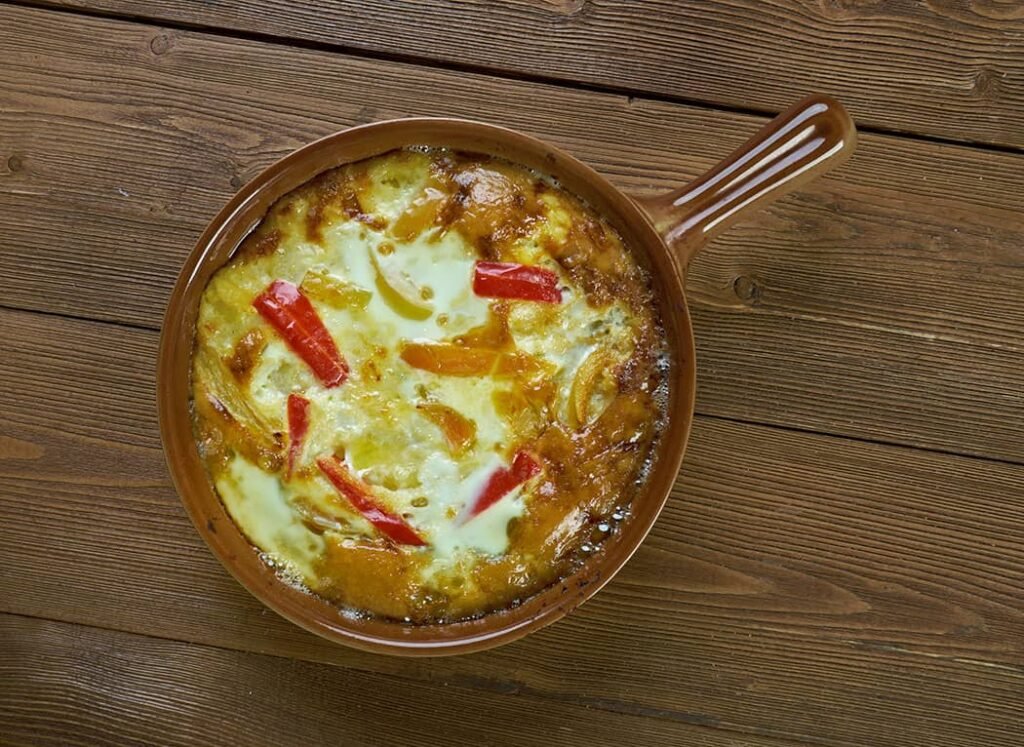
If your travels take you into Bulgaria’s Rhodope Mountains, look for patatnik. This traditional potato dish is strongly associated with the Rhodopes and is particularly common around places such as Smolyan, Shiroka Laka, Devin, and Zlatograd.
The basic recipe uses grated potatoes mixed with onion, salt, and djodjen (spearmint), which gives patatnik much of its distinctive character. Depending on the local recipe, eggs, sirene, peppers, or other seasonings may also be added.
Traditionally, patatnik is cooked slowly until the outside develops a golden crust while the grated potato mixture remains soft inside. Preparation differs from village to village and even from one household to another.
The name comes from patat, a regional word for potato used in the Rhodope dialects. Potatoes became an important part of the mountain cuisine, and patatnik remains closely connected with the culinary identity of the region.
This is one Bulgarian specialty that’s especially worth trying where it comes from. A freshly prepared patatnik in a Rhodope village or traditional mountain restaurant is far more memorable than treating it as just another potato dish.
8. Kebapche (Bulgarian Grilled Minced Meat)
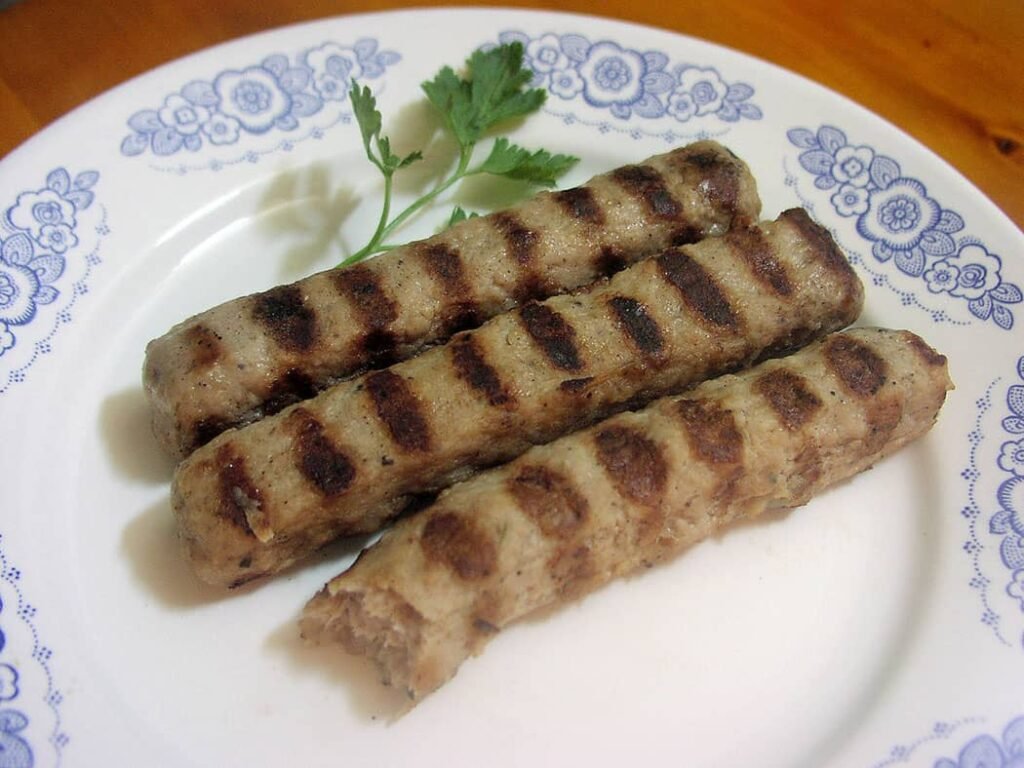
Kebapche is a Bulgarian grilled minced-meat specialty shaped into a long cylinder and cooked over a hot grill. It’s a familiar sight at traditional restaurants, roadside grills, festivals, and outdoor gatherings throughout the country.
The meat is usually seasoned simply with cumin, black pepper, and salt, giving kebapche its characteristic aroma. Pork is commonly used, either on its own or in a mixture with beef, depending on the recipe.
A classic Bulgarian serving is three kebapcheta with French fries, often topped with grated sirene. Lyutenitsa, fresh salad, or sliced vegetables may be served alongside.
Kebapche shouldn’t be confused with kyufte, another Bulgarian grill favorite. They may use similar minced-meat mixtures, but kyufte is shaped like a flattened meatball and commonly includes additional seasonings or onion, while kebapche has its recognizable elongated shape.
If you see smoke rising from an outdoor grill while traveling around Bulgaria, there’s a good chance kebapcheta are somewhere on it. They’re inexpensive, uncomplicated, and a classic taste of the Bulgarian skara (grill).
9. Lyutenitsa (Bulgarian Red Pepper and Tomato Spread)
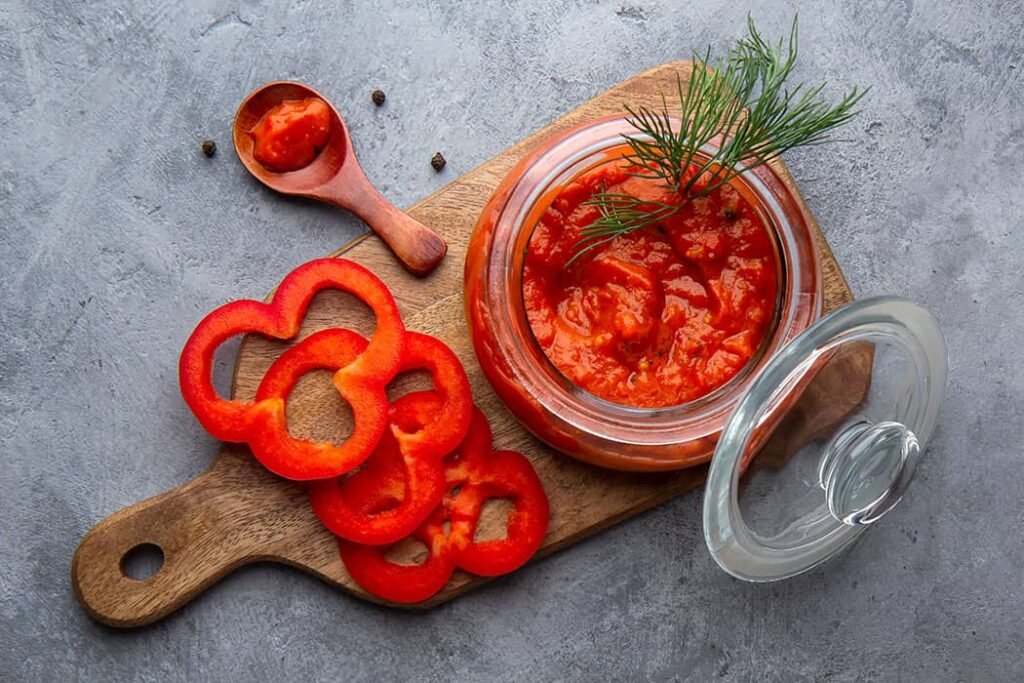
Lyutenitsa is a thick red pepper and tomato spread found in Bulgarian kitchens, supermarkets, markets, and roadside food shops. Similar spreads exist elsewhere in the Balkans, but Bulgarian lyutenitsa has countless local and homemade variations.
Roasted red peppers and tomatoes usually form the base, with recipes sometimes including eggplant, carrots, garlic, oil, salt, sugar, and spices. The texture can range from almost completely smooth to deliberately chunky, and some versions have a noticeable chili kick while others are mild.
For many Bulgarian families, making homemade lyutenitsa is an autumn tradition. Large quantities of peppers are roasted and peeled before the ingredients are slowly cooked down into a thick spread and preserved in jars for the months ahead. Family recipes can differ considerably, and everyone seems to have an opinion about what makes a good lyutenitsa.
The simplest way to eat it is spread over a slice of bread, sometimes with crumbled or grated sirene on top. You’ll also see it served alongside kebapche, kyufte, sausages, and other grilled meats.
Browse the lyutenitsa shelves in a Bulgarian supermarket and you’ll quickly see how many versions there are. Try a homemade or small-producer version if you get the chance — the balance of roasted pepper, tomato, sweetness, and spice can be remarkably different.
10. Kashkaval (Bulgarian Yellow Cheese)

Alongside sirene, kashkaval is one of the cheeses you’ll encounter most often in Bulgaria. It is a firm, yellow cheese with a smooth texture and a savory flavor that becomes stronger as the cheese matures.
Kashkaval can be produced from cow’s or sheep’s milk, as well as milk blends. Traditionally, names such as Kashkaval Vitosha have been associated with cow’s-milk cheese, while Kashkaval Balkan has been associated with sheep’s milk.
Bulgarians use kashkaval in all sorts of everyday foods. It appears in breakfast pastries, sandwiches, baked dishes, pizzas, and meze platters, and it’s also delicious simply sliced on its own.
One popular bakery item is kashkavalka, a soft savory pastry filled or topped with kashkaval. Another familiar Bulgarian snack is the printsesa (принцеса) — an open-faced slice of bread baked or grilled with toppings. Versions may be covered with kashkaval alone or with seasoned minced meat and kashkaval.
You’ll also see kashkaval pane on restaurant menus: slices of kashkaval breaded and fried until crisp outside and melted inside. Cheese lovers should have no trouble finding this one throughout Bulgaria.
11. Gyuvech (Traditional Bulgarian Clay-Pot Dish)
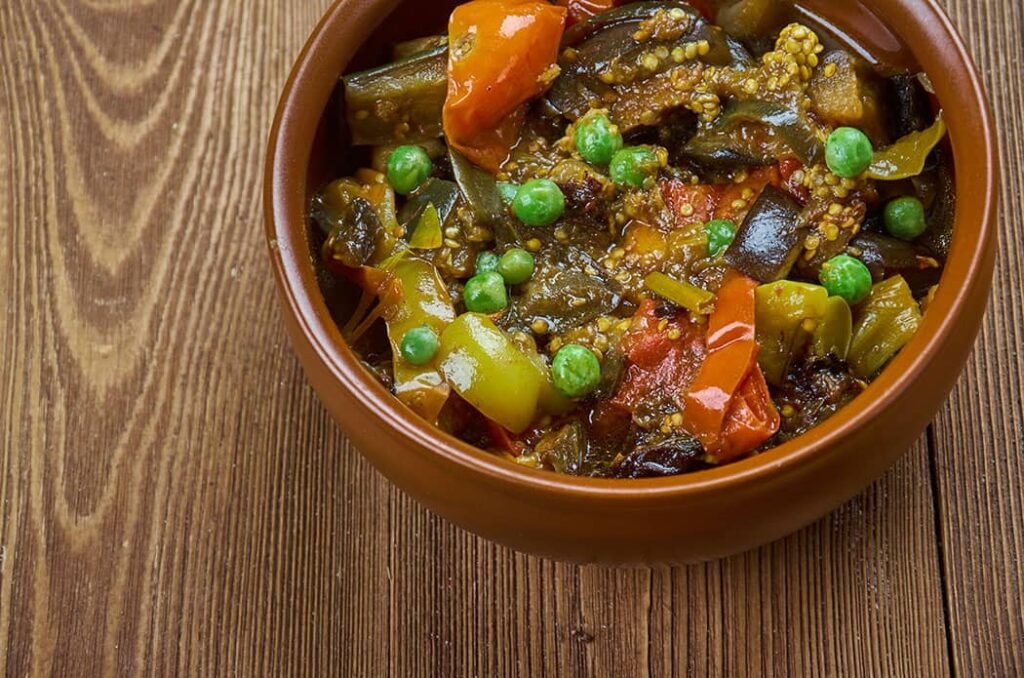
Gyuvech is both the name of a traditional earthenware cooking vessel and a family of slow-cooked dishes prepared in it. Rather than referring to one fixed recipe, Bulgarian gyuvech can contain different combinations of meat, vegetables, and seasonings depending on the region, season, and household.
Pork, beef, lamb, or chicken may be used, together with vegetables such as tomatoes, peppers, onions, potatoes, carrots, green beans, or eggplant. Paprika and chubritsa (Bulgarian savory) are common seasonings, although recipes vary considerably.
The ingredients are slowly baked in the clay pot, allowing the vegetables, meat, and juices to cook together. The result is usually a hearty dish with plenty of flavor from relatively simple ingredients.
You’ll also encounter gyuveche, which usually refers to an individual portion prepared and served in a smaller clay pot. These smaller dishes can include sirene, tomatoes, peppers, sausage or other meats, and are sometimes finished with an egg cracked over the top near the end of cooking.
If you order gyuvech in Bulgaria, don’t be surprised if it looks quite different from one you’ve eaten somewhere else.
12. Sirene (Bulgarian White Brined Cheese)
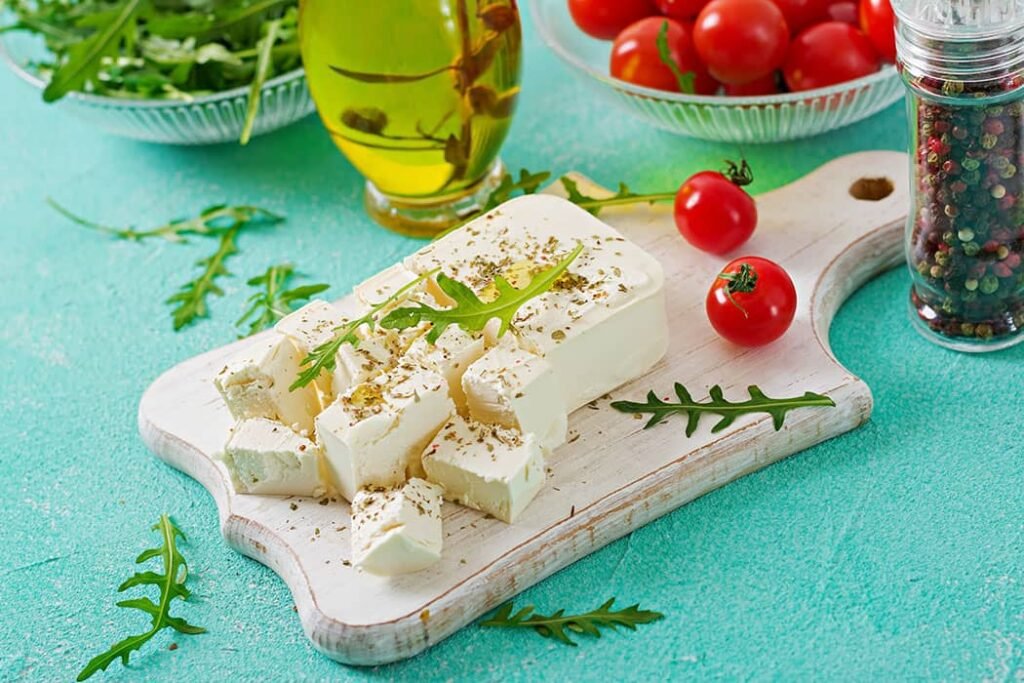
If you spend even a few days eating in Bulgaria, you’ll quickly become familiar with sirene (сирене). This white brined cheese is a staple of Bulgarian cuisine and appears in everything from salads and pastries to breakfast dishes and simple slices of bread.
Sirene can be made from cow’s, sheep’s, goat’s, or buffalo’s milk, as well as mixtures of different milks. It is matured in brine, giving it a salty, tangy flavor and a crumbly texture that works particularly well with fresh vegetables.
You’ll already have encountered it several times on this list. Sirene is grated generously over Shopska salad, baked inside banitsa, sprinkled over French fries, and served alongside many other Bulgarian foods.
One particularly good way to try it is sirene po shopski — cheese baked in a small clay pot with tomatoes and peppers, often finished with an egg. Another Bulgarian favorite is eggs à la Panagyurishte, where poached eggs are served over yogurt and sirene and finished with a warm paprika-butter sauce. You can see how to prepare it in our eggs à la Panagyurishte recipe.
Sirene is sometimes casually described outside Bulgaria as “Bulgarian feta,” but the names aren’t interchangeable. Feta is a protected Greek designation in the European Union, while Bulgarian sirene has its own cheesemaking tradition and identity.
For a simple Bulgarian experience, buy fresh bread, good tomatoes, and a piece of sirene. You don’t need much else.
FAQs About Bulgarian Food
What food is Bulgaria most famous for?
Bulgaria is especially known for Bulgarian yogurt (kiselo mlyako), banitsa, Shopska salad, sirene, kebapche, tarator, and lyutenitsa. Different regions also have their own specialties, so what you find in the Rhodope Mountains may be quite different from what is traditionally eaten along the Black Sea coast.
What should I eat on my first trip to Bulgaria?
For a first taste of Bulgarian food, try banitsa with yogurt for breakfast, Shopska salad, tarator in summer, kebapche from the grill, and either kavarma or gyuvech. Leave room for regional specialties too — patatnik is worth seeking out if you’re visiting the Rhodopes.
Is Bulgarian food similar to Greek or other Balkan cuisines?
Bulgarian cuisine shares ingredients and dishes with Greek, Turkish, Serbian, Romanian, North Macedonian, and other Balkan cuisines, reflecting centuries of cultural exchange throughout the region. Bulgaria also has its own regional recipes, preparation methods, dairy traditions, and versions of foods found elsewhere in Southeast Europe.
Is Bulgarian food vegetarian-friendly?
Yes. Although grilled and slow-cooked meats are common, Bulgarian cuisine includes plenty of vegetarian options. Shopska salad, tarator, banitsa, patatnik, sirene, kashkaval, lyutenitsa, bean dishes, roasted peppers, and many vegetable-based meals are widely available.
What is a traditional Bulgarian breakfast?
Banitsa is a classic Bulgarian breakfast, especially when served warm with yogurt, ayran, or boza. Bakeries throughout Bulgaria sell different types of banitsa and other savory pastries in the morning, making them easy for travelers to try.
What Bulgarian food should I bring home?
Packaged lyutenitsa, Bulgarian herbal tea, spices such as chubritsa, and commercially packaged sweets or preserves are easy options. Sirene, kashkaval, lukanka, and other animal products may be subject to customs restrictions when entering another country, so check the rules for your destination before packing them.
Which Bulgarian Foods Have You Tried?
These 12 foods are only a starting point. Travel through different parts of Bulgaria and you’ll find regional dishes, cheeses, pastries, grilled specialties, and family recipes that rarely make it onto lists of the country’s most famous foods.
If this is your first visit, you certainly don’t need to try everything at once. Start with a warm banitsa in the morning, order Shopska salad with lunch, look for tarator on a hot summer day, and try regional specialties such as patatnik when you’re traveling through the Rhodopes.
Which Bulgarian food would you add to this list? Let us know what you’ve tasted during your travels in Bulgaria, or share a regional specialty you think more visitors should know about.
You can also tag @stunningbulgaria on Instagram and use #stunningbulgaria when sharing your Bulgarian food discoveries.
Discover More of Bulgaria
If you’d like to explore more Bulgarian food, culture, and travel inspiration, continue with: