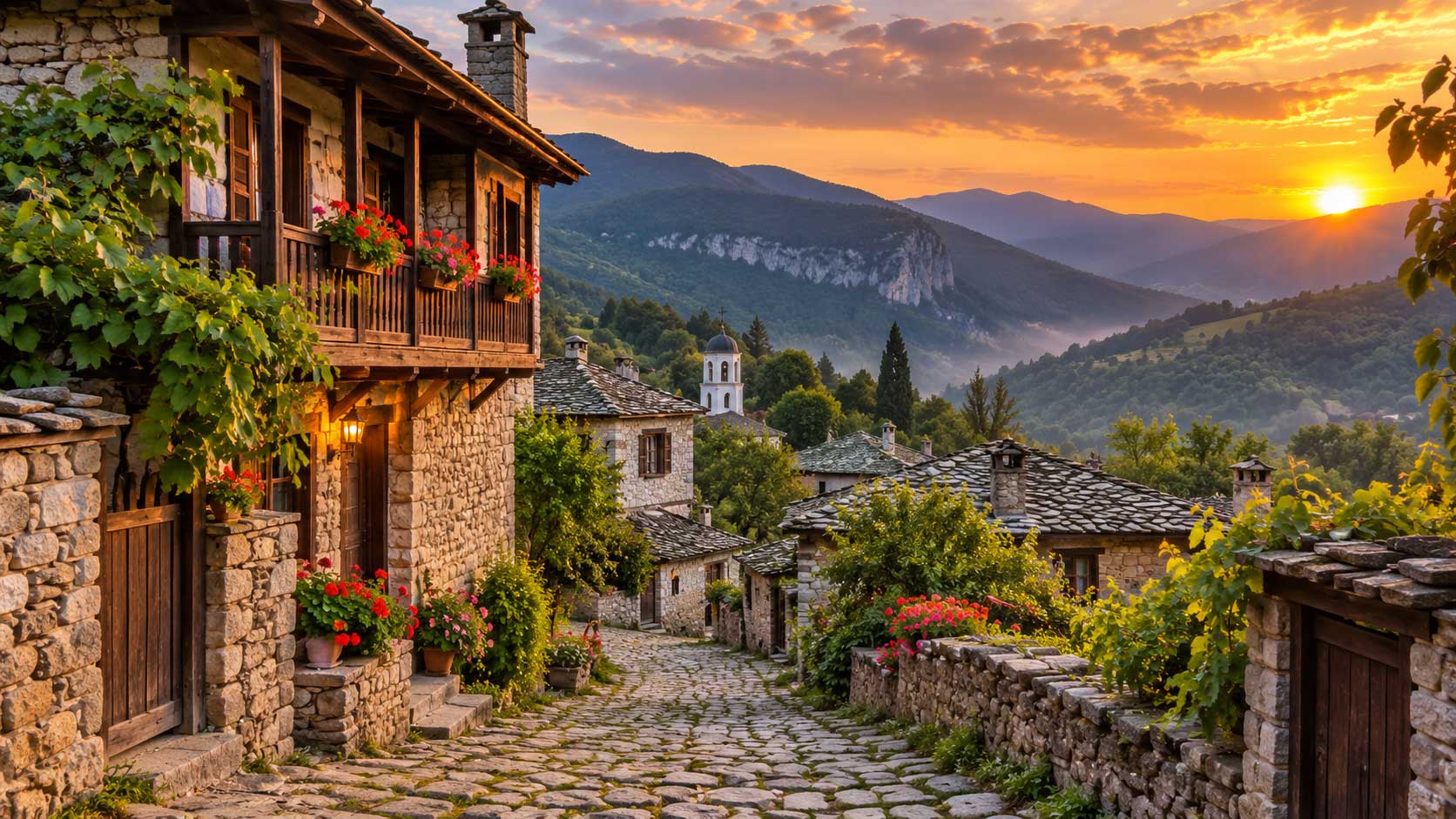
There are places in Bulgaria where time seems to slow down. Stone houses line cobbled streets, smoke curls from old chimneys, and centuries-old churches stand quietly among forested hills. In these hidden corners of the country, modern life can feel surprisingly far away.
Some of the most beautiful fairy-tale villages in Bulgaria are tucked into the Rhodope, Balkan, and Sredna Gora mountains, where traditional houses, stone bridges, wooden balconies, and narrow lanes have survived for generations. While many travelers come to Bulgaria for its Black Sea beaches, ski resorts, or historic cities, these smaller places reveal a quieter and more traditional side of the country.
Planning a longer trip? These best places to visit in Bulgaria are a good starting point for building your itinerary.
Some villages are famous for their Bulgarian Revival architecture, others for folklore, crafts, or mountain scenery. A few are so well preserved that walking through them genuinely feels like stepping into another century.
If cobblestone streets, old houses, mountain views, and places with a storybook atmosphere sound like your kind of trip, these 10 fairy-tale villages in Bulgaria deserve a place on your travel list.
Why Bulgaria’s Historic Villages Feel So Unique
What makes these fairy-tale villages in Bulgaria special isn’t just how beautiful they look. Many preserve architecture and traditions connected to the Bulgarian National Revival, a period when distinctive stone-and-wood houses, carved ceilings, enclosed courtyards, workshops, churches, and schools appeared across the country.
Bulgaria’s official tourism portal highlights Bulgarian Revival cultural monuments across many of the towns and villages featured in this guide.
The architecture changes as you travel. In the Rhodope Mountains, villages such as Kovachevitsa and Shiroka Laka are known for substantial stone houses built along steep mountain streets. Koprivshtitsa stands out for its colorful Revival-era homes, while Zheravna is famous for dark wooden houses tucked among the hills.
Historic villages are only part of the picture. These stunning places in Bulgaria include everything from mountain landscapes to remarkable cultural landmarks.
These aren’t simply reconstructed tourist attractions. People still live in many of them, and you’ll find family-run guesthouses, small taverns, working churches, gardens, and homes that have been passed down through generations.
That mix of preserved architecture and everyday village life is what makes exploring Bulgaria’s old villages so memorable. You aren’t just looking at historic buildings — you’re walking through places where pieces of the country’s past are still part of the landscape.
10 Fairy-Tale Villages in Bulgaria to Visit
From stone villages hidden deep in the Rhodope Mountains to colorful National Revival towns surrounded by forested hills, Bulgaria has remarkable places where historic architecture still shapes the character of everyday life. Some are well known among Bulgarian travelers, while others remain surprisingly quiet even during the warmer months.
The fairy-tale villages in Bulgaria on this list were chosen for more than their appearance. Each has something that makes it worth the journey — preserved architecture, an unusual mountain setting, local traditions, historic importance, or simply the feeling that you have arrived somewhere far removed from modern city life.
You could visit several on a longer Bulgarian road trip, but there is no need to rush through them. These are places best explored slowly: walk the old streets, stop at a local tavern, look inside historic churches and houses when they are open, and stay overnight when you can.
Here are 10 beautiful Bulgarian villages and small historic towns where the past still feels remarkably close.
1. Kovachevitsa — A Stone Village in the Western Rhodopes

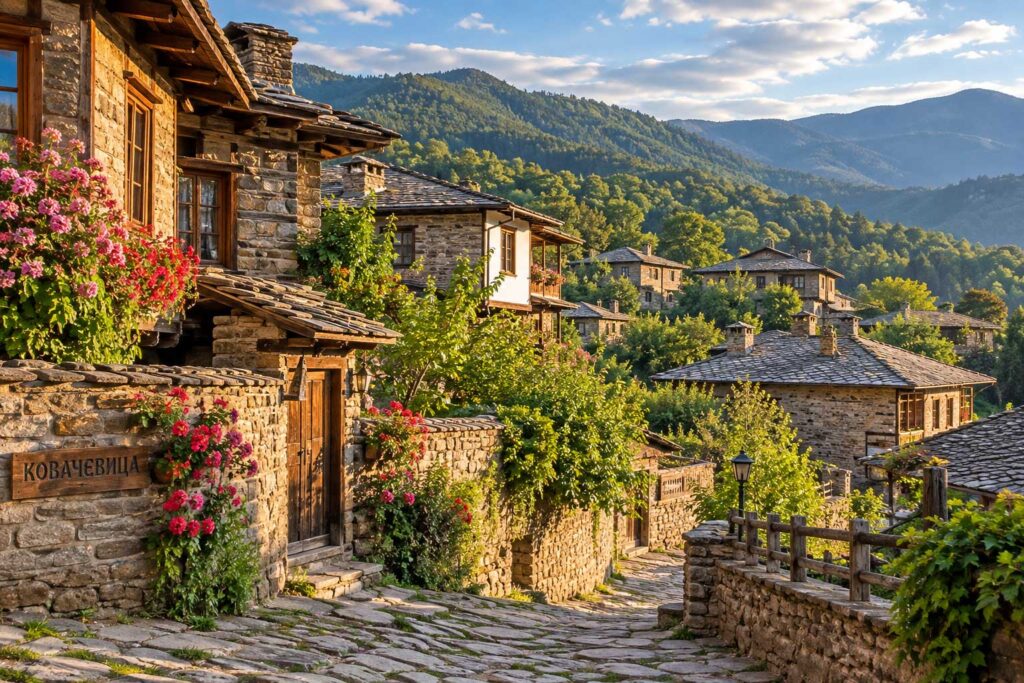
If one place deserves to open a list of fairy-tale villages in Bulgaria, it’s Kovachevitsa. Hidden in the western Rhodope Mountains, the village is known for its striking stone-and-wood houses, steep cobbled lanes, and remarkably preserved historic character.
The first thing you notice is the architecture. Tall houses rise directly from stone walls, with lower floors built from local stone and upper levels incorporating wood. Heavy stone roofs, wooden gates, narrow passages, and houses stacked along the hillside give Kovachevitsa a look that is instantly recognizable.
Walk away from the main road and the village becomes wonderfully quiet. Cobbled lanes twist between old homes and garden walls, opening occasionally to views across the surrounding forested mountains. There are few signs of modern urban life, which makes exploring on foot feel like wandering through another era.
If this quieter side of the country appeals to you, there are plenty of other underrated destinations in Bulgaria worth seeking out.
Kovachevitsa is also protected for its architectural heritage, and its preserved appearance has made it a natural setting for Bulgarian film productions. But it doesn’t feel like a movie set. Stay overnight and you can experience a much quieter side of the village after daytime visitors have left.
Bulgaria’s official tourism portal also recognizes Kovachevitsa as an architectural and historical reserve, known for its distinctive stone-and-wood houses.
Why Kovachevitsa Is Worth Visiting
Come for the architecture, but take time to wander. The mix of stone houses, mountain scenery, quiet streets, and traditional guesthouses makes Kovachevitsa especially memorable for photographers and travelers seeking a place far removed from Bulgaria’s busier destinations.
Best for: Architecture, photography, romantic escapes, mountain scenery
Best time to visit: Late spring through autumn
Don’t miss: Walking the old cobbled lanes and viewpoints around the upper parts of the village
Nearby: Leshten, Garmen, and the mineral springs around Ognyanovo
2. Leshten — A Tiny Rhodope Village Made for Slow Travel

Not far from Kovachevitsa, Leshten offers a different kind of mountain escape. It’s small, peaceful, and perched above the surrounding landscape, with old stone houses and winding lanes that seem to disappear between gardens and rooftops.
Much of Leshten’s charm comes from its setting. From different points around the village, you can look across the western Rhodopes toward layers of forested hills and distant peaks. Early mornings can be especially beautiful, when mist hangs low in the valleys and the village is still quiet.
Leshten is one of those less touristy places in Bulgaria where the lack of major attractions is actually part of the appeal.
Several traditional houses have been restored and turned into guesthouses, making Leshten a wonderful place to stay rather than simply visit for an hour. Stone walls, wooden balconies, fireplaces, courtyards, and mountain views create exactly the cozy atmosphere you would hope to find in one of the fairy-tale villages in Bulgaria.
You can find additional visitor information about Leshten and its Bulgarian Revival houses through Bulgaria’s official tourism portal.
There isn’t a long checklist of attractions here — and that is part of the appeal. Leshten is a place for slow walks, long breakfasts, mountain air, and evenings when there is very little to hear beyond village sounds and the surrounding countryside.
Why Leshten Is Worth Visiting
Choose Leshten when you want to slow your trip down. It works particularly well as part of a road trip through the western Rhodopes, especially when combined with nearby Kovachevitsa.
Best for: Couples, quiet weekends, photography, mountain views
Best time to visit: Spring through autumn; winter can be beautiful when conditions allow
Don’t miss: An early-morning or sunset walk through the village
Nearby: Kovachevitsa, Garmen, Ognyanovo, and the ancient plane tree near Garmen
3. Shiroka Laka — Where Rhodope Music and Mountain Traditions Live On
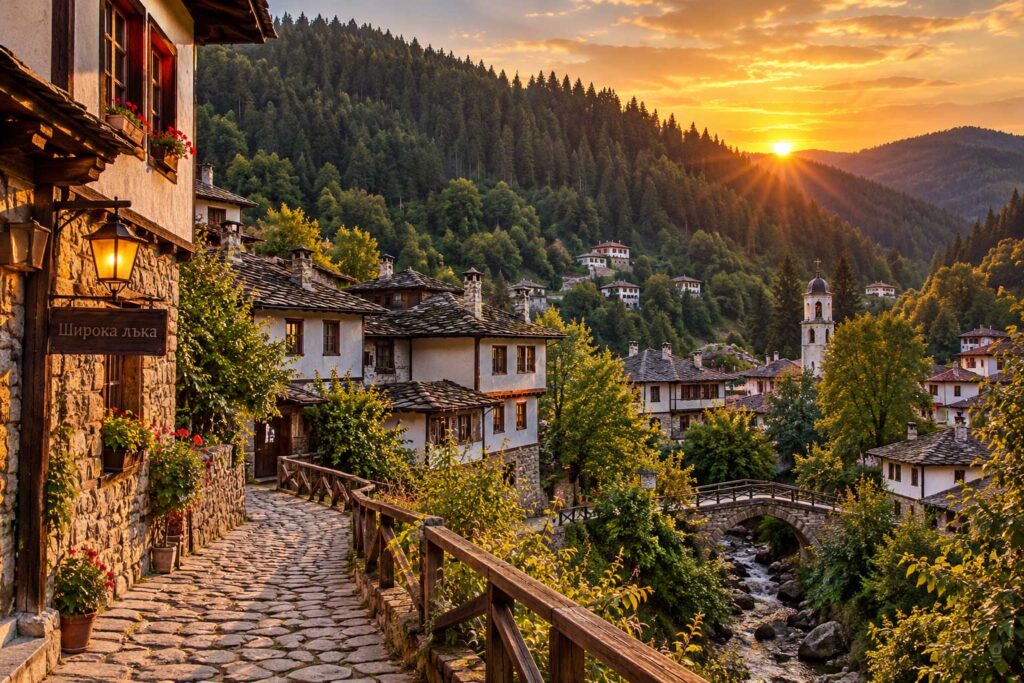
Set along a narrow valley in the central Rhodope Mountains, Shiroka Laka is one of those places that immediately feels different. Traditional white houses climb the slopes above the river, stone bridges cross the water below, and forested mountains rise on both sides of the village.
It also fits naturally into a longer journey through the Rhodope Mountains in Bulgaria, especially if Smolyan or Pamporovo is already on your route.
Shiroka Laka is particularly known for its distinctive Rhodope architecture. Many of its historic houses have stone foundations, white upper floors, dark wooden details, and stone-slab roofs. Built close together along the steep terrain, they give the village a dramatic layered appearance when viewed from across the valley.
But architecture is only part of the story. Shiroka Laka has strong connections to Rhodope folklore and music, especially the haunting sound of the kaba gaida, the traditional low-pitched Rhodope bagpipe. The village is home to the National School of Folk Arts, where younger generations continue studying Bulgarian folk music and dance.
Shiroka Laka is officially recognized as the Shiroka Laka Architectural Reserve, making it an especially worthwhile cultural stop in the Rhodopes.
If your timing is right, you may also encounter one of the village’s traditional celebrations. The best known is Pesponedelnik, a kukeri festival held around the beginning of March, when masked performers in elaborate costumes take to the streets in a centuries-old ritual associated with driving away evil and welcoming spring.
Why Shiroka Laka Is Worth Visiting
Shiroka Laka is one of the best fairy-tale villages in Bulgaria for travelers who want more than beautiful old houses. Its architecture, mountain setting, music, and living folklore traditions come together in a place that still feels unmistakably Rhodopean.
Winter can be especially atmospheric when snow settles on the stone roofs, while the greener months are ideal for combining the village with a wider road trip through the Rhodopes.
Best for: Traditional architecture, Bulgarian folklore, photography, mountain scenery
Best time to visit: Year-round; early March for Pesponedelnik and winter for snowy scenery
Don’t miss: The old stone bridges, historic houses, and a walk through the center of the village
Nearby: Pamporovo, Smolyan, Gela, and the surrounding Rhodope Mountains
4. Bozhentsi — A Bulgarian Revival Village Hidden in the Hills
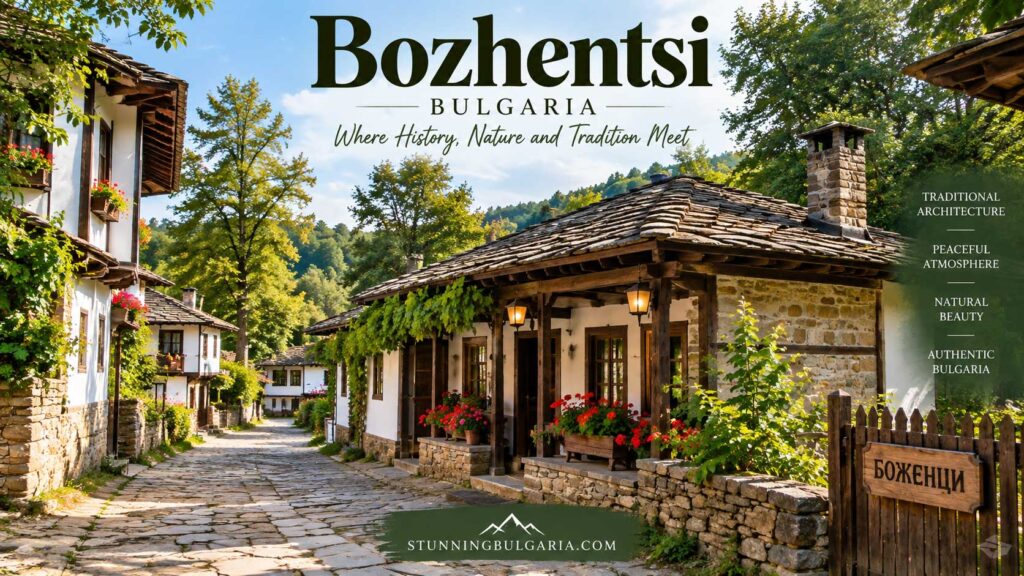
Tucked into the wooded foothills of the Balkan Mountains near Gabrovo, Bozhentsi is one of Bulgaria’s best-preserved historic villages. Cobbled lanes curve between stone walls, traditional houses sit behind heavy wooden gates, and small bridges cross the streams running through the village.
Bozhentsi flourished during the Bulgarian National Revival, when local merchants and craftsmen built the distinctive two- and three-story houses that still define the village today. Whitewashed upper floors, dark wooden balconies, stone roofs, workshops, and enclosed courtyards give the streets an unmistakably old-world appearance.
Today, Bozhentsi is protected as an architectural and historical reserve. Some of the old buildings have become museums, workshops, guesthouses, and traditional restaurants, but the village has retained much of its historic character. It is compact enough to explore on foot, and wandering without a strict route is part of the experience.
Bozhentsi pairs especially well with Tryavna, another nearby destination with deep roots in Bulgaria’s National Revival period.
Spring brings green hills and flowering gardens, while autumn may be even more beautiful as the surrounding forests turn shades of yellow, orange, and red. On quieter mornings and evenings, Bozhentsi can genuinely feel like a village from another century.
Why Bozhentsi Is Worth Visiting
Among the fairy-tale villages in Bulgaria, Bozhentsi is particularly appealing if you love Bulgarian Revival architecture but also want an easy destination to combine with other cultural attractions in central Bulgaria.
Give yourself time to explore the side streets rather than staying only around the main visitor areas. Small details — an old wooden gate, a stone fountain, a flower-filled courtyard, or a view across the rooftops — are often what make Bozhentsi most memorable.
Best for: Bulgarian Revival architecture, history, photography, relaxed day trips
Best time to visit: April through October, especially spring and autumn
Don’t miss: The cobbled streets, traditional houses, old workshops, and stone bridges
Nearby: Gabrovo, Tryavna, Etar Open-Air Museum, and the central Balkan Mountains
5. Zheravna — A Village of Wooden Houses and Quiet Lanes
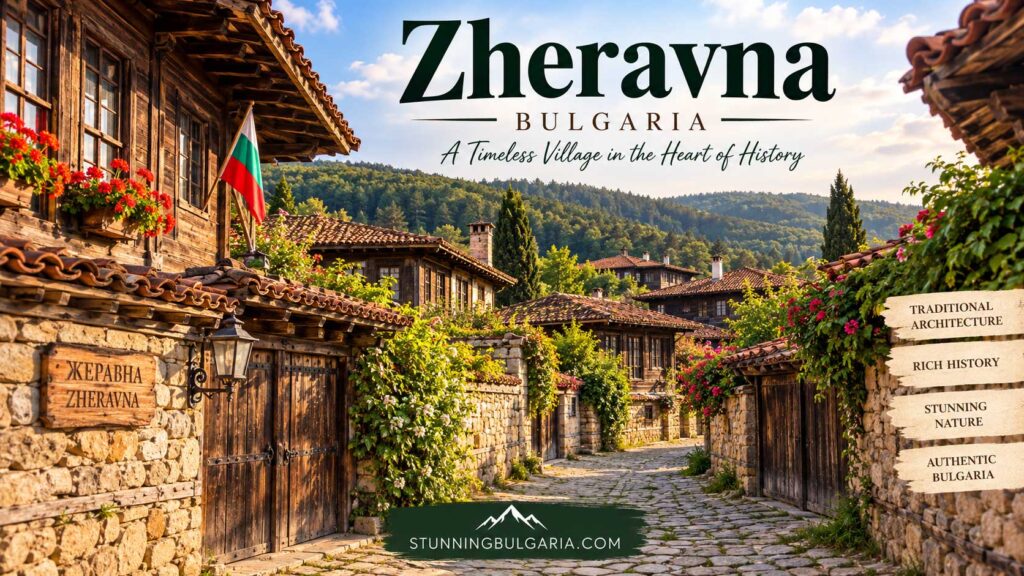
Hidden among the hills of the eastern Balkan Mountains, Zheravna looks remarkably different from Bulgaria’s stone-built Rhodope villages. Here, dark wooden houses rise behind stone walls, narrow lanes weave between old courtyards, and wooded slopes surround the village on every side.
Zheravna grew into an important center of crafts and trade during the Bulgarian National Revival, and much of that heritage remains visible today. The village preserves hundreds of historic buildings, including traditional homes, churches, fountains, and former workshops.
Many of the houses are especially striking. Broad wooden facades, deep rooflines, carved details, and enclosed courtyards create a warm, rustic appearance that becomes even more atmospheric in the softer light of early morning and late afternoon.
The village is closely associated with Bulgarian writer Yordan Yovkov, who was born here, and his childhood home is now a museum. Other historic houses offer a closer look at how prosperous families lived during the Revival period.
Zheravna is also known for the annual Festival of the Folk Costume, when thousands of visitors arrive dressed in traditional clothing for several days of folk music, dancing, crafts, and celebrations. Outside festival dates, however, the village can be remarkably peaceful.
Why Zheravna Is Worth Visiting
What makes Zheravna so distinctive is the way its architecture and landscape work together. There are no grand monuments dominating the experience. Instead, its charm comes from walking slowly through old lanes, noticing wooden houses behind stone walls, and discovering small pieces of history around almost every corner.
Staying overnight is especially worthwhile. Once most day visitors leave, the streets become quieter and the village takes on an entirely different atmosphere.
Best for: Traditional architecture, Bulgarian history, folklore, photography
Best time to visit: Late spring through autumn; visit during the folklore festival for a livelier experience
Don’t miss: Yordan Yovkov’s birthplace, the historic wooden houses, and a slow walk through the old lanes
Nearby: Kotel, Medven, and the eastern Balkan Mountains
6. Arbanasi — Historic Merchant Houses Above Veliko Tarnovo
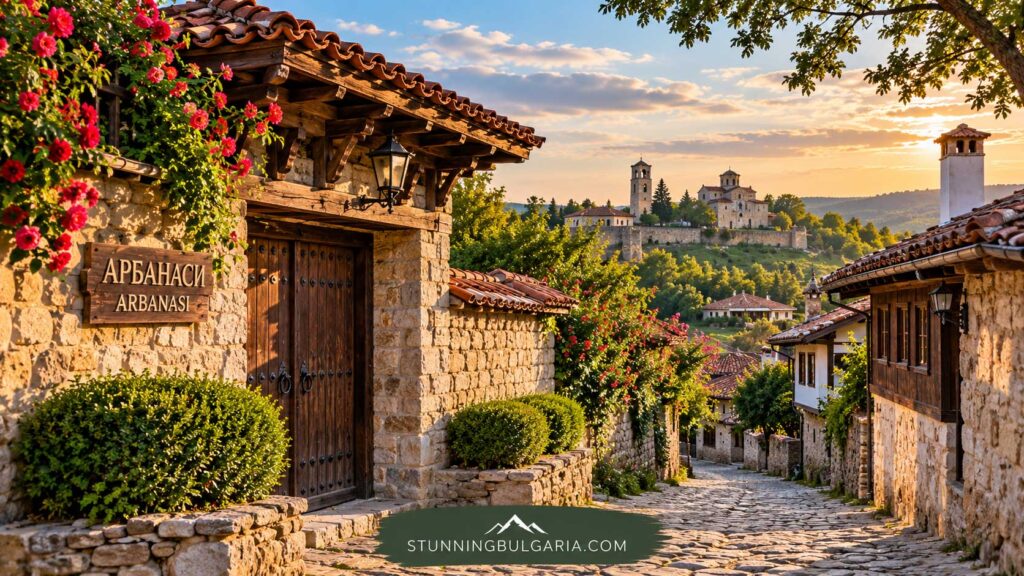
Perched on a plateau just outside Veliko Tarnovo, Arbanasi has a different character from the remote mountain villages on this list. Its broad stone walls, heavy wooden gates, historic churches, and impressive merchant houses reflect a time when the settlement was prosperous and closely connected to regional trade.
Many of Arbanasi’s historic homes were designed almost like small fortresses. High stone walls protected interior courtyards, while the houses concealed spacious rooms, storage areas, and richly decorated interiors. The Konstantsalieva House is one of the best places to see this architectural style up close.
Arbanasi is equally famous for its religious heritage. Several historic churches and monasteries survive in and around the village, often appearing surprisingly simple from the outside. Step inside, however, and you may find interiors covered with elaborate frescoes.
One of the highlights is the Church of the Nativity of Christ, whose interior contains extensive wall paintings. From the outside, the low stone building is easy to underestimate, which makes the richly decorated interior even more memorable.
The village’s position above Veliko Tarnovo adds another reason to visit. You can spend the morning exploring Tsarevets and the old capital before escaping to the quieter streets and gardens of Arbanasi later in the day.
If you’re staying nearby, use our guide to Veliko Tarnovo to plan more time in Bulgaria’s historic capital.
Why Arbanasi Is Worth Visiting
Arbanasi earns its place among the fairy-tale villages in Bulgaria through architecture rather than isolation. Its fortified houses, stone walls, old churches, leafy courtyards, and views across the surrounding hills create an atmosphere unlike anywhere else on this list.
It is also one of the easiest historic villages to include in a Bulgaria itinerary, especially if Veliko Tarnovo is already part of your trip.
Best for: Historic houses, churches, Bulgarian history, cultural sightseeing
Best time to visit: Spring and autumn for pleasant walking weather; summer mornings are also beautiful
Don’t miss: Konstantsalieva House and the Church of the Nativity of Christ
Nearby: Veliko Tarnovo, Tsarevets Fortress, Trapezitsa, and the Monastery of the Holy Transfiguration
7. Melnik — Bulgaria’s Tiny Historic Town Beneath the Sand Pyramids

Melnik is technically a town — and famously Bulgaria’s smallest — but it fits this list too perfectly to leave out. Historic houses line its narrow streets while enormous sandstone formations rise behind the rooftops, giving the entire place a landscape you won’t find anywhere else in the country.
The surrounding Melnik Earth Pyramids are the first clue that this is no ordinary historic settlement. Wind and water have sculpted the pale sandstone into steep cliffs, ridges, and unusual formations that tower above the town. From certain viewpoints, old tiled roofs seem almost tucked directly beneath the cliffs.
That unusual combination of history and landscape also makes Melnik one of the more memorable hidden destinations in Bulgaria.
Melnik also has a long connection with wine. The warm climate and surrounding vineyards have supported winemaking in the region for centuries, and today you can visit traditional wine cellars and small local producers while exploring the town.
One of Melnik’s most recognizable historic buildings is Kordopulova House, an impressive National Revival-era mansion built for a wealthy merchant family. Its spacious rooms, decorative details, and underground wine cellar offer a glimpse into Melnik’s more prosperous past.
If you’re continuing toward Pirin, you can easily pair Melnik with some of the best hiking destinations in Bulgaria.
For a wider view of the landscape, follow one of the paths above town. Looking down over the old houses with the sandstone formations rising around them makes it easy to understand why Melnik feels so different from the other fairy-tale villages in Bulgaria on this list.
Why Melnik Is Worth Visiting
Melnik combines three things remarkably well: historic architecture, dramatic nature, and wine culture. You can explore old houses in the morning, walk among surreal sandstone landscapes in the afternoon, and finish the day tasting local wine.
Stay until evening if possible. Once many day-trippers have left, the streets become quieter and the warm colors of the surrounding sandstone look particularly beautiful in the late-day light.
Best for: Wine, historic architecture, photography, unusual landscapes
Best time to visit: Spring and autumn; autumn is especially appealing during the grape and wine season
Don’t miss: Kordopulova House, the Melnik Earth Pyramids, and a local wine cellar
Nearby: Rozhen Monastery, Rozhen village, Sandanski, and the Pirin Mountains
8. Momchilovtsi — Everyday Village Life in the Rhodope Mountains
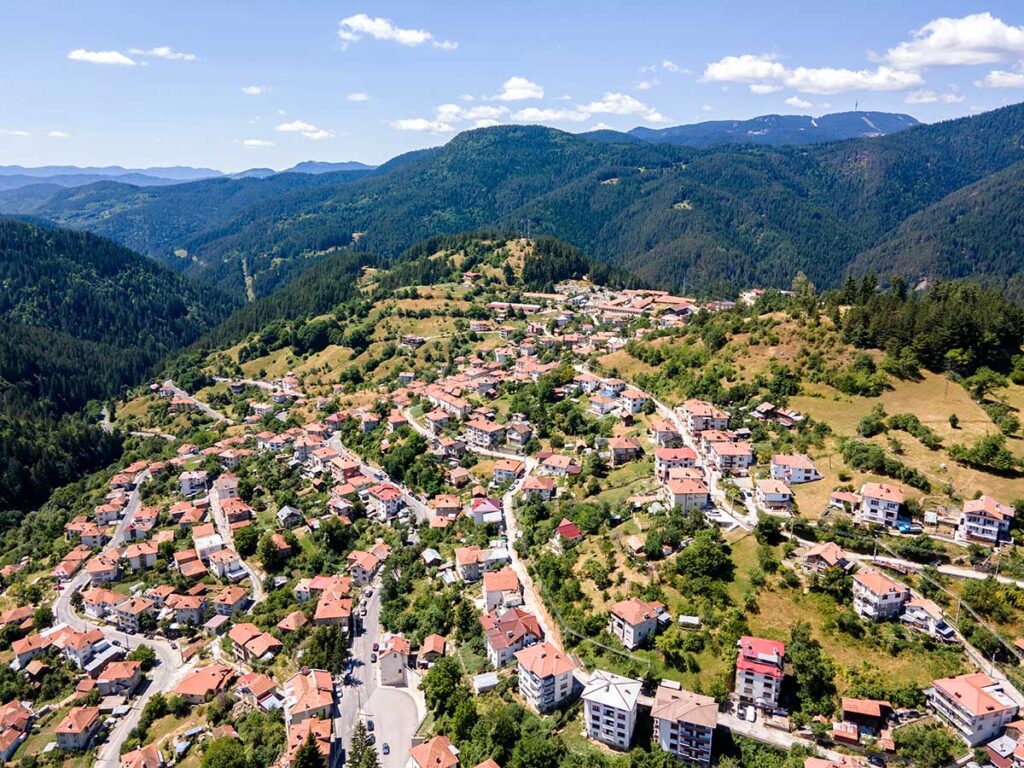
Momchilovtsi offers something slightly different from the carefully preserved architectural reserves elsewhere on this list. Set high in the central Rhodope Mountains, it is a living village where traditional culture, mountain scenery, and everyday life remain closely connected.
The village spreads across the slopes beneath forested peaks, with houses clustered along winding streets and views opening toward the surrounding mountains. It may not have the perfectly preserved architectural uniformity of Kovachevitsa or Zheravna, but that is part of its appeal. Momchilovtsi feels lived-in rather than staged.
Life here has long been shaped by the Rhodopes. Livestock farming, dairy products, potatoes, local herbs, and home cooking remain closely associated with the region, while folklore and Orthodox traditions continue to play an important role in local celebrations.
Momchilovtsi is also a good base for travelers who want to spend more time outdoors. Forest roads, mountain paths, meadows, and viewpoints surround the village, and the wider Smolyan region offers plenty of opportunities for hiking and scenic drives.
It’s an easy place to combine village life with some of the beautiful nature in Bulgaria, particularly around Smolyan and the surrounding Rhodopes.
Come during the greener months and you’ll find hillsides covered in vegetation and wildflowers. Visit in winter and snow can completely change the atmosphere, turning the rooftops and surrounding forests into a quiet mountain scene.
Why Momchilovtsi Is Worth Visiting
Momchilovtsi earns its place on this fairy-tale villages in Bulgaria list for a different reason. Not every building looks centuries old, but the village offers something equally valuable: the chance to experience a traditional Rhodope community surrounded by beautiful mountain landscapes.
It’s a particularly good choice if you prefer places where local life continues alongside tourism rather than destinations built primarily around sightseeing.
Best for: Rhodope culture, mountain scenery, hiking, local food, slow travel
Best time to visit: Late spring through early autumn for hiking; winter for snowy scenery
Don’t miss: Walking through the village, trying regional Rhodope food, and exploring the surrounding mountain landscape
Nearby: Smolyan, Shiroka Laka, Pamporovo, and the Smolyan Lakes
9. Koprivshtitsa — Bulgaria’s Colorful National Revival Town
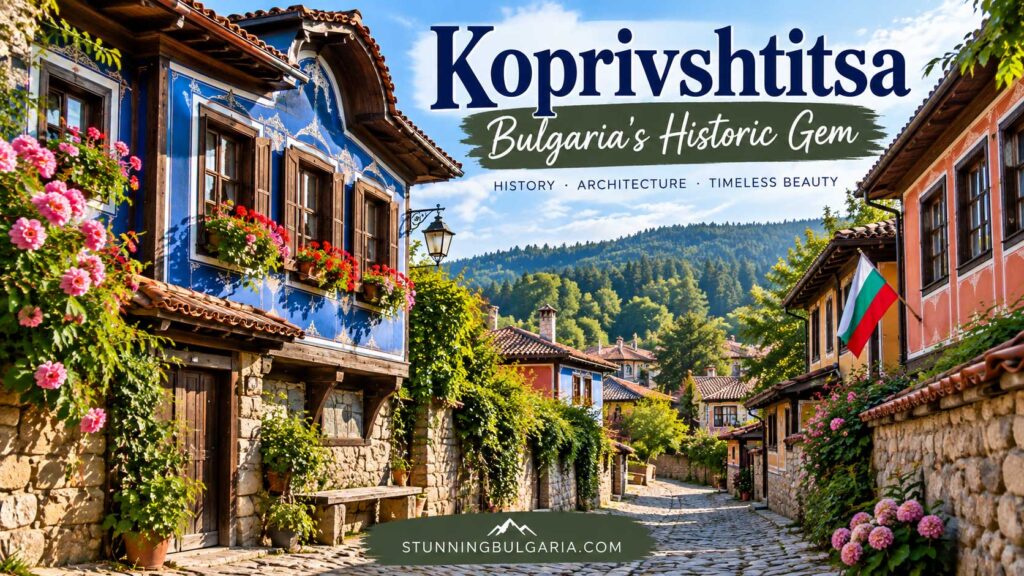
Koprivshtitsa is officially a town rather than a village, but few places in Bulgaria capture the storybook atmosphere of this list quite as beautifully. Set in a valley in the Sredna Gora Mountains, it is filled with colorful National Revival houses, stone bridges, cobbled lanes, wooden gates, and small streams running through the historic center.
Unlike the darker stone and timber architecture found in some mountain villages, Koprivshtitsa is full of color. Blue, yellow, red, and pale pastel facades appear behind high stone walls, often surrounded by gardens and leafy courtyards. Many of the most important houses have been preserved as museums.
But Koprivshtitsa is much more than a pretty historic town. It played an important role in the April Uprising of 1876, one of the defining events in Bulgaria’s struggle for liberation from Ottoman rule. Several revolutionary figures were born here, and their former homes help tell the story of the period.
For more places connected to the country’s past, explore our guide to historic places in Bulgaria.
Among the best known are the houses associated with Todor Kableshkov, Georgi Benkovski, Dimcho Debelyanov, and Lyuben Karavelov. Visiting even one or two adds much more context to the streets and buildings you see around town.
Between museum visits, leave time simply to wander. Cross the little stone bridges, follow the quieter side streets, and look for views of colorful houses framed by the surrounding hills. Early morning is particularly atmospheric before most day visitors arrive.
Why Koprivshtitsa Is Worth Visiting
Of all the fairy-tale villages in Bulgaria and small historic towns on this list, Koprivshtitsa offers one of the strongest combinations of architecture, scenery, and national history.
It is beautiful enough to visit purely for photography, but understanding what happened here makes the experience considerably richer. If your Bulgaria itinerary has room for only one National Revival destination, Koprivshtitsa should be high on the shortlist.
Best for: Bulgarian history, colorful architecture, museums, photography
Best time to visit: Late spring through autumn; winter can be beautiful after snowfall
Don’t miss: The historic house museums, old stone bridges, and cobbled streets of the center
Nearby: Panagyurishte, Starosel, Sredna Gora, and routes toward the Valley of the Roses
10. Brashlyan — A Quiet Historic Village in Strandzha
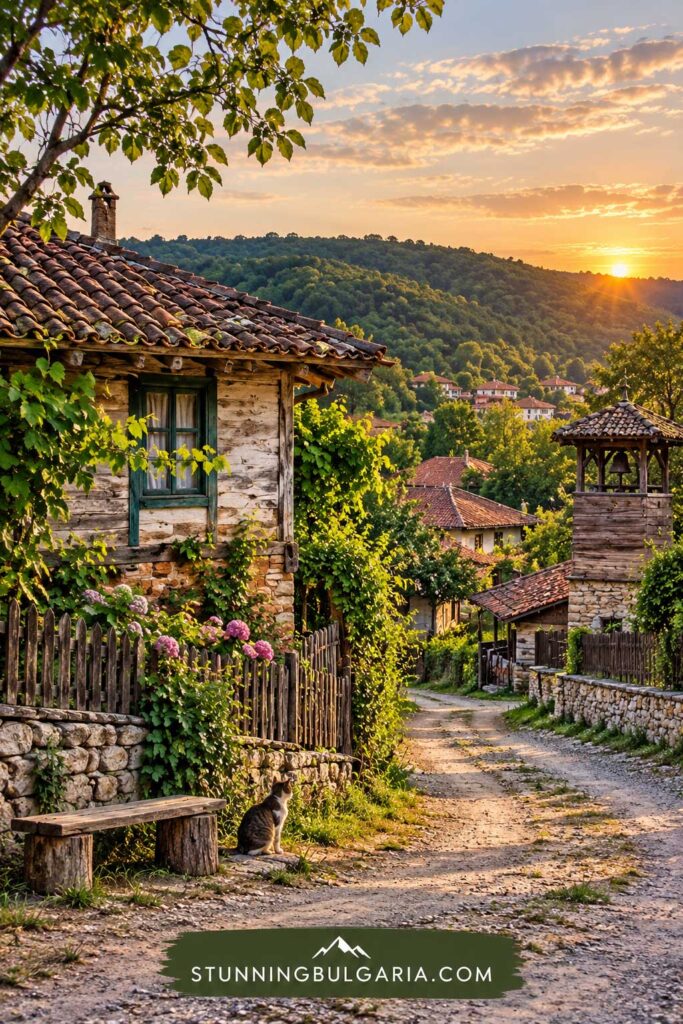
Deep in the green hills of Strandzha, not far from Bulgaria’s southeastern border, Brashlyan feels far removed from the country’s busy resorts and major sightseeing routes. The village is small, peaceful, and surrounded by the dense forests that make this corner of Bulgaria feel almost mysterious.
Brashlyan is protected for its architectural heritage and preserves traditional Strandzha houses built from stone and wood. Walk through the village and you’ll find old homes behind wooden fences, narrow lanes, stone walls, wells, and gardens that seem to blend naturally into the surrounding landscape.
Its history is visible in more than the architecture. The Church of St. Demetrius, dating from the 17th century, is one of the village’s important landmarks, while other preserved buildings and small ethnographic collections offer glimpses into traditional life in Strandzha.
What really sets Brashlyan apart, however, is the region around it. Strandzha has its own distinctive folklore, customs, landscapes, and traditions. Ancient forests cover much of the surrounding countryside, and small villages remain scattered among wooded hills that stretch toward the Black Sea and the Turkish border.
The region is also associated with nestinarstvo, Bulgaria’s famous fire-dancing tradition. The custom is most strongly connected with villages such as Balgari elsewhere in Strandzha, but it forms part of the wider cultural identity that makes this region so fascinating to explore.
For more information about exploring the region, Bulgaria’s tourism portal provides additional resources for Strandzha Nature Park and its traditional villages.
Why Brashlyan Is Worth Visiting
Brashlyan may be less famous than Koprivshtitsa or Melnik, but that is precisely why it makes such a fitting final stop among these fairy-tale villages in Bulgaria. It offers preserved architecture without large crowds and a chance to discover a part of the country many international visitors never reach.
Come here for the village, but leave enough time for Strandzha itself. Forest walks, tiny settlements, local food, old churches, and winding roads through the hills can easily turn a short visit into one of the most memorable parts of a Bulgarian road trip.
From here, you can continue toward some of the best beaches in Bulgaria for a completely different side of the country.
Best for: Quiet escapes, traditional architecture, nature, rural photography
Best time to visit: Late spring through autumn
Don’t miss: The Church of St. Demetrius and a slow walk through the historic village
Nearby: Malko Tarnovo, Strandzha Nature Park, Balgari, and Bulgaria’s southern Black Sea coast
Fairy-Tale Villages in Bulgaria at a Glance
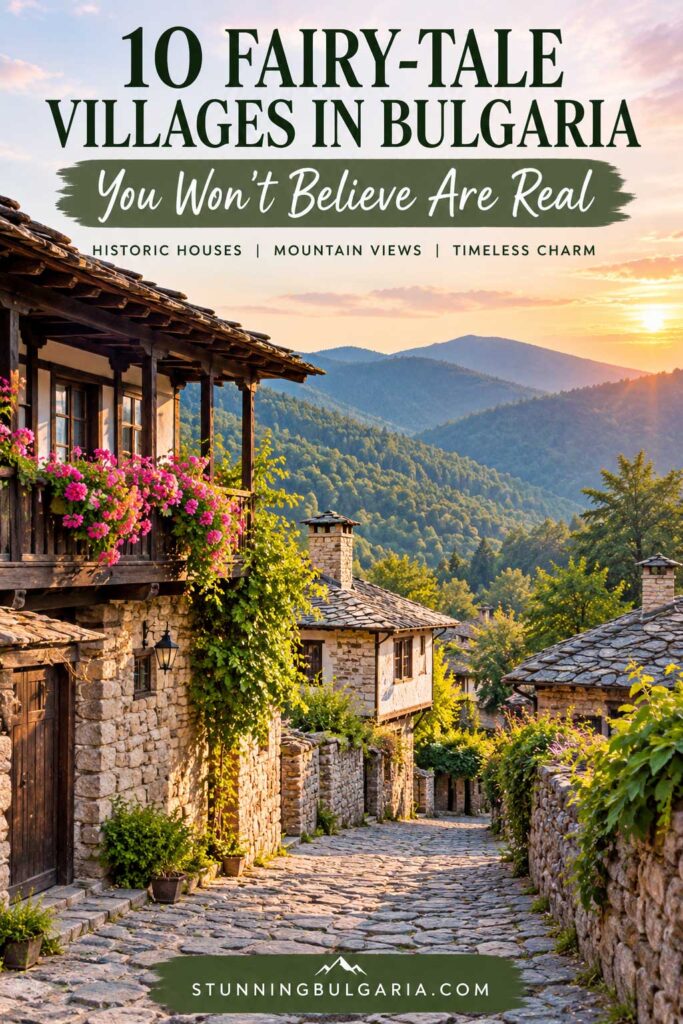
Each place on this list offers a different glimpse of Bulgaria’s past. Some are best for architecture and history, while others are worth visiting for mountain scenery, folklore, food, or simply the chance to spend a quiet night away from the country’s busier destinations.
If you’re deciding which fairy-tale villages in Bulgaria to include in your itinerary, this quick comparison can help narrow down the choices.
| Place | Region | Best For | Don’t Miss |
|---|---|---|---|
| Kovachevitsa | Western Rhodopes | Stone architecture & photography | Cobbled lanes and historic houses |
| Leshten | Western Rhodopes | Romantic escapes & mountain views | Sunset or early-morning village walk |
| Shiroka Laka | Central Rhodopes | Folklore & Rhodope culture | Stone bridges and traditional houses |
| Bozhentsi | Central Bulgaria | Revival architecture | Historic streets and old workshops |
| Zheravna | Eastern Balkan Mountains | Wooden architecture & folklore | Historic houses and Yovkov’s birthplace |
| Arbanasi | Near Veliko Tarnovo | Churches & merchant houses | Church of the Nativity and Konstantsalieva House |
| Melnik | Southwestern Bulgaria | Wine & dramatic landscapes | Melnik Earth Pyramids and Kordopulova House |
| Momchilovtsi | Central Rhodopes | Local life & mountain scenery | Rhodope food and surrounding countryside |
| Koprivshtitsa | Sredna Gora | History & colorful architecture | Revival-era house museums |
| Brashlyan | Strandzha | Quiet escapes & nature | Historic village and Strandzha forests |
Which Village Should You Choose?
For traditional stone architecture, start with Kovachevitsa. For a romantic mountain stay, choose Leshten. If Bulgarian folklore interests you most, Shiroka Laka and Zheravna are excellent choices, while history lovers should put Koprivshtitsa and Arbanasi near the top of the list.
Melnik is the standout choice if you want to combine historic architecture with wine and unusual landscapes. For somewhere quieter and less familiar to international visitors, consider Momchilovtsi or Brashlyan.
And if you have enough time, don’t choose just one. Several of these places can be combined into regional road trips, allowing you to see how dramatically Bulgaria’s architecture, landscapes, and traditions change from one part of the country to another.
Best Time to Visit Bulgaria’s Fairy-Tale Villages
There really isn’t a bad season for exploring Bulgaria’s historic villages, but the experience changes considerably throughout the year. For most travelers, late spring and early autumn offer the best balance of comfortable weather, beautiful scenery, and manageable crowds.
Spring: April to June
Spring is one of the loveliest times to explore the fairy-tale villages in Bulgaria. Gardens begin to bloom, forests turn bright green, and daytime temperatures are generally more comfortable for walking than during the hottest part of summer.
May and June are particularly attractive for road trips through the Rhodopes and Balkan Mountains. Mountain scenery is lush, daylight hours are long, and outdoor terraces and guesthouses begin settling into the warmer season.
Best for: Flowers, green landscapes, photography, hiking, and road trips
Summer: July and August
Summer brings warm weather and the liveliest atmosphere, particularly in popular destinations such as Koprivshtitsa, Arbanasi, and Melnik.
Mountain villages including Shiroka Laka, Leshten, and Momchilovtsi can also provide a refreshing change from Bulgaria’s hotter lowlands and Black Sea coast.
If you’re combining the mountains with the coast, see our guide to the Bulgarian Riviera before planning your route.
July and August are popular months for cultural events and folklore festivals, but weekends can be noticeably busier. If you’re visiting a well-known village, arrive earlier in the morning or consider staying overnight.
Best for: Festivals, outdoor dining, long days, and combining villages with mountain hiking
Autumn: September and October
If I had to choose one season for a road trip through Bulgaria’s old villages, early to mid-autumn would be difficult to beat.
The weather often remains pleasant in September, while October brings beautiful fall colors to forested regions. Places such as Bozhentsi, Zheravna, Kovachevitsa, and Brashlyan can be especially atmospheric when the surrounding hills turn gold and orange.
Autumn is also a natural choice for visiting Melnik and Bulgaria’s wine regions during grape-harvest season.
Best for: Fall colors, photography, wine, romantic weekends, and scenic drives
Winter: December to March
Winter reveals a completely different side of Bulgaria’s mountain villages. Snow-covered stone roofs, smoking chimneys, quiet lanes, and warm guesthouses can create the closest thing to a genuine storybook setting.
Shiroka Laka and other Rhodope destinations are particularly beautiful after fresh snowfall. Koprivshtitsa can also look spectacular in winter.
The trade-off is that mountain weather can make driving more difficult. Roads may be snowy or icy, daylight is shorter, and some attractions or restaurants may operate reduced hours outside peak periods.
Best for: Snowy scenery, cozy guesthouses, winter photography, and quiet escapes
So, When Should You Go?
For a first trip, I would choose May, June, September, or early October. These months generally offer the easiest combination of pleasant conditions and beautiful landscapes while avoiding some of the busiest summer periods.
For pure fairy-tale atmosphere, however, there are two particularly magical choices: October when the forests change color, or winter immediately after fresh snowfall.
How to Visit Bulgaria’s Historic Villages
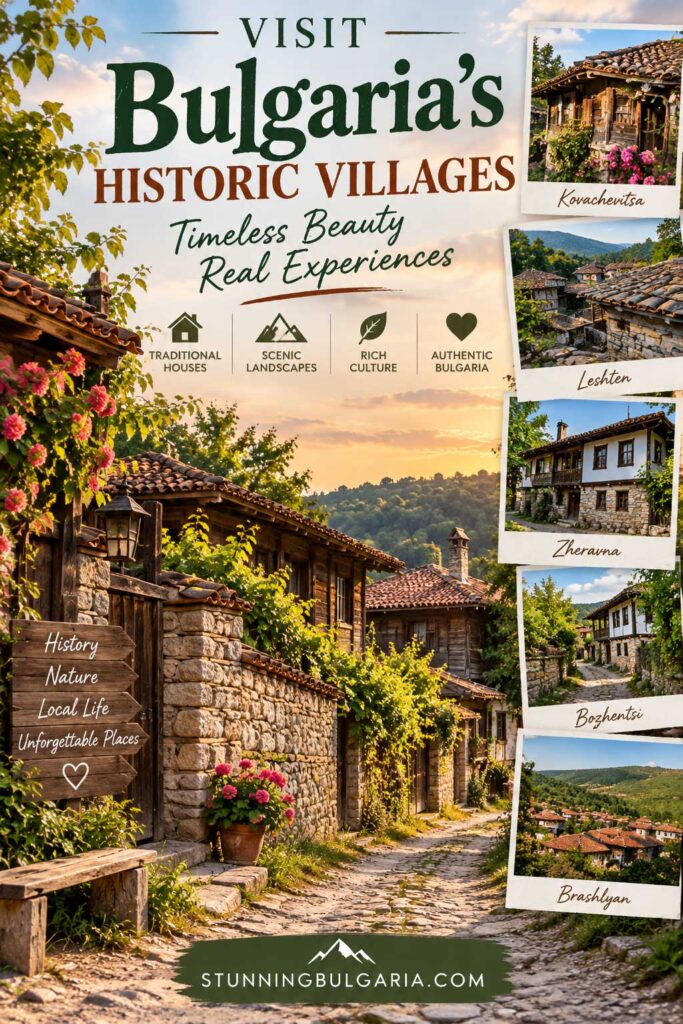
Bulgaria’s historic villages are spread across several different mountain regions, so trying to see all 10 on a single short trip would mean spending far too much time in the car. A better approach is to choose one or two regions and combine nearby villages into a relaxed road trip.
Is Renting a Car Worth It?
For this particular trip, renting a car is the easiest way to get around. Some larger destinations can be reached by bus, but public transportation becomes much more limited once you start exploring smaller mountain villages.
Having your own car also gives you the freedom to stop at viewpoints, monasteries, hiking trails, roadside restaurants, and smaller villages that you might otherwise miss.
Keep in mind that roads approaching places such as Kovachevitsa, Leshten, and some Strandzha villages can be narrow and winding. Allow more time than the distance on the map might suggest, particularly in winter or after bad weather.
The Best Village Combinations for a Road Trip
You don’t need to cross the entire country to experience several of the fairy-tale villages in Bulgaria. Grouping them by region makes much more sense.
Western Rhodopes:
Combine Kovachevitsa + Leshten, with possible stops around Garmen and Ognyanovo.
Central Rhodopes:
Combine Shiroka Laka + Momchilovtsi, then add Smolyan, Pamporovo, or nearby natural attractions.
Central Bulgaria:
Combine Bozhentsi + Tryavna, with Gabrovo and the Etar Open-Air Museum nearby.
Veliko Tarnovo Region:
Visit Arbanasi + Veliko Tarnovo together. This is one of the easiest combinations for travelers who want history without a long mountain drive.
Southwestern Bulgaria:
Build a trip around Melnik + Rozhen, adding Rozhen Monastery, Sandanski, and perhaps the Pirin Mountains.
Eastern Bulgaria:
Combine Zheravna with Kotel and nearby mountain villages.
Strandzha:
Make Brashlyan part of a wider Strandzha road trip that includes Malko Tarnovo, forest walks, traditional villages, and eventually the southern Black Sea coast.
Should You Stay Overnight?
Whenever possible, yes.
Historic villages often feel completely different after the day visitors leave. Streets become quieter, restaurants settle down, and early mornings give you a chance to explore before tour groups and weekend visitors arrive.
Staying in a traditional guesthouse can also become part of the experience. Many restored homes retain stone walls, wooden interiors, courtyards, fireplaces, and other architectural details that connect naturally with the character of the village.
You certainly don’t need to spend a night in every destination, but choosing two or three villages as overnight bases can turn a sightseeing trip into a much more memorable journey through rural Bulgaria.
What to Know Before Visiting Traditional Bulgarian Villages
Exploring old Bulgarian villages is usually easy and relaxed, but the experience is different from visiting Sofia, Plovdiv, or a major resort. A little preparation can make the trip much smoother, especially when you are heading into smaller mountain communities.
Wear Comfortable Shoes
Those beautiful cobbled streets are not always easy to walk on. Some are steep, uneven, or slippery after rain, so comfortable shoes with good grip are a much better choice than sandals with smooth soles.
This is especially useful in places such as Kovachevitsa, Leshten, Shiroka Laka, and Koprivshtitsa, where exploring on foot is a major part of the experience.
Carry Some Cash
Card payments are common across Bulgaria, but smaller guesthouses, family-run restaurants, museums, workshops, and village shops may still prefer or require cash.
It’s still worth carrying some cash in euros, particularly when traveling through smaller villages where card payments may not always be available.
Don’t Expect Everything to Stay Open Late
Village life tends to follow a quieter schedule than life in Bulgaria’s cities. Small museums, churches, shops, and restaurants may have limited opening hours, particularly outside summer and on weekdays.
If there is a specific museum or attraction you really want to visit, check its current opening hours before making the drive.
Try the Regional Food
One of the pleasures of exploring the fairy-tale villages in Bulgaria is discovering how food changes from region to region.
In the Rhodopes, look for dishes such as patatnik and klin. Around Melnik, regional wine is part of the experience. Elsewhere, small taverns and guesthouses may serve homemade banitsa, grilled meats, soups, preserves, yogurt, cheeses, and seasonal dishes using locally grown ingredients.
Remember That These Are Real Communities
Even the most picturesque villages aren’t outdoor movie sets. People live behind those beautiful wooden gates, tend the gardens, attend the churches, and use the narrow streets every day.
Avoid entering private courtyards for photographs, keep noise down in residential areas, and ask before photographing people at close range.
Give Yourself More Time Than You Think You Need
A village may look tiny on a map, but rushing through it in 30 minutes misses much of the experience.
Leave enough time to follow side streets, stop for coffee or lunch, visit a historic house, and simply sit somewhere with a view. In places like these, slowing down is part of the reason to go.
Planning a Bulgarian Village Road Trip
If these places are inspiring a longer trip, resist the temptation to connect all 10 in one route. Bulgaria may look compact on a map, but mountain roads can be slow, and some of the best villages are separated by several hours of driving.
Instead, build your itinerary around one region. Spend a few days exploring Kovachevitsa and Leshten in the western Rhodopes, pair Shiroka Laka and Momchilovtsi with the central Rhodopes, or combine Bozhentsi, Tryavna, and the Gabrovo region for a trip focused on Bulgarian Revival architecture.
For even more road-trip inspiration, explore these underrated destinations in Bulgaria that are worth adding along the way.
For a first visit, three or four villages over several days is plenty. You’ll have time for spontaneous stops, local meals, viewpoints, museums, and evenings in traditional guesthouses instead of spending most of your trip behind the wheel.
And keep some flexibility in your schedule. One of the pleasures of exploring rural Bulgaria is discovering the places you weren’t originally planning to stop.
A Few Last Tips Before You Go
Don’t judge these villages only by how many attractions appear on Google Maps. In places like Leshten, Kovachevitsa, or Brashlyan, the village itself is the attraction. The old streets, houses, mountain views, gardens, and quiet atmosphere are what you’ve come to experience.
Try to arrive early or stay until later in the afternoon, especially in the more popular destinations. You’ll have quieter streets for photographs and a much better sense of what the village feels like without the busiest daytime traffic.
Most importantly, leave some room in your itinerary for unplanned stops. Bulgaria’s mountain roads pass through tiny villages, forests, viewpoints, roadside fountains, monasteries, and family-run restaurants that may never appear on a list of must-see attractions.
Sometimes those unexpected stops become the part of the trip you remember most.
Frequently Asked Questions About Fairy-Tale Villages in Bulgaria
What is the most beautiful village in Bulgaria?
There is no single answer, but Kovachevitsa is a strong contender if you love traditional architecture. Its stone-and-wood houses, cobbled lanes, and Rhodope Mountain setting make it one of Bulgaria’s most photogenic historic villages. Leshten, Shiroka Laka, Bozhentsi, and Zheravna are also excellent choices.
What is the best traditional village to visit in Bulgaria?
For a first visit, Kovachevitsa, Bozhentsi, or Shiroka Laka are excellent options. Kovachevitsa is particularly impressive for architecture, Bozhentsi offers an accessible Bulgarian Revival setting, and Shiroka Laka combines historic buildings with strong Rhodope folklore traditions.
Which Bulgarian villages have traditional architecture?
Some of the best places for traditional Bulgarian architecture include Kovachevitsa, Leshten, Shiroka Laka, Bozhentsi, Zheravna, Arbanasi, and Brashlyan. The architectural style changes by region, which is one reason visiting villages in different parts of Bulgaria can be so interesting.
Can I visit Bulgarian villages without a car?
Yes, but your options will be more limited. Larger and more popular destinations may have bus connections from nearby cities, while reaching smaller mountain villages can require infrequent local transportation or a taxi.
If you want to explore several fairy-tale villages in Bulgaria on the same trip, renting a car is generally the most convenient option.
Which Bulgarian villages are best for photography?
Kovachevitsa is excellent for dramatic stone architecture, while Koprivshtitsa is ideal for colorful Revival-era houses. Shiroka Laka offers beautiful mountain scenery, Zheravna is known for its wooden architecture, and Melnik combines historic streets with unusual sandstone formations.
Early morning and late afternoon usually provide the most atmospheric light and quieter streets.
Are Bulgaria’s historic villages worth visiting in winter?
Yes, particularly if you enjoy snowy scenery and cozy mountain stays. Shiroka Laka, Koprivshtitsa, and villages in the Rhodopes can look spectacular after fresh snowfall.
Winter driving in mountain areas requires more preparation, however. Check weather and road conditions before traveling, allow extra time, and make sure your vehicle is properly equipped for winter conditions.
Can you stay overnight in Bulgaria’s traditional villages?
Absolutely. Many historic villages have family-run guesthouses, restored traditional homes, and small hotels. Staying overnight can be one of the best ways to experience these places because the streets often become much quieter after day visitors leave.
Kovachevitsa, Leshten, Shiroka Laka, Bozhentsi, Zheravna, Melnik, and Koprivshtitsa all offer accommodation options.
If you prefer boutique stays and spa escapes between village stops, you may also like these cheap luxury destinations in Bulgaria.
How many days do you need to explore Bulgaria’s villages?
For one region, two to three days is enough for a relaxed introduction. A longer trip of seven to ten days allows you to explore several regions without spending every day driving across the country.
Rather than trying to visit all 10 places in one trip, choose a few villages that are geographically close and combine them with nearby monasteries, historic towns, hiking areas, or natural attractions.
Which Fairy-Tale Village in Bulgaria Will You Visit First?
Some of Bulgaria’s most memorable places aren’t its biggest cities or most famous attractions. They’re found at the end of winding mountain roads, where stone houses line narrow lanes, church bells carry across the hills, and there is little reason to rush.
Travel from one of these fairy-tale villages in Bulgaria to another and you’ll quickly see how much the country changes from region to region. Kovachevitsa and Leshten showcase the stone architecture of the western Rhodopes, while Shiroka Laka brings together mountain scenery, music, and folklore. Bozhentsi and Zheravna preserve another side of Bulgaria’s National Revival heritage, while Melnik adds vineyards and extraordinary sandstone landscapes. In Strandzha, Brashlyan offers something quieter again, surrounded by forests and traditions unique to southeastern Bulgaria.
You don’t need to visit all 10 in one trip. Choose a region, follow the smaller roads, and give yourself enough time to experience these places rather than simply photograph them.
Walk the cobbled streets. Try the regional food. Stay overnight in an old guesthouse. Sit outside with a coffee and watch village life go by.
Because sometimes the best way to discover Bulgaria isn’t to see more of it — it’s to slow down long enough to notice where you are.
You May Also Like
Planning more adventures around Bulgaria? Continue exploring with these guides:
- Stunning Places in Bulgaria — Discover remarkable mountains, historic landmarks, natural wonders, and beautiful corners of the country worth adding to your itinerary.
- Underrated Destinations in Bulgaria — Go beyond the best-known attractions and discover quieter places that many international visitors overlook.
- Best Places to Visit in Bulgaria — Start planning your trip with some of the country’s essential destinations, from historic cities to mountains and the Black Sea.
- Instagram-Worthy Places in Bulgaria — Find colorful streets, dramatic viewpoints, historic landmarks, and beautiful landscapes made for photography.
- Cheap Luxury Destinations in Bulgaria — Discover boutique stays, spa towns, mountain retreats, and other places where you can enjoy more without spending a fortune.
What’s Your Favorite Fairy-Tale Village in Bulgaria?
Have you visited any of these fairy-tale villages in Bulgaria, or is there another beautiful old village you think deserves a place on the list?
Share your favorite in the comments. And if you’re exploring Bulgaria’s historic villages, tag @stunningbulgaria on Instagram and use #stunningbulgaria so we can see where your adventures take you.