The Bulgarian Black Sea coast stretches along the entire eastern edge of Bulgaria, from the Romanian border in the north to Turkey in the south. Along the way, you’ll find long sandy beaches, quiet coves, historic seaside towns, modern resorts, protected wetlands, and some surprisingly wild stretches of coastline.
Varna and Burgas are the two largest cities on the coast and Bulgaria’s main Black Sea ports. Both also have international airports, making them convenient starting points for exploring the seaside.
The scenery can change surprisingly quickly along the coast. You can spend one day on a wide, lively beach near a major resort and the next somewhere much quieter, surrounded by dunes, forest, or the mouth of a river.
This guide covers 10 beautiful beaches along the Bulgarian Black Sea coast, from well-known places such as Golden Sands and Albena to more natural beaches around Irakli, Alepu, and Sinemorets.
To serve worthily and usefully, renounce yourself.
Colonel Boris Drangov
Also Read: Best Beaches in Bulgaria for Summer Travelers

A Few Quick Facts About the Bulgarian Black Sea Coast
Before exploring the beaches, it helps to know a little about the coastline itself. The Bulgarian Black Sea coast runs along the country’s entire eastern border and combines sandy beaches, rocky headlands, coastal lakes, river mouths, dunes, and seaside towns.
- Bulgaria’s Black Sea coastline stretches for approximately 378 km (235 miles) from Romania in the north to Turkey in the south.
- More than 100 km of Bulgaria’s coastline consists of sandy beaches, ranging from long resort beaches to small, secluded coves.
- The Balkan Mountains reach the Black Sea at Cape Emine, traditionally considered the dividing point between Bulgaria’s northern and southern Black Sea coast.
- Varna and Burgas are the two largest cities on the Bulgarian coast and its principal seaports.
- Bulgaria’s two main coastal airports, Varna Airport and Burgas Airport, provide convenient access to resorts and beaches along the northern and southern coast.
- The landscape along the coast is surprisingly diverse, with protected dunes, wetlands, coastal forests, cliffs, and river estuaries found between the larger resorts.
Beaches to Explore Along Bulgaria’s Black Sea Coast
From the long resort beaches of the north to the wilder shores around Strandzha in the south, Bulgaria’s coastline offers much more variety than its relatively compact size might suggest. Some of these beaches are surrounded by established seaside resorts, while others sit beside dunes, forests, wetlands, and river mouths.
The following 10 beaches give you a good sense of that variety, whether you’re planning a summer holiday or exploring different parts of the Bulgarian Black Sea coast.
1. Primorsko Beaches
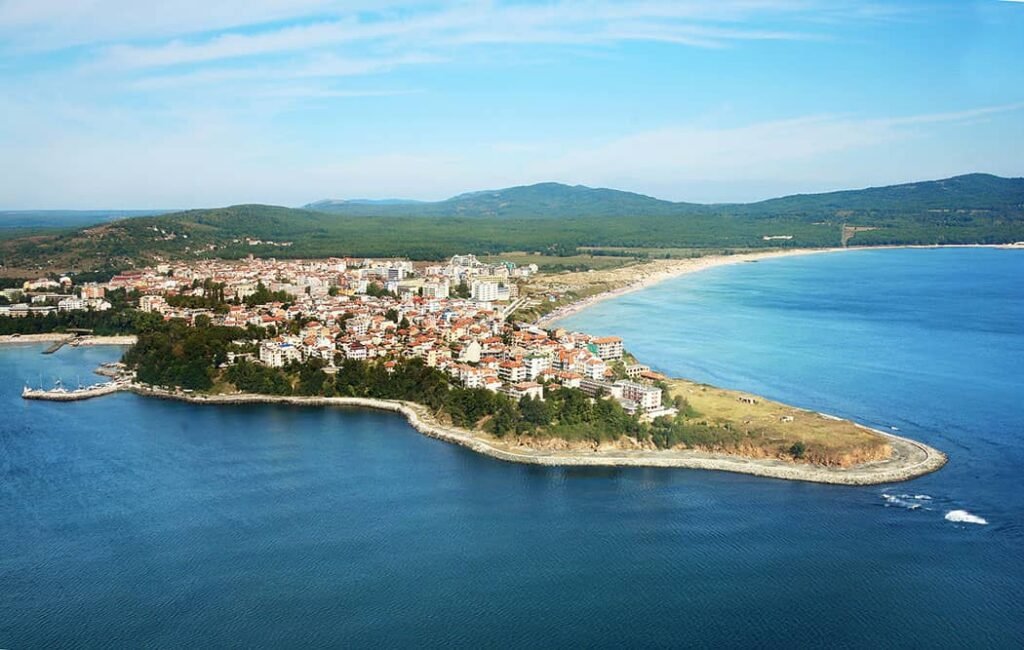
Primorsko sits on a small peninsula on Bulgaria’s southern Black Sea coast and has beaches on both sides of town. Its two main stretches of sand, North Beach and South Beach, offer slightly different experiences, so you can easily switch between two sides of the peninsula during your stay.
North Beach is only a short walk from the center of Primorsko and is the livelier of the two during the summer. Following the coastline farther north brings you toward Perla Beach, where the surroundings become greener and less developed.
On the opposite side of town, South Beach stretches for more than 2 km toward Kiten. It is wide and sandy, with sections that become quieter as you move away from central Primorsko. The beach can also be reached by crossing the bridge over the Dyavolska (Devil’s) River.
With long sandy shores on both sides of town, Primorsko works particularly well for a traditional seaside holiday while still providing easy access to some of the more natural areas of Bulgaria’s southern coast.
Location: Primorsko Beach
2. Golden Sands Beach
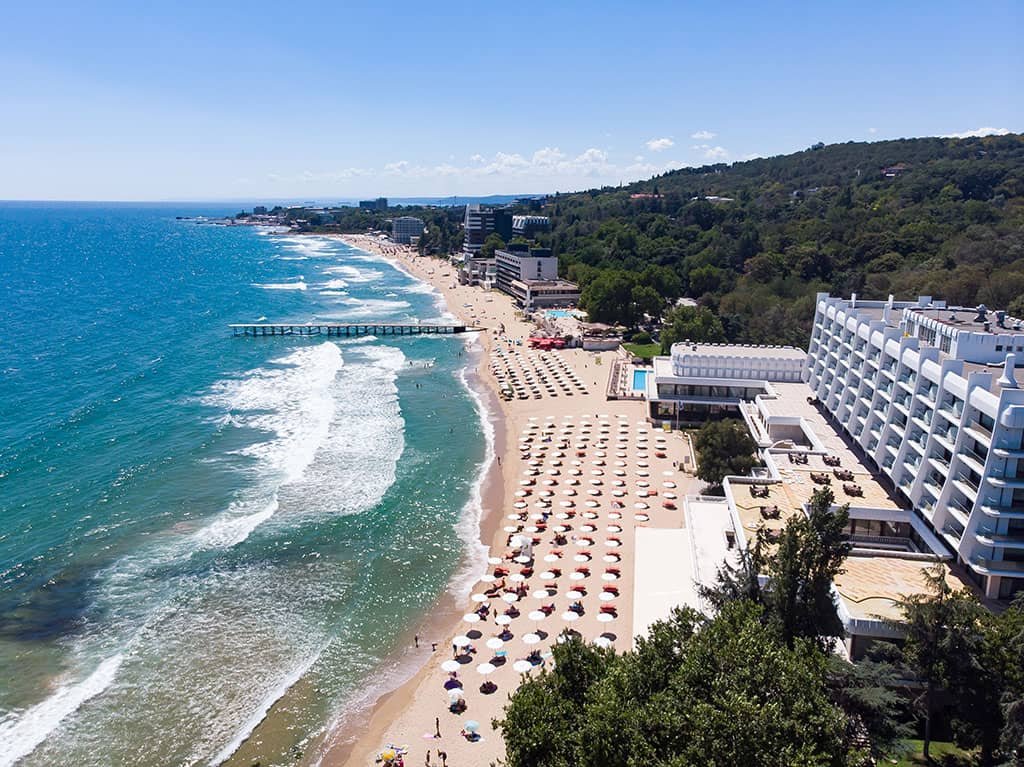
About 17 km north of central Varna, Golden Sands is one of the largest and best-known seaside resorts on Bulgaria’s northern Black Sea coast. Its long, wide beach and extensive tourist facilities have made it a popular summer destination for both Bulgarian and international visitors.
The resort takes its name from the fine golden sand that covers the shoreline. Unlike some of the quieter beaches in this guide, Golden Sands is a fully developed resort area, with hotels, restaurants, beach facilities, water sports, and plenty of activity throughout the summer season.
Golden Sands Nature Park rises directly behind the resort, adding a completely different landscape beyond the busy beachfront. Established as a protected area in 1943, the park covers approximately 13.2 square kilometers and preserves forested slopes descending toward the Black Sea.
Golden Sands combines a large sandy beach with wooded surroundings, nearby mineral springs, and easy access from Varna — one reason it has remained such a popular resort for decades.
Location: Golden Sands Beach
3. Albena Beach

Located about 12 km from Balchik and 30 km from Varna, Albena is a purpose-built seaside resort on Bulgaria’s northern Black Sea coast. The resort opened in 1969 and has since become known for its long sandy beach, green surroundings, and family-friendly atmosphere.
Albena Beach stretches for several kilometers along a broad bay, with fine sand and shallow water in many areas. The beach is well developed, with sunbeds, restaurants, water sports, and other facilities available during the summer season.
One of Albena’s biggest advantages is its natural setting. The resort borders the Baltata Nature Reserve, a protected area known for its dense floodplain forest near the Batova River. This gives Albena a noticeably greener feel than many large seaside resorts.
Despite being a developed holiday destination, much of the resort has been designed around its existing landscape, with extensive vegetation between the hotels and the beach. It’s a good stop along the Bulgarian Black Sea coast for families and travelers who want resort facilities without giving up easy access to nature.
Location: Albena Beach
4. Smokinya Beach, Near Sozopol

About 5 km south of Sozopol, Smokinya Beach is a popular sandy beach along Bulgaria’s southern Black Sea coast. It lies between the beaches around Kavatsi and the coastline leading toward Duni, in an area long associated with camping and summer holidays by the sea.
Smokinya is known for its fine golden sand, clear water, and relatively open coastline. The sea can become wavier here than at beaches sheltered inside smaller bays, which gives the area a slightly different character from the calmer resort beaches farther north.
Camping has long been part of Smokinya’s identity, and the beach remains especially popular with younger travelers, campers, and people staying around Sozopol. During the summer you’ll also find beach bars, restaurants, sunbeds, and other seasonal facilities, so it isn’t a completely wild beach.
A day here also pairs naturally with a few hours wandering through Sozopol’s Old Town.
Location: Smokinya Beach
5. Atliman Beach in Kiten
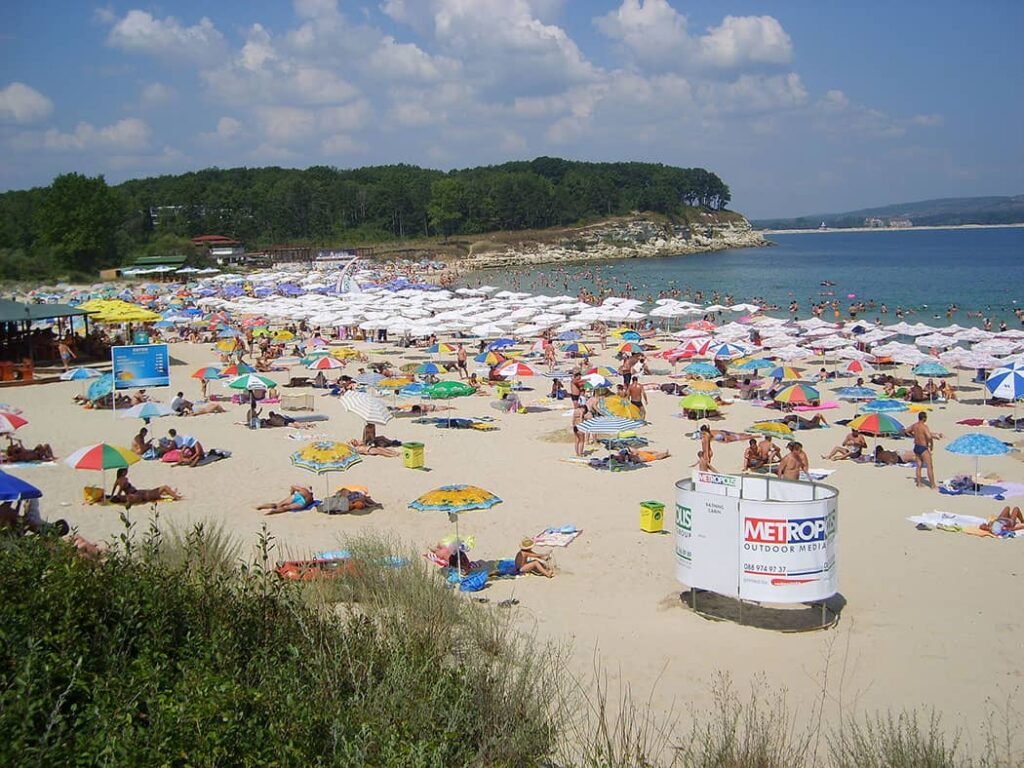
Atliman Beach lies on the northern side of Kiten, a small seaside town on Bulgaria’s southern Black Sea coast. Sheltered inside a curved bay and surrounded by wooded hills, it has a very different feel from the long, exposed beaches found elsewhere along the coast.
The beach has soft golden sand and generally shallow water near the shore, which helps make it popular with families during the summer. Its protected position inside the bay can also mean calmer conditions than on more open stretches of coastline, although sea conditions naturally vary from day to day.
Kiten itself occupies a small peninsula between two bays, with Atliman Beach to the north and the beaches around Karaagach Bay to the south. Forested areas extend close to the shoreline, giving this part of the coast a greener appearance.
Atliman becomes busy during July and August, but its combination of a sandy beach, sheltered bay, and forested surroundings makes it worth visiting while exploring the southern Bulgarian Black Sea coast.
Location: Atliman Beach
6. Driver’s Beach (Alepu Beach), Near Sozopol
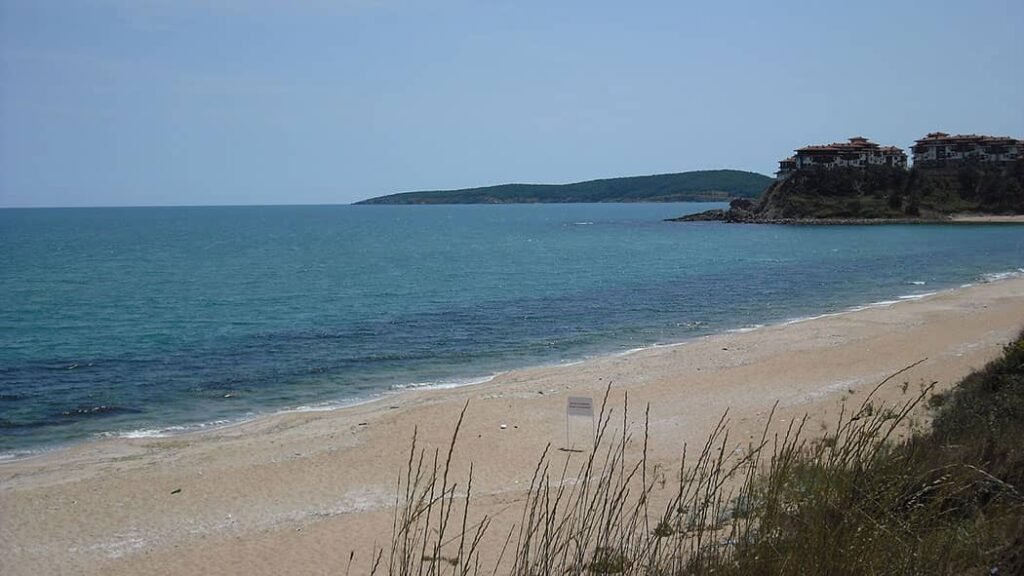
Driver’s Beach, often called Alepu Beach, stretches along the southern Black Sea coast between the Duni resort area and Cape Humata, about 10 km south of Sozopol. Its roadside location explains the popular name, but the landscape feels much wilder than the name might suggest.
Behind the sandy shoreline lies the Alepu wetland, an important coastal habitat separated from the Black Sea by dunes and the narrow strip of land followed by the coastal road. The combination of sea, sand dunes, wetland, and surrounding hills gives this part of the coastline a distinctly natural character.
Compared with the large resort beaches at Golden Sands or Albena, Alepu has traditionally attracted visitors looking for a less developed stretch of coast. Parts of the beach have limited facilities, so it’s worth arriving prepared if you plan to spend several hours here.
The protected dunes are also part of what makes Alepu special. Visitors should avoid walking or driving across dune vegetation and use established access points wherever possible.
For travelers exploring the area around Sozopol, Alepu feels remarkably undeveloped considering how close it is to Sozopol and Duni.
Location: Drivers’ Beach
7. Bolata Beach, Near Cape Kaliakra
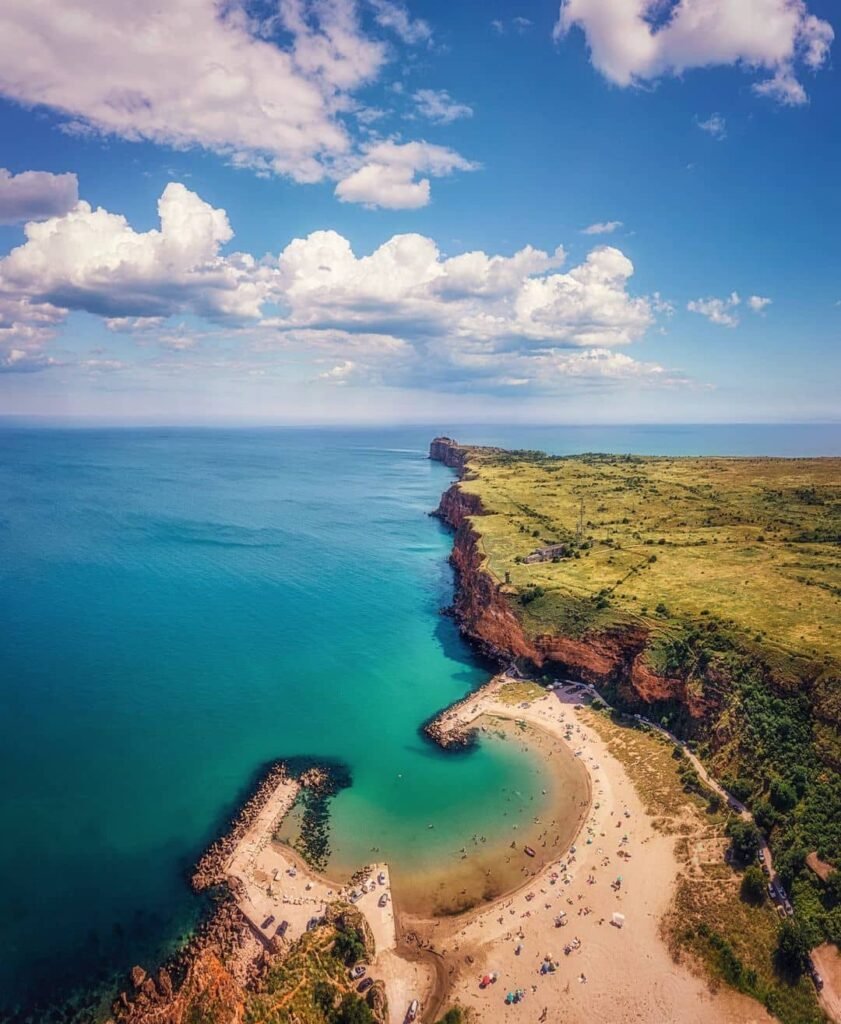
Bolata Beach is instantly recognizable, tucked into a small bay beneath the reddish cliffs of northeastern Bulgaria. It lies near Cape Kaliakra, a short drive from the village of Bulgarevo and roughly 75 km north of Varna.
Unlike the long resort beaches farther south, Bolata forms a compact crescent of sand enclosed by steep coastal slopes. From above, the sheltered bay and intensely blue water create a view quite unlike anywhere else on the Bulgarian Black Sea coast.
Bolata is part of the protected landscape surrounding Kaliakra, an area important for both its scenery and wildlife. The northern Bulgarian coast lies along a major bird migration route, and the cliffs and surrounding steppe provide habitat for numerous species.
The beach’s small size means it can become crowded during the summer, particularly on weekends. Its real appeal is the setting rather than resort facilities: dramatic cliffs, a sheltered bay, and the opportunity to combine a beach stop with nearby Cape Kaliakra.
For a longer day trip, Bolata can also be combined with Kaliakra, Kavarna, and other destinations along Bulgaria’s quieter northern coastline.
Location: Bolata Beach
8. Shkorpilovtsi Beach
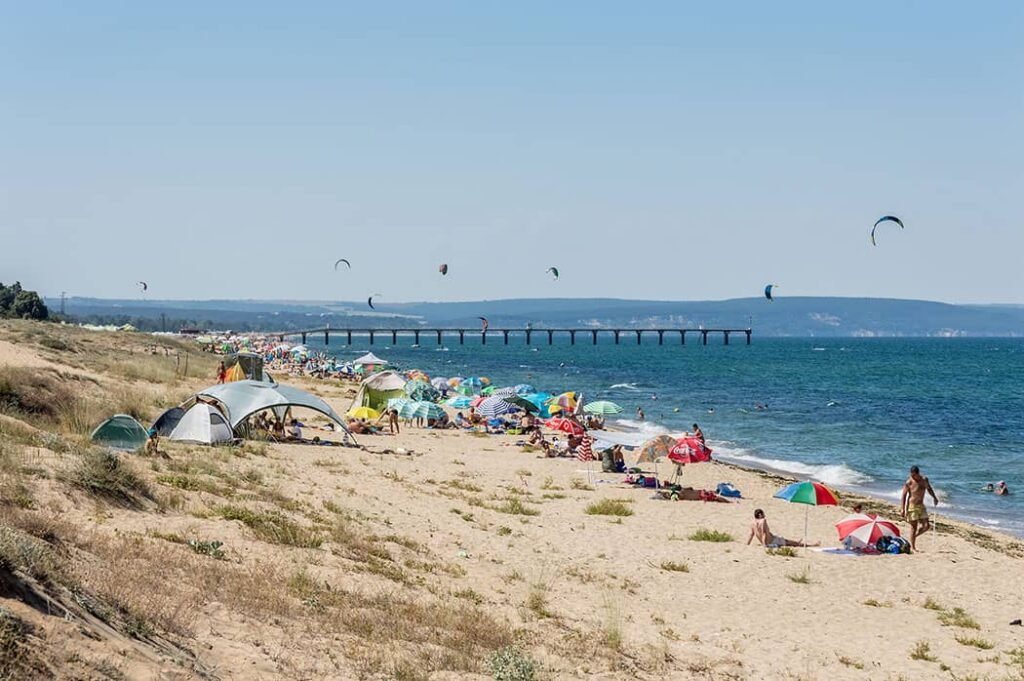
About 40 km south of Varna, Shkorpilovtsi is known for its long, open stretch of sand and noticeably quieter atmosphere compared with the large resorts of Bulgaria’s northern Black Sea coast.
The beach extends for several kilometers, with plenty of room even during much of the summer season. Instead of a continuous line of large hotels, you’ll find a mixture of camping areas, smaller accommodations, beach facilities, and relatively undeveloped sections of coastline.
The long pier stretching into the Black Sea has become a recognizable landmark of Shkorpilovtsi. The exposed coastline also attracts windsurfers and other water-sports enthusiasts when conditions are suitable.
Behind the beach are wooded areas associated with the eastern reaches of the Balkan Mountains, creating a landscape where forest and sea come unusually close together.
Shkorpilovtsi feels noticeably removed from the large resorts around Varna, especially once you move away from the main beach entrances.
Location: Shkorpilovtsi Beach
9. Veleka Beach at Sinemorets
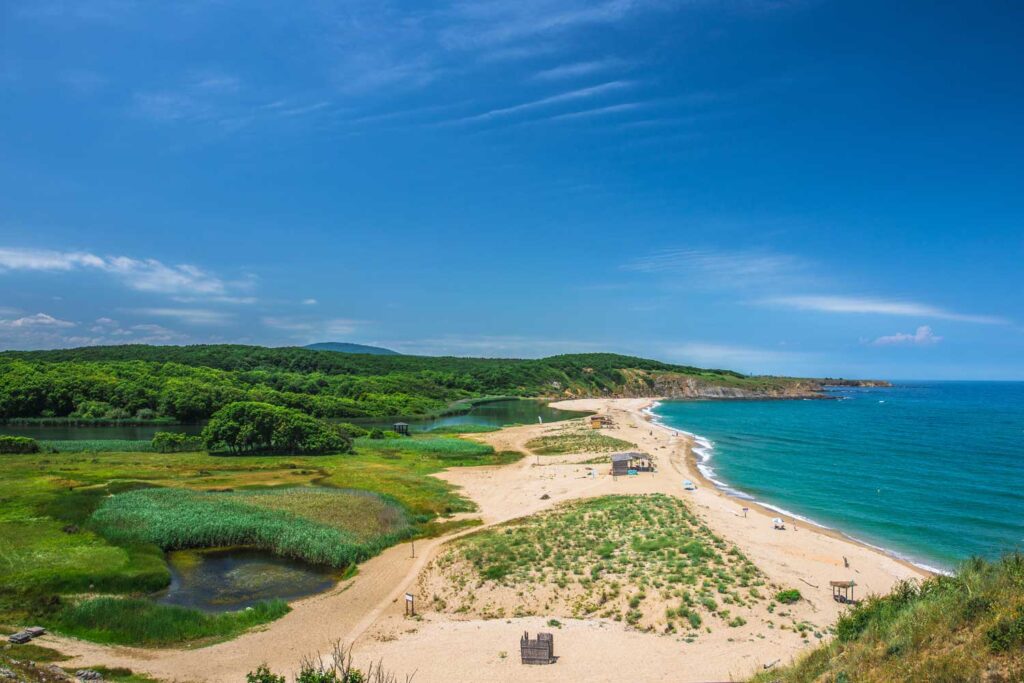
At the northern edge of Sinemorets, the Veleka River curves around a long strip of sand before reaching the Black Sea. The result is Veleka Beach, where the river and sea meet, creating the spectacular landscape for which Sinemorets is known.
Sinemorets lies in the far southeast of the country, around 15 km from the Turkish border, within Strandzha Nature Park. This remote location has helped the surrounding coastline retain a more natural character than Bulgaria’s larger seaside resorts.
What sets Veleka Beach apart is its unusual geography. The sandy strip has the Black Sea on one side and the Veleka River on the other, while green hills rise around the river valley. Walk to one of the viewpoints above the beach and you can see the river bending behind the sand before entering the sea.
The river and sea have different currents and water conditions, so visitors should pay attention to local warnings and swim only where conditions are safe.
Sinemorets also has another well-known beach, Butamyata Beach, south of the village. Butamyata and Veleka are separate beaches, making it easy to experience two very different coastal settings while staying in Sinemorets.
For scenery alone, Veleka Beach deserves a place on any journey along the Bulgarian Black Sea coast.
Location: Veleka Beach
10. Irakli Beach
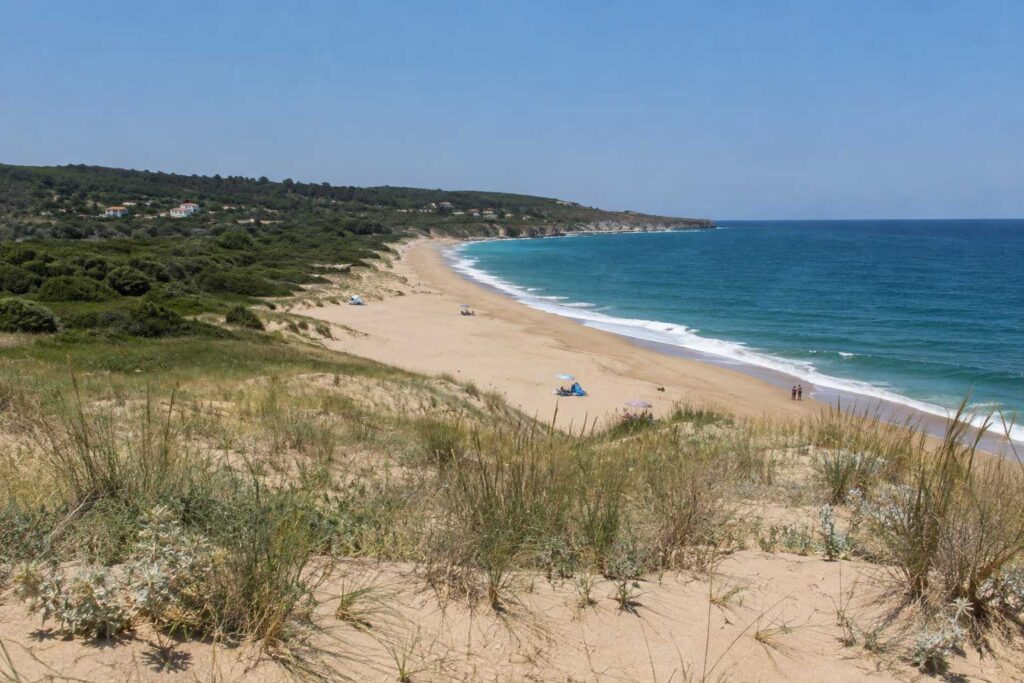
Irakli Beach is one of the best-known natural beaches on the Bulgarian Black Sea coast, lying between Obzor and Nessebar and close to the eastern end of the Balkan Mountains. The nearby village of Banya is only a few kilometers inland, while Cape Emine lies farther along the coast.
The beach stretches for several kilometers, with a broad strip of sand backed by dunes, vegetation, and relatively undeveloped coastal landscape. The Vaya River reaches the Black Sea here, adding another natural feature to the area.
Irakli has long attracted campers and nature lovers because much of the surrounding coastline escaped the large-scale resort development seen elsewhere. July and August weekends can still get busy, but move away from the main access points and the beach quickly begins to feel more spacious.
Parts of the surrounding area are protected, so visitors should respect designated access points, dunes, vegetation, and any local restrictions on camping or vehicles.
With the Balkan Mountains meeting the Black Sea nearby, Irakli is a fitting final stop on this list and a reminder that some of Bulgaria’s most memorable coastal landscapes are found beyond its major resorts.
Location: Irakli Beach
Which Bulgarian Black Sea Beach Should You Choose?
The right beach depends on which part of the coast you’re visiting and how developed you want your surroundings to be. Golden Sands and Albena offer the most complete resort experience on this list, while Alepu and Irakli retain a noticeably more natural setting.
For dramatic scenery, Bolata and Veleka Beach stand out. Primorsko and Kiten work well when you want several beaches close to a seaside town, while Shkorpilovtsi offers plenty of space without the scale of Bulgaria’s largest resorts.
| Beach | Best For | Part of Coast | Setting |
|---|---|---|---|
| Primorsko | Variety and long sandy beaches | South | Seaside town |
| Golden Sands | Full resort experience | North | Large resort |
| Albena | Families and easy facilities | North | Green resort |
| Smokinya | Camping and Sozopol trips | South | Beach and camping area |
| Atliman | Sheltered bay and families | South | Small resort town |
| Alepu | Nature and quieter surroundings | South | Less developed |
| Bolata | Coastal scenery | North | Small natural bay |
| Shkorpilovtsi | Space and a quieter holiday | North | Long open beach |
| Veleka | River-mouth scenery | Far south | Natural |
| Irakli | Nature and undeveloped coastline | Central coast | Natural |
Best Time to Visit the Bulgarian Black Sea Coast
The main beach season on the Bulgarian Black Sea coast runs from June through September, with July and August bringing the warmest weather, busiest beaches, and widest choice of seasonal restaurants and activities.
June is a good time to visit before the peak summer crowds arrive. The days are already warm, although the sea can still feel cool early in the month.
July and August are the height of the season. This is when resorts such as Golden Sands, Albena, Primorsko, and Kiten are at their liveliest, but accommodation prices and visitor numbers are also at their highest. Popular smaller beaches such as Bolata can become especially busy on summer weekends.
September is often an excellent month for the Bulgarian seaside. The sea retains much of its summer warmth, while beaches and resort towns generally become quieter as the month progresses.
Outside the main season, the coast can still be beautiful for hiking, photography, birdwatching, and visiting historic seaside towns. Keep in mind that many beach bars, restaurants, water-sports operators, and other seasonal businesses close or reduce their hours once summer ends.
Northern vs. Southern Bulgarian Black Sea Coast
Bulgaria’s coastline is commonly divided into northern and southern sections, with Cape Emine marking the geographic point where the Balkan Mountains reach the Black Sea. Both sides have excellent beaches, but the landscapes and travel experience can feel quite different.
Northern Bulgarian Black Sea Coast
The northern coast is centered around Varna and includes Golden Sands, Albena, Balchik, Kavarna, Cape Kaliakra, and Bolata. Parts of this coastline are characterized by higher cliffs and rocky headlands, especially as you travel farther north toward Kaliakra.
Varna is the main transportation hub, and Varna Airport makes the region convenient for international travelers. From the city, you can easily combine beach days with places such as Balchik Palace, Cape Kaliakra, Aladzha Monastery, and the coastal resorts north of Varna.
Southern Bulgarian Black Sea Coast
The southern coast is centered around Burgas and includes Nessebar, Sozopol, Primorsko, Kiten, Irakli, Alepu, and Sinemorets. Here you’ll find everything from large resorts and historic towns to river mouths, wetlands, forested shores, and some of Bulgaria’s more secluded beaches.
Traveling farther south toward Strandzha Nature Park brings a noticeable change in scenery. Around Sinemorets and the Turkish border, forested hills reach close to the sea and development becomes much lighter than around the major resorts.
If you have enough time, exploring both regions is worthwhile. The relatively short Bulgarian Black Sea coast packs a surprising amount of variety into its roughly 378 km of shoreline.
Tips for Visiting Beaches on the Bulgarian Black Sea Coast
A little planning can make exploring Bulgaria’s coastline much easier, especially when visiting smaller or less-developed beaches.
- Don’t expect every beach to have the same facilities. Major resorts such as Golden Sands and Albena have restaurants, showers, sunbeds, and plenty of services, while natural beaches may have few facilities nearby.
- Arrive early at smaller beaches. Bolata, Veleka, and some of the beaches around Sozopol can become busy during July and August, particularly on weekends.
- Pay attention to the beach flags. Conditions on the Black Sea can change quickly. Follow lifeguard instructions and avoid swimming when warning flags indicate dangerous conditions.
- Be especially careful around river mouths. Beaches such as Veleka and Irakli are influenced by nearby rivers, where currents and water conditions can differ from the surrounding sea.
- Protect the dunes. Several beaches along the coast have environmentally sensitive dune systems. Use established paths and never drive or park on protected dunes.
- Bring what you need to wild beaches. Water, sun protection, food, and suitable footwear are useful when visiting less-developed sections of the coast.
- Check parking before you go. Access and parking arrangements can change seasonally, particularly around popular natural beaches.
- Don’t limit your trip to the sand. Some of the most interesting places on the Bulgarian Black Sea coast are just beyond the beaches, including Nessebar, Sozopol, Balchik, Cape Kaliakra, Strandzha Nature Park, and the coastal lakes around Burgas.
Frequently Asked Questions About the Bulgarian Black Sea Coast
Does Bulgaria Have Good Beaches?
Yes. Bulgaria has a long stretch of sandy coastline with everything from large resort beaches to small bays and less-developed natural areas. The beaches around Albena, Golden Sands, Sozopol, Primorsko, Sinemorets, and Irakli show how varied the coast can be.
Which Side of Bulgaria Has the Black Sea?
The Black Sea forms Bulgaria’s eastern border. The Bulgarian coastline stretches from Romania in the north to Turkey in the south.
How Long Is the Bulgarian Black Sea Coast?
The Bulgarian Black Sea coast is approximately 378 km (235 miles) long. More than 100 km of Bulgaria’s coastline is made up of sandy beaches.
What Are the Main Seaside Cities in Bulgaria?
Varna and Burgas are Bulgaria’s two largest Black Sea cities and its principal coastal transportation hubs. Both have international airports and provide easy access to nearby beaches and resorts.
Is the Northern or Southern Bulgarian Coast Better?
Neither is universally better. The northern coast has destinations such as Golden Sands, Albena, Balchik, Cape Kaliakra, and Bolata, while the southern coast includes Nessebar, Sozopol, Primorsko, Kiten, Irakli, and Sinemorets. The south generally offers more forested and river-mouth landscapes as you approach Strandzha, while parts of the north are known for dramatic cliffs and rocky headlands.
What Is the Best Month for a Beach Holiday in Bulgaria?
July and August offer the warmest and liveliest beach conditions, but they are also the busiest months. June is generally quieter, while September can be an excellent choice for warm sea temperatures and fewer crowds.
Are There Wild Beaches in Bulgaria?
Yes. Although much of Bulgaria’s coastline is developed for tourism, less-developed stretches remain. Irakli and Alepu are two examples in this guide, while the far southern coast around Strandzha also contains quieter natural areas.
What Is the Bulgarian Riviera?
Bulgarian Riviera is an informal tourism term for the resorts, beaches, towns, and attractions along Bulgaria’s Black Sea coastline. It generally refers to the entire coast rather than one particular resort area.
Have You Explored the Bulgarian Black Sea Coast?
From the cliffs and sheltered bays of the north to the forests and river mouths of the far south, the Bulgarian Black Sea coast has far more variety than many first-time visitors expect. Golden Sands and Albena represent the classic resort side of Bulgaria’s seaside, while Bolata, Alepu, Veleka, and Irakli reveal something quieter and more natural.
These 10 beaches are only a starting point. There are dozens of other stretches of sand, small coves, seaside towns, and coastal landscapes worth discovering between the Romanian and Turkish borders.
Have you visited any of these beaches? Let us know which one was your favorite, or share another Bulgarian Black Sea beach you think deserves a place on the list.
You can also follow Stunning Bulgaria on Instagram, tag @stunningbulgaria and use #stunningbulgaria when sharing photos from your travels around Bulgaria.
While I have you here, may I suggest a few other places you should visit on your next trip: